Was Menschen denken? (Part 8)

Hey!

Wie ihr euch vielleicht noch erinnern könnt, habe ich vor einiger Zeit eine Umfrage verschickt, um herauszufinden, wie andere Menschen mich als Person und Gestalterin wahrnehmen. Zuerst einmal: Danke an alle, die sich die Zeit genommen haben, mitzumachen! Die Antworten waren teilweise sehr überraschend, teilweise bestätigend und insgesamt unglaublich spannend zu lesen.

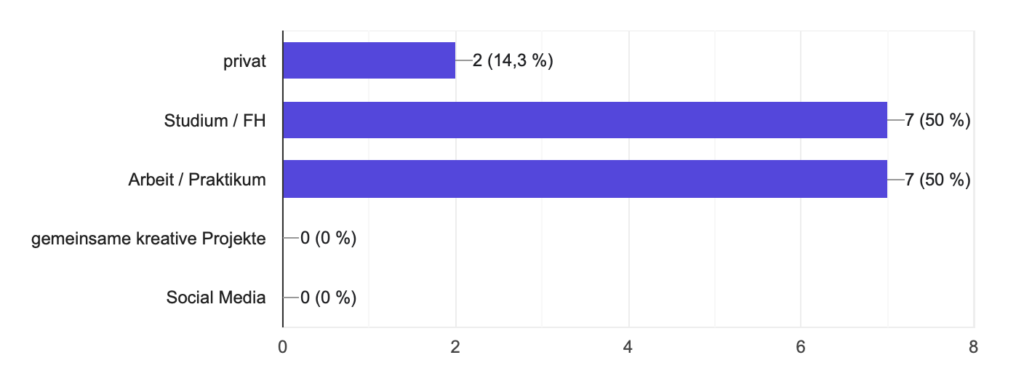
Da Menschen aus ganz unterschiedlichen Bereichen meines Lebens teilgenommen haben – Studium, Arbeit, Praktikum und Privatleben – war ich besonders neugierig, ob sich ein gemeinsames Bild ergeben würde.
Bei der Frage, ob ihr mich eher als Künstlerin oder Designerin wahrnehmt, wurde am häufigsten „Künstlerin“ gewählt. Viele von euch haben aber auch geschrieben, dass meine Arbeiten irgendwo zwischen Design und Kunst liegen oder beides gleichzeitig sind. Einige sehen mich eher als Designerin. Besonders spannend fand ich die Antwort einer Person, die meinte, ich sei noch auf dem Weg und deshalb nicht eindeutig einzuordnen. Mehrere von euch haben außerdem geschrieben, dass meine Arbeiten für sich selbst sprechen – ein Kommentar, über den ich mich besonders gefreut habe.

Auch bei den persönlichen Eigenschaften haben sich einige klare Tendenzen gezeigt. 86,7 % von euch haben mich als freundlich beschrieben. 64,3 % verbinden mit mir die Eigenschaften fähig, selbstsicher und vertrauenswürdig. Ebenfalls häufig genannt wurden witzig, verlässlich und komplex (jeweils 57,1 %).

Eine Erkenntnis, die mich besonders gefreut hat: 71,4 % von euch verbinden mit mir als Person und mit meinen Arbeiten sehr ähnliche Gefühle. Die Begriffe Freiheit, Stärke und Freude kamen dabei immer wieder vor. Das zeigt mir, dass viele von euch meine Persönlichkeit und meine kreative Arbeit als etwas Zusammengehöriges wahrnehmen.

Auch bei den Farben gab es ein überraschend klares Bild. Blau wurde am häufigsten mit mir verbunden, generell aber auch kräftige, leuchtende Farben. Was dabei auffällt: Keine einzige Person hat Pastellfarben genannt. Offenbar werde ich eher mit starken Kontrasten und ausdrucksstarken Farben assoziiert.

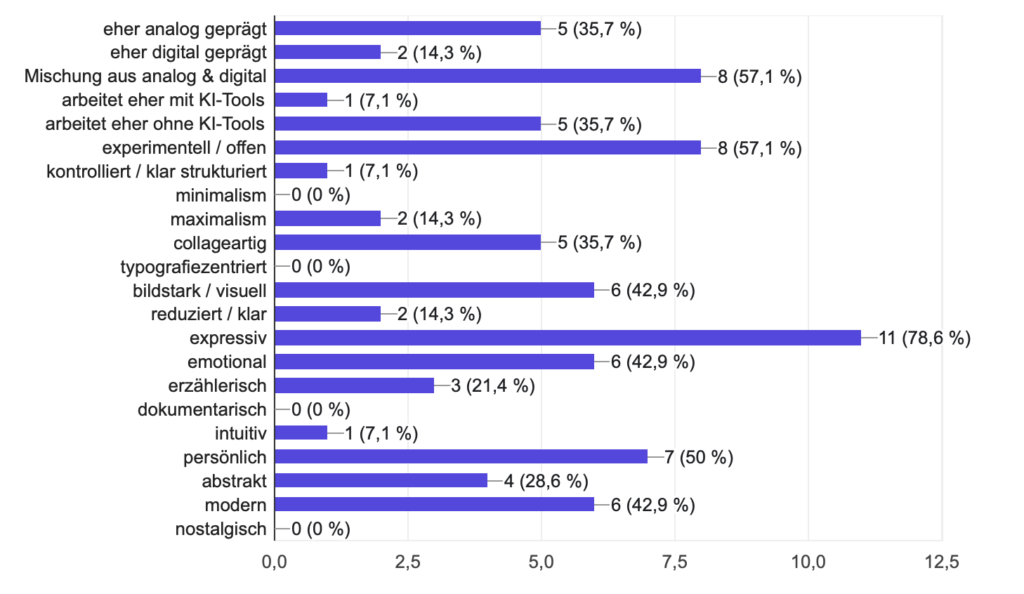
Meinen kreativen Stil haben 78,6 % von euch als expressiv beschrieben. Viele sehen ihn außerdem als experimentell sowie von einer Mischung aus analogen und digitalen Arbeitsweisen geprägt (jeweils 57,1 %).
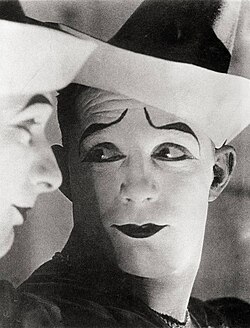
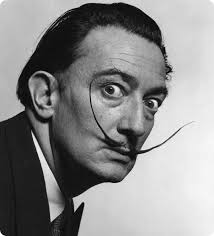
Besonders neugierig war ich auf die Frage: „Wenn meine Arbeiten eine Person wären – wie wäre diese Person?“ Die Antworten reichten von konkreten Persönlichkeiten wie Dalí oder Vivienne Westwood bis zu Beschreibungen wie „nicht zu übersehen :)“ oder „ein Weißclown: scheinbar ruhig, aber tiefgründig und voller Überraschungen“. Allein diese Antworten zu lesen hat unglaublich viel Spaß gemacht.
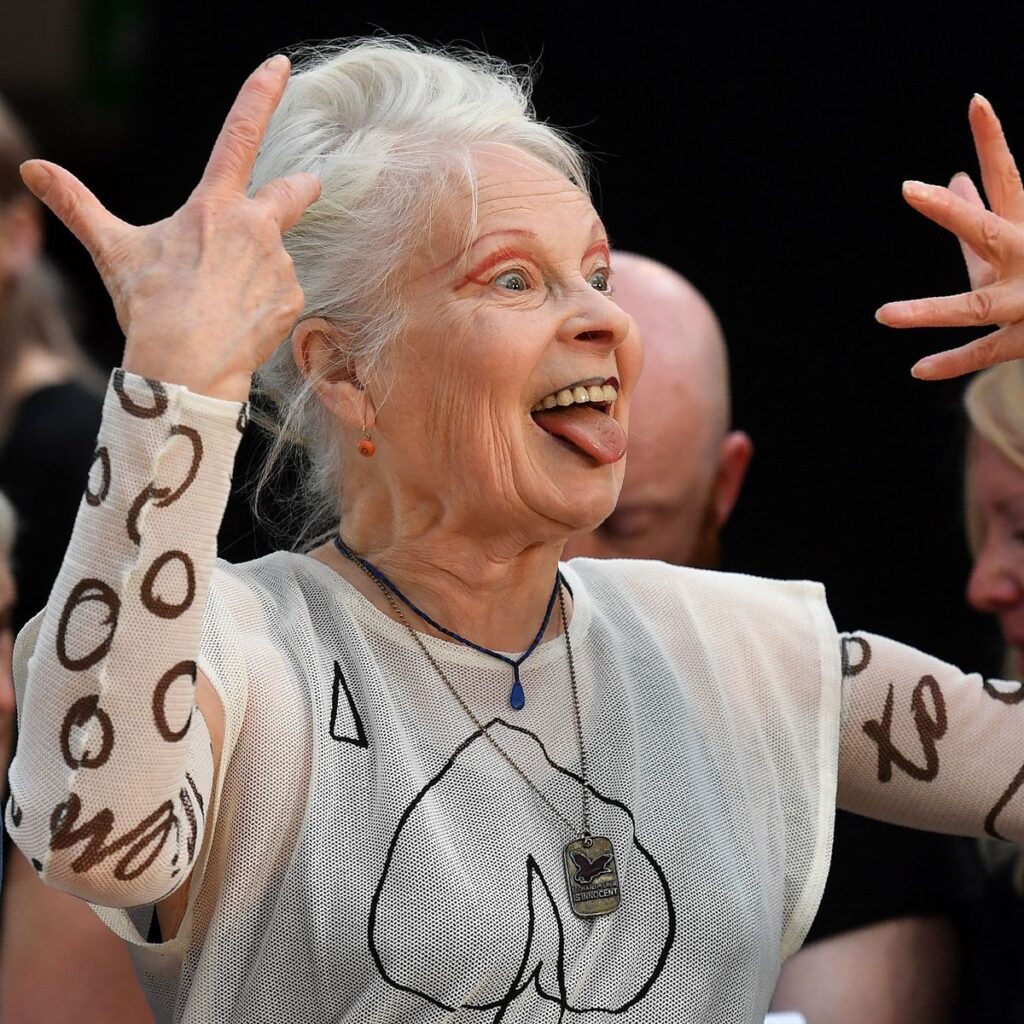
Auf die Frage, was an mir besonders authentisch wirkt, wurden meine Art und mein Auftreten am häufigsten genannt. Mehrere von euch haben außerdem meine mutigen Farbkombinationen erwähnt. Eine Antwort ist mir besonders in Erinnerung geblieben: Dass ich meine Haltung und Persönlichkeit nicht von meiner kreativen Arbeit trenne und dadurch das Gefühl entsteht, dass das, was ich gestalte, wirklich zu mir gehört.

Ein Feedback, das sich durch viele Antworten gezogen hat, war, dass ich mein Selbstbewusstsein noch stärker zeigen könnte. Das fand ich interessant, weil gleichzeitig auch Selbstsicherheit häufig als Eigenschaft genannt wurde. Vielleicht bedeutet das einfach, dass noch mehr davon sichtbar sein darf.

Zum Schluss noch ein kleiner Fun Fact: Bei der Frage nach Musik, Filmen oder Objekten, die an mich erinnern, haben viele von euch sehr persönliche Insider genannt, die wahrscheinlich nur wir verstehen. Daneben wurden aber auch Filme wie „Alice in Wonderland“ von Tim Burton, „Volver“ von Pedro Almodóvar oder „Ronja Räubertochter“ genannt. Damit hätte ich ehrlich gesagt nicht gerechnet. Noch überraschter war ich bei „Rachmaninow“. Falls die Person, die das geschrieben hat, das hier liest: Ich würde wirklich gerne wissen, was die Gedanken dahinter waren haha

Insgesamt fand ich es unglaublich spannend zu sehen, welche Gemeinsamkeiten sich durch die Antworten gezogen haben und welche Aspekte von mir offenbar besonders stark wahrgenommen werden. Danke euch allen fürs Mitmachen und für eure ehrlichen, kreativen und teilweise sehr schönen Antworten!

✋ au revoir

11*BRANDING POLITICS: Why political branding still works in physical space

At this point, we’ve established that politics do not simply exist within policy documents, election campaigns or the occasional family argument at Christmas dinner. Politics exist visually. They exist culturally. They exist in the way movements present themselves, how ideologies circulate and how collective identities become recognisable. But while most political communication today lives online – optimised for feeds, algorithms and endless scrolling – one thing has stubbornly refused to disappear: physical political media.

Posters. Flyers. Stickers. Banners. Protest signs taped onto lamp posts at 2am.
So here I am, about to take a deep dive into the physical appearance of political media, in hopes that what I’ll conclude at the end of this semester is not loudly yelling “print is dead and political vandalism sucks” back at me.

Despite living in what feels like an entirely digital political landscape, physical political communication still carries a strange kind of authority. A political poster on the street feels different from a sponsored Instagram post, even when both communicate the exact same message. One interrupts your environment. The other competes with cat videos and skincare ads.

This difference matters.

Political communication has always relied heavily on occupying public space. Long before social media feeds became ideological battlegrounds, walls, streets and newspapers acted as the primary sites of visual persuasion. Public space itself became political infrastructure. Cultural theorist Henri Lefebvre argued that space is socially produced and deeply shaped by power relations (Lefebvre, 1991). Political posters are therefore never “just” decoration. They actively participate in shaping who belongs, which ideologies become visible and what narratives dominate public consciousness.

Unlike digital content, physical political media cannot be easily scrolled away from. It demands confrontation through presence alone. A sticker on a street sign, a campaign poster at a bus stop or a protest banner stretched across a building occupies space in a way digital communication cannot fully replicate. It inserts ideology directly into everyday life.

And importantly, physical political communication often feels more authentic.

This perception is partly tied to labour and materiality. Analogue political media carries visible traces of production: ink textures, paper grain, imperfect alignment, weather damage, tape marks, fingerprints. These imperfections signal human involvement. Media theorist Marshall McLuhan famously argued that “the medium is the message” (McLuhan, 1964), meaning that the form of communication itself shapes how content is interpreted. A handmade protest poster communicates something fundamentally different from a polished digital advertisement – even before the text is read.

This becomes particularly interesting in relation to political trust. Contemporary political communication is increasingly associated with strategic branding, algorithmic targeting and carefully manufactured image management. Audiences are highly aware of political messaging techniques. As a result, highly polished communication can sometimes feel suspicious rather than convincing.

Analogue aesthetics often operate in opposition to this.

Rough textures, visible print errors and DIY visuals are frequently associated with grassroots activism, resistance movements and anti-establishment politics. Their “unfinished” appearance becomes proof of sincerity. Ironically, imperfection itself has become a form of branding.

This dynamic is visible across contemporary protest culture. Climate movements, feminist collectives and labour organisations regularly rely on analogue-inspired aesthetics even when their campaigns primarily circulate online. Screen-print textures, photocopy-style graphics and hand-drawn typography create the visual impression of collective effort and urgency. These aesthetics communicate political values before a single slogan is processed consciously.

But physical political media also creates a different relationship between audience and message.

Digital political communication is designed for speed. A post appears, is consumed within seconds and disappears beneath new content almost immediately. Physical media operates slower. You pass the same poster repeatedly. A sticker slowly deteriorates over weeks. A slogan becomes embedded into the visual rhythm of a city.

This persistence creates memory.

Political theorist Benedict Anderson describes collective identity as something constructed through shared symbols and repeated cultural encounters (Anderson, 1983). Physical political media contributes directly to this process. It creates visual familiarity. Repetition transforms symbols into belonging.

At the same time, analogue political communication carries historical weight. Contemporary political posters inevitably reference earlier traditions of protest, propaganda and activism. Whether intentionally or not, screen prints and wheat-pasted posters visually echo anti-war movements, labour struggles, punk culture and revolutionary propaganda. Analogue political design therefore does not simply communicate a message – it communicates a lineage.

And perhaps this is why physical political communication still matters so deeply.

Not because it is more effective than digital media.

Not because it reaches larger audiences.

But because it feels real.

In a political environment increasingly shaped by algorithms, branding strategies and disappearing content, physical political media reintroduces material presence. It reminds us that politics does not only happen online.

Sometimes, it’s taped to a wall.

And maybe that’s exactly why analogue political communication continues to matter.

Not because it resists modern media entirely, but because it slows political messaging down long enough for people to physically encounter it. A poster occupies space differently than a TikTok does. It asks to be looked at rather than immediately reacted to. Even destruction becomes part of its communication. Torn edges, graffiti additions and weather damage turn political media into an evolving object rather than static content.

This material vulnerability also makes political print feel temporary and urgent at the same time. Posters disappear. Stickers get scraped off. Banners are removed. Their physical existence mirrors the instability of political discourse itself.

Perhaps that is why analogue political communication still feels emotionally powerful despite digital dominance.

Because unlike content designed to disappear beneath the next algorithmic update, physical political media leaves traces.

Quite literally.

Sometimes in memory.

Sometimes on walls.

Sometimes both.

Sources:

  • Anderson, B. (1983). Imagined Communities. Verso.
  • Lefebvre, H. (1991). The Production of Space. Blackwell.
  • McLuhan, M. (1964). Understanding Media. McGraw-Hill.
  • Couldry, N. (2012). Media, Society, World. Polity Press.

BRANDING POLITICS: Look again – questioning politics, branding, and the choices we make

By now, one thing should be undeniable: politics rarely announces itself clearly. It doesn’t always arrive as a policy proposal or a campaign speech. More often, it slips in quietly – through visuals, voices, aesthetics, platforms and vibes. It disguises itself as lifestyle, taste, entertainment or common sense.

That’s exactly why questioning matters.

Especially for creatives.

If you can identify branding tactics, you can identify persuasion. If you understand visual language, tone and emotional framing, you can see how power is communicated – and how it is normalised. Political movements rely on design to simplify complex realities, mobilise emotion and create belonging. Sometimes this is empowering. Sometimes it’s manipulative. Often, it’s both.

Questioning doesn’t mean disengaging. It means becoming literate in the systems shaping perception. Asking who benefits from a particular visual language. Whose voices are amplified. Whose experiences are aestheticised. And whose realities remain invisible.

This is where creative skill becomes political responsibility.

Design, media, communication and storytelling are not neutral tools. They structure what is seen, what is felt and what is remembered. As branding logic increasingly dominates political communication, the ability to recognise it becomes a form of power. To see branding is to see strategy. To see strategy is to slow it down.

And slowing down matters.

Because political branding thrives on immediacy. On emotional shortcuts. On recognition before reflection. Questioning interrupts that flow. It creates distance. It makes space for complexity.

This brings us full circle – back to where this series began.

Politics doesn’t start at the ballot box. It starts earlier. Smaller. Quieter. With a repost. A purchase. A design choice. A silence. A black or white shirt at H&M.

Everything is political – not because everything is dramatic, but because everything participates. Every choice exists within systems of power, culture and meaning, whether we acknowledge them or not.

The real question isn’t whether you’re involved.

It’s whether you’re looking closely enough, at how involved you actually are.

Sources:
• Foucault, M. (1980). Power/Knowledge. Pantheon Books.
• Hall, S. (1997). Representation: Cultural Representations and Signifying Practices. Sage.
• Couldry, N. (2012). Media, Society, World. Polity Press.

BRANDING POLITICS: Politics as lifestyle – when ideology becomes everyday practice

If politics truly permeates everything – and by now it should be clear that it does – then lifestyle is where it settles most comfortably. Not loudly, not dramatically, but quietly. In routines. In habits. In choices that don’t feel political until someone points out that they are.

What we eat, wear, watch, share and buy increasingly functions as political expression. Ethical consumption, sustainability, boycott culture, conscious branding, “voting with your wallet” – these practices allow individuals to align ideology with daily life. Politics becomes something you do without necessarily noticing you’re doing it.

This shift reflects a broader transformation in how political identity is constructed. Rather than being expressed primarily through formal participation – voting, party membership, protest – politics is increasingly embedded in personal identity and self-presentation. Being political is no longer just about what you argue for, but about how you live.

Sociologist Pierre Bourdieu famously argued that taste is never neutral. Our preferences in food, clothing, art and media reflect social positioning, cultural capital and power relations (Bourdieu, 1984). In contemporary culture, taste has become explicitly political. Aesthetic choices signal values. Consumption communicates alignment. Lifestyle becomes ideology, translated into everyday practice.

This is precisely why branding plays such a central role in modern political movements. For a cause to last, it must integrate seamlessly into daily routines. It must be wearable, shareable and repeatable. When politics becomes habitual, it becomes resilient. A movement that fits into everyday life is harder to abandon than one that only exists in moments of crisis.

But lifestyle politics also exposes deep contradictions.

Who gets to participate in ethical consumption? Who can afford sustainable fashion, organic food, or locally produced goods? When political engagement is tied to purchasing power, participation becomes uneven. What presents itself as moral choice can quickly slide into exclusion.

There is also the question of effectiveness. Critics argue that lifestyle politics risks reducing systemic issues to individual responsibility. Buying the “right” products may soothe personal conscience without challenging structural inequalities. Political action becomes symbolic rather than transformative.

And yet, dismissing lifestyle politics entirely misses its cultural power. Everyday practices shape norms. Norms shape expectations. Expectations shape politics. What feels normal today was often radical yesterday.

Lifestyle politics operates in the slow lane of change. It doesn’t replace institutional reform or collective struggle – but it does influence how those struggles are understood, supported and sustained. It turns abstract values into visible behaviour.

Politics doesn’t only live in institutions or protests.
It lives in habits.

And habits, once formed, are hard to break.

Sources:
• Bourdieu, P. (1984). Distinction: A Social Critique of the Judgement of Taste. Harvard University Press.
• Giddens, A. (1991). Modernity and Self-Identity. Polity Press.
• Micheletti, M. (2003). Political Virtue and Shopping. Palgrave Macmillan.

BRANDING POLITICS: Beyond the feed – other media channels shaping modern political movements

Social media dominates contemporary discussions of political activism – but focusing exclusively on feeds, algorithms and platforms obscures a crucial reality. Modern political movements are multi-channel by necessity. They operate across digital and physical spaces simultaneously, adapting their messages to different media logics.

Street posters, stickers, murals, banners and wheat-pasted flyers remain powerful political tools precisely because they resist digital ephemerality. You don’t scroll past them. You encounter them. Public space becomes a medium, and a battleground.

Cultural theorist Henri Lefebvre famously argued that public space is never neutral, it is produced through power relations, regulation and resistance (Lefebvre, 1991). Protest media that occupies physical space interrupts everyday routines and asserts political presence without requiring consent or algorithmic approval.

Zines and independent print publications function in a similar way. Historically rooted in feminist, queer, punk and anti-capitalist movements, zines prioritise depth, intimacy and community over reach. Their aesthetics – imperfect, handmade, intentionally “unpolished” – reject corporate design standards while still operating within recognisable visual languages.

Community radio also plays a vital role, particularly outside metropolitan centres. It sustains local political discourse, amplifies marginalised voices and maintains continuity between moments of heightened protest visibility. Unlike social media, it is less driven by virality and more by presence.

Even fashion operates as a political media channel. Clothing transforms bodies into mobile communication surfaces. Slogan T-shirts, pins, patches and colour-coded accessories allow individuals to signal political alignment in everyday life. Once again, branding logic reappears: visibility, recognisability, repetition.

What unites these channels is not nostalgia, but strategy. Modern movements do not choose between online and offline media. They occupy all of it. Each channel fulfils a different function – mobilisation, education, identity-building, memory.

The feed is loud.
But the street still speaks.

Sources:
• Lefebvre, H. (1991). The Production of Space. Blackwell.
• Duncombe, S. (2008). Notes from Underground: Zines and the Politics of Alternative Culture. Microcosm Publishing.
• Couldry, N. (2012). Media, Society, World. Polity Press.

BRANDING POLITICS: Press record to protest – podcasting as a political movement

Podcasting doesn’t look like protest – and that’s precisely why it has become so politically powerful.

There are no marches, no placards, no visually striking crowds filling public squares. Instead, there is a voice. Sometimes just one. Conversational and opinionated. “So here’s the thing…” And suddenly, politics unfolds in your headphones while you’re cooking dinner or commuting to uni.

Podcasting has emerged as one of the most influential – and underestimated – political media forms of the 21st century. Unlike social media platforms that reward speed, outrage and brevity, podcasts thrive on slowness. They offer time, continuity and deeper narratives. In an attention economy built on fragmentation, this temporal commitment is, in a way, radical.

Media scholars argue that podcasts foster strong forms of parasocial interaction – one-sided relationships in which listeners feel emotionally connected to hosts (Llinares, Fox & Berry, 2018). This perceived intimacy generates trust, loyalty and long-term engagement. From a political perspective, this is an incredibly powerful mechanism.

Political podcasts do not simply distribute information. They construct ideological worlds. Over time, listeners adopt not just the host’s language, but also references and interpretive frameworks. The podcast becomes more than content – it becomes a brand, a community and a shared worldview. Intro music functions like a logo. Catchphrases become insider language. Live shows and merchandise transform listening into belonging.

Unlike traditional broadcast media, podcasting bypasses institutional gatekeepers almost entirely. Anyone with a microphone and internet access can participate. This accessibility has allowed marginalised voices to build substantial audiences without relying on mainstream media approval. At the same time, it has enabled the formation of highly insulated ideological spaces.

Podcasting mirrors protest branding in an unexpected way: it replaces visual symbolism with sonic identity. Tone of voice, rhythm, pacing and repetition become political tools. Where protest movements rely on imagery in public space, podcasts occupy private space – directly inside people’s heads.

This private consumption does not make podcast politics passive. On the contrary, it often deepens ideological commitment. Listening is sustained, habitual and intimate. Political ideas are not encountered accidentally, they are chosen, returned to and internalised.

Political change does not always shout. Sometimes, it whispers – consistently, convincingly, and every single week.

Sources:
• Llinares, D., Fox, N., & Berry, R. (2018). Podcasting: New Aural Cultures and Digital Media. Palgrave.
• Spinelli, M., & Dann, L. (2019). Podcasting: The Audio Media Revolution. Bloomsbury.

BRANDING POLITICS: Same fight, different fonts – movement interconnectivity in modern politics

At first glance, political movements tend to present themselves as singular, distinct and morally unique. Each cause claims urgency. Each struggle insists on its own language, symbols and priorities. Climate activists block streets and glue themselves to infrastructure. Feminist movements organise marches and online campaigns. Labour unions strike. Nationalist movements rally under flags and slogans. Different demands, different enemies – different aesthetics.

And yet, once you start paying attention to how these movements communicate, the differences begin to blur.

Political movements rarely invent themselves from scratch. They emerge within existing cultural, political and media environments, borrowing tactics, visuals and narratives from those that came before them – and from those they oppose. Social movement scholars describe this process as movement spillover, where ideas, organisational forms and symbolic repertoires travel across movements, even across ideological boundaries (Meyer & Whittier, 1994).

A slogan migrates. A colour palette resurfaces. A gesture becomes universal.

The clenched fist is perhaps the most recognisable example. Originally associated with labour movements and anti-fascist resistance, it has since been adopted by feminist, anti-racist, queer and climate justice movements. In each context, its meaning shifts slightly – empowerment, solidarity, resistance – but its emotional core remains intact. Symbols accumulate histories. Movements inherit them whether they want to or not.

What becomes particularly striking is that opposing movements often rely on remarkably similar branding tactics. Uniform clothing. Simplified messaging. Strong emotional narratives. Clear distinctions between “us” and “them.” Even when political goals are fundamentally incompatible, the communication logic remains the same. Everyone is competing within the same attention economy.

This mirroring effect is especially visible in polarised political landscapes. Progressive and reactionary movements alike frame themselves as authentic, silenced or under threat. They claim moral urgency. They mobilise fear, hope or nostalgia. Communication theorist Paolo Gerbaudo argues that contemporary mobilisation is less about rational persuasion and more about emotional identification – movements succeed by making people feel part of something (Gerbaudo, 2018).

Belonging, however, requires recognisability.

This is where branding becomes essential. A movement must be instantly identifiable, repeatable and scalable. Limited colour palettes, recognisable symbols, consistent tone of voice – these elements allow movements to circulate across platforms and contexts without losing coherence. Whether it’s climate justice or nationalist populism, the mechanics are often identical. Same fight, different fonts.

Interconnectivity also becomes visible through coalition-building. Climate justice movements increasingly align themselves with labour rights, feminist politics and anti-racist struggles, recognising shared structural enemies. These alliances reshape visual language too. Messaging becomes broader. Symbols soften. Aesthetics adapt in order to accommodate multiple identities without collapsing into incoherence.

Yet this process is never frictionless. Interconnected movements must constantly negotiate whose priorities are foregrounded and whose are marginalised. Branding choices become political decisions.

Ultimately, movements do not operate in isolation. They exist within shared cultural systems, media infrastructures and design logics. Same platforms. Same visual languages. Same struggle for attention.

Different politics. Same design rules.

Sources:
• Gerbaudo, P. (2018). The Digital Party. Pluto Press.
• Meyer, D. S., & Whittier, N. (1994). Social Movement Spillover. Social Problems, 41(2).

BRANDING POLITICS: How branding strategies are implemented in political communication

If politics look like brands, protests act like campaigns, and social media functions as the main distribution channel – then political communication today is, at its core, strategic branding. Just with significantly higher stakes. But who’s counting, eh?

Political actors have long understood the importance of image, messaging and symbolism. What has changed is not whether branding exists in politics, but how central it has become. Research in political marketing shows that voters increasingly relate to parties, movements and leaders through emotional identification rather than detailed policy alignment (Scammell, 2014). Before arguments are processed rationally, signals are already doing the work.

Colours, typography, slogans, tone of voice, platform choice – these elements function as shorthand. They communicate values instantly. Authority. Relatability. Stability. Urgency. Hope. Fear. Branding allows political actors to compress ideology into something immediately recognisable.

This is visible across ideological spectrums. Progressive movements often employ inclusive language, participatory aesthetics and softer colour palettes. Their visuals emphasise community, openness and horizontality. Conservative political communication, on the other hand, frequently relies on visual stability, national symbols, traditional typography and authoritative tone. These differences are not ideological coincidences – they are branding strategies designed to resonate with specific audiences (Lees-Marshment, 2019).

What makes this especially powerful is that branding operates before conscious evaluation. You don’t have to agree with a message to feel something about how it looks. Political branding bypasses rational debate and moves straight into affect.

The parallels to commercial branding are impossible to ignore. Political identities are consumed, displayed and defended in ways strikingly similar to lifestyle brands. People wear slogans, share logos, defend movements with brand-like loyalty. As theorist Arjun Appadurai argues, consumption has become a primary site for identity construction in modern societies – and politics is no exception (Appadurai, 1996).

This does not mean politics are fake, hollow or superficial. It means they are communicated through the dominant cultural logic of our time. Branding becomes a translation tool – turning abstract ideologies into emotionally resonant visuals, narratives and experiences.

But branding also simplifies. It creates coherence by excluding complexity. Political movements must decide what to highlight and what to leave invisible. Which stories become central. Which identities are foregrounded. Which contradictions are smoothed over.

This is where power enters the design process.

Who controls the branding of a movement often determines whose realities are represented. Marginalised voices can be aestheticised without being empowered. Radical demands can be softened for broader appeal. Branding can unify – but it can also erase.

And yet, opting out is rarely an option. In a media environment saturated with visuals and competition, unbranded politics risk invisibility. The question is no longer whether politics should be branded.
They already are.

The real question is who gets to design them – and who is forced to live with the consequences.

Sources:
• Appadurai, A. (1996). Modernity at Large. University of Minnesota Press.
• Lees-Marshment, J. (2019). Political Marketing. Routledge.
• Scammell, M. (2014). Consumer Democracy. Cambridge University Press.

BRANDING POLITICS: I’m liking this! About political movements in the 21st century and the role of social media in modern protest

If protest movements were once built in meeting rooms, universities and city squares, today they are built in comment sections, reddit forums and for-you-pages. The architecture of political participation has shifted dramatically – not away from collective action, but into platforms designed primarily for entertainment, advertising and endless scrolling. Likes, shares, reposts and saves have become political tools, and whether we like it or not, social media has fundamentally reshaped how movements grow, who participates, and what “political engagement” even means.

Social media platforms enable mobilisation and global visibility on a scale that would have been unimaginable to earlier protest movements. A single video, image or hashtag can circulate across continents in minutes. Research on digital activism highlights how platforms lower participation thresholds, allowing individuals to engage politically without formal membership, organisational structures or physical presence (Bennett & Segerberg, 2012). This shift has profoundly altered who gets to participate in political discourse.

Movements like Black Lives Matter illustrate this transformation clearly. Initially propelled by user-generated content – videos, eyewitness accounts, personal testimonies – BLM bypassed traditional media gatekeepers entirely. Social media did not just document protest, it produced it. Visibility became a catalyst. Outrage became connective tissue.

But this transformation comes at a cost. What “cost“, you might ask?

Online political engagement is often criticised as shallow or performative. The term “slacktivism” captures the fear that low-effort actions – liking a post, sharing a story, changing a profile picture – replace sustained political involvement (Morozov, 2011). Clicking “like” feels political, but its tangible impact remains contested. Does engagement translate into change, or does it simply generate metrics?

This critique is not unfounded. But it is incomplete.

What it often ignores is how political identity itself is formed today. Political participation is no longer confined to voting, protesting or party membership. It is deeply entangled with self-presentation. According to media scholar Zizi Papacharissi, online political engagement operates through affect – emotion, visibility and personal expression – rather than through formal political action alone (Papacharissi, 2015). In other words, sharing is not just communication, it is meaning-making.

Your feed becomes a political space. Your reposts signal alignment. Your follows imply morals and values. Your silence is read as a statement. Political movements now exist not only as collective struggles but as curated presences within individual timelines. Activism becomes part of personal branding – whether intentionally or not. There’s always that one influencer unwilling to comment on relevant political matters for the sake of their following, and on the other side there will be another influencer ditching their content niche and giving protest a platform, seemingly selfless, but alas also for the sake of their following.

This is where social media fundamentally reshapes protest logic. Movements must now be algorithmically legible. They must perform well within systems designed to reward speed, emotional intensity and visual clarity. Anger spreads faster than nuance. Images outperform text. Moral clarity outperforms ambiguity.

As a result, political movements increasingly adapt their messaging to platform logics. Protest becomes content. Messaging becomes modular. Visual identity becomes essential not just for recognition, but for survival.

Yet social media is not a neutral stage. It actively shapes what kinds of politics are visible, rewarded or suppressed. Algorithms prioritise engagement over accuracy, virality over complexity. Protest movements do not just fight institutions anymore – they fight platforms. They fight shadow bans, content moderation, demonetisation and algorithmic invisibility.

And sometimes, they win.

Digital platforms have allowed marginalised voices to bypass traditional power structures, challenge dominant narratives and build global solidarities. But they have also fragmented movements, encouraged internal policing and intensified performative pressure. To be political online is to be constantly visible – and constantly judged.

Modern protest exists in this contradiction. It is both empowered and constrained by the platforms it depends on. Participation is easier than ever, but sustaining momentum is harder. Engagement is measurable, but impact is not.

Social media did not make politics superficial. It made visibility unavoidable.

Sources:
• Bennett, W. L., & Segerberg, A. (2012). The Logic of Connective Action. Information, Communication & Society.
• Morozov, E. (2011). The Net Delusion. PublicAffairs.
• Papacharissi, Z. (2015). Affective Publics. Oxford University Press.

BRANDING POLITICS: The visual representation strategies of modern protest

Fast forward to today, where protest no longer lives exclusively in the streets. It lives on your phone. In your feed. On your explore page. On posters designed to be photographed rather than read in real life. And with this shift in space, the visual strategies of protest have evolved too. They’ve become sharper, faster, more recognisable and sometimes painfully on-brand.

Modern protest exists in a visual economy defined by platforms. In what communication scholar Manuel Castells describes as the “networked public sphere,” political messages compete for attention across fragmented digital spaces (Castells, 2009). Visibility is no longer guaranteed by physical presence alone. It must be designed.

Climate protest offers one of the clearest examples of this transformation. Movements such as Fridays for Future and Extinction Rebellion rely on strong, cohesive visual identities to ensure instant recognition across platforms, countries and contexts. Research on contemporary activism shows that consistent visual branding significantly increases media attention, message recall and participant identification (Doerr, Mattoni & Teune, 2013).

The neon green hourglass symbol of Extinction Rebellion is a particularly telling case. Its design is deliberately simple, almost crude. High contrast. Easy to reproduce. Instantly recognisable even at small scales on a phone screen. Combined with bold typography and a seemingly “handmade” aesthetic, the movement balances urgency with accessibility. It looks disruptive, but not alienating or strange.

This aesthetic is not accidental. It reflects an awareness of digital circulation. Protest imagery today must function simultaneously as political communication and as content. It must be photographable, shareable and adaptable across formats – from banners and posters to Instagram posts and press images.

However, this raises critical tensions.

When visual simplification becomes necessary for visibility, what happens to complexity? Critics argue that highly aestheticised protest risks reducing politics to digestible symbols, prioritising visibility over substance (Dean, 2010). A message designed for quick consumption could lose nuance, or be easily detached from its original context. And it’s not like we don’t witness things like that every single day – between reaction videos where you can only see a short clip of the original video, screenshots and Ai-images, it’s easier than ever to take things out of context.

There is also the risk of co-optation. Once a protest aesthetic becomes recognisable, it can be absorbed by institutions, corporations or political actors seeking to signal alignment without committing to structural change. The line between resistance and trend becomes dangerously thin.

And yet, dismissing branded protest entirely overlooks its democratic potential. Visual branding lowers the barrier to participation. It allows individuals to identify with a cause instantly, without requiring extensive prior knowledge or ideological literacy. Sociologist Paolo Gerbaudo describes visual symbols as “emotional shortcuts” – tools that enable rapid collective alignment in moments of political urgency (Gerbaudo, 2012).

In a media environment defined by speed, overload and the attention span of a goldfish, these shortcuts matter.

Modern protest visuals operate in a space of constant negotiation: between authenticity and strategy, emotion and design, resistance and recognisability. They must be legible enough to travel, but flexible enough to adapt. Radical enough to disrupt, but coherent enough to endure.

This tension is not a flaw. It is the defining condition of political expression in the digital age.

Just like earlier movements, contemporary protests rely on visual language to create belonging, signal values and sustain momentum. The difference is not whether protest is branded – it’s where that branding circulates, and how quickly it can be reproduced, reshaped and most importantly reinterpreted.

From the street to the screen, protest has always needed a look.
Now, it just needs to load fast. And be at least a little funny.

Sources:
• Castells, M. (2009). Communication Power. Oxford University Press.
• Dean, J. (2010). Blog Theory. Polity Press.
• Doerr, N., Mattoni, A., & Teune, S. (2013). Advances in the Visual Analysis of Social Movements. Emerald.
• Gerbaudo, P. (2012). Tweets and the Streets. Pluto Press.