Analysis and summary of a scientific review on the relation between sports and psychological and social well-being

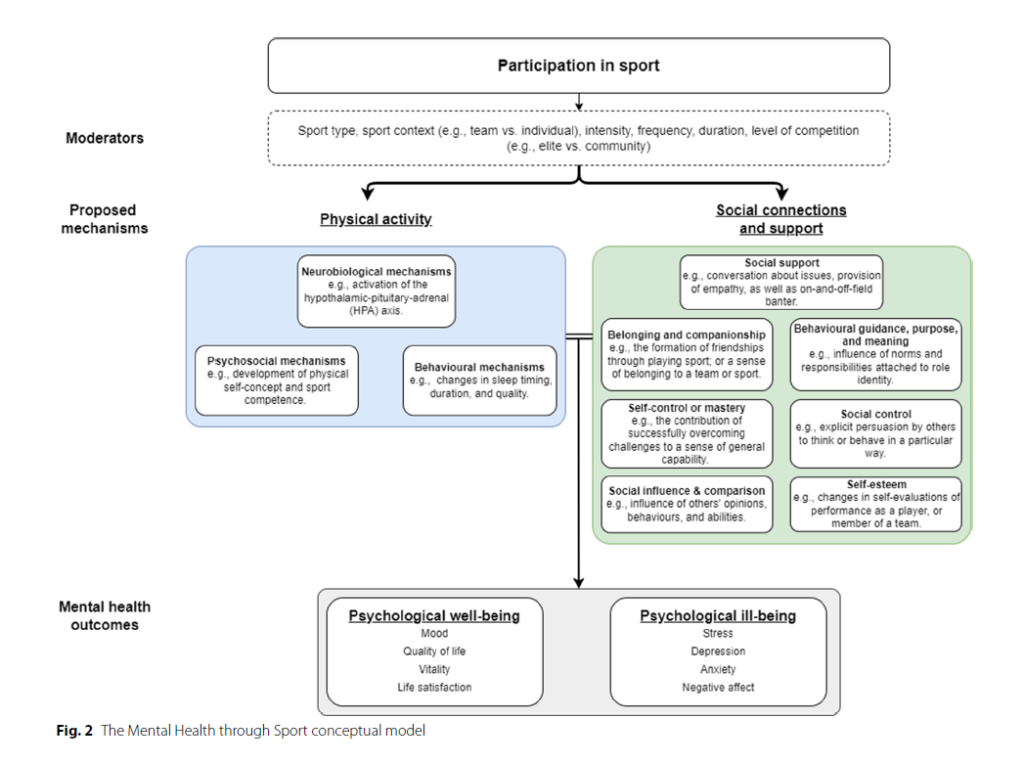
For proving my point of the impact of sports on mental health I read a scientific review called “The impact of sports participation on mental health and social outcomes in adults: a systematic review and the ‘Mental Health through Sport’ conceptual model“ which was conducted by Narelle Eather, Levi Wade, Aurélie Pankowiak and Rochelle Eime in 2023. The review screened studies that were published between 2012 and March 2020 to find out the relation between sport participation and mental health and social outcomes.

This is how the term mental health is defined in the review:

According to the World Health Organization, mental health refers to a state of well-being and effective functioning in which an individual realizes his or her own abilities, is resilient to the stresses of life, and is able to make a positive contribution to his or her community. Mental health covers three main components, including psychological, emotional and social health. Further, psychological health has two distinct indicators, psychological well-being (e.g., selfesteem and quality of life) and psychological ill-being (e.g., pre-clinical psychological states such as psychological difficulties and high levels of stress). Emotional well-being describes how an individual feels about themselves (including life satisfaction, interest in life, loneliness, and happiness); and social well–being includes an individual’s contribution to, and integration in society.

The review showed that adults who participate in sport activities on a regular basis have better mental health conditions: there was shown to be a strong relation to psychological well-being, like e.g. higher self-esteem and life satisfaction, and lower psychological ill-being, like e.g. a lower level of depression, anxiety and stress. Furthermore, sports can have a positive influence on social factors such as improved self-control, pro-social behaviour, interpersonal communication anda sense of belonging. Although this review researched the impact of sports on adults, it can still provide useful insights for the topic of sports education in schools and can be transferred to youths.

Specific outcomes of the review

Another interesting finding is that the positive effects are not as strong when it comes to elite-level sport: in contrary to community sport it can cause higher levels of psychological distress. Research in this field indicates that this fact is related to the high mental and physical demands on pro-athletes. The effects of the pressure to perform prove my point of the negative impact that performance oriented sports education can have on the students mental well-being.

Summary of findings in the review:

  • the positive effects of participating in sports even exceed the effects of other leisure-time activities or recreational activities
  • the effects occur in all different kinds of sports and across different life stages and sub-populations
  • there is a strong tendency for youths to drop out of community sports during adolescence, which leads to many people missing out on the positive effects of sports on mental well- being
  • over the past 25 years there was a consistently high rate of around 10% of adults affected by mental illness
  • especially among young adults there is a high level of loneliness and social isolation
  • improved vitality through sport participation
  • if adults participate in sports they chose themselves and that they enjoy, there is a relation between the intensity of the sports participation and the amount of mental health benefits
  • social factor of sports (social support, peer bonding) as an explanation for the benefits on mental and social health
  • evidence shows that participation in sports in adolescence and young adulthood prevent depression, anxiety and stress longterm
  • aspects that impact the improvement of psychological well-being:
    • psychological mechanisms: development of self-efficacy, opportunity for mastery, changes in self-perceptions, the development of independence, and for interaction with the environment
    • behavioural mechanisms: changes in sleep duration, self-regulation and coping skills
    • social mechanisms: social influence/social comparison; social control; role-based purpose and meaning (mattering); self-esteem; sense of control; belonging and companionship; and perceived support availability
  • improved perception of capability or value (within a team) -> improved self-esteem
  • self-efficacy: learning new skills, overcome challenges, self-control mastery -> confidence in the ability to cope with general life challenges
Deductions based on those findings:

  • It is important that one has the possibility to choose sports that they enjoy
  • Social bonding is an important  factor for unfolding the potential of sports. If social bonding is prevented by performance pressure, unhealthy competition and comparison, the potential of sports can not be reached
  • For students to learn new skills and experience self-efficacy and mastery, sports education needs to be tailored to the student’s individual capabilities and needs

Sources

Eather, Narelle; Wade, Levi; Pankowiak, Aurélie; Eime, Rochelle: The impact of sports participation on mental health and social outcomes in adults: a systematic review and the ‘Mental Health through Sport’ conceptual model. 2023
Interview preperation

When i go home for christmas i plan to hold interviews about peoples doomscrolling habits and thougts with my friends and family members. I have a big family that includes people of all different ages, genders and lifestyles, so it is a good group to interview to gain a wider understanding of peoples relationship to doomscrolling.

How to approach an interview 

When holding an interview, I think it is important to think of it as a qualitative conversation rather than a strict questioning session. My goal is to understand people’s experiences, perspectives, and meanings in their own words. According to Kvale and Brinkmann (2015), qualitative interviews should balance structure and openness, allowing the interviewer to guide the conversation while remaining flexible and responsive to the person you are interviewing, something I agree with and will try to follow.  

I will be using a semi-structured interview approach that provides a framework of themes and questions while still leaving room for follow-up questions and unexpected insights. 

Different approaches for different age groups 

I will be interviewing people of different ages and will have to adapt to the age and life situation of the participants. Younger participants often respond better to concrete examples and simple language, while adults and older participants may need more time to reflect and may appreciate being given space to elaborate on their answers. Adapting the interview style to different age groups helps ensure that their responses are authentic and that the participants understand the questions. 

Wording questions 

The wording of the different interview questions plays a central role in the outcome of the data collected. Open ended questions that begin with howwhat, or can you describe encourage participants to reflect and provide more detailed answers. Leading questions or questions that suggest a “correct” answer should be avoided, as they can influence responses and push people to provide the expected answer instead of their own thoughts (Kvale & Brinkmann, 2015). 

Interview template  

As mentioned, for my interviews I will use a semi-structured interview guide. This approach ensures consistency across interviews while still allowing flexibility to explore individual experiences in depth. 

The interview template includes: 

  1. Introduction:  
  • Brief explanation of the purpose of the interview and content.  
  1. Opening questions:  
  • These questions are meant to ease the participant into the topic and check their knowledge with the term. 
  • Have you heard the term “doomscrolling” before? 
  • If yes: What does it mean to you? 
  1. Main questions:  
  • How often do you find yourself scrolling through negative or distressing news or content? 
    (For example: daily, weekly, occasionally, or rarely.) 
  • What kinds of content do you tend to doomscroll? 
    (News, social media posts, videos, comment sections, specific topics, etc.) 
  • What usually triggers you to start doomscrolling? 
    (Boredom, stress, habits, current events, notifications, or something else?) 
  • Are there certain situations or moods that make you doomscroll more or less? 
    (For example: late at night, during stressful periods, when you’re alone, or when you’re busy.) 
  • How do you usually feel while you’re doomscrolling? 
  • How do you feel when you stop? 
  • Do you feel like doomscrolling serves a purpose for you in the moment? 
  • If yes: What do you think you’re getting out of it? 
  • Have you ever tried to stop or reduce your doomscrolling? 
  • If yes: What strategies did you try, and did any of them work? 
  • What usually pulls you out of a doomscrolling session? 
    (Time limits, emotions, interruptions, physical needs, other people, etc.) 
  • Looking back, how do you think doomscrolling affects your mental health, mood, or daily life overall? 
  1. Follow-up questions: Further questions based on the participant’s responses. 
  1. Closing: Giving participants the opportunity to add anything they feel is important.  

This structure is widely used in qualitative research because it combines reliability with flexibility and allows for rich, nuanced data collection (Kvale & Brinkmann, 2015). 

Reference 

  • Kvale, S., & Brinkmann, S. (2015). InterViews: Learning the Craft of Qualitative Research Interviewing (3rd ed.). Sage Publications. 
  • ChatGPT was used to help with grammar and spelling.

When a Research Topic Feels too Big

At some point in the research process, a topic can start to feel overwhelming. What once felt exciting and full of possibilities slowly turns into a space of uncertainty, where everything seems relevant and nothing feels clear enough. This is exactly where I currently find myself in my thesis journey.

My initial interest in playground design came from a simple question: why do most playgrounds still look the same? The more I read and explored, the more layers I discovered—safety regulations, standardization, adult-centered design, lack of child participation, educational values, urban constraints, and social expectations. Each of these aspects felt important, meaningful, and worth investigating. However, instead of clarity, this richness created a sense of being lost.

This moment of doubt made me question whether I should change my research question or narrow my scope. Should I focus only on school playgrounds? Should I shift my attention from playgrounds as spaces to the design process itself? Or should I concentrate on one specific issue, such as how children can be meaningfully involved in the early stages of design?

As I move forward, my goal is not to simplify the topic, but to clarify my role as a designer within it. Accepting that a research topic can feel too big is an important step toward shaping it into something focused, intentional, and personal.

Why Do Playgrounds Still Look the Same?

Public playgrounds have existed for little more than a century, yet their physical appearance has changed surprisingly little. Swings, slides, and climbing frames arranged on soft surfaces remain the dominant model in cities around the world. While these spaces are widely accepted as “safe,” they are often criticized for being repetitive, predictable, and limited in terms of creativity. This raises an important question: why do playgrounds still look the same despite decades of research on child development and play?

One key reason lies in the rise of risk-averse attitudes toward childhood. As Tim Gill explains in No Fear: Growing Up in a Risk-Averse Society, parents and institutions have increasingly prioritized supervision and risk elimination over children’s independent exploration (Gill, 2007). Concerns about injury and liability have led to strict safety standards, which strongly influence playground design. As a result, playgrounds became standardized environments optimized to minimize physical risk rather than to support imagination or curiosity.

Historically, early playgrounds were often supervised and included equipment that would be considered unacceptable today due to injury risks. However, from the mid-20th century onward, safety regulations and cost considerations encouraged uniform solutions. Impact-absorbing surfaces and fixed equipment became the norm, reinforcing a one-size-fits-all design approach. While research shows that the actual risk of serious injury in playgrounds is extremely low, fear continues to shape design decisions more than evidence does (Gill, 2007).

Another reason playgrounds remain unchanged is their adult-centered design process. Children are rarely involved in early design stages, and decisions are typically made based on adult assumptions about safety, order, and control. Brown et al. (2021) highlight that many playgrounds are designed to meet regulatory and accessibility requirements but fail to consider how children actually experience play. This often results in environments that are inclusive in theory but limited in playful engagement.

The persistence of similar playground designs is therefore not due to a lack of alternatives, but to a system shaped by fear, regulation, and adult perspectives. Reimagining playgrounds requires shifting the focus from eliminating risk to designing meaningful play experiences, where creativity, curiosity, and social interaction are valued alongside safety. For designers, this opens an opportunity to rethink playgrounds not as fixed installations, but as dynamic environments that support children’s development in richer and more diverse ways.

References

[1] T. Gill, No Fear: Growing Up in a Risk-Averse Society. London, UK: Calouste Gulbenkian Foundation, 2007.

[2] D. M. Y. Brown et al., “A Scoping Review of Evidence-Informed Recommendations for Designing Inclusive Playgrounds,” Frontiers in Rehabilitation Sciences, vol. 2, 2021.

[3] Future Foundation, Changing Patterns of Parental Time and Supervision, Report, 2006.

Communication: what is it, what makes it good, and how does it present itself? 

[1] states that “a central puzzle that people face, from a design perspective, is how to make communication possible that was once difficult, impossible or unimagined.” This problem is exacerbated when the communication topic is one’s own body awareness and proprioception – and it’s an even bigger problem when you add the extra element of being suspended in the air. 

I believe that a possible solution to my identified design problem is redesigning the communication strategies used in aerial silks teaching, but to do so, we must first understand what communication design actually is. [1] defines it as “an intervention into some ongoing activity through the invention of techniques, devices, and procedures that aim to redesign interactivity and thus shape the possibilities for communication.” We, as designers, must design communication strategies in the preferred form of interactivity of the receiver, eliminating the nonpreferred forms [1]. 

According to [2], good communication must be effective (achieving the objective), appropriate (conforming to the rules of a situation), satisfying (fulfilling expectations), efficient (achieving the valued outcomes relative to the amount invested), verisimilar (having clearly understood symbol-referent links), and task-achieving (accomplishing the correct interpretation). It is also located in perception rather than in behavior [2]. This means that good communication is evaluated by people’s subjective perception that a communicator and their performance are appropriate and effective [2]. 

Communication can be classified by channel (i.e., the medium, means, manner, and methods): verbal or non-verbal [3]. Verbal communication can be either oral (either face-to-face or via a distance) or written, whereas non-verbal communication is more subtle [3]. Non-verbal communication consists of facial expressions, gestures, body language, eye contact, touch, space, and personality [3]. Communication can also be classified by style: formal (as in, within the professional environment) or informal (also called word-of-mouth) [3]. 

In the context of aerial silks, effective communication must: 

  • Reference mutually understood signifiers for basic movements (e.g. Footlock, hip key, S-wrap, etc.) 
  • Be both visual (observation of a teacher/video) and verbal (naming the steps) 
  • Be memorable (or in its defect, have a communicator repeating the steps while the aerialist does the figure) 

Plus, I would add that communication in aerial silks does not terminate once the communicator gives the steps to the aerialist; but rather, it ends once the aerialist has climbed the silk and actually felt the figure in the air. 

– 

Sources:  

[1] M. Aakhus, “Communication as Design,” Communication Monographs, vol. 74, pp. 112-117, March 2007. 

[2] B. H. Spitzberg, “What is Good Communication?,” Journal of tbe Association for Communication Administration, vol. 29, pp. 103-119, January 2000. 

[3] R. Kapur, “The Types of Communication,” Multidisciplinary International Journal, vol. 6, pp. 1-7, December 2020. 

Design Activism (Part 5)

Welcome back to my blog, in my last post I focused on the importance to know that everything designed is in some way political and it is the job of the designer to think about this before publishing your own work. Besides, it is crucial to give people the opportunity to share their voices through your work. Do not speak for them, because you might not be able to express things in the same way as affected people.

Nick Adam, Associate Partner and Director of Span, shares:

Working across networks is powerful, and bringing people into the design process can help level the playing field. When done well, this work engages people who may not have had access to designers and are understandably unsure of what they need or how to participate. While this can extend a project’s timeline, a slower, more generous process often yields richer outcomes. A collaborative designer’s role must include guiding people to engage and participate meaningfully. (Meharry 2024, p. 21)

With this citation the persona of the collaborative designer is added to the mix. This shows that designers can use different methods to go about their work. They can either work on their own, just finishing projects for their customers, share their knowledge and skills through co-design or work collaboratively, which might add new dimensions to the design if done in a meaningful way.

This idea of collaborative design is a form of activism, as well. It gives a voice to people and involves them in the design process to which they usually do not have any access. Dave Pabellon, Associate Professor at the Columbia College in Chicage, argues that the word activism often has certain connotations and is viewed as something extreme, when sometimes it is just about connecting with affected communities. (cf. ibid. p. 22)

Language is important in every aspect of our lives, therefore, we have to think about how certain words make us feel, which connotations they might have. This can give us access to different groups of people. Similar to activism is “[…] the word activist, because in many ways, everyone is an activist – it just depends on what they’re activating and working toward.” (ibid. p. 22) He mentions that it does not make him more of an activist than another designer just because he is working with communities and they are working with big corporations, they just promote different things through their work. (cf. ibid. p. 22f)

It is interesting how easy it is to initiate a shift in mindset. Language is power, is a crucial statement to remember in communication design or all types of design really. And therefore, any designer should think about what kind of activist do they want to be? Do they want to influence a societal change or do they want to make the powerful people and corporations even more powerful?

To conclude, try to think about which kinds of products or services you want to advocate for. What kind of activist designer do you want to be and how will you be able to do that? Try to think about different ways of designing, do you want to work for certain companies, with certain people (co-design) or with communities (collaborative design)?

Source:

Meharry, Jessica (ed.): Design as Acitivsm. September 13-14, 2024. Symposium Proceedings. Institute of Design at Illinois Tech. California: ORO Editions 2024.

Design Activism (Part 4)

In my last post, I started talking about which questions you need to ask yourself as a designer in order to become a design activist and which questions you need to ask about your target group. This is a good starting point to make design that matters and promotes a greater cause.

Anne H. Berry states why it is important to be a design activist:

There are many ways in which design has been a contributor to racism and bigotry and negatively affected people’s lives. So part of our work is to recognize the ways in which these problematic histories and relationships exist, whether or not we’re choosing to identify or acknowledge them. You can stand at a distance, say that you aren’t political, and remain reticent about engaging with politics, but that’s just [not] how our society works. I don’t think it’s a reflection of reality.
Designers need to be ready to push back, stand our ground, and say, “No, we’re not going to do that.” We just can’t afford to be silent. There’s nothing neutral about design. Ever. (Meharry 2024, p. 12)

Even though, you might think your designs are not political and do not influence anyone in this direction, by not acknowledging problems you might just play right into the plans of some politicians or parties you might not want to help. And if you are doing this on purpose then be aware of the ideals you are conveying to others.

To be able to change society you have to be aware of where the power lies and what power is. Sara Cantor from the Greater Good Studio thinks power has “the ability to change someone else’s reality, or maybe even your own.” (ibid. p. 13) She talks about power being inherently neutral, only society interprets it as being either good or bad, but it is necessary if you want to bring about equitable social change. (cf. ibid. p. 13)

Furthermore, she talks about designers being involved in decision-making processes. This means, they are able to influence clients and stakeholders to a certain degree and, therefore, able to redistribute power. (cf. ibid. p. 14) For instance, powerful people usually want to stay powerful on their own, but if you tell them that their power will increase, if they share with others, because they have people behind them they can trust and work together with it could help shift their mindset slightly. (cf. ibid. p. 16)

Ahmad Jitan, Director of Organizing and Advocacy in the Inner-City Muslim Action Network, adds that it is important to remember: “[…] that I don’t need to be the voice for the voiceless. You just pass the mic. That’s where, at its base, it becomes a values conversation.” (ibid. p. 16) Do not try to speak for the people, but be their amplifier and give them the stage they need to be heard.

To conclude, be aware that each work you put out is somehow political and think about how you can strengthen the causes you want to support. Additionally, do not try to speak for others, give them the room they need and let their voices be heard.

Source:

Meharry, Jessica (ed.): Design as Acitivsm. September 13-14, 2024. Symposium Proceedings. Institute of Design at Illinois Tech. California: ORO Editions 2024.

2. Why Emotions Influence Design More Than Logic

In my first blog post, I talked about what emotional design is and why emotions play such an important role when we interact with products or interfaces. While writing it, I realized that emotions don’t just influence how something feels in the moment, but also how we make decisions and remember experiences afterwards.

In this post, I want to look a bit deeper into why emotions often have more influence on our behaviour than logic. To better understand this, it helps to take a short look at how our mind actually works and how decisions are made in everyday situations.

Modern psychology shows that emotions guide attention, decision-making, and memory. Kahneman (vgl. 2011, S. 21-51) explains this through a dual-system model: System 1 operates intuitively and emotionally, while System 2 processes information more consciously. Because most everyday interactions happen at the fast, intuitive System-1 level, emotional cues heavily shape the behaviour of the user.

Emotional responses are quicker and more influential than cognitive evaluations (vgl. Norman 2004, S. 13). This means that a product that feels for example trustworthy and friendly is more likely to be perceived as easier to use, even when functionality is identical to a product that does not evoke those feelings (vgl. ebda., S. 17-18).

However, emotions influence not only the moment of interaction but also future behaviour (vgl. ebda., S. 38, 65).

When a customer reflects on the product in order to decide what next to purchase or to advise friends, a pleasant reflective memory can overcome any prior negative experiences.

(Norman 2004, S. 88)

So customers or users consider how well a product fulfils their emotional needs, and those emotional needs are often shaped by prior experiences (vgl. Norman 2004, S. 70).

This would mean, that in our consumption-driven society, emotional resonance can also provide a competitive advantage e. g. for the following reasons:

  • Memorability: “memories can trigger (…) powerful, long-lasting emotions” (Norman 2004, S. 65)
  • Loyalty: Positive emotional associations strengthen attachment, for example to brands or interfaces (vgl. Norman 2004, S. 46, 88)
  • Motivation: Enjoyable interactions encourage repeated use (vgl. ebda., S. 136)
  • Connection: Emotional resonance differentiates brands in crowded markets (vgl. ebda., S. 38)

In conclusion of my first two blog posts, emotional design reminds us that products are not neutral. Every interaction and every product leaves a feeling, whether this is intended or not. Understanding how these emotions shape the perception, memory, and behaviour of customers or users allows designers to create experiences that truly resonate with people.

For me personally, emotional design is ultimately about empathy. It is about understanding people’s wants and needs and finding meaningful ways to respond to them. This is also why I chose this topic for my blog entries: to explore how I can achieve this while becoming a designer myself.

Literature

Desmet, P. (2002). Designing Emotions. Delft: University of Technology.
Kahneman, D. (2011). Thinking, Fast and Slow. UK: Penguin Books.
Norman, D. A. (2004). Emotional Design. Why We Love (or Hate) Everyday Things. New York: Basic Books.

1. What Is Emotional Design?

Hello and welcome to my very first blog post!
Even though life is pretty busy at the moment, I didn’t want to procrastinate too much, although I already did a little, haha.

In this post, I want to introduce my design and research topic for this semester at FH JOANNEUM. If you’re interested, feel free to comment, ask questions, or start a discussion. And please don’t be too hard on me about my English skills, I’m really trying my best, even though mistakes sometimes happen.

The topic I chose for my research is “Emotional design”. The main reason, why I chose this topic is that I believe empathy and compassion are things our world is missing right now, and I want to explore how I, as a future designer, can contribute to making it a little brighter.

So, let’s dive into it!

When we interact with a product or a digital interface, our first reaction is rarely logical. Instead, it is immediate, intuitive, and emotional (vgl. Norman 2004, S. 12-13). Don Norman (vgl. ebda., S. 7-10) argues in his book “Emotional Design – Why we love (or hate) everyday things” that we love or hate products because of the emotions they evoke. Emotional design builds on exactly this idea, that people experience products not only through function, but also through feeling.

Norman (vgl. ebda., S. 5) argues that emotions influence how effectively people use and especially appreciate products. By doing so, he describes three levels of emotional processing which together shape how users perceive and remember an experience:

  • Visceral → is automatic and happens very quickly; it is about first impressions and how something looks (vgl. ebda., S. 19)
  • Behavioural → is about how easy and enjoyable something is to use during action (vgl. ebda., S. 23)
  • Reflective → is about thinking back on an experience; it includes meaning, memories, and rational thoughts (vgl. ebda., S. 38)

Origins of Emotional Design

Although Norman came up with this concept in the early 2000s, its roots lie much deeper. Before taking emotional aspects into account, Norman focused mainly on utility and usability, function and form, for which he was criticized a lot, especially by designers themselves (vgl. ebda., S. 8).

In my opinion, this was the case because designers have always wanted to create an emotional response with their designs. Many of them already knew that this aspect is also very important for a product.

So, what has changed about how we define emotional design then?
I think it is the scientific understanding behind these emotional reactions. Desmet (vgl. 2002, S. 111-117) also notes that products evoke emotions through the meanings that users assign to them, which makes the emotional impact an inherent part of the design itself.

In the next blog post, I will take a closer look at why emotions influence our behaviour more strongly than logic and what this means for design.

Literature

Desmet, P. (2002). Designing Emotions. Delft: University of Technology.
Kahneman, D. (2011). Thinking, Fast and Slow. UK: Penguin Books.
Norman, D. A. (2004). Emotional Design. Why We Love (or Hate) Everyday Things. New York: Basic Books.

Technology at Home: From Domotics to Smart Plant Care

Can technology be limited to only reproducing or simulating nature? In many fields, it has been shown that technology can interact directly with real living organisms, influencing their care, growth, and management. For the purpose of this research, we explore some of these interactions, focusing in particular on those that take place within the domestic environment.

Today, technology no longer mediates only our relationship with nature, but also shapes the way we live in, organize, and care for our homes.

Domotics

The term domotics, or home automation, refers to a set of technologies designed to automate private homes and provide services that improve comfort, safety, energy efficiency, and system management.
In addition to common functions such as lighting and climate control, domotics also includes applications like multimedia entertainment systems, automatic plant irrigation, and systems for feeding pets.

From a structural point of view, domotic systems can be organized according to different architectures: v

  • Centralized – a single central device collects data from sensors and decides which actions to activate.
  • Distributed – each device has its own “intelligence”: sensors and actuators make local decisions and communicate with each other without a single central controller.
  • Mixed – a combination of both systems, where some devices process data locally while being coordinated by central units.

Smart Home

A more advanced definition is that of the smart home, as described by the European Commission. A smart home is a dwelling where an organized home automation system connects electrical devices to manage lighting, heating, cooling, ventilation, security, audio-video systems, energy control, door and window automation, presence sensors, and technical alarms. [2]

By connecting previously separate systems into a single network, the smart home reduces the need for human intervention and increases comfort and safety. A smart home therefore represents a more advanced stage of domotics

We can distinguish five levels of home automation, [1] but the term smart home applies only from the third level onward. This evolution from domotics to smart homes can be clearly understood by observing how plant care changes within the domestic environment.

Level 1 – Homes with intelligent objects

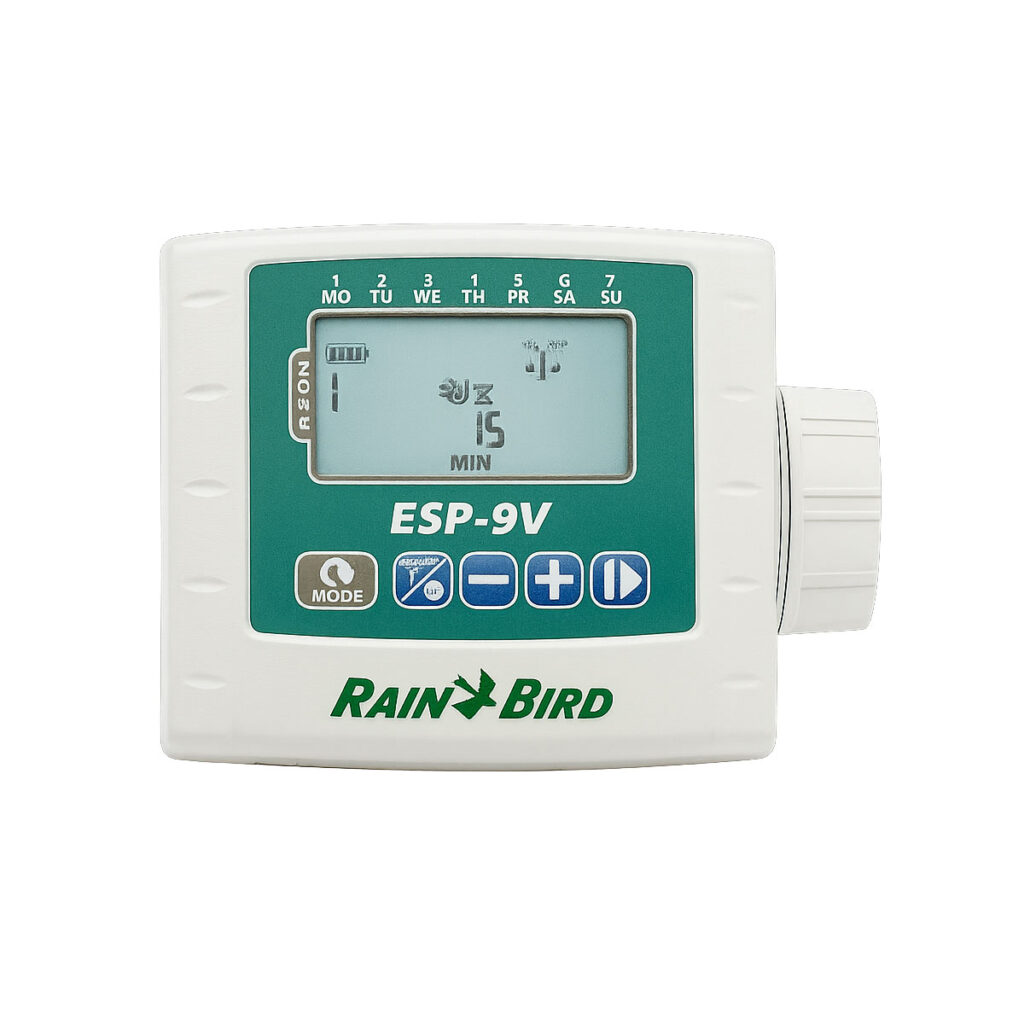
At the simplest level, an automatic irrigation system performs a repetitive task by watering plants at fixed times, without sensors or environmental feedback.

Level 2 – Homes with communicating intelligent objects

At this level, soil moisture sensors can indicate when a plant needs water, but irrigation still happens in a mostly autonomous and isolated way.

Level 3 – Connected homes

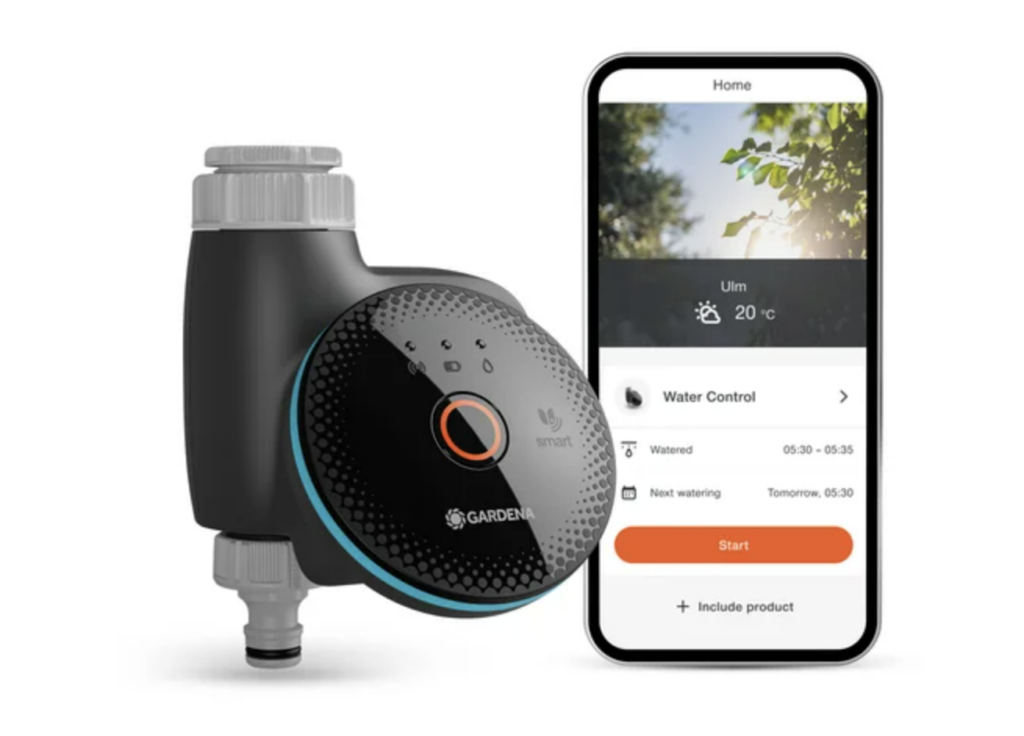
Sensors and irrigation actuators coordinate with each other, and users can control plant watering remotely, for example through a mobile application.

Level 4 – Learning homes

At this stage, irrigation systems can self-regulate by analyzing data over time, adapting watering patterns based on user behavior, climate conditions, and seasonal changes.

Level 5 – Attentive homes

In the most advanced systems, the activity and location of people and objects are constantly monitored. This information is used to anticipate needs, such as advanced sensors that monitor plant conditions and provide real-time feedback, automatically adjusting irrigation, light, and environmental conditions.

[1] D. Ardu, M. G. Bellino, and G. Di Giorgio, Domotics and Smart Homes. Italy: EDISCO Editrice, n.d. Domotics_and_smart_homes_

[2] B. Dvoršak, J. Havelka, E. Mainardi, H. Pandžić, T. Selič, and M. Tretinjak, Smart Home Systems. SHVET Project, co-funded by the Erasmus+ Programme of the European Commission, n.d. Smart_Home_systems_FINAL

[3] Elecrow, “Arduino Automatic Smart Plant Watering Kit,” Elecrow Electronics, n.d. [Online]. Available: https://www.elecrow.com/arduino-automatic-smart-plant-watering-kit.html. [Accessed: n.d.].

[4] TechPunt, “Xiaomi Mi Flower Care Plant Sensor,” TechPunt, n.d. [Online]. Available: https://www.techpunt.nl/de/xiaomi-mi-flower-care-plant-sensor.html. [Accessed: n.d.].

[5] GARDENA, “Smart Irrigation Control,” GARDENA GmbH, n.d. [Online]. Available: https://www.gardena.com/at/produkte/bewaesserung/sprinklersystem/smart-irrigation-control-bewaesserungssteuerung/970658701.html. [Accessed: n.d.].

[6] RainPoint, “Manuals, Downloads & Support,” RainPoint Irrigation, n.d. [Online]. Available: https://www.rainpointonline.com/pages/manuals-downloadssupport. [Accessed: n.d.].

[7] GARDENA, “Smart System,” GARDENA GmbH, n.d. [Online]. Available: https://www.gardena.com/it/c/in-evidenza/prodotti/smart-system. [Accessed: n.d.].