The next step in this project is to define my project outcome in greater detail and assess the feasibility of my idea. Once this direction has been established, the following phase of the prototype will focus on preparing and refining the testing process. The intended medium fidelity prototype will be the final step for this section of research and will hopefully provide new insights and results for the chapter of investigation surrounding this topic.
Solution Vision
Over the past year, I have explored the topic of train stations in Germany and investigated how the User Experience could be improved for travellers. This process has involved a combination of online research, surveys, prototyping, and user testing. Through these activities, I have gradually narrowed the scope of the project, shifting my focus from the broader train station environment to the more specific and manageable context of the platform itself. This refinement has allowed me to concentrate on a smaller physical space while still addressing a wide range of possible interactions. The first round of testing played a significant role in shaping the direction of the project. It provided valuable insights into the structure of the problem and highlighted the needs and expectations of participants. One of the key findings was the recurring desire for additional information and clearer guidance. Participants expressed that more support during moments of uncertainty would improve their experience and help them navigate the station environment more confidently. These findings encouraged me to explore solutions that respond directly to these needs and contribute to a more intuitive and supportive travel experience.
The vision for this project is to investigate how light can function as a flexible and adaptive orientation system on the platforms of German train stations. Through my research, I found that the information currently available on platforms often needs to be translated into forms of interaction that better respond to users’ changing needs. Rather than relying solely on fixed signs and static displays, this project explores how light itself could become a medium for communication and guidance. Light offers several characteristics that make it particularly suitable for this purpose. It can be switched on and off when needed, adjusted in brightness and opacity, directed towards specific areas, and adapted to different situations. This flexibility creates the possibility of an orientation system that is not tied to a single location but can change according to the circumstances of the station environment. In addition to its practical function, light can influence how people perceive and experience a space by contributing to atmosphere, increasing comfort, and enhancing the feeling of safety, particularly during the evening.
I imagine the concept as a series of lighting panels integrated into the ceilings above the train platforms. During regular operation, these panels could provide ambient illumination for the station. However, when additional information is required, they could transform into an active guidance system, communicating directly with passengers through dynamic visual cues. The lighting system could extend across the entire platform, offering invitations or directions tailored to different trains and routes. Rather than requiring travellers to search for static signs, information could appear exactly where it is needed. For example, the light could indicate where a train will arrive, guide passengers towards the correct boarding area, or highlight the most efficient path through the platform. It could also adapt to changes in real time, responding to delays, platform alterations, or varying passenger flows.
Technical Feasibility
At this phase of the project, the technical feasibility can only be estimated and will require further investigation and planning at a later stage of the process. However, the proposed technical setup of using ceiling-mounted projectors to display objects and wayfinding systems onto the floor is not a new invention and has already been implemented in a variety of contexts. One example is the entrance area of Accenture Dienstleistungen GmbH at their location in Essen, Germany. In this project, projectors mounted on lighting tracks were used to display text and arrows on the floor in order to support orientation within the space (derksen lichttechnik, 2020). Another example is the development of personalised wayfinding and guidance systems for elderly people in private homes. This project, initiated by the University of Applied Sciences Vorarlberg in Austria in 2012, aimed to support elderly people in their spatial orientation and improve their independent mobility (Kempter, 2012).
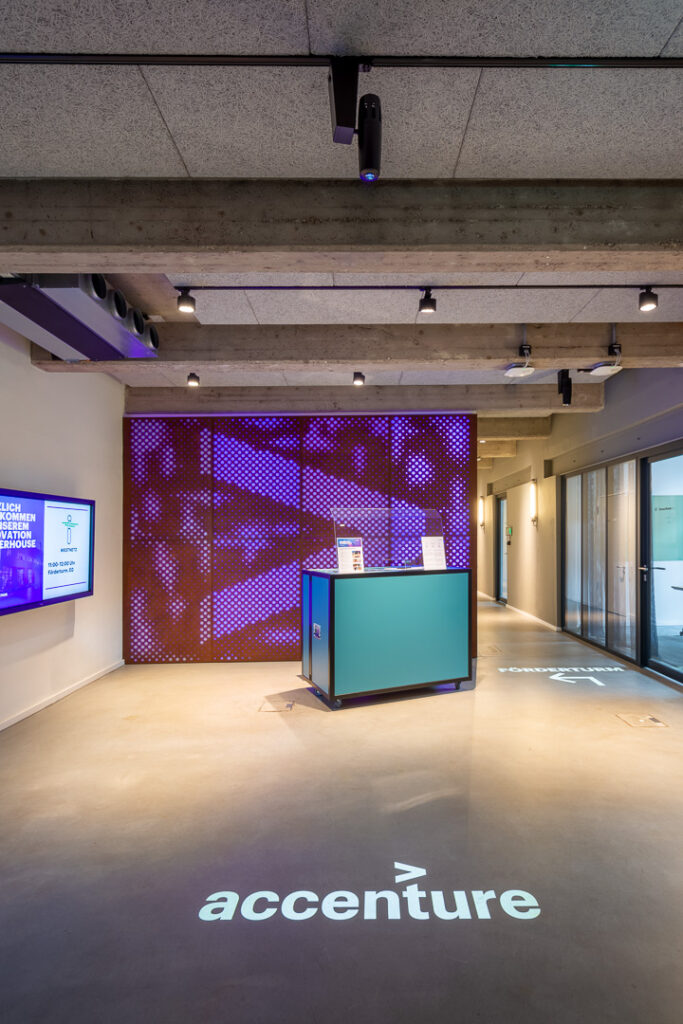
Although these examples were implemented in environments very different from a train platform, they demonstrate that projector technology capable of displaying guidance systems already exists and is actively being used. They also illustrate that such systems can be customised and adapted to the needs of individual users. Furthermore, they show that relatively simple interventions can enhance a space and improve the experience of navigating through it.
Prototype Iteration
To test this idea not only through a digital prototype but also in a real-life setting, the development of an experience prototype is planned as the next step. This type of prototype makes it possible to move beyond testing interactions on a screen and instead simulate the user experience, including emotions, pain points, behaviours, and physical interactions (Medium, 2025).
Planning for Conduction
The prototype is planned to be tested within an academic setting using students as participants. This environment is not ideal, as it does not represent the full diversity of users found in German train stations. However, considering the opportunities currently available and the limitations of time and resources, this testing phase can still serve as a valuable first step in understanding users’ reactions to the proposed setup. At a later stage, the testing could be repeated with a broader and more diverse participant group in order to further validate the findings and gain a wider range of insights. Nevertheless, the planned study already provides an opportunity to test the concept at an early stage without requiring a significant investment of time or money, while allowing the prototype to be implemented quickly in a controlled environment.
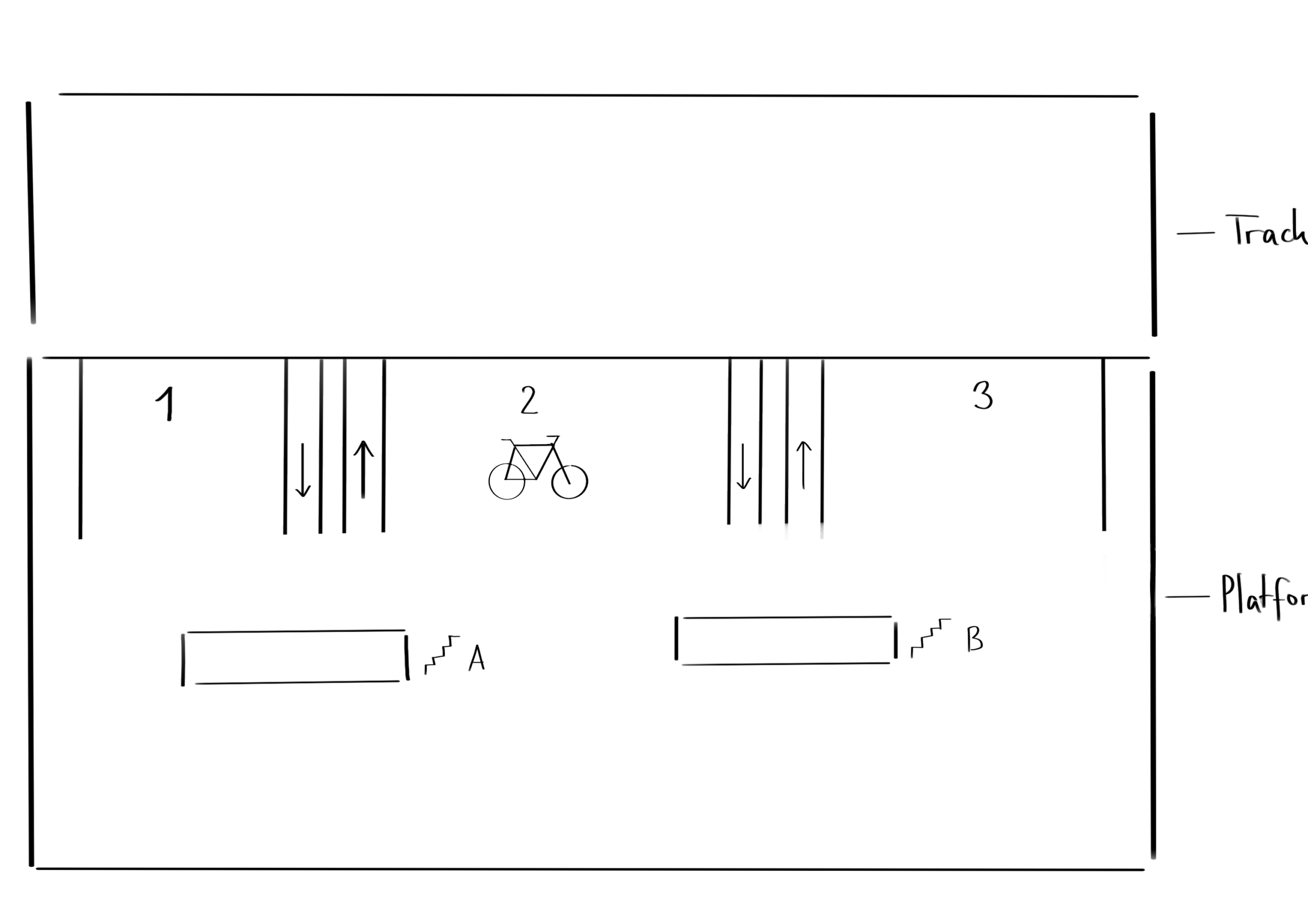
Preparations for the testing include mapping the space that will represent the train platform, preparing the materials that will be provided to participants, writing the instructions for the testing procedure, and planning the camera setup used to document the sessions. To build the prototype environment, sticky tape, markers, and sticky notes will be used. A rectangle constructed from tape on the floor of the testing room will represent the train platform. A second rectangle positioned alongside it will represent the train tracks. Participants will be instructed to remain within the platform area and avoid entering the space representing the tracks. In addition to these spatial boundaries, the prototype setup will include coloured lines and symbols representing the projected light elements that would eventually be integrated into the platform environment. These elements will indicate where the train is expected to stop, where the train doors will be located, designated areas for boarding and alighting passengers, and the position of the bicycle carriage on the platform. Once participants enter the prototype environment, they will be given a number of tasks to complete within the setup. At the end of the testing session, they will receive sticky notes on which they can record their thoughts, identify problems, suggest improvements, and add any additional wishes or ideas they may have. If time allows, the prototype will be tested with two to three groups consisting of three to five participants each. This approach would make it possible to observe different group dynamics and collect feedback from a larger number of users, providing a broader range of opinions and ideas for future development.
Information Gathered
The process of defining the idea for the final outcome in greater detail has been an important step within this project. By examining both the concept itself and its technical feasibility more closely, I have gained a clearer understanding of the direction of the project and what I aim to achieve by its conclusion.
In addition, the planned experience prototype will provide valuable insights into whether the proposed idea can function within a real physical environment. It offers the opportunity to identify strengths and weaknesses early in the process and to assess how users respond to the concept before investing further resources into its development.
Next Steps
The next stage of the project will involve conducting the physical prototype testing, filming and documenting the sessions, and collecting feedback and suggestions for improvement from participants. Once the testing has been completed, the findings will be analysed, written up, and documented. The outcomes of this phase of the project will also be summarised in a video format. Both the written documentation and the video can then serve as a foundation for the next chapter of the project, supporting further research, additional testing, and continued development of the concept.
Bibliography
derksen lichttechnik. (29. September 2020). Guidance system and lighting design in the Accenture office. Von derksen lichttechnik: https://www.derksen.de/en/projekt/guidance-system-and-lighting-design-in-the-accenture-office/ abgerufen
Kempter, P. D. (01. May 2012). GUIDING LIGHT. Von AAL: https://www.aal-europe.eu/projects/guidinglight/ abgerufen
Medium. (2. July 2025). Experience Prototyping: Blending Physical, Digital & Spatial Elements. Von Medium : https://medium.com/@harsh.mudgal_27075/experience-prototyping-blending-physical-digital-spatial-elements-74a7257bfbc9 abgerufen
