A system map is a visual tool used to understand complex environments by illustrating how different actors, elements, and relationships are connected. Within a research process, it helps designers move beyond isolated touchpoints and instead grasp the bigger picture: how users, organizations, and external influences interact with one another. By mapping these relationships, dependencies and opportunities for improvement become more visible, enabling more informed, holistic, and connected design decisions.
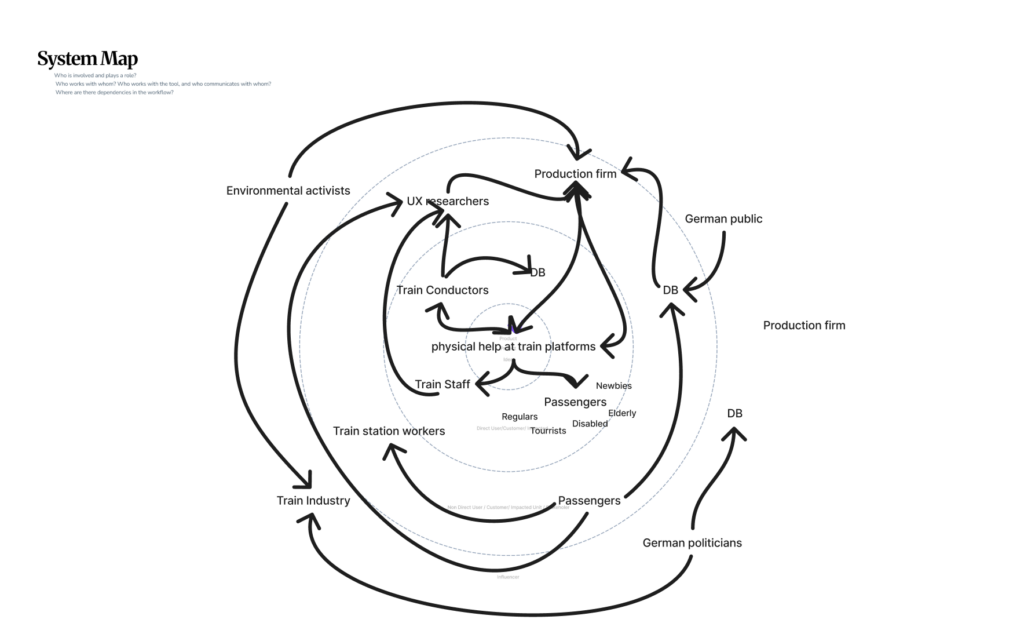
The project I am currently working on focuses on German train stations and explores how physical UX and UI design can improve the user experience on train platforms. At the center of my system map is the intended product: a form of physical assistance at train platforms. This core element is surrounded by the direct users, customers, and those most immediately impacted. In this case, these include train conductors, train staff, Deutsche Bahn (DB), and most importantly, passengers. These passengers represent a diverse group, ranging from regular commuters and tourists to elderly individuals and people with disabilities. Each bringing different needs and challenges to the experience.
Beyond this inner circle are indirect users and stakeholders, such as train station workers, UX researchers, and production teams responsible for developing and implementing solutions. Larger institutional actors, including DB and associated organizations, also play a key role in shaping the system.
The outer layers capture broader societal influences, such as the German public and environmental activists, who indirectly affect priorities and decision-making processes.
The connections between all these actors are visualized through arrows, representing communication and interaction within the system. The density and direction of these connections highlight the dynamic, interconnected, and often circular nature of influence, revealing the complexity of the system as a whole.
Overall, this system map demonstrates that improving a seemingly simple experience requires understanding a complex network of stakeholders, making it a valuable tool for gaining deeper insight and a clearer overview of all relevant factors.
Prototyping is an important step in the design and development process. A prototype can be described as an early sample, model, or version of a product that is built in order to test a concept or process. It is typically used to validate a product’s design and functionality and to gather feedback from potential users before investing in mass production. In addition, prototypes help define the specifications and requirements for the final product (Arena, 2026). Because of this, prototyping often serves as a valuable starting point for projects that aim to create digital or physical products.
Within the field of design, prototypes are commonly categorized into three different stages: low, medium, and high fidelity. In this context, the term fidelity refers to the level of detail, accuracy, and realism of a prototype in comparison to the final product (Sorodoc, 2025). A low-fidelity prototype is intended to provide a rough representation of an idea and to communicate the basic concept of a product. These prototypes are usually simple, inexpensive, and quick to produce, which allows designers to visualize ideas and gather early feedback without the risk of significant costs.
Medium-fidelity prototypes contain more accurate and detailed elements and begin to demonstrate specific functions and interactions. At this stage, the prototype offers a clearer impression of how the product might look and behave, making it suitable for more structured user testing and feedback.
High-fidelity prototypes represent the stage closest to the final product. They contain a high level of visual detail and interactive elements and allow realistic testing before final production decisions are made. Due to their complexity, these prototypes typically require the greatest investment of time and resources.
The current research project focuses on user experience design at German train stations and investigates how the experience on train platforms could be improved for passengers. After examining the theoretical background of this topic over the past six months and building a solid foundation of knowledge about the relevant parameters, design considerations, and possible approaches, it is now a logical next step to move toward more practical exploration. Prototyping offers the opportunity to translate theoretical insights into tangible experiments and to explore how the project’s ideas could be implemented in practice.
Low fidelity prototype
To explore this practical dimension, three different low-fidelity prototypes were conceptualized and developed. Each prototype approaches the same problem from a slightly different perspective while using different materials and forms of interaction. The first prototype was created as a paper prototype, which is a simple yet effective method for developing an early representation of an idea using inexpensive and easily accessible materials. Paper prototyping allows designers to test concepts quickly and to discard or modify them easily while still gathering useful insights and feedback (msg, 2026). For this prototype, a sketch of a train platform was created to represent the situation of a train arriving at a station. Participants were asked to place circles representing different passenger groups on the platform drawing. The task was to indicate where they believed these users would position themselves in order to board the train. This exercise aims to identify whether there are recognizable patterns in passenger placement and whether the current signage and orientation systems on train platforms provide enough information for users to intuitively position themselves.
The second prototype also uses paper as the main material but aims to create a more interactive and flexible representation of the scenario. In this version, a simple model of a train platform was built that includes small figures representing passengers. Participants can move these figures around the platform in order to simulate their behavior when a train arrives. Similar to the first prototype, the central question concerns the positioning of passengers and the information they might need to find an optimal location for boarding. After completing the task, participants are invited to draw directly on the prototype to indicate where additional signage, markings, or guidance systems could improve the clarity and usability of the platform. This approach allows users not only to demonstrate their behavior but also to actively propose potential design improvements.
The third low-fidelity prototype explores a digital approach instead of a physical one. For this prototype, the collaborative digital workspace Miro was used. Miro functions as an online whiteboard that allows multiple users to interact with visual elements in a shared digital environment (Miro, 2026). Within this digital workspace, a simplified representation of a train platform was created. Participants join the Miro board and are asked to place themselves within the platform layout in the position where they would choose to wait for an approaching train. After this initial round, participants are allowed to add visual guidance elements such as lines, colors, signs, or other indicators that they believe would help clarify where passengers should stand. Once these elements have been added, the task is repeated so that the results can be compared, and it can be observed whether the additional guidance elements improve user behavior and decision-making.
Those three prototype will be tested and the results and observations will be evaluated to see whether one of the approaches could be beneficial and whether one of the prototypes has the potential for further improvement.
Information gathered
Exploring these different prototyping approaches has provided a deeper understanding of the role prototypes play in the design process. Prototypes are not only useful for testing digital interfaces but can also be applied to spatial and physical interaction scenarios such as those found in public transportation environments. Through the upcoming testing phase, valuable insights are expected to emerge regarding how passengers interpret spatial information on train platforms and which design interventions could help improve clarity and usability. These findings will contribute to the broader investigation of user experience design in railway environments.
Next Steps
The next step in the project will involve testing the three prototypes with participants in order to gather feedback and behavioural observations. The collected information will then be analysed to determine whether one of the approaches proves particularly effective and whether any of the prototypes show potential for further development. Based on the insights gained during this phase, the most promising concept may be refined and further developed into a medium-fidelity prototype that allows for more detailed testing and continued exploration of improved user experience design solutions for train platforms.
Reference
Arena. (2026). What is a Prototype? Von Arena: https://www.arenasolutions.com/resources/glossary/prototype/ abgerufen
Miro. (2026). Von Miro: https://miro.com/de/ abgerufen
msg. (2026). Paper prototype. Von User Experience Methods Catalogue: https://user-experience-methods.com/en/04_design/paper-prototype.html abgerufen
Sorodoc, I. (11. March 2025). Low-Fidelity vs. High-Fidelity Prototyping: Key Differences Explained. Von ProtoPie: https://www.protopie.io/blog/low-fidelity-vs-high-fidelity-prototyping abgerufen
Noisy Flesh is compelling precisely because it resists the dominant paradigm of seamless, efficient wearable interaction. Instead of functioning as a “second skin,” the textile becomes an intrusive, body-altering prosthesis that reshapes posture, gesture, and sonic possibility. This shift from integration to transformation is conceptually strong and refreshingly critical.
The decision to employ audification grounds the sonic output in the material behavior of the textile. We do not simply hear mapped gestures. We hear the friction, compression, and instability of conductive threads under strain. This creates a tight perceptual loop between force and sound, reinforcing the sense that the prosthetic extensions are alive and responsive. The weighted extra limbs and collision-based sensors further introduce physical unpredictability, allowing gravity and inertia to participate in the composition. In this way, agency emerges from material dynamics rather than computational complexity.
What stands out most is the deliberate rejection of intuitive control. The interface demands negotiation, asking the performer to invent movement strategies specific to its deformable structure. As a design approach, this is bold and philosophically aligned with embodied and entangled interaction frameworks. At the same time, it raises productive questions about mastery and sustainability in performance: how the performer internalizes, or resists, the prosthesis over time would be an important area for further exploration.
The grotesque, low-frequency sonic aesthetic coherently aligns with the visual metaphor of redundant body parts, yet it also feels intentionally constrained. Expanding the sonic vocabulary in future iterations could deepen the expressive range and complicate audience expectations of what such a body might sound like.
Overall, Noisy Flesh makes a meaningful contribution to sound-centered interaction design by treating the interface not as a transparent tool but as an active, deforming collaborator. It proposes a model of wearable technology that amplifies tension rather than minimizing it, allowing sound to emerge from the friction between body, textile, and resistance.
The final step of this research phase was to conduct the planned surveys at two German train stations. Due to changes in my travel schedule and time availability since the last blog post, I conducted the interviews in Berlin and Munich instead of Augsburg as originally planned. Despite this adjustment, I was able to approach a diverse range of people at both stations and collect valuable data and insights through the interviews. The final step of this phase was to organize, review, and analyze the collected data.
Questioning
Before bringing the survey to the train stations, I first tested the questions with family members and friends. This initial test phase aimed to evaluate whether the questions were understood as intended and whether they were concise and easy to answer. The feedback was largely positive, and only minor adjustments were necessary. As a result, I was able to proceed confidently to the next stage of the research.
The first round of on-site interviews took place in Berlin during one of my trips. At Berlin Main Station, I spoke with three participants and asked them the prepared survey questions. The selected individuals represented a diverse group and provided a range of interesting and varied responses. With the participants’ consent, I recorded the conversations, which was particularly helpful during the data analysis phase.
The second survey location was Munich Main Station. There, I interviewed five people in the area around the train platforms. Once again, the participants were diverse in terms of age, gender, and language background. All interviewees agreed to voice recording and provided detailed answers to the questions. However, the high level of background noise, caused by ongoing construction work in addition to the typical sounds of a busy train station, posed a minor challenge. It made conversations more difficult and resulted in some recordings being less clear than desired.
Despite these limitations, I am satisfied with the overall outcome of the survey and the number of participants I was able to engage within a relatively short period of time.
Analysis
To take a deeper look at the data collected during the surveys, I began by transcribing the voice recordings into text format. I chose to retain the original languages of the participants, resulting in transcripts in both German and English, depending on the language used during the interviews. Writing out the individual responses allowed me to gain a clear overview of the answers and to identify the range of opinions, experiences, and ideas shared by the participants.
Here is the overview I created for the interviews:
Some of the responses were expected, while others were surprising and addressed aspects I had not personally considered. For the rating-based questions, the scores varied between two and seven, reflecting a wide range of individual experiences. Responses to the question about problematic locations within train stations differed significantly between participants. In contrast, the question asking whether improvements to train platforms would lead to a better user experience was answered with “yes” by all participants.
The final question, which asked participants to share their own ideas, was not answered by everyone, as it was the most challenging and time-consuming question. Nevertheless, the responses I did receive were highly insightful. One of the biggest surprises was that a participant identified the service center as the most problematic area within a train station. This answer stood out to me because it was not something I would have mentioned based on my own travel experiences. However, it is a valid and understandable perspective and just as valuable as the other responses.
One particularly encouraging moment was when a participant suggested improvements in information structure, clearer signage, and floor-based guidance systems to enhance orientation. These ideas closely align with my own thoughts and proposed directions for the project, and it was reassuring to see that another user independently identified similar areas for improvement.
Information Gathered
My main takeaway from this method of data collection is that users experience train stations in very different ways, both during their journeys and while spending time at the stations themselves. However, one point all participants agreed on was that train stations are in need of further improvement, and that these changes should be implemented as soon as possible.
I also found that while users identify multiple problematic areas within train stations, improvements to train platforms in particular would be highly appreciated. Participants expressed the belief that enhancing platform design and functionality would significantly improve their overall travel experience in Germany.
Overall, the survey provided useful and insightful responses that fulfilled my initial goal of gaining a broader and more diverse understanding of everyday user experiences. I therefore consider this research step to be both successful and valuable for the continuation of my project.
Final Conclusion
Over the course of the last ten blog posts, I had the opportunity to explore my chosen topic from multiple perspectives and to experiment with different research approaches. This process served as an important first step into the subject and made it clear to me how engaging and complex this field is, as well as how many opportunities there are for further exploration, experimentation, and design. It also showed me that user experience at German train stations is a real-world challenge with significant potential for improvement and innovation.
For these reasons, I plan to continue researching this topic in the future. My goal is to further broaden and deepen my knowledge while moving closer to developing concrete and meaningful solutions to improve the user experience at German train stations.
As mentioned in the previous blog post, the final step of the project at this stage is to prepare and conduct surveys at at least two train stations in Germany. To achieve this, all preparations for the survey execution must be carefully planned and completed. Once this is done, the questions can be tested in a pilot phase before being used in a public setting.
Locations
To gain a more diverse insight into the opinions and experiences of travelers at German train stations, I plan to conduct surveys at two different locations. If the project is continued at a later stage, this approach could be expanded to include additional stations in order to further broaden the range of perspectives. For the current phase, however, two locations are realistic given the available time and resources. The selected stations are Augsburg Main Station and Berlin Main Station. These two locations differ significantly in terms of size, geographical context, and user demographics, which should provide insights from a wide range of travelers in varying situations.
Questions
There are several types of questions that can be used in a survey, including open-ended and closed-ended questions, as well as formats such as nominal scales, Likert scales, rating scales, and yes-or-no questions. To begin the survey, closed-ended questions are particularly useful because they offer predefined answer options, making them quicker and easier for participants to respond to. They also allow for the collection of clear, comparable data. These questions can then be followed by open-ended questions, which do not restrict responses and give participants the freedom to express their thoughts in their own words, allowing for deeper qualitative insights (Content Square, 2024).
For this project, I will primarily use closed-ended questions, specifically rating-scale questions and yes/no questions. These formats provide participants with clear answer options, making the survey quick and easy to complete while still producing structured and comparable results. In addition, I will include a small number of open-ended questions to gather more detailed and in-depth responses. Overall, the survey will be designed to be brief, keeping the required effort for participants as low as possible. A shorter questionnaire also allows me to approach more people within a limited time frame, enabling the collection of a wider range of perspectives.
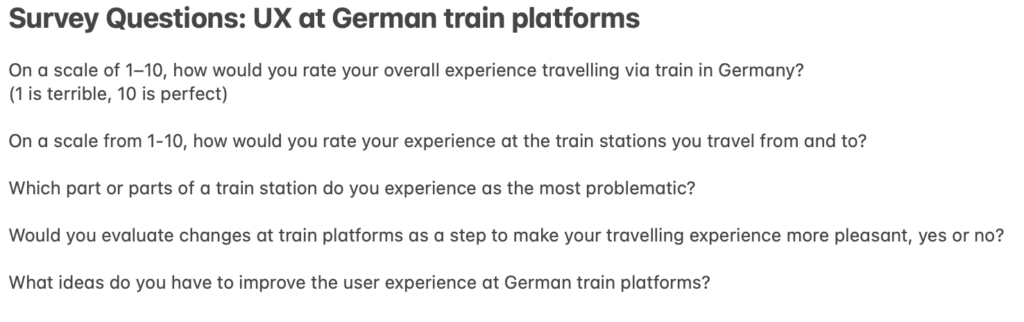
The questions I’m planning to ask are:
Approach
Before finalizing the questionnaire, I will test the questions with people in my immediate surroundings. Based on their feedback, I will make the necessary adjustments to improve clarity and effectiveness. This process will result in a finalized version of the questionnaire, which will then be used at the selected train stations.
I plan to record the interviews after obtaining the participant’s consent. As I do not intend to ask any personal or sensitive questions, data protection regulations should not pose an issue when using the collected information. The interviews will be recorded on my phone and later used to support a more accurate and efficient analysis of the data. I plan to visit each selected location one to two times and approach as many travelers, station employees, and other relevant individuals as possible.
Information Gathered
This week, I was able to develop a more detailed and finalized plan for the survey process. I also deepened my understanding of different question types and identified those most suitable for this project, allowing me to integrate them effectively into my research design.
Next Steps
I will allocate up to two weeks for conducting the surveys, particularly because the research location in Berlin requires travel. During this period, I aim to collect as many responses as possible to analyze the data thoroughly and draw meaningful conclusions.
References
Content Square. (5. November 2024). 24 on-site survey questions to ask your users. Von Content Square: https://contentsquare.com/guides/surveys/questions/ abgerufen
The next step in this project is to develop a survey strategy that enables me to gather insights into train travel in Germany from the perspective of other travelers. To achieve this, I will first establish a solid research foundation and prepare the necessary framework to begin conducting interviews in the coming weeks.
Survey planning
A crucial starting point for any survey is defining its purpose and objectives. It must be clear why the survey is being conducted, what goals it aims to achieve, and which hypotheses or questions it seeks to answer. A well-defined purpose helps ensure that the survey is goal-oriented and produces meaningful results (Public Affairs, 2026). In the context of this project, conducting a survey is essential because individuals experience train stations in very different ways, resulting in a wide range of needs and expectations. These insights cannot be fully understood without engaging directly with users on site. The primary goals of the survey are to identify key pain points, explore potential solutions, and broaden my understanding of user experiences at train platforms. The main questions guiding this research are how travelers currently experience train stations, which problems they encounter, and how these issues might be addressed.
Once the purpose is defined, identifying the target group becomes the next important step. A clearly defined audience helps ensure that the collected data is relevant and representative of actual users (Team, 2025). For this project, the target group is broad and diverse, encompassing anyone who interacts with the German rail system. However, particular attention will be given to those who regularly use or work on train platforms, such as travelers, station staff, conductors, and onboard personnel. These groups are most directly affected by platform design and are therefore likely to provide valuable and experience-based insights.
The next step is developing the survey questions. A helpful approach is to initially collect all potentially relevant questions and then organize them into a logical structure that allows for smooth questioning and clear answers. It is also important to determine the appropriate question formats and response types (Team, 2025). Both the questionnaire and the chosen survey method must suit the target group as well as the project’s time and resource constraints (Public Affairs, 2026). For this study, I have chosen an in-person interview format conducted directly at selected German train stations. While the final set of questions is still being developed, it will be completed before the next blog post.
Before launching the survey, testing and finalization are essential. Conducting a pilot test with a small group helps identify unclear questions and areas that require adjustment (Public Affairs, 2026). I plan to carry out this test run with people in my immediate surroundings, who can provide honest and constructive feedback to improve the questionnaire before it is used in a public setting.
Once all preparations are complete, the survey can be conducted. Here the questions are brought out to the public and are closely monitored while they’re active, to ensure a smooth and targeted process (Public Affairs, 2026). During this phase, the survey will be carried out in person at multiple train stations and on several dates. While conducting the interviews, I will observe which questions are easy or difficult to answer, how willing people are to participate, and the nature of the responses provided. This ongoing reflection will help assess the effectiveness of the survey design.
The final step is the analysis and presentation of the collected data. At this stage, the information will be processed, interpreted, and structured using appropriate analytical methods. The results will then be transformed into a clear and accessible format to make them understandable for others (Public Affairs, 2026). The specific analytical approach will be determined once the interviews are completed and the nature, scope, and quality of the data are fully understood.
Information Gathered
By taking a closer look at survey methodology and the process of conducting surveys, I gained a clearer understanding of the necessary steps involved and how these can be applied to my project.
Next Steps
The next step will be to develop the concrete survey questions and determine the locations where the research will be conducted. Once these aspects are clearly defined, I can carry out the survey and collect the intended data. After the results have been gathered, they will be combined with the insights obtained so far to begin developing concepts aimed at improving the user experience at German train stations.
References
Public Affairs. (2026). What are the most important steps in conducting an opinion poll? Von LinkedIn: https://www.linkedin.com/advice/0/what-key-steps-conducting-public-opinion-7yphf abgerufen
Team, Q. E. (13. November 2025). How to Conduct a Survey: 7 Steps That Actually Work. Von ProProfs Qualaroo: https://qualaroo.com/blog/how-to-conduct-a-survey/ abgerufen
To continue this project, my next step is to define the primary areas of focus more clearly. By narrowing down the scope, I aim to clarify the overall goal of the project and establish a stronger foundation for the next research phase. This will include conducting interviews, initially with people in my immediate surroundings and later with travelers directly at train stations.
Problem zone train station
In 2024, six of the lowest-ranked train stations in Europe were located in Germany. According to the annual train station ranking published by the international Consumer Choice Center (CCC), the bottom six positions out of 50 evaluated stations were occupied by Bremen Hauptbahnhof, Munich-Pasing, Berlin Zoologischer Garten, Berlin-Gesundbrunnen, Berlin Ostkreuz, and Essen Hauptbahnhof. The ranking evaluates criteria such as information management, the availability of elevators and escalators, and overall accessibility (Gang, 2024). These aspects are essential for a positive user experience, yet they remain insufficiently addressed at many German train stations. As a result, Germany continues to perform poorly in European-wide comparisons, highlighting the urgent need for improvement in this area.
Fokus area
Given the scope, time constraints, and available resources of this project, it would not be realistic to redesign every aspect of a train station. Concentrating on a specific area allows for deeper analysis and more meaningful outcomes. Based on my recent observations in Hamburg and Augsburg, I identified train platforms, along with their entry and exit points, as the areas where the highest number of recurring pain points and challenges occur. Therefore, this project will primarily focus on the user experience of train platforms, while still considering the broader station context in which they are embedded.
Current status
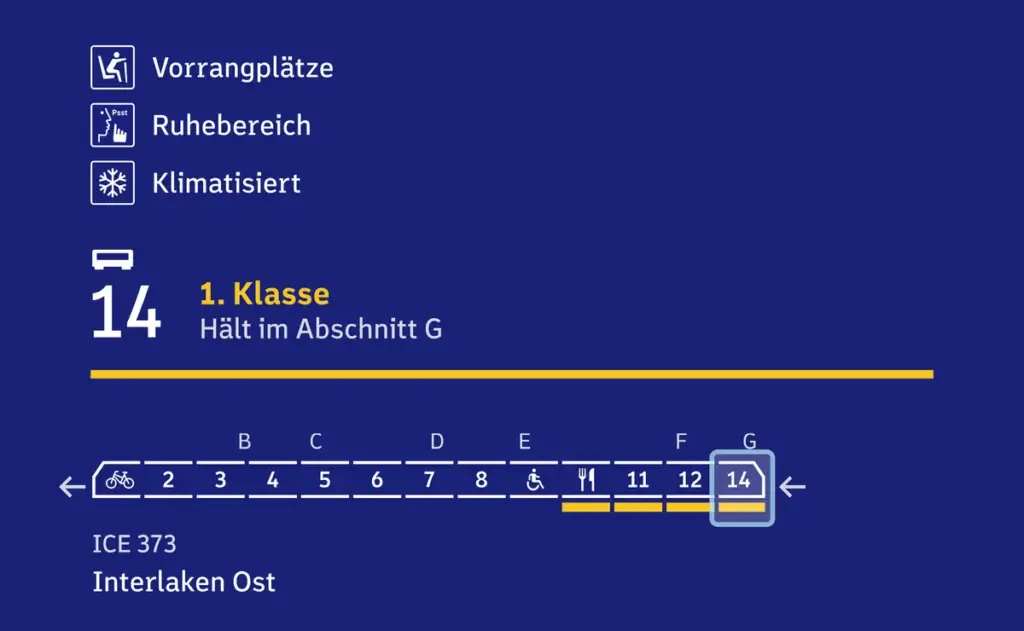
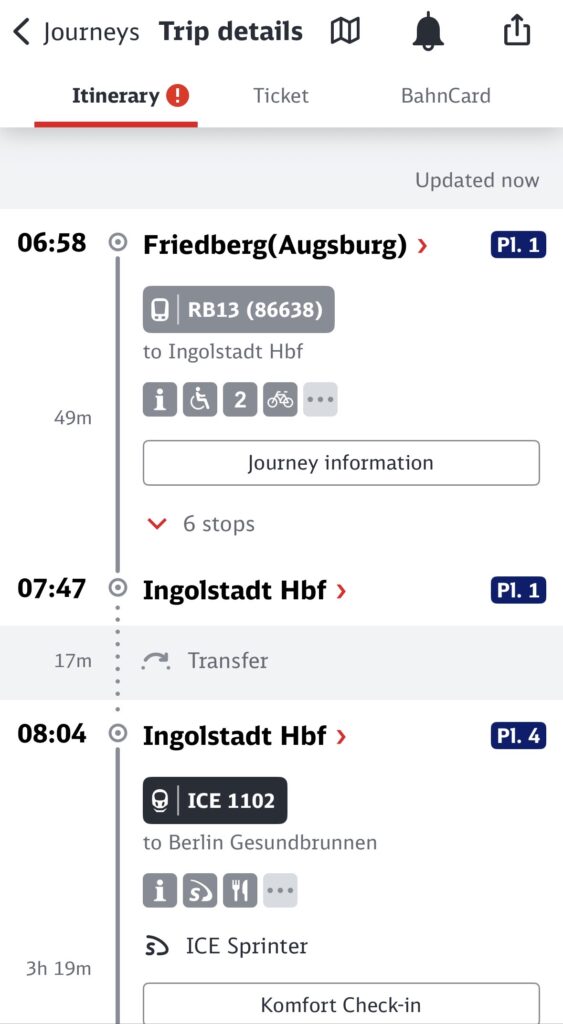
Today, passengers can access a wide range of information about their train both before and during their journey. Prior to arrival at the station, users can consult platforms such as Bahnhof.de, which provide details about train stopping positions, carriage formations, and onboard equipment. Travelers can see where specific carriages will be positioned on the platform, including family compartments, bicycle areas, wheelchair-accessible spaces, priority seating, dining cars, first-class sections, and sleeping cars. Additional information such as the availability of air conditioning, Wi-Fi, or onboard services is also provided (DB, 2025).
DB. (2025). See the stopping position, train formation and train equipment at a glance. Von DB: https://www.bahnhof.de/entdecken/wagenreihung abgerufen
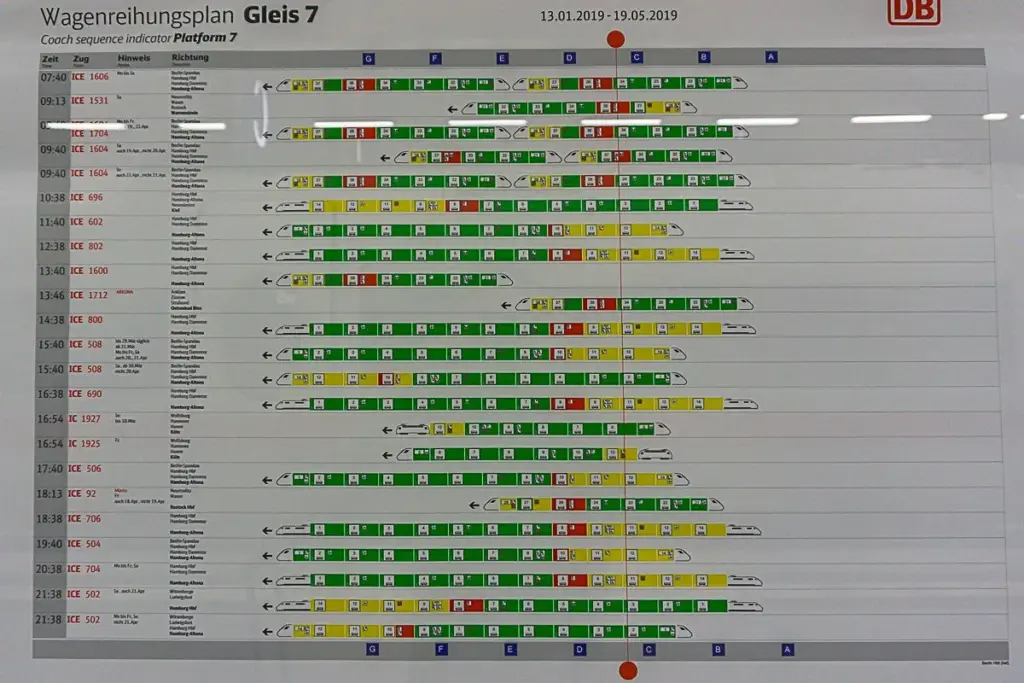
Upon arrival at the station, further guidance is available. Large information boards in entrance areas indicate the platforms assigned to each train, while digital displays on the platforms themselves provide updates on arrival times, delays, and platform changes. This information can also be accessed via the DB Navigator app or through Deutsche Bahn’s online portals. Platform sections where trains are expected to stop are typically displayed on boards, online, or in the app. In addition, many platforms feature carriage plans that show which trains will stop there and where individual carriages will be located. However, this analog system works best for regularly scheduled trains and often fails in cases of last-minute platform changes (Wagner, 2022).
Wagner, J. B. (2022). An Easy Guide to Deutsche Bahn – Navigating German Train Travel. Von Hamburg Beyond: https://hamburgandbeyond.com/an-easy-guide-to-deutsche-bahn-navigating-german-train-travel/ abgerufen
Overall, a large amount of information is already available to help make train travel more structured and predictable. However, a major challenge is that many travelers are unaware of these resources or do not know how to use them effectively. Another issue is the inflexibility of certain systems, which can quickly become confusing or ineffective when schedules change. While digital platforms are more adaptable, they can still be outdated or incomplete. Existing information systems therefore need to be communicated more clearly and made more accessible to all users.
Information Gathered
Through this blog post, I clarified which areas of the train station I want to focus on and gained a better understanding of the current status quo at many German stations. This forms a solid foundation for the next phase of the project.
Next Steps
The next phase will involve designing and preparing surveys to be conducted in January. This includes selecting appropriate locations, defining participant groups, and developing targeted questions. Once the survey results are collected, I will combine them with the insights gathered so far and begin developing concepts aimed at improving the user experience at German train stations.
References
DB. (2025). See the stopping position, train formation and train equipment at a glance. Von DB: https://www.bahnhof.de/entdecken/wagenreihung abgerufen
Gang, M. (01. January 2024). Die sechs schlimmsten Bahnhöfe Europas sind alle in Deutschland. Von 24 Rhein : https://www.24rhein.de/leben-im-westen/verkehr/bahn-schlechtesten-bahnhoefe-europas-deutschland-ranking-bremen-hbf-berlin-essen-hbf-nrw-deutsche-92713050.html abgerufen
Wagner, J. B. (2022). An Easy Guide to Deutsche Bahn – Navigating German Train Travel. Von Hamburg Beyond: https://hamburgandbeyond.com/an-easy-guide-to-deutsche-bahn-navigating-german-train-travel/ abgerufen
While travelling from Augsburg to Hamburg I was able to conduct primary research and observe the user behaviour, the spatial organization, the signage system and potential pain points on those two sites.
User behaviour
By observing travellers, conductors, and visitors at the two selected train stations, several differences in user behaviour and atmosphere became apparent. At Hamburg Main Station, people generally appeared stressed and in a hurry. Many travellers were running or rushing toward their platforms, contributing to a fast-paced and tense environment. The noise level was noticeably high, caused by constant conversations, shouting, phone calls, frequent announcements, and the general soundscape of the surrounding city. The user group was highly diverse, with people of different ages, body types, and cultural backgrounds, and I heard a variety of languages including German, English, and Turkish. Users engaged in a wide range of actions: standing, sitting, walking quickly, running, talking, and calling out to others. Despite these variations, their shared goal in most cases was to move efficiently from point A to point B using public transport.
In contrast, the atmosphere at Augsburg Main Station felt significantly calmer and less rushed. Although the noise level was elevated, mainly due to conversations, announcements, and construction sounds, it remained within a more tolerable range. The user group was still diverse in age and appearance, but linguistically I predominantly heard German. The observed activities resembled those in Hamburg, but with a greater emphasis on sitting, standing, and waiting, and far less running or shouting. Nevertheless, the fundamental goal for most users remained the same: to travel smoothly from one place to another via public transport.
Spatial organization
Regarding spatial organization and design, I observed that Hamburg Main Station is structured around a large bridge that spans across all tracks and connects the various entrances to the platforms. Access to the platforms is provided via stairs and elevators. Each platform stretches from section A to F, making them quite long. Both the platforms and the walkways on the bridge are relatively narrow, which contributes to a crowded and chaotic atmosphere, especially when people move in different directions at the same time. Overall, the space feels dark and confined, as the station is enclosed and only limited natural light enters the building. However, the design language throughout the station is coherent, and the areas belonging to the train company maintain a consistent visual identity.
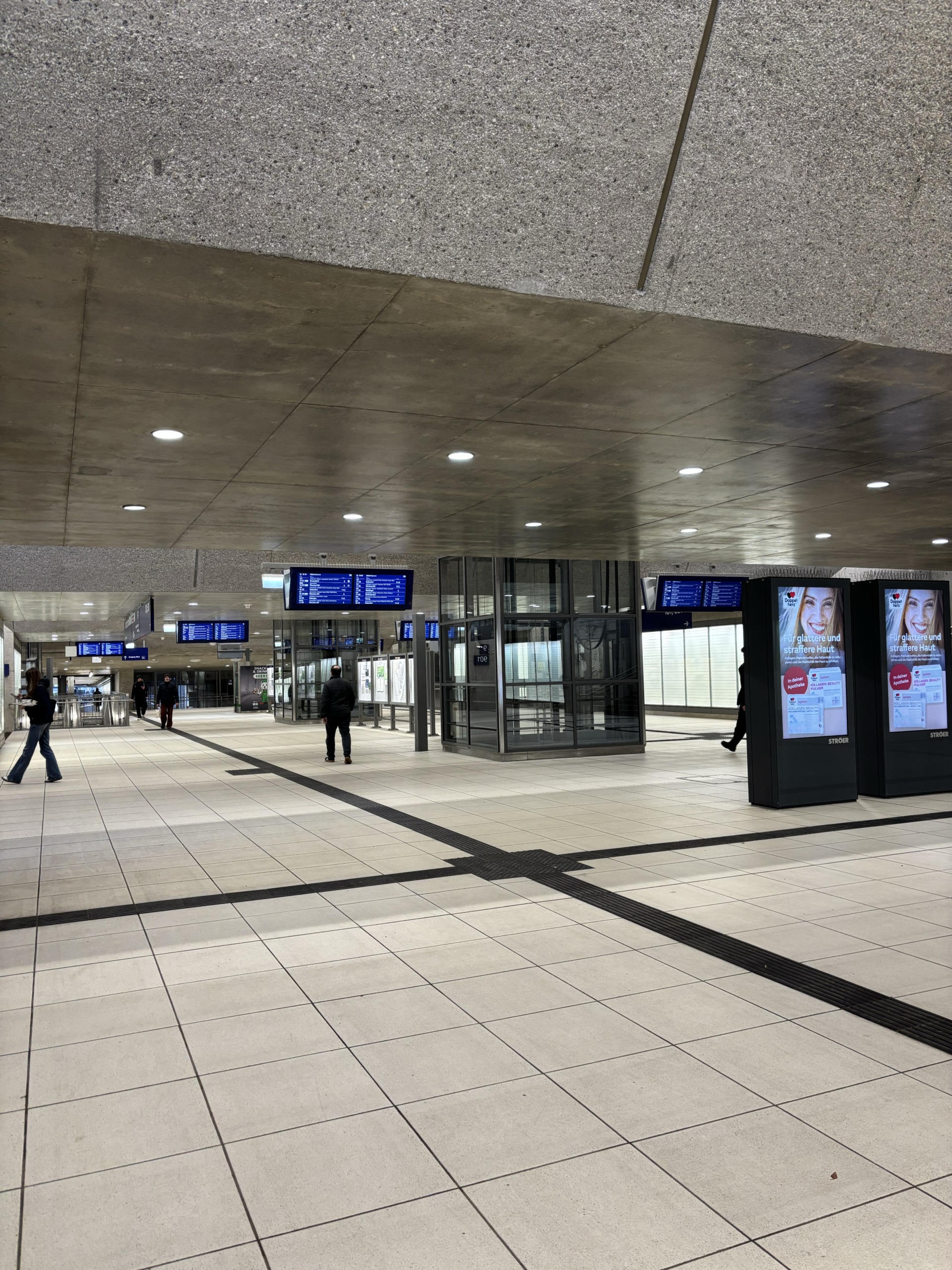
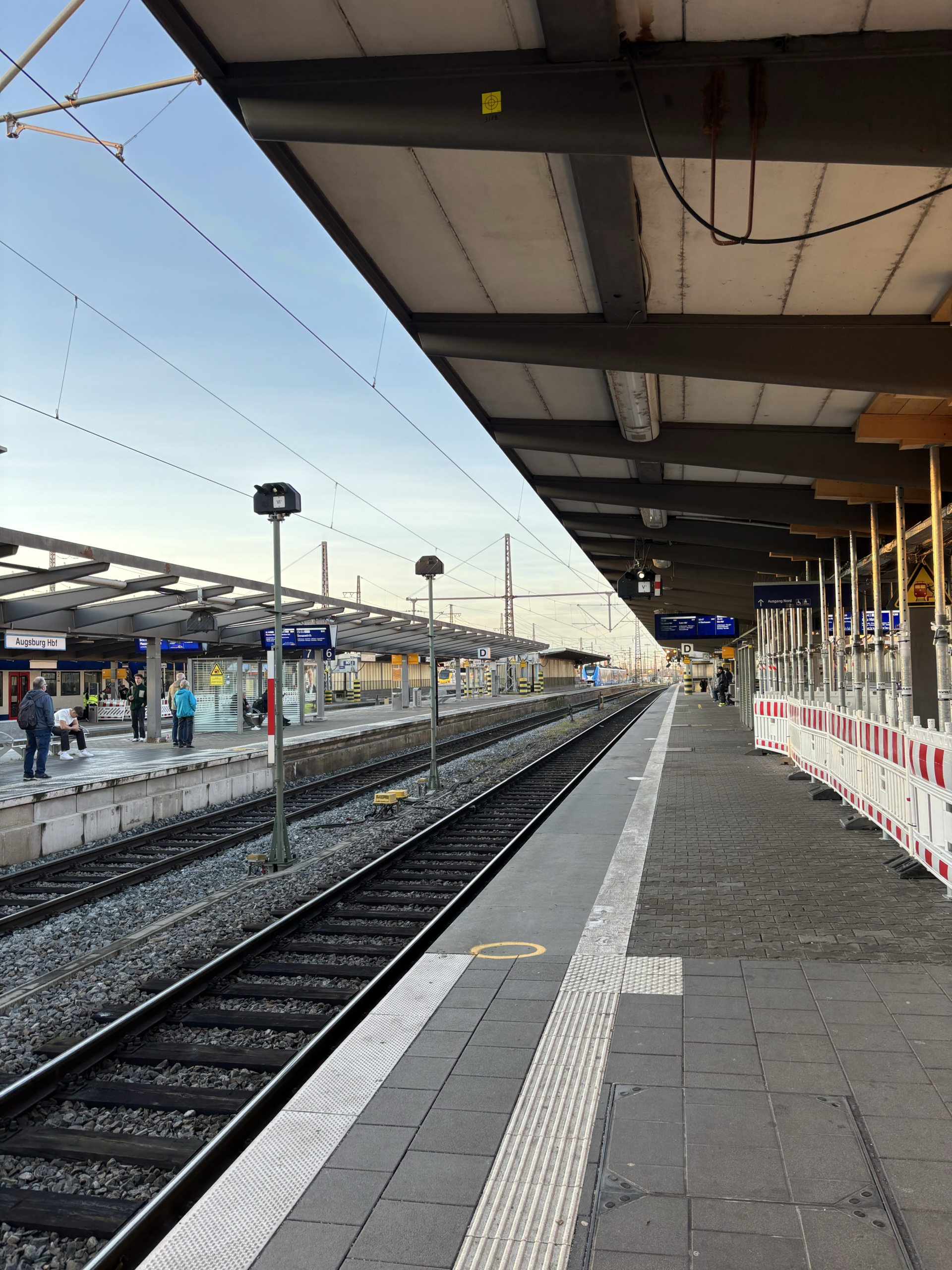
In Augsburg, the platforms are connected through an underground tunnel that runs beneath the tracks. Users can access the platforms via stairs, escalators, or elevators. The platforms here are shorter, ranging from section A to D, but they are noticeably wider than those in Hamburg. Despite the increased space, their current condition is not ideal, which can make navigating them, especially with luggage, somewhat challenging. The overall environment feels more open compared to Hamburg, as the station is not fully enclosed and benefits from abundant natural light. However, due to ongoing construction work, the visual appearance and general atmosphere lack coherence at the moment.
Signage systems
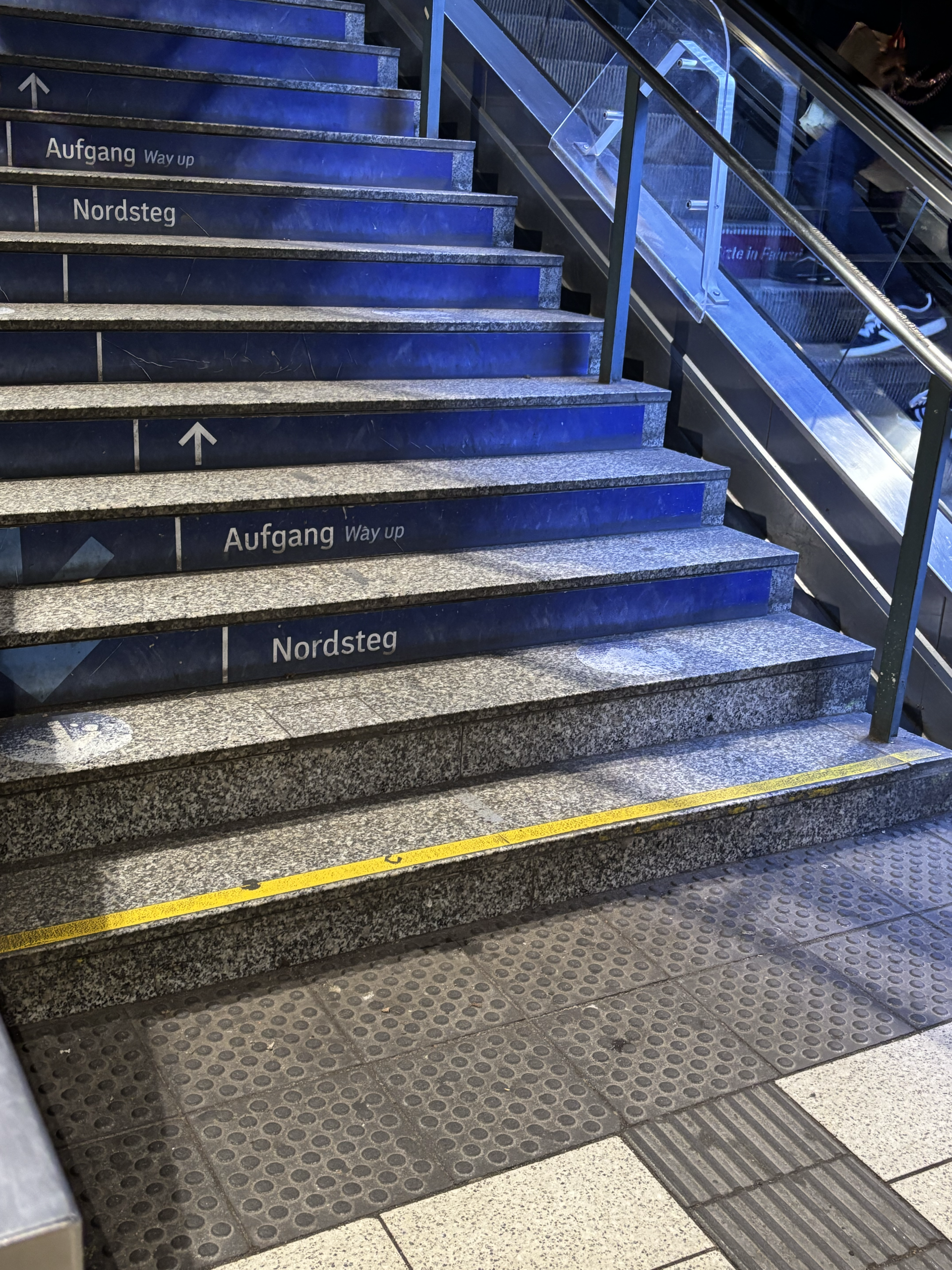
Focusing my attention on the signage systems revealed notable differences between the two stations. At Hamburg Central Station, the signage system is generally well-designed and functional. The panels follow a coherent visual language in terms of layout, iconography, and color usage. However, I did observe instances where signs were misleading or where additional guidance would have been helpful but was missing. There were also attempts to incorporate directional cues on stairs and floors to indicate walking directions. Unfortunately, many of these markings were either worn down and therefore difficult to see, or unclear in their meaning, which reduced their usefulness.
In Augsburg, signage is used more sparingly, and there are no visible attempts to integrate alternative forms of way finding beyond traditional overhead signs. While the existing system is understandable and relatively clear, its minimal nature sometimes makes it challenging for users to locate specific destinations within the station.
Potential pain points
For the pain-point analysis, I began by reflecting on my own experiences before examining the difficulties I observed in other travellers during my time in the stations. One of the most significant pain points I personally encountered in Hamburg was the narrowness of the walkways leading to the platforms, combined with the absence of escalators. This made navigating the station, especially with luggage, physically demanding and time-consuming. Additionally, the platforms were packed, as many people tended to gather in the central area rather than spreading evenly along the full length. This made it difficult to stand without obstructing others and complicated the process of boarding the train.
In Augsburg, my main challenges were related to missing signage, which caused me to spend a considerable amount of time searching for the public restrooms, and the inconsistent design and varying quality of the platforms. These inconsistencies made traveling with a suitcase uncomfortable and sometimes impractical.
Beyond my own experiences, I also observed several potential pain points faced by other travellers. In Hamburg, many people seemed to struggle with reaching their destinations quickly due to the narrow pathways, opposing walking directions, and the long distances across both the bridge and platforms. Orientation was another notable challenge: some signage was missing, and the exact stopping positions of trains on the platforms were not always predictable, leaving passengers uncertain about where to wait.
A frequent issue appearing in Augsburg was the limited number of exits on the platforms. When trains arrived and passengers needed to disembark, congestion formed quickly, and people often had difficulty identifying the most efficient route to continue their journey.
Information Gathered
This week, I evaluated and analysed the primary data I gathered by conducting first-hand observations on two German train stations. The insight that I gained will need to be supplemented with more observations and also surveys, to get a more general and wholistic picture of the current situation at train stations around Germany. But already paying closer attention to components that are interesting for this project has helped me develop a more realistic look on the problem at hand.
Next Steps
My next step in this project is to define the primary areas of interest for the further research and identify opportunities for targeted design interventions. I also want to conduct further observations and surveys at one or two train stations and collect more closer insights into the experience of various people.
Since I’m travelling by train a lot myself and I planned on a trip from Graz to Hamburg via train, I wanted to use the opportunity to conduct some research.
For that, I chose the method of observation, which is an effective and easy to realize way of gathering information and qualitative data. To do that effectively, the preparation beforehand should consist of defining goals, choosing the right setting without causing disruption and prepare tools for documentation. First, the research objective must be defined. For the project, the focus point is the observation of people’s actions in the surrounding of a German train station and also the physical design of those spaces. Additionally, the research goals must be defined under consideration of the research objective. There the goals are to find out more about user behavior, especially at train platforms, observe spatial organization and how the stations are designed, how signage systems are incorporated and used and lastly where potential pain points might lay.
Next is the selection of the right setting. Due to my travel plans my locations are going to be the train station in Augsburg and Hamburg. Those two match the description of German train stations and bring the advantages that I get to conduct my observations in two very different setting in size and location, and I might be able to compare my findings afterward. Since there are a lot of people going to be at the setting, the selection of participants won’t be necessary. Conducting the observations with not knowing participants will provide realistic and diverse output that reflects the real-life situation.
The last step is to plan the observation and to record data. The date for the research will be my travel days and to document my findings I plan to take notes both in physical and digital ways, but also to take pictures of the locations and their design and layout. After my trip has ended, I’m going to analyze my results and see if I can generate some general assumptions that will help my in the further course of the project (Williams, 2025).
Information Gathered
Through my research on the topic of observation I’m now able to conduct this method usefully and intentional to gather primary data that I can use for the further stretch of the project.
Next Steps
The next planned step is to conduct research by observing the train stations in Augsburg and Hamburg and documenting my findings.
Reference
Williams, B. (2025). Step-by-step guide to conducting observational research. Von Insight 7: https://insight7.io/step-by-step-guide-to-conducting-observational-research/ abgerufen
As mentioned in the previous blog post, I decided to examine my project through the lens of established UX heuristics. I chose Jakob Nielsen’s Ten Usability Heuristics and began interpreting them in a way that makes them applicable to my topic:
1. Visibility of system status A system should keep users informed about what is happening through timely and appropriate feedback. In physical spaces, this can be implemented through clear, easily visible signage that shows users where they are and how they can move to their desired location. Real-time updates, such as waiting times, delays, and recent changes, should be displayed clearly on timetables, information screens, or digital boards to keep travelers constantly informed.
2. Match between the system and the real world A system should communicate in a way that feels familiar and intuitive to users. This involves using established mental models to create environments that are easy to interpret. In the real world, this can be achieved through concise text, clear instructions, and comprehensible audio announcements. Additionally, pathways, iconography, and layout patterns should align with users’ expectations of how public spaces typically function.
3. User control and freedom Users should be able to easily undo mistakes or exit processes when necessary. This can be interpreted quite literally in real-world environments: users need multiple accessible and clearly marked entry and exit routes. The ability to navigate freely and safely through a space is essential for maintaining a sense of control.
4. Consistency and standards Consistency reduces cognitive load by allowing users to apply previously learned knowledge to new situations. In spaces, this may mean maintaining similar structures, layouts, and visual identities across different areas of a environment or even across multiple locations. Consistent color schemes, typography, signage design, audio cues, and general spatial organization help create a cohesive and predictable experience.
5. Error prevention Systems should anticipate common errors and be designed in ways that reduce the likelihood of users making them. In public places, implementing this heuristic can be challenging due to the diversity of users and the unpredictability of human behavior. Nevertheless, strategies such as well-marked pathways, abundant signage, and clear audio guidance can help. Visual guidance that subtly limits or directs user choices may also prevent confusion or missteps.
6. Recognition rather than recall Users should not have to rely heavily on memory. Instead, relevant information should be visible or easily accessible. Implementing this into physical spaces, may involve a thoughtful combination of visual, audio, and tactile cues placed strategically to support user decision-making. Careful placement is essential: the goal is to make important information visible while avoiding overwhelming users with unnecessary details.
7. Flexibility and efficiency of use Systems should cater to users with varying levels of skill and experience. For physical environments, one might consider shortcuts or direct routes for experienced users, while providing clearly signposted pathways and supportive instructions for newcomers, or people with disabilities. This dual structure ensures efficient navigation for all.
8. Aesthetic and minimalist design Design should avoid unnecessary complexity and visual clutter, highlighting only essential information. This heuristic is highly relevant to physical UX design. Elements such as color, lighting, object placement, spatial layout, and even sound can contribute to an environment that is visually calm and easy to interpret. Within signage systems, information should be organized hierarchically, so users can quickly identify the most important elements.
9. Help users recognize, diagnose, and recover from errors When errors occur, information about them should be clearly communicated. In real-world scenarios, this could involve visual and audio feedback that describes the problem in plain language and offers instructions for resolving it. The messaging should be constructive, explanatory, and free of blame, helping users navigate disruptions confidently.
10. Help and documentation Documentations might be necessary for complex systems. Make help resources easily accessible, searchable and focused on helping users accomplish their goals. While extensive documentation is not always realistic in physical environments, support should still be available. Digital systems, help points, and on-site staff can provide accessible and goal-oriented assistance to users when they require additional guidance (Nguyen, 2025).
These interpretations provide a foundation for adapting Nielsen’s heuristics to physical spaces. The next step will be to refine these concepts and apply them specifically to the context of train stations.
Information Gathered
By going through the heuristics step by step I’ve seen how many different challenges can appear in physical spaces and how deeply considered solutions have to be. This preparation will make it easier in the future of this project to apply the heuristics to actual challenge.
Next Steps
My next steps will focus more directly on German train stations and platforms. This will include investigating user behavior, spatial organization, signage systems, and potential pain points specific to railway environments. Based on this research, I aim to define the primary areas of interest for the project and identify opportunities for targeted design interventions.
References
Coughenour, A. (2025). User Experience in Physical Spaces. Von Orbis Cascade Alliance: https://www.orbiscascade.org/programs/dux/documentation/user-experience-in-physical-spaces/ abgerufen
Dengiz, C. (10. February 2024). The power of Physical User Experience Design (PUXD). Von LinkedIn: https://www.linkedin.com/pulse/power-physical-user-experience-design-puxd-cansu-dengiz-zv9pe/ abgerufen
heurio. (2023). Nielsen’s 10 Usability Heuristics. Von heurio: https://www.heurio.co/nielsens-10-usability-heuristics abgerufen
Kaarwan, T. (18. June 2025). How Does UI-UX Design Transform User Experience in Physical Spaces. Von Kaarwan: https://www.kaarwan.com/blog/ui-ux-design/ui-ux-design-transform-user-experience-in-physical-spaces?id=541 abgerufen
Nguyen, S. (05. June 2025). Applying Jakob Nielsen’s 10 Usability Heuristics for Better UX Design. Von DevBlog: https://shiftasia.com/community/applying-jakob-nielsens-10-usability-heuristics-for-better-ux-design/ abgerufen