#12 Building a Research Practice Around Eye-Tracking in Design

Design education often trains us to justify decisions conceptually or aesthetically. However, across my earlier work, a recurring question has emerged: How reliable is our intuition about where people look? We are holding on to principles that have been established, way before technological advancements took off. So how can we truly know how our eyes and brains experience our designs?

Eye-tracking offers a way to approach this question empirically. By recording gaze behaviors, specifically fixations, it becomes possible to reconstruct how viewers navigate visual material in real time (Scene Grammar Lab, 2023). This allows for a shift from speculative reasoning to evidence-based analysis of perception. Visual attention is not arbitrary, it is shaped by task, context, and prior knowledge (Eisma, Eijssen & de Winter, 2022). This suggests that design cannot be understood independently of its viewers. Or, put less diplomatically: a design without an audience is just a very confident arrangement of pixels. 

Expertise and the Problem of “Seeing Differently” 

Another key aspect I want to research further is the distinction between designers and non-designers as viewing groups. Existing research indicates that expertise significantly influences visual behaviour. Designers, due to training, tend to process layouts more strategically, while non-experts rely more on saliency and immediate visual cues (Lohmeyer et al., 2014). This in return raises an uncomfortable but necessary question for all design practice: Are we designing for ourselves, or for the people who will actually engage with the work? Because if these groups fundamentally see differently, then evaluating design solely within expert circles risks missing how it functions in real-world contexts. Giving that Personas and Target Groups are ofcourse researched, there is still a barrier we simply can not forsee and that is: the individuality of each person viewing a design. Circling back to the fact that we all live in constant progress. Meaning each age-, social- and targetgroup adapts differently to trends, animations or context. o build a structured research foundation, I will focus on eye-tracking in applied design contexts, particularly exhibitions and curated visual environments.

Planned approach: 

  • Conduct observational studies using eye-tracking technology 
  • Compare two primary groups: 
  • Designers (trained visual literacy) 
  • Non-designers (general audience) 
  • Analyse: 
  • Fixation duration 
  • Gaze paths 
  • Areas of interest (heatmaps) 

The aim is to generate empirical data on how different audiences engage with design, rather than relying on assumptions or post-rationalised explanations. Alongside data collection, I will have weekly consultations with Professor Baumann to refine the research direction. At this stage, the topic is intentionally broad, perhaps too broad. The goal of these meetings is to iteratively narrow the focus into a clearly defined research question. Because right now, the working title could easily be:  “Everything About Eye-Tracking, Everywhere, All at Once.”

Semester Plan & Why This Matters

To keep this project from dissolving into beautifully organised chaos, I am going to need a more narrow downed timetable. Since the beginning of the semester can turn slightly hectic, I will start my research a month after the start. So I propose the following structure:

Weeks 4–6:  Methodological framework and technical setup (including inevitable calibration struggles) 

Weeks 7–10: Data collection in exhibitions and design environments 

Weeks 11–12:  Data analysis (heatmaps, gaze plots, mild existential doubt) 

Weeks 13–14:  Synthesis and refinement of research focus 

This project is ultimately about repositioning design as an evidence-informed practice. By integrating eye-tracking data, we can begin to understand not just what design communicates, but how it is actually perceived

Because if design is a form of communication, then attention is its most fundamental currency. 

Sources:

  • Eisma, Y.B., Eijssen, D. & de Winter, J.C.F. (2022) What attracts the driver’s eye attention as a function of task and environment. Information (Switzerland), 13(7). 
  • Lohmeyer, Q., Matthiesen, S. & Meboldt, M. (2014) Task-dependent visual behaviour of engineering designers – an eye-tracking experiment. DESIGN Conference. 
  • Rodemer, M. et al. (2022) Dynamic signals in instructional videos support students to navigate through complex representations. Applied Cognitive Psychology. 
  • Scene Grammar Lab (2023) Eye-tracking research overview
  • Spinks, J. & Mortimer, D. (2016) Lost in the crowd? Using eye-tracking to investigate information processing in choice experiments. BMC Medical Informatics and Decision Making. 
#11 Let’s catch up!

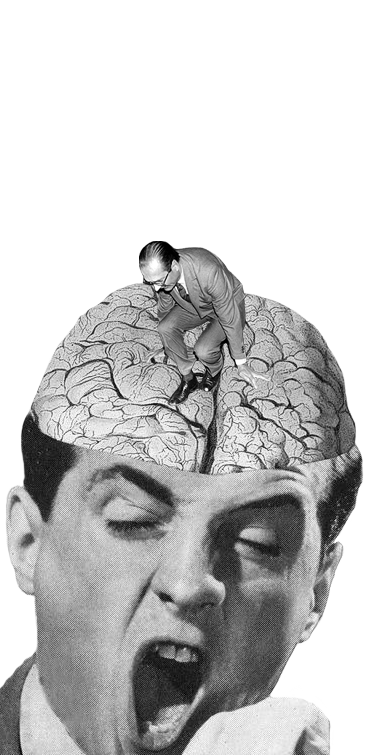
This semester, my research is not just about design itself, it’s about how the brain processes what we see and how we can actually visualize this data. Do people visually engage with design differentley?

Since a lot of you might not be familiar with my research, I thought it would be nice to do a quick catch up, on the matter.  In the last semester I have spent my time further deepening my understanding for neurodesign. Neurodesign sits at the intersection of design, cognitive science, and neuroscience. So instead of evaluating design purely through aesthetics or intention, we as designers ask:

What happens in the brain when we experience design?  

This includes processes such as attention, perception, and decision-making, all of which influence how visual information is interpreted. Importantly, these processes are largely automatic and unconscious (Posner, 1980). This means that, what we think we see and what we actually process can differ significantly. For designers this practice could create a shift: From designing based on intuition, to designing based on measurable cognitive responses. In a world where artificial intelligence becomes more and more advanced, it could mean immense progress for designers, to dive deeper into human cognitive responses, in order to make designs more relateable. Users being abled to experience designs, that feel tailored specifically to them, could mean a new way of connecting.

In neurodesign research, perception is understood as context-dependent and shaped by prior knowledge (Eisma, Eijssen & de Winter, 2022). This directly connects to my central comparison: Designers (trained visual literacy, pattern recognition) & Non-designers (intuitive, less structured viewing behaviour). Research suggests that expertise fundamentally alters how visual information is processed (Lohmeyer et al., 2014). Designers often scan strategically, while non-experts rely more on visual salience. 

Attention, Cognitive Load, and Ignored Design

Another important concept within neurodesign is cognitive load. As we all know by now, the brain has limited processing capacity, which means not all visual information receives equal attention. When designs become too complex, users may engage in selective attention, ignoring parts of the visual field entirely (Spinks & Mortimer, 2016). At the same time, research shows that guiding attention meaning through hierarchy, contrast, or motion, can significantly improve comprehension (Rodemer et al., 2022). 

More design ≠ more understanding 

However, this raises an important question: if attention can be guided, to what extent can perception actually be controlled? While design strategies such as hierarchy and contrast allow designers to direct visual flow, they do not guarantee uniform interpretation. Individual differences such as prior experience, cultural background, and emotional state, continue to influence how information is processed. This suggests that design operates within a space of probability rather than certainty. Designers can increase the likelihood that specific elements are noticed or understood, but they cannot fully determine how a visual message will be received.

This becomes particularly relevant when considering the role of artificial intelligence in contemporary design processes. AI systems are highly effective at optimizing visual output based on existing data patterns. They can predict where users are likely to look, which compositions perform best, and how to structure information for maximum clarity. In this sense, AI aligns closely with principles of cognitive efficiency, often reducing cognitive load by streamlining visual complexity. However, optimizing for efficiency does not necessarily equate to optimizing for experience.

From a neurodesign perspective, engagement is not solely driven by clarity or ease of processing. Elements such as ambiguity, surprise, and even minor inconsistencies can capture attention and sustain interest. These factors introduce a level of cognitive tension, encouraging deeper processing rather than immediate recognition. While AI tends to minimize such irregularities in favor of optimized outcomes, human designers may intentionally incorporate them as part of a more nuanced design strategy. This highlights a fundamental distinction: AI operates primarily through pattern recognition and prediction, whereas human designers integrate interpretation, intuition, and contextual awareness. As a result, the integration of AI into design workflows does not eliminate the need for human input, but rather shifts its focus. Designers are no longer only responsible for producing visual outcomes, but increasingly for evaluating, selecting, and contextualizing them.

In this evolving landscape, understanding cognitive processes becomes even more critical. By grounding design decisions in knowledge about perception, attention, and cognitive load, designers can engage more deliberately with both human users and computational systems. This creates the potential for a hybrid approach, where AI supports efficiency and scalability, while human designers maintain responsibility for meaning, relevance, and experiential quality.

Ultimately, neurodesign does not seek to replace intuition with data, but to expand it. By making cognitive processes more visible and measurable, it allows designers to reflect on their decisions in new ways, bridging the gap between subjective experience and objective analysis. In this sense, the future of design may not lie in choosing between human or machine-driven approaches, but in understanding how both can operate together within the same cognitive and perceptual frameworks that shape how we see, interpret, and connect with the world.

Sources:

Eisma, Y.B., Eijssen, D. & de Winter, J.C.F. (2022) What attracts the driver’s eye attention as a function of task and environment. Information (Switzerland), 13(7). 

Lohmeyer, Q., Matthiesen, S. & Meboldt, M. (2014) Task-dependent visual behaviour of engineering designers – an eye-tracking experiment. DESIGN Conference. 

Posner, M.I. (1980) Orienting of attention. Quarterly Journal of Experimental Psychology, 32(1), pp. 3–25. 

Rodemer, M. et al. (2022) Dynamic signals in instructional videos support students to navigate through complex representations. Applied Cognitive Psychology. 

Scene Grammar Lab (2023) Eye-tracking research overview. 

Spinks, J. & Mortimer, D. (2016) Lost in the crowd? Using eye-tracking to investigate information processing in choice experiments. BMC Medical Informatics and Decision Making. 
Creature Design – Visual Exploration (Part 1)

Last time we discussed what structure an ecosystem on Europa could have, today it’s time to explore it. I’ve grouped the animals into their place in the food chain. This way I can build it up gradually, thinking about the way animals would need to evolve to be able to consume their prey or flee from becoming prey themselves.

I put my focus on arthropods, molluscs, cnidaria, annelids and cephalopods – no bony fish, as they seem to be far and in-between and soft tissue animals or those with a shell or exoskeleton dominate around the hydrothermal vents.

I also structured my ecosystem along the aquatic food web. Here, the base is made up of producers, in this case these would be the chemosynthetic bacteria. These are eaten by the primary consumers, who are eaten by the secondary consumers, who are eaten by the tertiary consumers or final consumers. finally, everything that’s left over is broken down by the decomposers.

Producers

Chemoplankton form the basis for life down around the hydrothermal vents of Europa. Through the biological conversion of the minerals and chemicals contained in the vents they produce energy and synthesize organic matter.

Primary Consumers

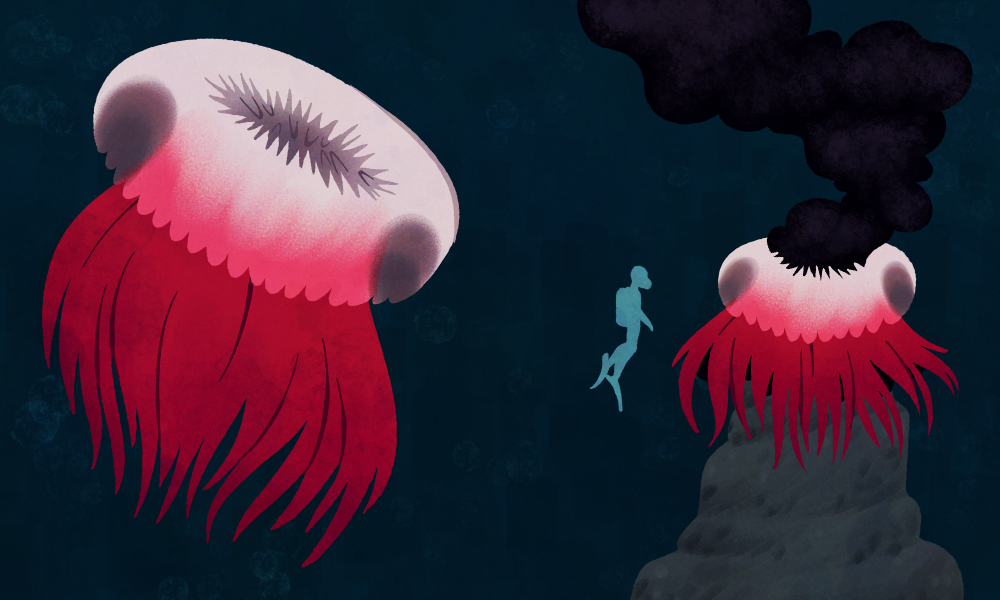
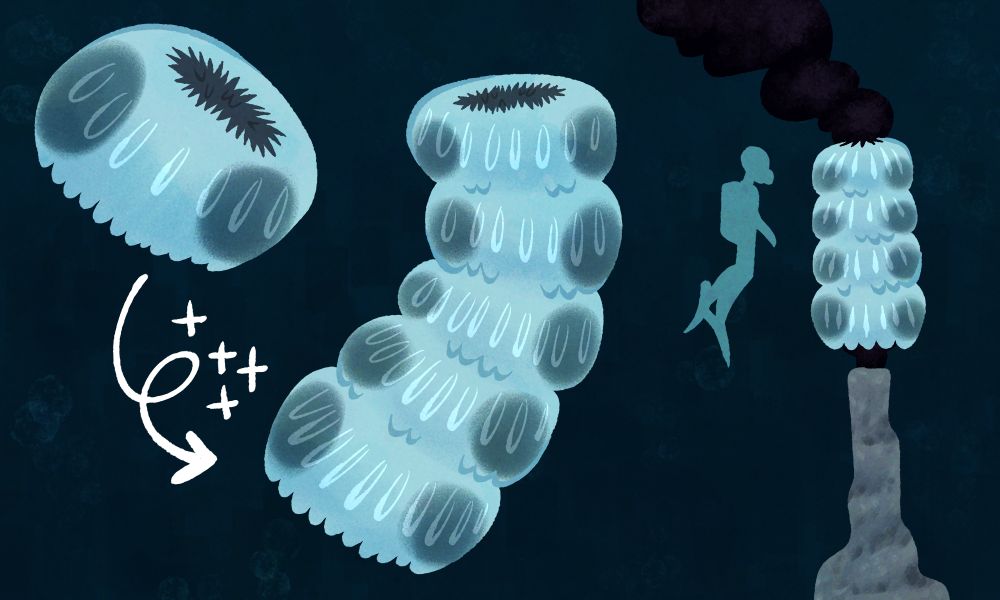
Floaters make up the subphylum of Vitrummarinum a group of animals comparable to jellyfish on Earth. They can be found in the waters right above the vents, drifting in and out of the plumes of smoke being expelled. They possess almost no sensory organs, neither do they have a brain – only a rudimentary sensory system that allows them to detect light, temperature and vibrations in the water. The opening in the centre of their body is filled with soft bristled that they use for filter feeding, which is usually done by “sitting” atop active vents.

Two species of them dominate in the oceans of Europa:

Red Cloaks (Anulusnatans palliumrubrum), which stand out with their diameter of around two meters. They have developed a sort of funnel made from tissue, allowing them to feed from the large vents in volcanically active areas.

Glass Towers (Anulusnatans turrisvitrea) live in shallower oceans and grow only to a diameter of around 40cm. While they lack the funnel structure of their deep-sea cousins, they found a different way to maximize food intake: they “fuse” together with other members of their species, building large, tower-like structures that allow them to feed thoroughly and deter predators due to their unwieldy size.

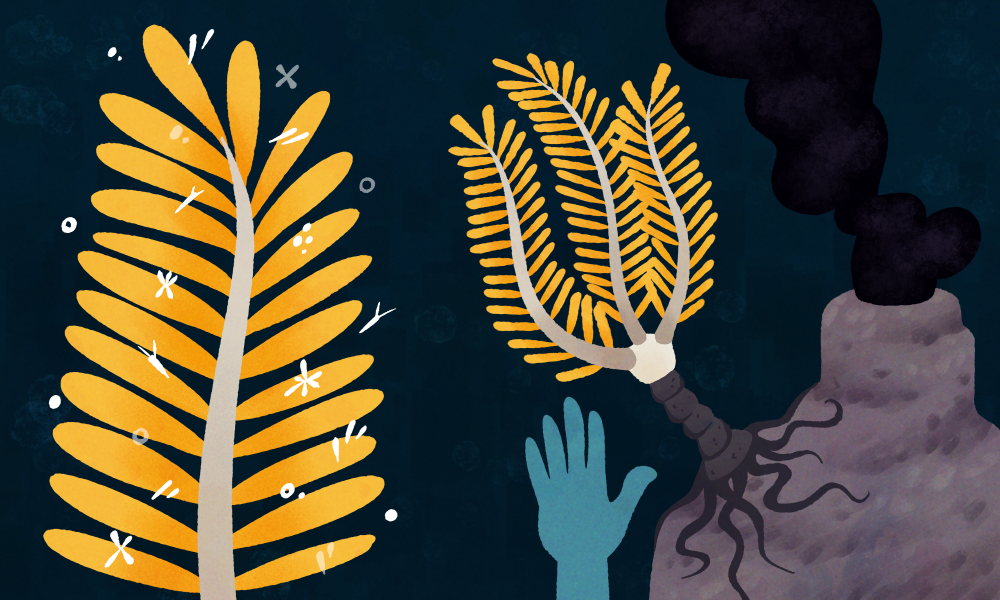
Although Antennae Trees may look like plants, they actually are part of the phylum Caulispennatus. They settle around the vents in both shallow and deep waters, where they dig into cracks and openings in the rock and remain sedentary. Antennae Trees are passive suspension feeders, using their feathered arms to filter Chemoplankton out of the water. Their stems are platted, likely an adaption to process their mineral-heavy diet and protect themselves from predators. They are able to swim by swinging their bodies back and forth, allowing them to move to different feeding grounds and evade predators.

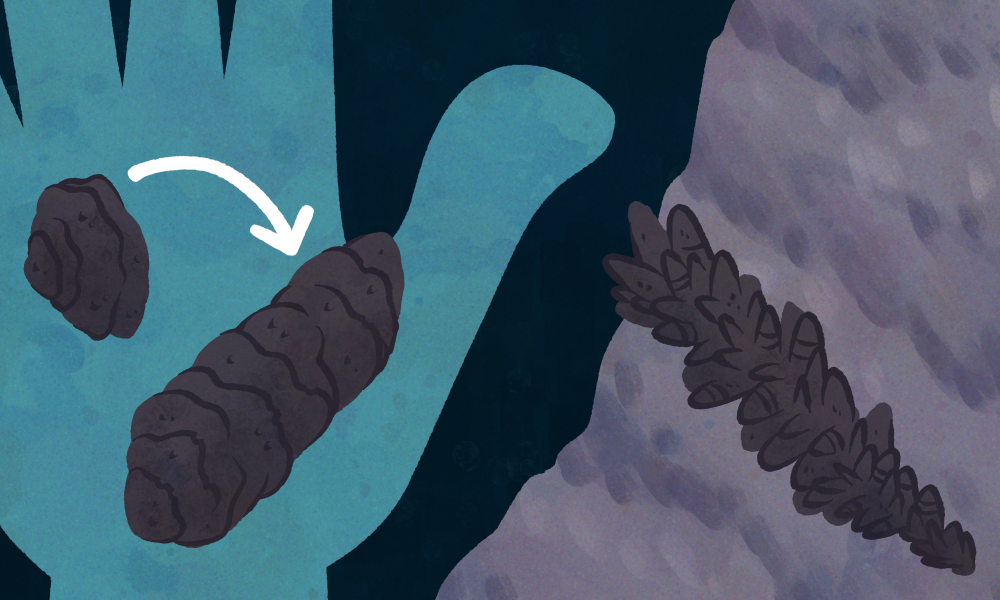
Pipe Worms are part of the same phylum as Antennae Trees, though they separated from their common ancestor around 400 million years ago. Their colonies can be found mostly around the equator, where the tides are strongest and thus the ocean the warmest. They expand often hundreds of square meters across the ocean floor. Their black pipe-like shells are composed from iron sulphides, that are excreted as they filter the black vent smoke for Chemoplankton. These shells protect them from a wide range of predators, allowing them to hide away whenever they sense unusual vibrations in the water.

Iron Beaks belong to the Laminaferrea phylum, a group of mollusc-like animals. Their name is due to the long, beak shape they grow into; young Iron Beaks are visually comparable to oysters but overtime they rather grow in length than overall size. This allows them to safely filter food from inside they rocky crevices they reside in. They commonly live in the shallow zone, though there are species that adapted to life all the way down in the abyss. They are composed of two hinged halves protecting their soft inner body. The black colour of their shell is due to the iron sulphides in their diet.

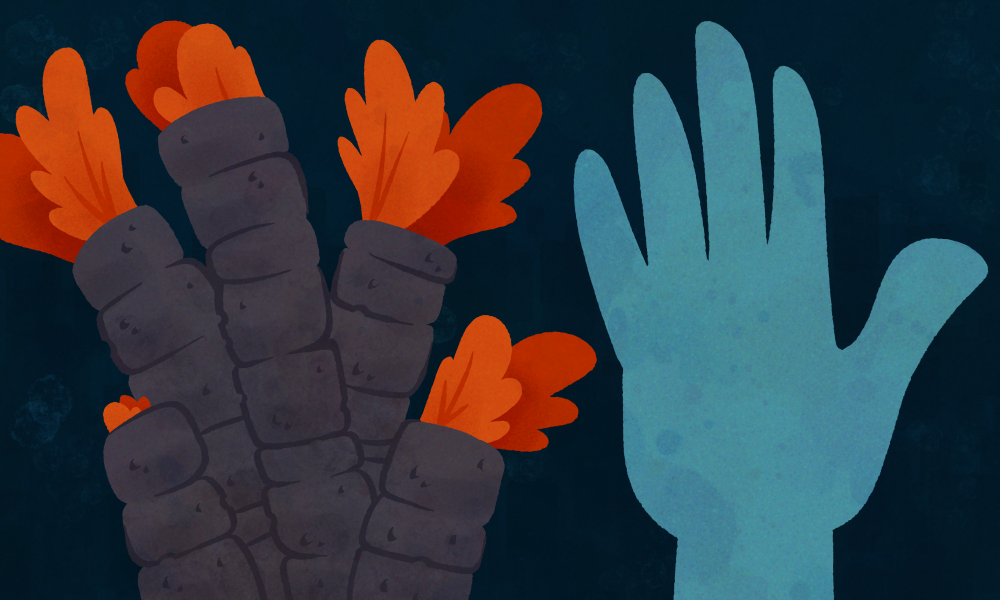
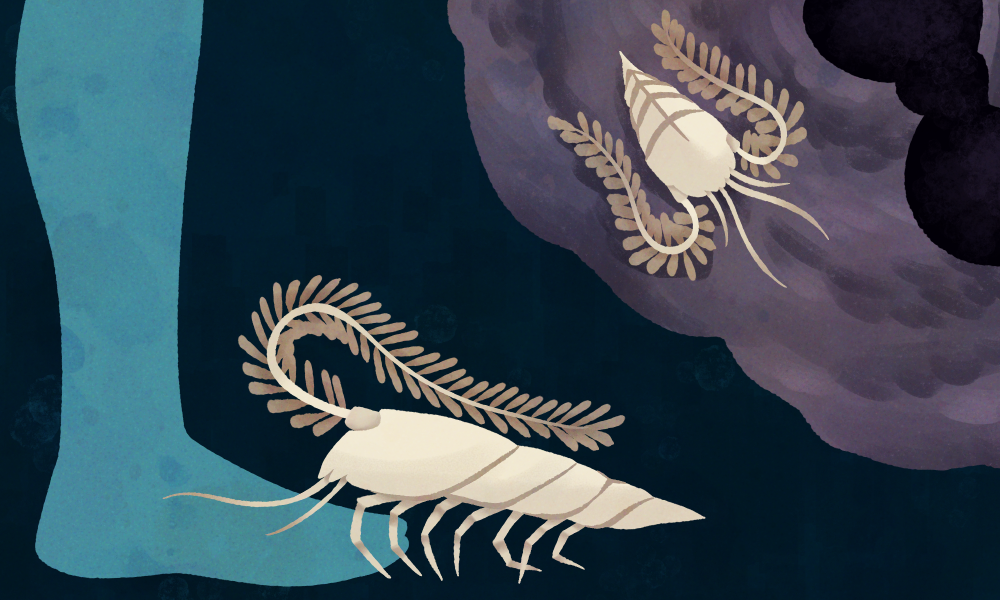
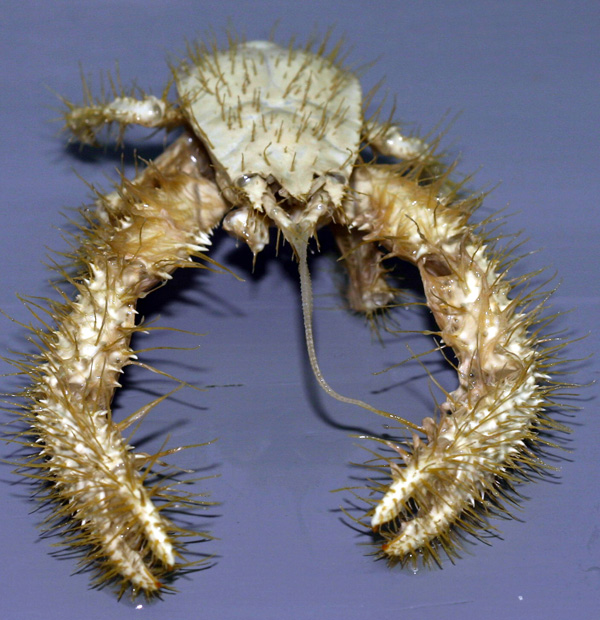
The White Bristle Crab lies in the Armaturatus phylum, which is a group of animals defined through the segmented shell protecting their bodies, similar to a knight’s armor. The White Bristle Crab is one of the most common representatives of the Reptator order, who are exclusively ground-dwelling. They live directly on the vents, roving around in large groups. Their long-bristled antennae are home to bacteria, which go through a process called chemosynthesis that detoxifies the poisonous minerals from the water and turn them into organic matter (–> see Chemoplankton). By “cleaning” their antennae the White Bristle Crabs are able to harvest this organic matter. They lack any kind of image-forming organ, though they are extremely sensitive to vibration.

Sources:

who I am talking to?? 👀 (Part 4)

So jetzt geht’s in meine Zielgruppe…

Alter? Eigentlich egal. Ich habe gemerkt, dass ich meine Zielgruppe nicht wirklich über Alter definieren möchte.

Irgendwie fühlt es sich für mich falsch an zu sagen „meine Zielgruppe ist 25–35“ oder so, als wären alle Menschen in diesem Alter gleich. Das entspricht einfach nicht meiner Realität – weder in meinem Umfeld noch online.

Stattdessen interessiert mich viel mehr, wie Menschen denken, was sie fühlen und wofür sie sich interessieren.

Ich möchte Leute erreichen, die:

– offen für visuelle Experimente sind

– sich für Kunst, Design und Ästhetik interessieren

– sich inspirieren lassen wollen oder selbst kreativ sind

Und das hat meiner Meinung nach weniger mit Alter zu tun als mit Haltung.

Ich glaube auch, dass diese Art von Einteilung schnell in eine Richtung gehen kann, die eher einschränkend als hilfreich ist. Für mich fühlt es sich stimmiger an, meine Zielgruppe über gemeinsame Interessen und Werte zu definieren, statt über Zahlen.

Am Ende geht es für mich nicht darum, wie alt jemand ist, sondern darum, ob eine Verbindung entsteht.

Ich habe 3 personas definiert:

Persona 1: Alex (Designer/Künstler)

Alex ist selbst kreativ tätig und sucht ständig nach Inspiration, neuen visuellen Ansätzen und Menschen aus der Szene. Er nutzt Instagram aktiv, um andere Künstler:innen zu entdecken und sich weiterzuentwickeln.

Warum folgt er mich?

-Er findet meine Ästhetik spannend

-Er erkennt sich in meinem Prozess wieder

-Er könnte sich vorstellen, mit mir zu arbeiten

 Was spricht ihn an?

-Einblicke in meinen kreativen Prozess

-Experimente, mutige visuelle Entscheidungen

-Persönliche Gedanken über Design & Selbstfindung

Potential:

-Ein gemeinsames Projekt

Persona 2: Sophia (arbeitet im Büro)

Sophie ist keine Designerin, aber sie liebt ästhetische Inhalte und moderne Kunst. Sie folgt Künstler:innen, weil sie sich inspirieren lassen möchte und gerne visuell „eintaucht“.

Warum folgt sie mich?

-meine Inhalte sind visuell ansprechend

-Sie spürt eine gewisse Persönlichkeit dahinter

-Sie fühlt sich emotional oder ästhetisch angesprochen

Was spricht ihn an?

-Starke visuelle Posts (Farben, Stimmung, Ästhetik)

-Authentische, nicht zu perfekte Inhalte

-kurze, verständliche Einblicke

Potential:

-Sie liked, teilt und verbreitet meine Inhalte

-Könnte in Zukunft auch Kunst/Merch kaufen

Persona 3: Marie (Die Kuratorin / Galerie)

Marie ist ständig auf der Suche nach neuen, jungen Positionen in der Kunst- und Designszene. Sie entdeckt Künstler:innen oft über Social Media oder Websites.

Warum interessiert sie sich für mich?

-meine Arbeiten haben eine klare visuelle Sprache

-meine Präsentation wirkt eigenständig und nicht generisch

-sie erkennt Potenzial für Ausstellungen oder Projekte

Was ist ihr wichtig?

-Klarheit in meiner künstlerischen Position

-Konsistenz in meinem visuellen Auftritt

-Professionalität (Website, Portfolio, Auftreten)

Potenzial:

-Einladung zu Ausstellungen

-Kooperationen

-Einstieg in die Kunstszene

Meine Zielgruppe ist für mich kein starres demografisches Konstrukt, sondern ein Zusammenspiel aus Interessen, Haltung und ästhetischer Wahrnehmung.

Im weiteren Verlauf meines Projekts möchte ich diese Definition nicht nur theoretisch festhalten, sondern durch meine Experimente auf Instagram und meiner Website weiter überprüfen und schärfen.

Am Ende geht es für mich nicht darum, wer genau zuschaut, sondern darum, ob eine Verbindung entsteht.

P.S. Ich bin mir noch nicht sicher, ob ich eher mit einer deutschsprachigen oder englischsprachigen Audience arbeiten möchte. Darüber werde ich mir noch Zeit nehmen, um nachzudenken!

Website ._. (Part 3)

Im Rahmen meines Self-Branding-Experiments habe ich begonnen, meine bestehende Portfolio-Website genauer zu analysieren. Nachdem ich mich im vorherigen Semester vor allem theoretisch mit dem Thema auseinandergesetzt habe, interessiert mich nun besonders die Frage, wie sich meine künstlerische Identität konkret in meinen eigenen Medien widerspiegelt – und ob diese auch für andere nachvollziehbar ist.

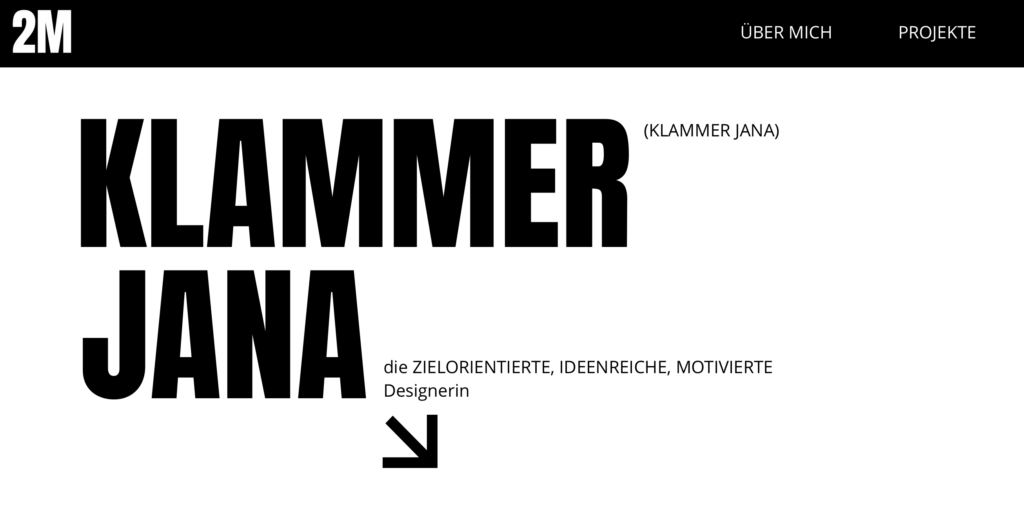
Meine Website dient aktuell als klassisches Portfolio und ist in mehrere Bereiche gegliedert. Die Startseite enthält grundlegende Informationen über mich, wie meinen Namen und meine Tätigkeit, bleibt dabei jedoch bewusst reduziert und eher kurz gehalten.

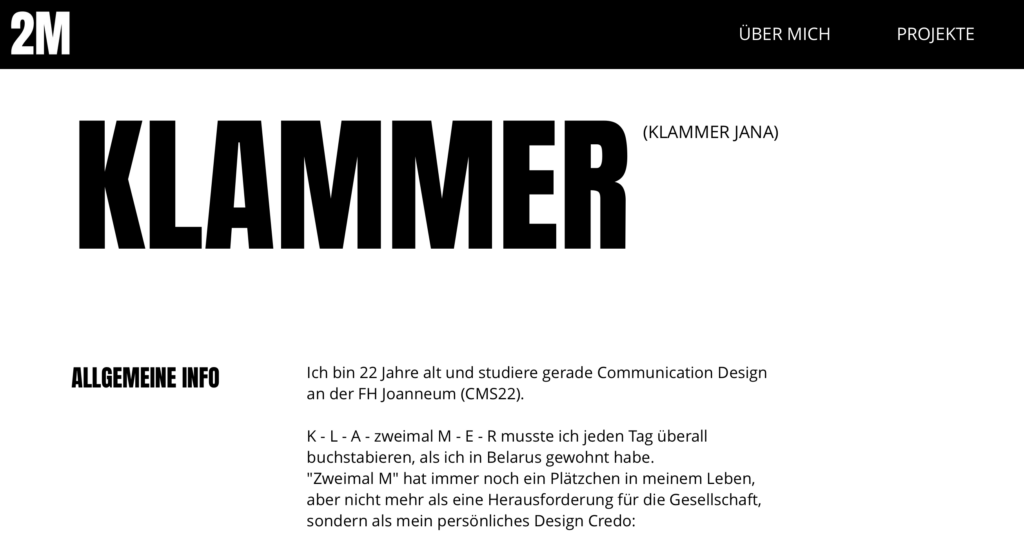
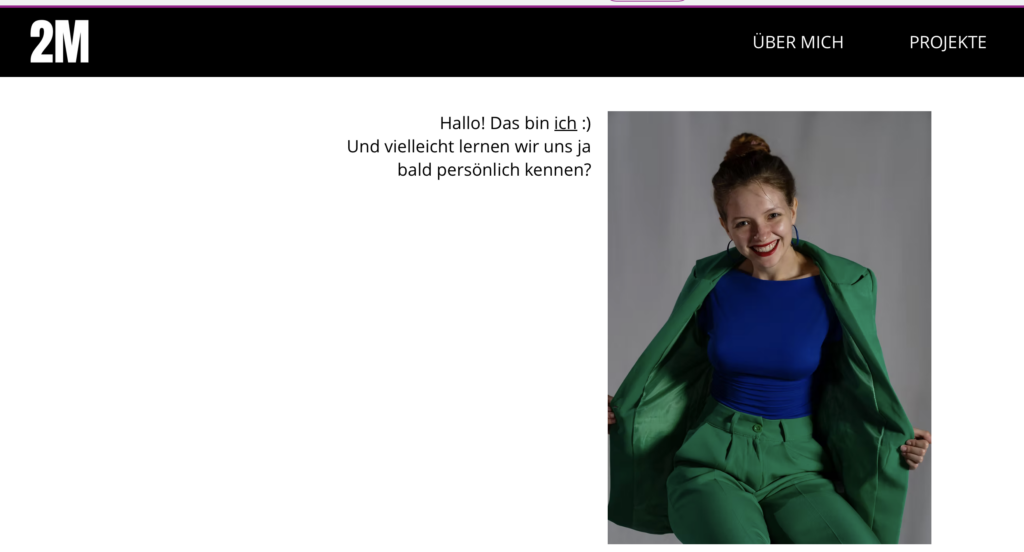
Ergänzend dazu gibt es eine ausführlichere About-Me-Seite, auf der ich näher auf meinen Hintergrund, meine Erfahrungen und Kontaktmöglichkeiten eingehe.

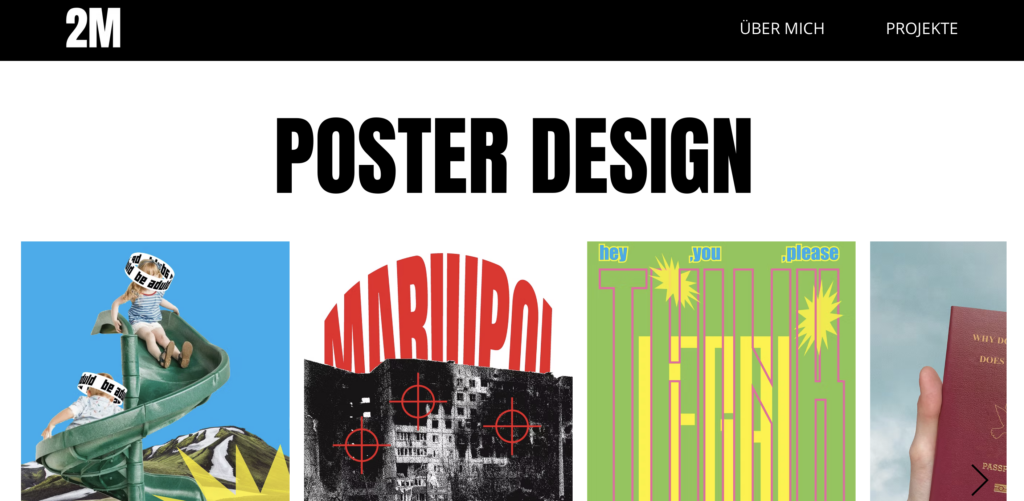
Den zentralen Teil bildet die Projektseite, auf der meine gestalterischen Arbeiten präsentiert werden – mit einem klaren Fokus auf Posterdesign, ergänzt durch weitere Projekte aus dem Designbereich.

Gestalterisch ist die Website eher minimalistisch und zurückhaltend aufgebaut. Sie wurde mit Wix umgesetzt (was man auch auf der website sieht, weil ich zu geizig war haha), was einerseits eine einfache Umsetzung ermöglicht hat, andererseits aber auch gewisse gestalterische und technische Einschränkungen mit sich bringt.

Meine bisherigen Webdesign-Kenntnisse sind eher grundlegend, was sich ebenfalls im Aufbau und in der visuellen Ausarbeitung widerspiegelt.

Trotzdem lassen sich bereits erste Ansätze einer eigenen gestalterischen Handschrift erkennen. Besonders die Verwendung der Schrift „Anton“, die ich bewusst gewählt habe, spiegelt meinen persönlichen Geschmack wider. Auch die insgesamt eher offene und informelle Stimmung der Website entspricht meinem Anspruch, mich nicht zu distanziert oder zu „perfekt“ zu präsentieren, sondern zugänglich zu bleiben.

Gleichzeitig wurde mir durch die Analyse klar, dass die Website in ihrer aktuellen Form noch nicht vollständig meine tatsächliche künstlerische Identität widerspiegelt. Der visuelle Ausdruck wirkt auf mich zu vorsichtig und „zu brav“, während meine Arbeiten und mein persönlicher Stil oft experimenteller, mutiger und lebendiger sind. Hier entsteht eine deutliche Diskrepanz zwischen dem, was ich gestalterisch ausdrücken möchte, und dem, was tatsächlich sichtbar wird.

Ein besonders auffälliger Punkt ist die Startseite, die aktuell sehr reduziert ist und dadurch eher leer wirkt. Obwohl Minimalismus bewusst eingesetzt werden kann, fehlt hier aus meiner Sicht ein klarer visueller oder inhaltlicher Einstieg, der meine Persönlichkeit oder meine Arbeit stärker vermittelt. Dadurch geht ein wichtiger Moment verloren, in dem Besucher:innen eine erste Verbindung zu mir und meiner Arbeit aufbauen könnten.

Interessant ist jedoch, dass die Website trotz dieser kritischen Punkte bereits eine gewisse Funktion erfüllt: Sie wurde im Kontext einer Masterbewerbung akzeptiert. Das deutet darauf hin, dass die strukturelle und inhaltliche Basis funktioniert, auch wenn die visuelle und konzeptionelle Ausarbeitung noch Entwicklungspotenzial hat.

Im weiteren Verlauf meines Projekts möchte ich die Website daher nicht nur optimieren, sondern gezielt als Experimentierfeld für mein Self-Branding nutzen. Dabei interessiert mich vor allem, wie sich Veränderungen im Design, in der Bildsprache oder in der Art der Präsentation auf die Wahrnehmung meiner Person auswirken.

Ziel ist es, die Website von einem eher funktionalen Portfolio zu einer klar positionierten, persönlichen Plattform weiterzuentwickeln, die meine künstlerische Identität nicht nur zeigt, sondern auch erlebbar macht. Dabei werde ich verschiedene Ansätze testen, dokumentieren und reflektieren, um besser zu verstehen, welche gestalterischen Entscheidungen tatsächlich zu einer stärkeren und authentischeren Außenwirkung führen.

P.S. Ah ja und die Website existiert heutzutage nur für Desktop, das will ich auch im Zukunft ändern und sie für handy zu optimieren 🙂

How to Structure an Ecosystem

I’ve discussed the setting for my worldbuilding project, so today I’d like to get into the ecosystem. To take a look at how life evolves – the rules it follows and how it will change over time. I also want to explore what animals might evolve in this environment based on what animals we know live around the hydrothermal vents on Earth.

Animal Architecture – Repetition, Symmetry & Polarity

First, let’s get down the facts of animal architecture – how is life structured?

When looking at fossils, we can draw a lot of conclusions about evolution’s pervasive use of repeating parts and modular architecture in animal designs. Even individual body parts reflect this theme of modular design – the limbs of four-legged vertebrates are all made up of thigh, calf, ankle or upper arm, forearm, wrist and the hands and feet bear five similar digits. Something that can be found as far back as the Jurassic.

No matter how complex or bizarre the outward appearance of an animal may be – beneath it they are all constructed along recognizable, similar themes. It’s all about repetition; repeated parts and within those repeating units. The most obvious difference between groups of animals are the number and kind of repeated structures. When comparing these parts however, it’s important to discern if it’s the same body part that might have been changed/adapted. This is referred to as a “homolog” and would apply to our fore- and hindlimbs, for example. Or different shapes of teeth that are specifically adapted for biting, tearing or compacting food. These are all structures that arose as a repeated series and over time differentiated to varying degrees in different animals.

Another point in animal architecture is symmetry – most animals are bilaterally symmetrical, meaning their left and right sides match and they have a central axis of symmetry running down the middle of the long axis of the body. This also enables a front/rear orientation, which played an important part in the evolution of locomotion.

Thirdly, let’s talk about polarity. This is essential to how we are built from a purely structural point. Most animals possess three axes of polarity: head to tail, top to bottom/back and front and near to far from the body/torso (e.g. limbs).

Diversification of Life

Variation in shape also directly leads into evolution – the changes in the number and kind of serial homologs are considered a principal theme here. Early groups of animals tended to have a large number of similar repeating parts, but later groups would specialize these structures more and more. These specialized structures also wouldn’t revert back to more generalized forms.

The Basis for Life in Europa

Researching about primitive life during the last semester taught me that even with the animal itself long gone, we can draw conclusions about it by drawing parallels to animals known today. Similar features and structures are likely to have served a similar purpose, so it makes sense to take a look at what lifeforms live around our hydrothermal vents on Earth and use them as a stepping stone for creating an alien ecosystem.

These animals would be the following:

  • Bristle Worms (e.g.: pompeii worm, sulfide worm)
  • Segmented Worms (e.g.: tube worms)
  • Jellyfish (e.g.: Lucernaria janetae)
  • Sea Anemones (e.g.: Relicanthus daphneae)
  • Crustaceans like shrimp, crabs, lobsters – many of which lack eyes (e.g.: Alvinocarididae, Bythograeidae, Yeti Crabs/Lobsters)
  • Molluscs like mussels, clams, snails (e.g.: Bathymodiolus thermophilus, Calyptogena magnifica, scaly-foot snail)
  • Tonguefish (e.g.: Symphurus thermophilus)
  • Ray-Finned Fish (e.g.: Eelpouts)
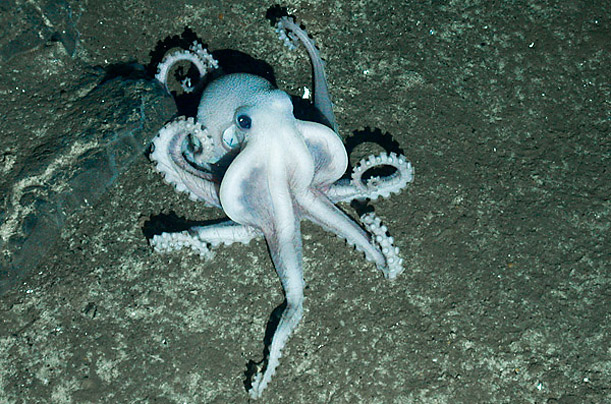
  • Cephalopods (e.g.: Vulcanoctopus)

Sources:

(1) Carrol, Sean B.: Endless Forms Most Beautiful. The New Science of Evo Devo. New York: W. W. Norton & Company, Inc. 2005 [E-Book]

(2) Wikipedia. Die freie Enzyklopädie (21.03.2017), s.v. Category: Animals living on hydrothermal vents, https://en.wikipedia.org/wiki/Category:Animals_living_on_hydrothermal_vents (zuletzt aufgerufen am 31.03.2025)

kein fancy Name (yet) Part 2

Diese Woche habe ich meinen Instagram-Account genauer unter die Lupe genommen, um herauszufinden, welche Inhalte bei meinem Publikum am besten ankommen.

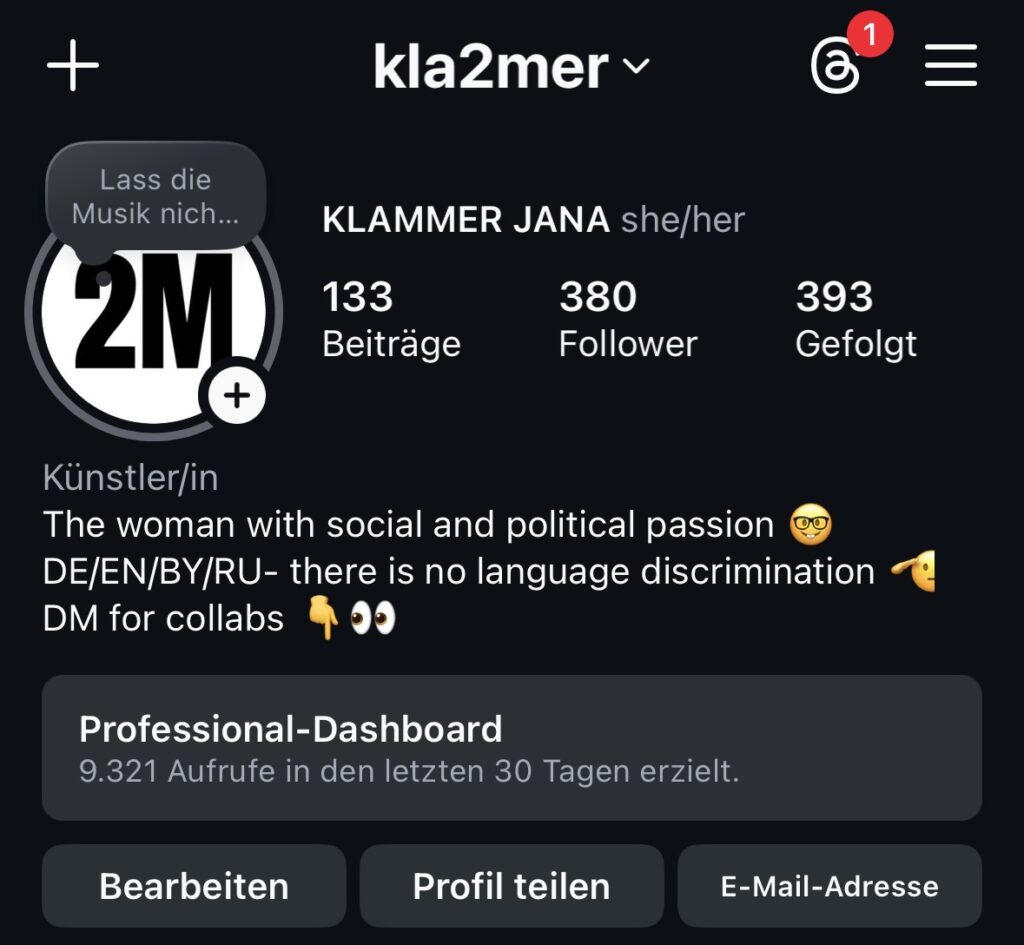
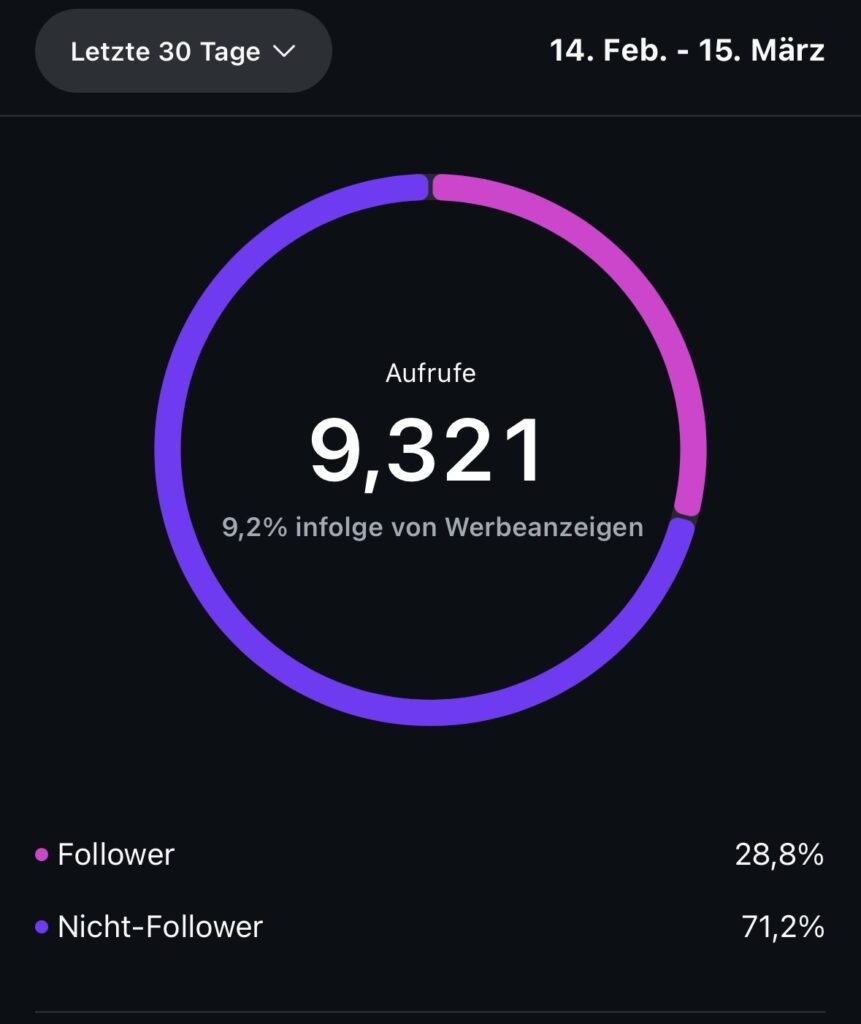
Mein Account hat aktuell 380 Follower. In den letzten 30 Tagen wurden über 9.000 Aufrufe erzielt – 71 % davon stammen von Menschen, die mir noch nicht folgen. Das zeigt, dass meine Inhalte nicht nur mein bestehendes Publikum erreichen, sondern auch neue Menschen auf meine Arbeit aufmerksam machen.

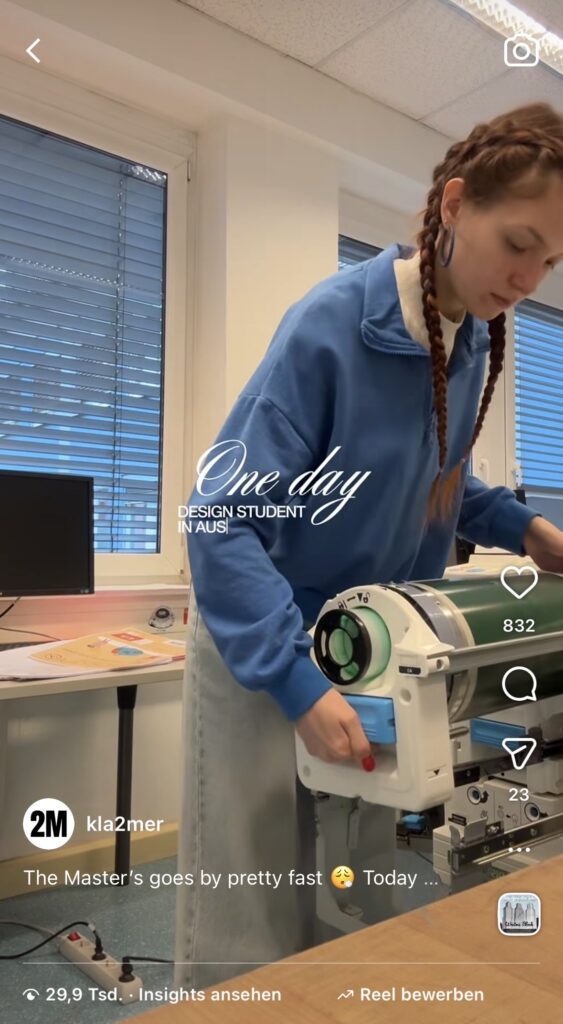
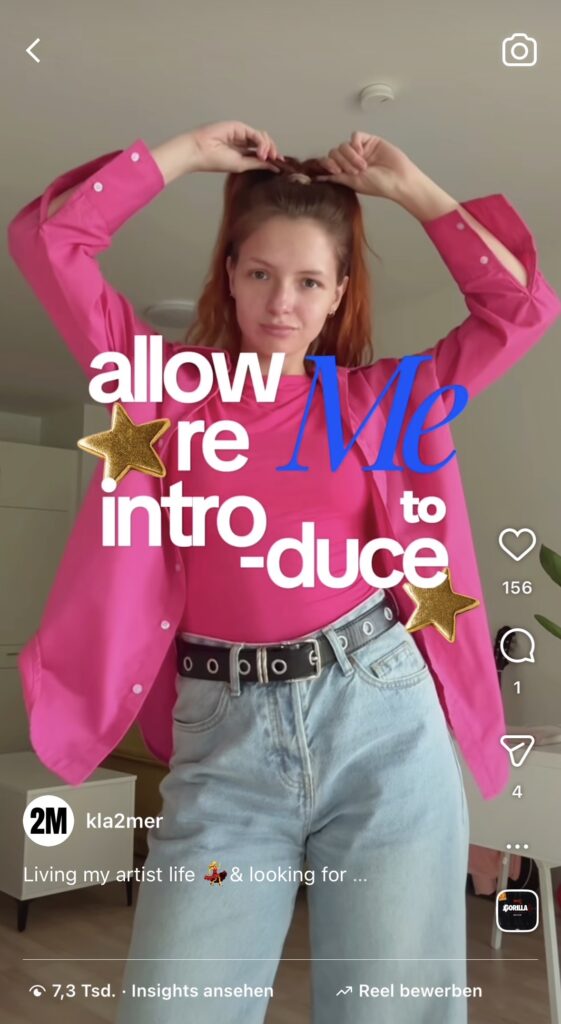
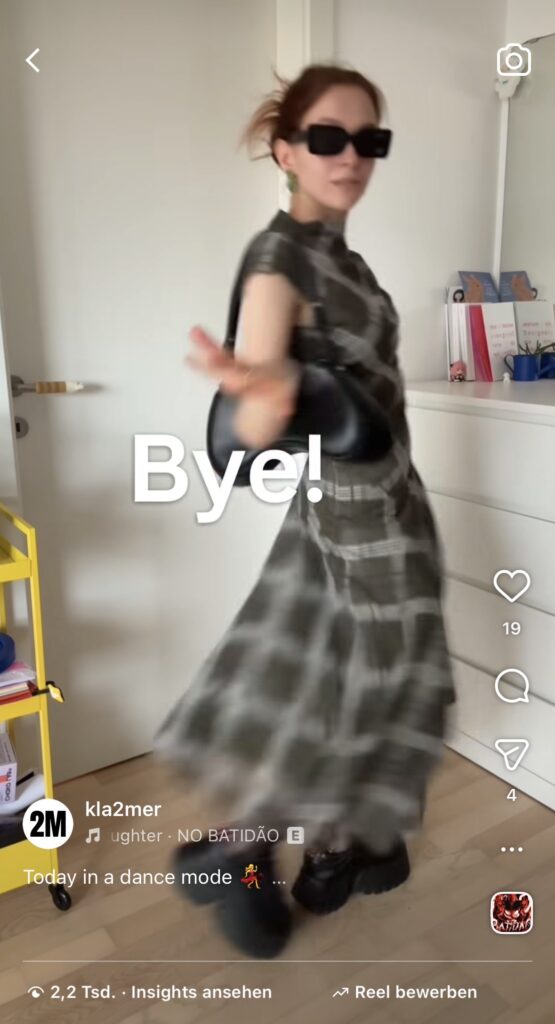
In meiner Analyse habe ich die drei Videos untersucht, die mir die größte Reichweite gebracht haben.

Das erfolgreichste Video hat über 20.000 Aufrufe erreicht und zeigt meinen Alltag im Designstudium – wie das Leben als Designstudentin aussieht. Dieses Video hat mir 174 neue Follower gebracht und wurde überraschenderweise am meisten in Indonesien gesehen, obwohl ich mir nicht erklären kann, warum.

Das zweite Video war eine Art Visitenkarte von mir, in der ich mich einfach vorgestellt habe. Es hat über 7.000 Aufrufe und 51 neue Follower gebracht. Die Farben in diesem Video sind wie immer bunt, aber besonders interessant war vermutlich die vielfältige Abfolge von Sequenzen, die fast alle möglichen Farben gesammelt hat. Ich kann dieses Format wahrscheinlich nicht oft wiederholen, aber es zeigt, dass die Leute visuell abwechslungsreiche Inhalte sehr ansprechend finden.

Das dritte Video entspricht eher dem typischen Format meines Accounts – Fashion Styling. Es hat über 2.000 Aufrufe erreicht. Zwar nicht so viele wie das erste Video, aber dennoch ein Erfolg! Besonders daran ist, dass sich das Video durch seine Stimmung und Performance von allen anderen Styling-Videos auf meinem Account unterscheidet: Ich habe das erste Mal vor der Kamera getanzt, und offenbar ist das bei meiner Audience positiv angekommen. Bei diesem Video kamen die meisten Betrachter*innen aus Deutschland und Österreich, obwohl das Video auf Englisch war.

Was mich jedoch überrascht hat, ist, dass Videos mit Voice-over deutlich weniger Interaktionen erzielt haben, obwohl viele „Expert*innen“ auf Instagram genau dieses Format empfehlen.

Eine mögliche Erklärung dafür ist die Sprache: Die Voice-over-Videos habe ich auf Deutsch gemacht, während meine Audience aktuell überwiegend englischsprachig zu sein scheint. Das könnte ein Grund sein, warum diese Inhalte weniger gut performen.

Diese Beobachtung bringt mich zu einer wichtigen Frage für mein weiteres Experiment:
Wer ist eigentlich meine Zielgruppe? Soll ich mich eher auf ein deutschsprachiges oder ein englischsprachiges Publikum konzentrieren?

Im weiteren Verlauf des Semesters möchte ich genau das gezielt testen und herausfinden, welche Sprache und Kommunikationsform besser zu meiner künstlerischen Identität und meiner Audience passt.

Oder die Menschen haben meinen slawischen Akzent nicht gefeiert, wer weiß haha 🥲

Creating Alien Environments

Last time I talked about using Jupiter’s moon Europa as basis for worldbuilding. Today, let’s look at what the parameters are – what we can surmise about Europa as well as the bottom of the sea floor.

The Oceans of Europa

Europa is covered by an ice shell, which could be from a few kilometres to as much as 30 km thick. The fractures in the ice criss-cross along its surface, showing regions that are “geologically chaotic”. Here the ice would be especially thin and allow sunlight to peak through.

Europa has a density of about 3,000 kg/m3, same as our moon. This means it has enough rock mass to form a proper sea floor. Unlike our moon however, water makes up about 6% of its total mass. In comparison, Earth is about 0.02% water. This means the oceans on Europa are much vaster and deeper than on Earth – about 100 km of depth. Earth’s deepest point, the Challenger Deep, only ranges about 11km.

Europa has a lot of sulfur, as seen in the yellowish-reddish-brown regions on its surface. It has about the same amount of carbon dioxide as in our atmosphere, which means carbon as a basis for life is available.

Life Around the Hydrothermal Vents

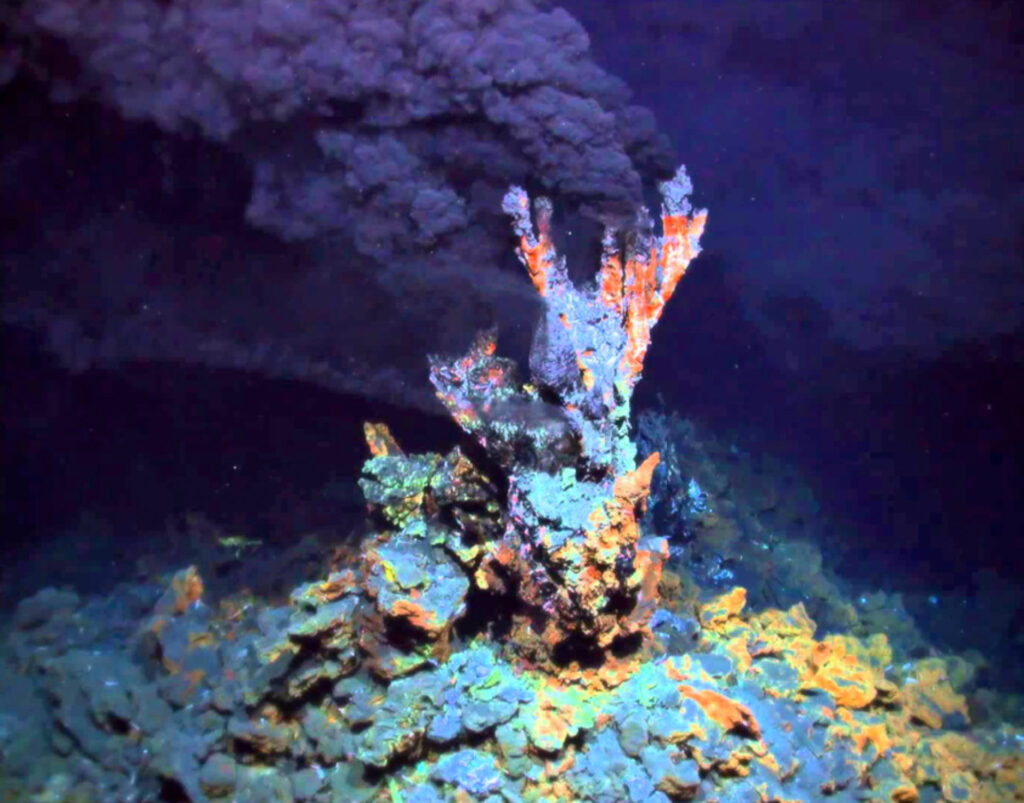
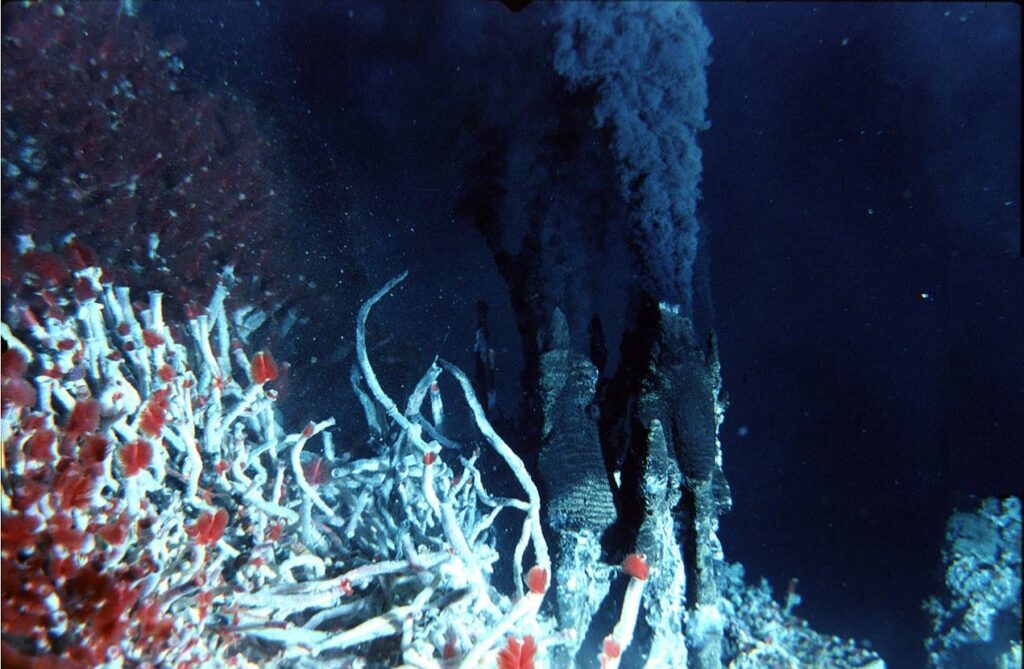
Hydrothermal vents exist in total darkness, under relentless water pressure. They spew hot water loaded with dissolved gases and minerals, which quickly cools down and forms solid structures around the vent – these are also known as vent chimneys. Depending on the temperature these vents expel white or black “smoke”.

White smokers occur at lower temperatures, they appear white because of the minerals they carry. These are usually silica and barite. Black smokers are hotter and carry iron sulphides for the most part.

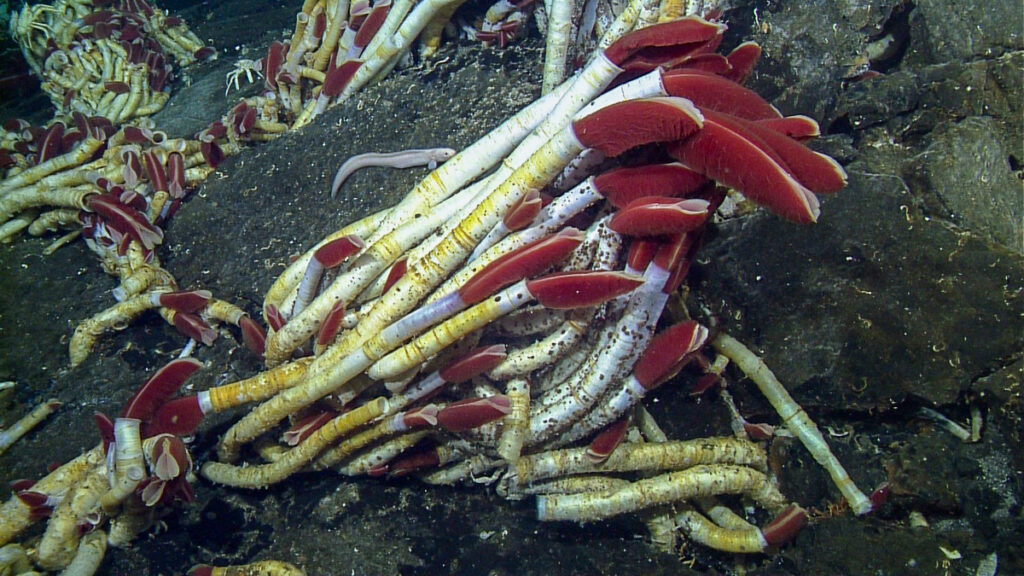
Life around the hydrothermal vents is rich and bizarre – ranging from red tube worms, molluscs and crustaceans all the way to octopuses and eelpout fish. The food chain relies on chemosynthesis, which works similar to photosynthesis. But instead of using sunlight as energy, the bacteria use chemicals from the vent smoke.

First Explorations

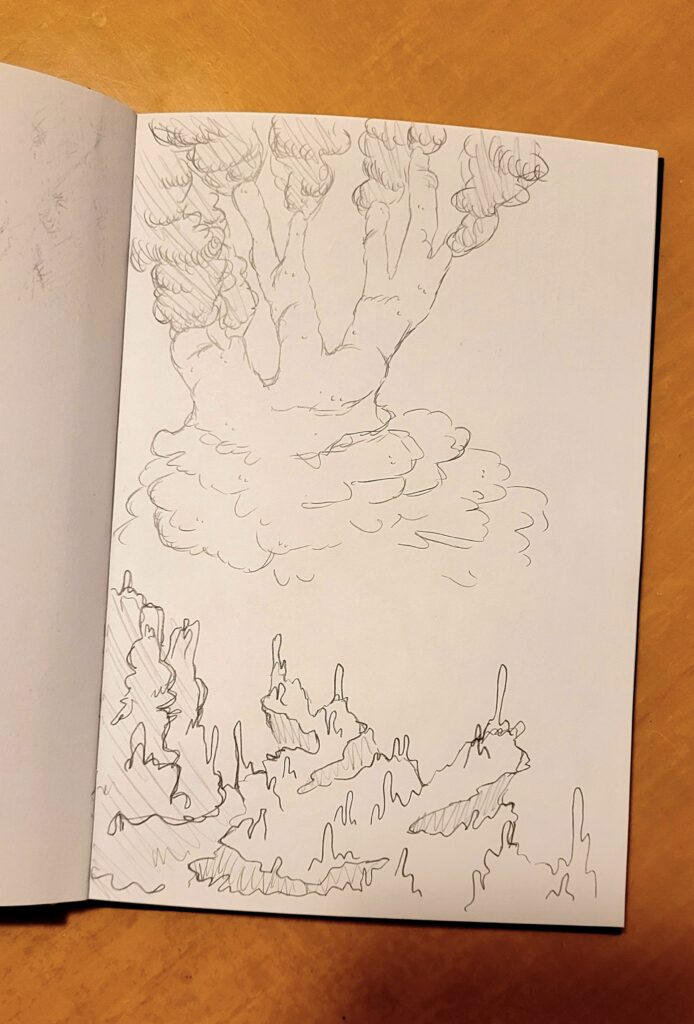
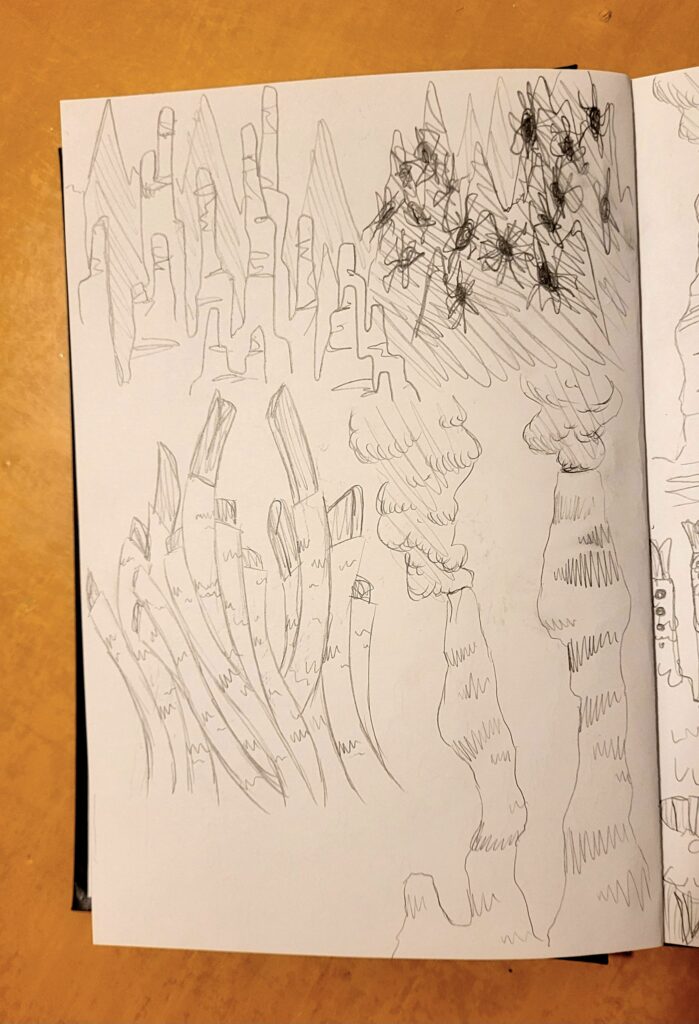
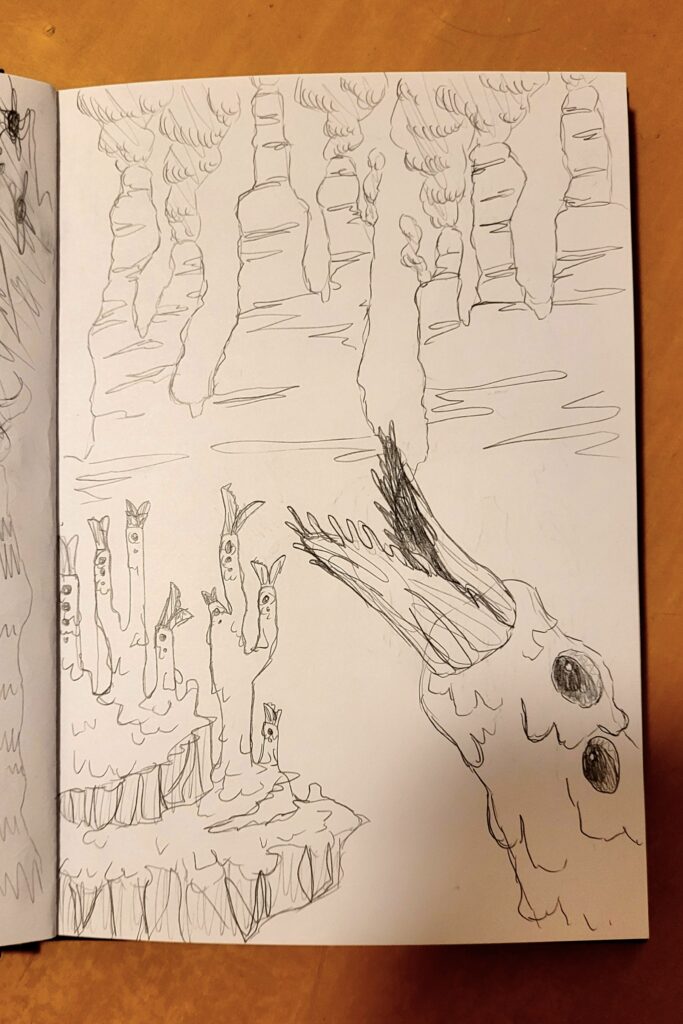
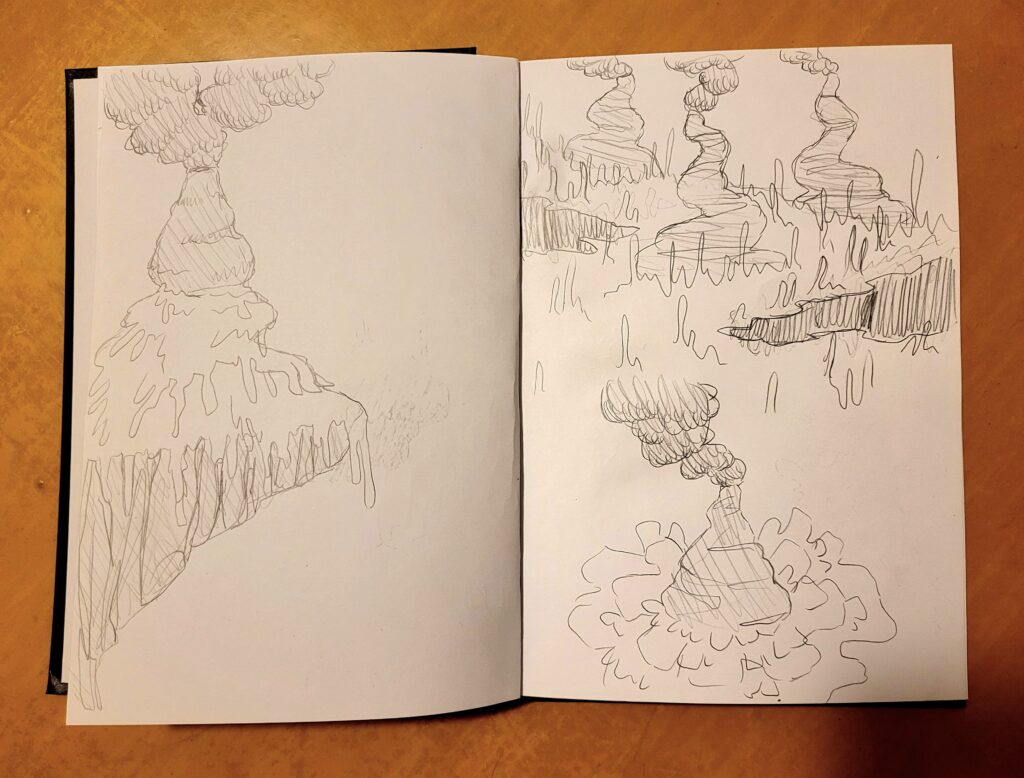
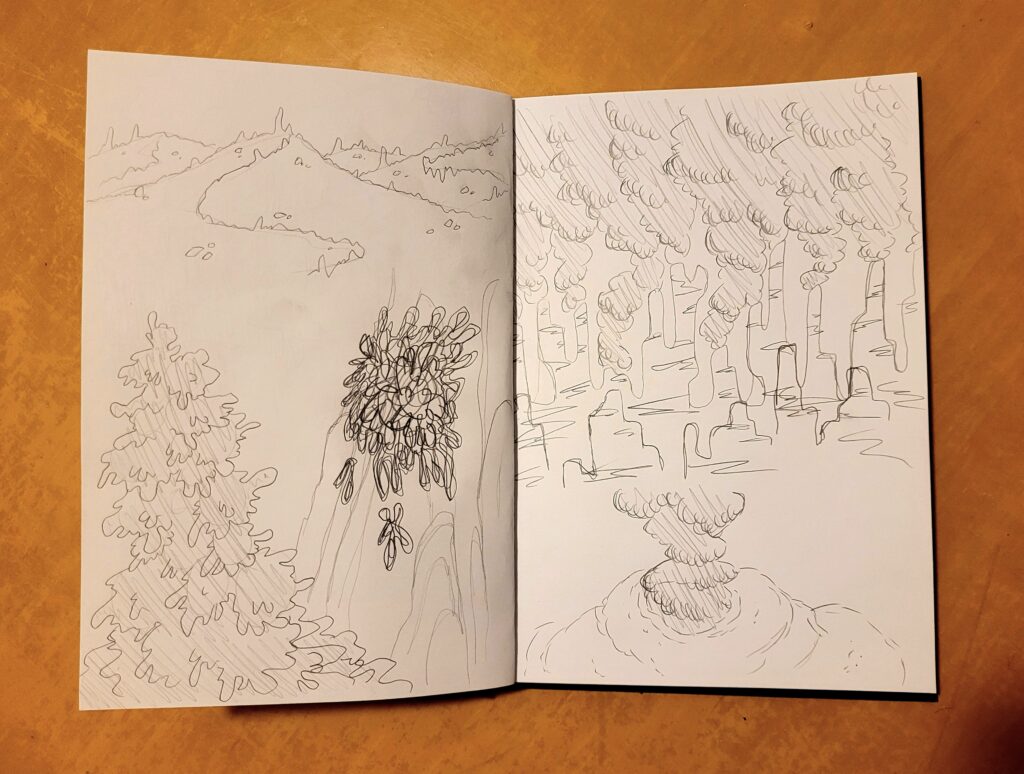
I started my process by looking at how life by the thermal vents looked like – making studies of the structures, finding ways to translate what I see into my personal drawing style.

Afterwards I started to experiment; how could I estrange the shapes, but keep them looking believable? What diversity could exist in its forms?

Sources

Using “Alien Oceans” as Basis for Worldbuilding

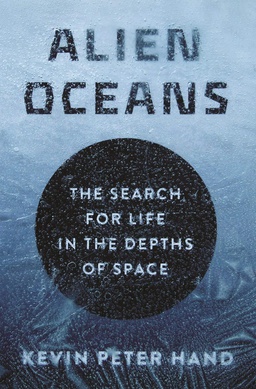
In order to continue my research into how we could depict life outside our known world, I began reading the book Alien Oceans by the astrobiologist and planetary scientist Kevin Peter Hand. The book explores the possibility of life within our solar system – though not on a planet, but on Jupiter’s moons.

I want to explore what alien life on one of these moons, more specifically Europa, could look like – what environment could exist, what flora, what fauna. What intelligent life could look like – how it would behave, communicate, what culture it would develop. Using both science and my own imagination I want to create a far-off world and use this book as basis for storytelling.

Life Here and Possibly Elsewhere

But first of, what’s so special about Jupiter’s moons? How could life possibly exist there? Well, for a long-time we believed alien life was only possible in the habitable zone, on a planet not too hot or too cold. But that’s not true. Life is possible on the floor of our oceans, down where no light or warmth from the sun may ever reach. Entire ecosystems have grown around hydrothermal vents deep in the Arctic Ocean. It’s quite likely that under the frozen surface of Jupiter’s moons lie unknown oceans, brimming with life.

What is needed to sustain an ocean out there?

Ice: The ice surface of Saturn’s moons serves as a kind of blanket – it keeps in the heat generated in the bottom of the ocean.

Seafloor: The moons would need the necessary space and materials to form hydrothermal vents – it has to have a rocky seafloor.

Tidal Pull: The heat needed for creating and sustaining liquid water oceans would be most likely generated by tidal energy – for this the moons would need to experience a changing gravitational field. Meaning they would need elliptical orbits. E.g..: Europa and Ganymede

Planet Size: If a moon is too large, it’s possible that that the pressure within may be high enough for ice to form at the bottom of the ocean, thus stopping hydrothermal vents from forming. Thus, smaller to medium-sized high-density moons are more likely to have the right measurements for chemically rich liquid water oceans in contact with rocky seafloors. E.g.: Enceladus and Europa

This leaves three moons as possible hot spots for alien life – Europa and Enceladus possess the right combination of liquid water, elements, and energy to sustain life. While Titan might be too big to have a rocky seafloor, it’s flush with carbon and interesting organic chemistry that could support life.

Sources

  • Hand, Kevin Peter: Alien Oceans. The Search for Life in the Depths of Space. New Jersey, Oxfordshire: Princeton University Press 2020 [E-Book]

Let’s Start Over and Reflect

Before beginning this master’s program, my work already revolved around questions of storytelling and communication. Coming from a background in interior and exhibition design, I became interested in how people understand narratives through space, atmosphere, and visual cues rather than through long textual explanations. In my previous thesis, I explored how lighting can support storytelling and guide perception within an installation. The project focused on how visitors interpret meaning through sensory experience, even when verbal guidance is limited.

Alongside this academic interest, communication has also been a personal challenge in my everyday life. Living and studying in a country where my mother tongue is not spoken means a constant negotiation between languages. I move between Persian, English, and German depending on the situation. Certain thoughts are easier to express in one language than in another, and sometimes I struggle to find the right words even when the idea is clear in my mind. Because of this, communication is something I am highly aware of. It is not simply a neutral tool but something that requires constant adjustment and creativity.

This experience gradually led me to search for ways of expressing ideas that depend less on words. Music was one of them. Part of my motivation for learning the violin was the desire to express emotions that are difficult to articulate verbally. Drawing and painting have been a lifelong and often frustrating challenge, but one that kept my interest in visual language alive. Photography taught me to pay attention to gestures, light, and composition as carriers of meaning. Even baking, through my small project Dot Pastry, became a way of thinking about how taste, color, form, and presentation can communicate without a single word.

In the first semester of this program I explored storyboarding as a method of visual communication. I examined how a narrative can be conveyed with as few words as possible, relying on images, sequence, and context. Looking back at that research, I notice something important. Storyboarding was never really my topic. It was my first case study. The actual question underneath all nine blocks was larger: how do images communicate when words are reduced or removed entirely? Storyboarding answered the part about sequence, about how images work together. What it did not answer is the part about the image itself.

This is where my plan has changed, and I want to document it openly, because the change is part of the research. My original intention was to spend this semester deepening my illustration skills and to leave photography for the following semester. But while planning, a sharper question appeared. If the same simple story is told once through illustration and once through photographic imagery, what does each visual language actually do to the message? Does one version feel clearer, more trustworthy, or warmer than the other? Treating the two media separately, one in each semester, would never answer this. A direct comparison is the only way.

How I will explore this comparison, with which stories and what kind of test, will come in the next blocks. Here I only want to mark the turning point. The direction has shifted from learning one medium at a time to asking what each medium actually does.

The direction is now more structured than a few months ago, but the thread is the same one I keep returning to. It is the ongoing search for ways to express meaning when words alone are not enough. This semester, I am turning that search into a question that can be tested.