IMPULSE #3 | 📓 Design Research 3

Another talk I attended at the World Usability Congress was “The UX Horror Show: Let’s Talk About Dark Patterns” by Vicky Pirker. This talk connects directly to another talk (Addiction vs. Control: How (not) to build habit-forming products), since deceptive patterns are used to make products that are habit-forming. Moreover these patterns are used to manipulate and deceive users. What I found most interesting was that Digital Service Act already prohibits these tactics yet few businesses adhere to them.

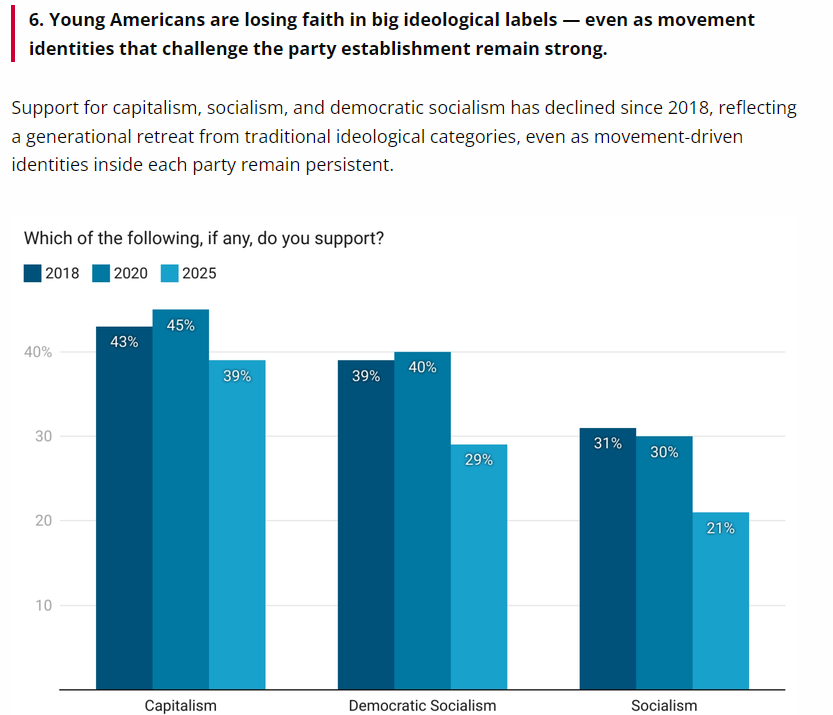
As Designers we understand how people think and therefore we have the power to either protect users or exploit them. I know that as Designers, we still depend on big corporations to make a living. And as both speakers mentioned we probably can’t change capitalism in an instant but we can make things better little by little through the design decisions we make. I would argue that many young people are also growing sceptical of businesses that are purely profit-driven and prefer companies that act more responsibly and socially. This is also reflected in the 51st edition of the Harvard Youth Poll, in which the share of young Americans who identify as capitalist fell by ten percent (from 29% in 2020 to 19% in 2025).
Source: https://iop.harvard.edu/youth-poll/51st-edition-fall-2025

3 Guidelines for Designers (Article 25(3) Digital Service Act)

The speaker mentioned some easy guidelines to adhere for Designers:

  1. Don’t give prominence to one option: This is most commonly used in cookie banners, where businesses often highlight the option that benefits themselves than the users.
  2. Don’t repeatedly ask the user to reconsider: Also called Nagging, which is used by businesses to upsell certain subscription plans or products. (e.g. choosing the Basic plan and then getting “Are you sure? You’ll miss these Pro features.”)
  3. Don’t make it harder to cancel than to sign up: Many businesses use this model called Roach Motel to keep users from unsubscribing from their service. (e.g. unsubscribing from a newsletter)

DATA Framework by Vicky Pirker

How can Designers make the right decisions? The speaker created a framework called DATA, which offers some pointers for making digital products less manipulative and exploitative.

  1. D (Dignity): Users should be respected and not shamed into making decisions.
    1. For example, pop-ups that try to upsell users at checkout, such as “Are you sure you want to continue with Basic? Get 5% off if you upgrade now.”
  2. A (Autonomy): User should be able to choose freely.
    1. One well-known example is the cookie banner, where the “Accept all” button is highlighted while the other options are barely visible. Thus, users often click whatever stands out, even if it isn’t in their best interest.
  3. T (Transparency): User should always know what is going on.
    1. One example is unsubscribing, which is often extremely complicated. Instead of simply confirming that everything has been turned off and the user is unsubscribed, many businesses add extra steps.
  4. A (Authenticity): Pressure placed on users should be real not fabricated.
    1. A common example might be fake urgency on hotel booking platforms, such as “20 people are looking at this hotel right now” or “only 3 rooms left.” A more honest version would be “3 rooms left on our platform,” which makes clear that the hotel itself possibly has more availability.

Related Links

IMPULSE #2 | 📓 Design Research 3

The second impulse I got was at the World Usability Congress 2026. I listened to the talk: “Addiction vs. controll: How (not) to build habit-forming products” by Sebastian Castaneda.

Why companies build addictive products

According to the speaker the basis for companies designing interactions that are addictive lies in their business model (capitalism). Most companies goal is to create digital products that are as engaging as possible, because that creates value. In other words the more time a user spends in an app, the more ads they see and the more revenue the company generates.

Time management in social media apps

Additionally, the speaker was specifically talking about time-management features inside social media apps. In the past these apps genuinely tried to interrupt the user so they would stop using the app. Over the past few years this changed since most businesses are profit-driven.

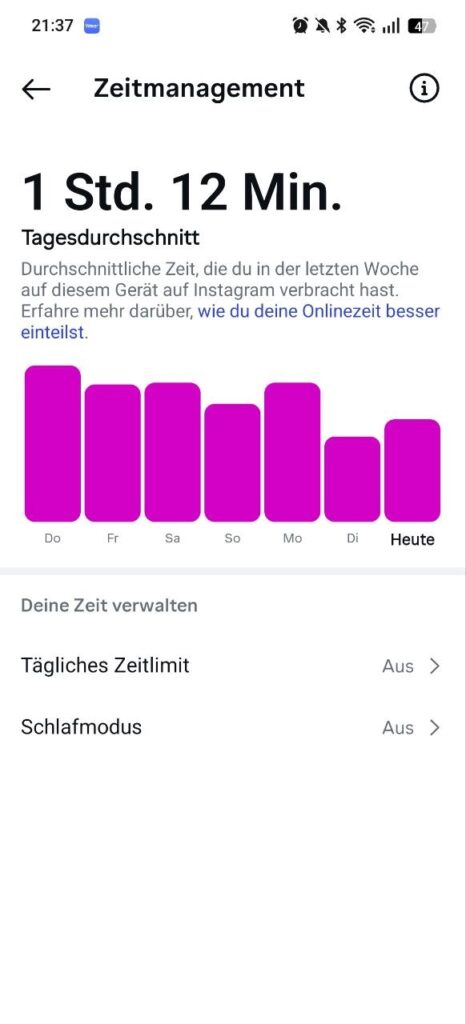
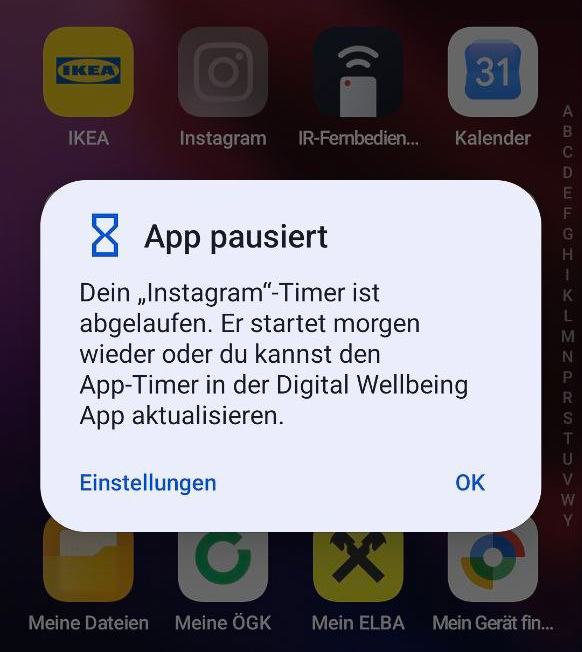
Until today I didn’t know that social media apps offered a time-management features. However, as shown in the previous images those features are not very effective. Why are there buttons for postponing the time limit but none for closing the app? At this point I want to mention that I use Android’s Digital Wellbeing feature, which actually works well for me. What helps me a lot through the day is that once I reach my time limit, the app icon gets grayed out. Even when I am searching for it I am having a trouble finding it. Besides that, adding more time is slightly more complicated, since I have to open the settings and click a few times.

Should we build habit-forming products at all?

One crucial question the speaker raised was: “Do we really need to build something that creates habits?”. He suggested that it sometimes makes sense to create habits. The following table shows a matrix for deciding whether it is ethical to build a habit-forming application.

the maker does not use itthe maker uses it
improves the users lifePeddlerFacilitator
doesn’t improve the users lifeDealerEntertainer

In brief, the Facilitator would be the ideal case. The creator (business) builds something that they believe in and would use themselves. The goal is to understand the user and their interests. In contrast, the Dealer (often social media platforms) is where the creator builds something that they do not use themselves and that does not help anyone, yet they still try to get people hooked on it.

What stood out to me

What stood out most to me were facts about the effects of social media. According to the speaker 45% of teen Instagram users find it difficult to manage their time on the platform. Studies show decreased cognitive capacity with the mere presence of a smartphone. Most importantly, people are two times as likely to get depression and anxiety if their social media use is more than five hours a day.

Accompanying links

Hooked: How to build Habit Forming Products – Book

James Clear – The Habbits Guide – Website

James Clear – Atomic Habits – Book

IMPULSE #1 | 📓 Design Research 3

Summer-Break Update

Over the past several months I took some time to look into other areas of interaction design. Initially I wanted to research interface design for older adults, but I kept finding existing studies, bachelor’s and master’s theses that already covered the topic. It didn’t feel innovative. Since then I’ve shifted to the topic of deceptive patterns as it is currently in public discourse. (e.g. Engagement-Optimized Algorithms)

Recently, more related topics like solarpunk, capitalism, social media and as already mentioned deceptive patterns came to my attention. Social media platforms monetize on attention, which ties their revenue directly to how long users stay engaged. This incentivises comapnies to create addictive algorithms and to use deceptive patterns.

In this context, I found the book Desing after Capitalsim by Matthew Wizinsky which I am currently reading. The author argues that design needs to be reoriented away from exploitative and growth driven models towards much fairer and more sustainable ones.

For my first blog post I watched a lecture about this topic from the author.

This lecture was focused on Design design after Capitalism. Matthew Wizinsky was talking about difference of Design (with capital d or expert design) and design (lowercase d or diffuse design). He describes Design as the the design being practised by trained designers whereas design is performed by everybody. Most importantly he mentioned that expert design can help facilitate diffuse design.

Facing the Polycrisis

The speaker mentioned that humanity are currently facing a poly-crisis: ecological, economic and social crises. They are not separate problems but overlap and reinforce each another. He asked himself if design can help us imagine a life after capitalism.

How can we begin to think beyond capitalist logics and subjectivities, so that we can start to labor, work, act and live in different ways?

This question resonated with me because I have noticed in my own work that much of what I design is driven by business interests and not the users. Companies decide goals and metrics, so in the end our design decisions end up following their commercial interests.

Who owns attention?

Most interestingly humanity currently lives in a time where information is everywhere and its valuable because attention, data and knowledge are parts that drive economy as well. As Matthew Wizinsky pointed out, property and ownership have shifted. In the past, owning something meant owning a physical product, but today things are digital. This is also where big platforms come in. They are not just passive participants in the market, they are the market itself. They decide what users see, what creators earn and what advertisers pay. And Designers sit at the center of this system: they create the interfaces, brands and experiences of these platforms and are therefore directly responsible for decisions that affect millions of users and huge amounts of revenue.

Why it is related to my topic of deceptive patterns?

Looking back at everything, deceptive patterns are not accidents.They come from companies and their business models, where engagement equals revenue and Designers are the ones who create the tools that make this possible. For this reason and for many others this topic is important to me.

Right now I am trying to gather ideas and impulses from this talk.

Disclaimer: I will use the terms “Designers” and “designers” with their distinct meanings, that were mentioned by Matthew Wizinsky.

Related Links

Design After Capitalism

Eat the rich!

Community Economies – J.K. Gibson Graham