Since I came up with the idea of creating a physical phone book in my last blog post, I decided to ask ten older adults, all around the age of 65, what they actually like to use their phones for. This time, the conversations went much better than my previous ones. Everyone was able to tell me quite clearly what they regularly use their phones for.
What I found even more interesting was that many participants started talking about their frustrations with smartphones on their own. While answering questions about their everyday phone use, they often mentioned situations where they felt confused.
For this very short interview, which was more of a questionnaire, I simply asked participants what they use their phones for most often. The most common answers were: making phone calls and using WhatsApp, either for texting or sending voice messages. Other frequently mentioned activities included looking at photos, checking the weather and reading the news. Some participants also said that they regularly listen to music, radio stations or playlists using apps on their phones.
These results were somewhat interesting for me because they support my idea that older adults often use a relatively small set of functions very frequently. This made me think that focusing on simplifying these tasks, rather than trying to simplify the entire smartphone experience, could be a direction for my research.
| Activity | Participants (n = 10) | Percentage |
|---|---|---|
| Calling (normal) | 10 | 100% |
| Watching Photos and Videos | 10 | 100% |
| Taking Photos | 10 | 100% |
| Calling (video) | 8 | 80% |
| Sending Messages (WhatsApp) | 7 | 70% |
| Listening to Music | 6 | 60% |
| Checking the Weather | 5 | 50% |
| Reading News | 4 | 40% |
| Listening to Radio | 3 | 30% |
Since many of the people I interviewed mentioned that they mainly use their phones to stay in touch with family and friends, it became clear that social connection plays a very important role for them.
Importance
Access to digital technology plays an important role in the lives of many older adults, as it can significantly influence their quality of life, social participation and ability to manage their health and well-being. Social isolation is a significant concern for the elderly population which is often caused by shrinking social circles either because of retirement, illness or death. [1]
As a result, maintaining social connections becomes increasingly important in older age. One of the most important benefits of digital technologies is that they can help reduce social isolation and loneliness. Through video calls and social media, older adults can stay connected with family and friends and continue to participate in social life. [1] Regular social interaction through digital technologies is also associated with better subjective health and overall well-being. [2]
Beyond supporting social connections, digital technologies can also help older adults maintain their independence and quality of life. They can support everyday tasks, promote cognitive engagement and enable older adults to remain active and participate in society longer. [3]
These findings are also in line with the interview results, where participants mentioned that they mainly use technologies such as smartphones to stay in contact with family and friends.
Prototyping – The PhoneBook
After trying out different ideas, I ended up focusing on the NFC phone book. The idea came from my observations and the short interviews I did. Most of them told me that they only use a handful of functions on their phones regularly, mainly calling family and friends, looking at photos, listening to music or checking the weather. That made me think: instead of trying to simplify the whole smartphone, why not just make these everyday tasks easier to access?
The book is divided into different sections based on most used functionalities, like calling family, listening to music or viewing photos. Every page contains pictures or symbols with NFC tags hidden inside. To perform an action, users simply open the page they need and hold their phone over the corresponding picture. For example, holding the phone over a picture of their daughter would automatically start a phone call.
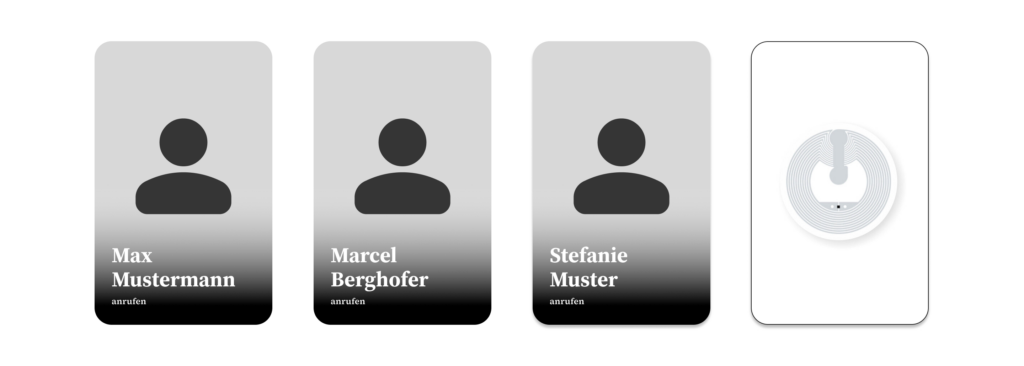
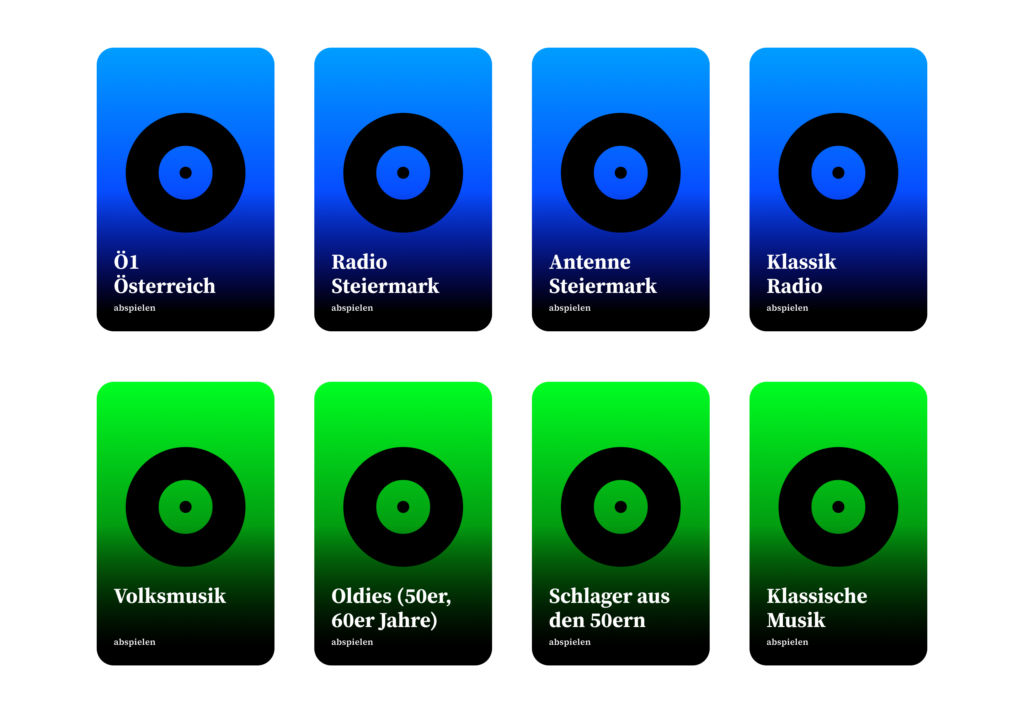
I decided to go with a book because it feels familiar. Earlier, I experimented with individual NFC objects, but I realized that they could easily get lost and would need to be stored somewhere. A book keeps everything in one place and also gives clear instructions.
At this stage, the prototype is mainly meant to explore whether a familiar object like a phone book can make smartphone interactions feel simpler. Instead of navigating through apps and menus, users interact with pictures and pages, which hopefully reduces some of the barriers that older adults experience when using smartphones.
Update from 6.7.2026
I already tested it with my grandmother. Her comment: “It feels like magic!”
Sources
[1] P. Bhowmick and E. Stolterman Bergqvist, ‘Exploring Tangible User Interface Design for Social Connection Among Older Adults: A Preliminary Review’, in Extended Abstracts of the 2023 CHI Conference on Human Factors in Computing Systems, Hamburg, Germany, 2023.
[2] Y. Liu and R. Tamura, ‘How can smart home help “New elders” aging in place and building connectivity’, 07 2020, pp. 100–107.
[3] P. Bhowmick and E. Stolterman Bergqvist, ‘Exploring Tangible User Interface Design for Social Connection Among Older Adults: A Preliminary Review’, in Extended Abstracts of the 2023 CHI Conference on Human Factors in Computing Systems, Hamburg, Germany, 2023.
