Design & Research 2 with Birgit Bachler
After creating the three prototypes which I described in the last article, I reflected on which direction I wanted to go. The app about light pollution reporting is what interests me the most because I believe that it is the solution that could reach a broader audience out of the three.
Once I made this decision, I decided to research citizen science and gamification. The starting point consisted in two articles I wrote in the first Design & Research phase. The first was my user testing project of the Globe at Night project website, where I analysed an existing tool to report light pollution. The other one is my article about light pollution-themed games.
My colleague Ahmed Turk and I started working on the light pollution reporting app for our App Design course. In the research phase, I realised that this app would fall under a niche. The risk that comes with it is low popularity and engagement. I decided to research gamification because I see it as a possible solution to this issue.
My research was based on three applications I have installed on my phone and that I used as a reference when designing: iNaturalist, Duolingo and Strava. iNaturalist is a citizen science application for reporting animal and plant species, while Duolingo is for language learning and Strava for fitness tracking. I decided to include the last two in my research because I believe that they have strong gamified features that I could use as an example.
In the following annotated bibliography you can see a summary and my review of the papers.
Howard, L., van Rees, C. B., Dahlquist, Z., Luikart, G., & Hand, B. K. (2022). A review of invasive species reporting apps for citizen science and opportunities for innovation. NeoBiota, 71, 165-188. https://neobiota.pensoft.net/article/79597/
The authors analysed the efficacy of existing apps to report invasive species.
These apps are based on citizen science, meaning that they rely on users to report data about the environment they are in. Although smartphones have largely enhanced the capability to monitor invasive species, existing apps do not make use of all known functionalities that could maximise their efficacy. User engagement is limited due to the lack of gamification and social media sharing options, which would encourage frequent and prolonged usage.
The introduction of a leaderboard would be a competitive element that encourages users to send data about a specific area that needs more coverage. Leaderboards, reward systems, Badges and ranks could motivate users to send reports regularly.
There are some other features that would improve engagement. Apps are not taking advantage of modern smartphone sensors such as thermometer, altimeter and barometer. Also, they are often not using machine learning and AI to verify or flag reports, which would save time and human resources. Moreover, in many cases offline saving of reports is not possible, making it hard for users to cover certain areas.
The reason why these features are not implemented is the lack of funding for design and development. The authors suggest the creation of open-source code or templates to spread quality and innovation and reduce costs.
This paper was crucial in understanding that citizen science apps struggle to keep their users motivated and engaged in the long-term. It made me realise that my project should feature a gamified design and social media sharing options to improve engagement. The exact gamified features are yet to be explored.
Chen, X., & Deng, Y. (2025). Exploring the Impact of Gamification on User Engagement and Motivation: A Mixed-Method Study on Duolingo. DiVA Portal Repository, MSc Thesis, 1-52. https://www.diva-portal.org/smash/record.jsf?pid=diva2%3A1971949&dswid=-429
This paper explores the impact of Duolingo’s gamified design on user engagement and motivation, focusing on emotional responses.
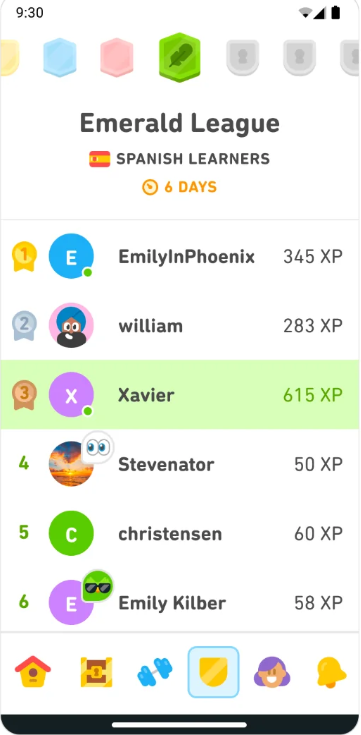
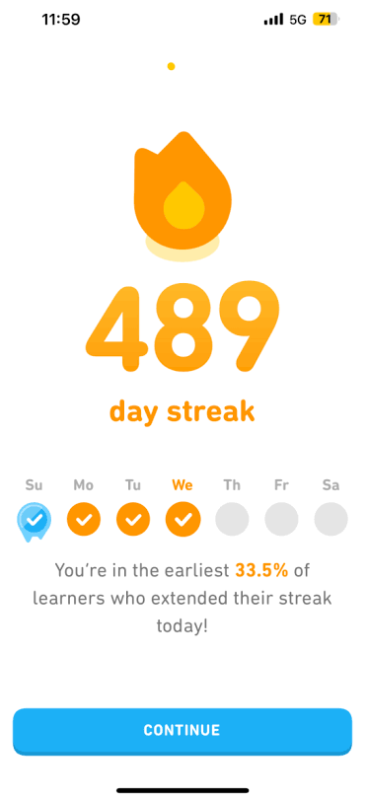
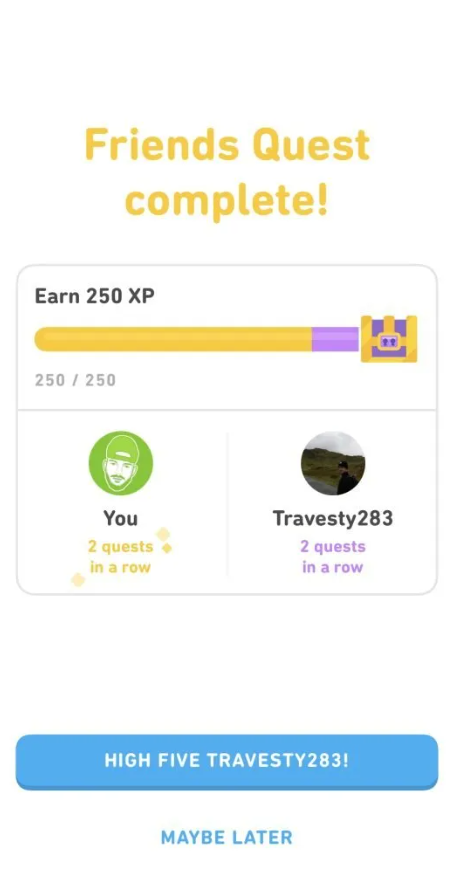
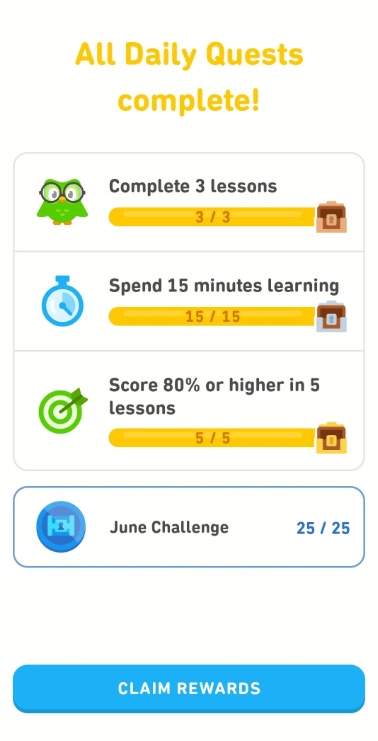
The encouragement mechanisms analysed were the streak, the leaderboard, the achievement system, the friend system, treasure boxes, daily tasks and double XP. While streaks are an effective method to keep users on the app daily, they can cause psychological stress. The “streak freeze” can relieve these feelings. The leaderboard causes mixed feelings: on one side, the competition motivates people to learn more and increase their points, on the other side a drop in rankings can cause loss of motivation and even an interruption in the daily usage of the app. The achievement system fails in its intention to motivate users because it is not seen or understood by most of them. The friend system succeeds in motivating users, creating a feeling of social responsibility. The treasure boxes also have a good impact because they spark curiosity. Daily tasks give users the positive feeling of making progress, but they can turn into stress factors when the tasks are not completed. Double XP (experience points) also generates mixed feelings: users can make progress more quickly, but the time limit causes stress.
The penalty mechanisms analysed were the life point limitation and the forced repetition. While the heart system made users more focused and careful, it also caused anxiety and finally frustration when it came to gaining hearts back by watching ads. While repetition helps with memory retention, the fact that it is forced feels like a punishment, therefore users should have the freedom to avoid it.
In conclusion, while Duolingo’s encouragement mechanisms successfully motivate users to learn regularly, they can cause feelings of stress and anxiety. Especially penalty mechanisms can reduce motivation.
The paper is outdated, in fact some issues such as the hearts have already been fixed. As a user of the app, I can confirm that the encouragement mechanisms cause me stress and even lead me to avoid opening the app. This happens especially when I receive notifications with a negative tone after skipping a day.
While Duolingo focuses on learning and often uses pushy and passive aggressive tones, I can still draw inspiration from its gamified design to keep the users of my application engaged. The paper could serve me as a guide to create more user-centered learning mechanisms that take emotions into account.
Hartsch, S. (2026). Gamification on Strava: An Empirical Study on User Motivation, Engagement, and Continued Platform Use. UCP Repositório Institutional, MSc Thesis, 1-61. https://repositorio.ucp.pt/entities/publication/42bc8434-8be7-4893-94bb-5c7d12b66680
This paper analyses how gamification elements on the fitness app Strava influence runners’ behaviour, focusing on motivation, perceived social pressure, engagement, continued use and the activation of premium features.
The gamification elements Strava uses are challenges, leaderboards, segment rankings and progress visualisations. It was found that gamification elements increase user motivation, leading to higher engagement on the platform. Features like optional challenges and individual goal setting are customisable, do not force participation and therefore promote autonomy. Visible progress indicators, performance feedback and personal achievements create a positive feeling of competence, while social interactions like kudos or comments are associated with higher perceived social connectedness. It can be said that the app supportings intrinsic motivational processes rather than relying on external pressure.
Higher engagements translate to an increased willingness to use premium features. The reason for this is that users perceive physical activity as self-determined and meaningful. Therefore, gamification is not directly linked to the adoption of premium features, but by encouraging users to regularly log their activity on Strava, the app becomes a part of one’s training routine.
Competitive elements and social comparison features did not have a negative impact on users and did not affect their engagement through perceived social pressure. This happens because social pressure is a highly individual experience. Feelings associated with comparison are usually temporary and are not sufficient to reduce engagement over time.
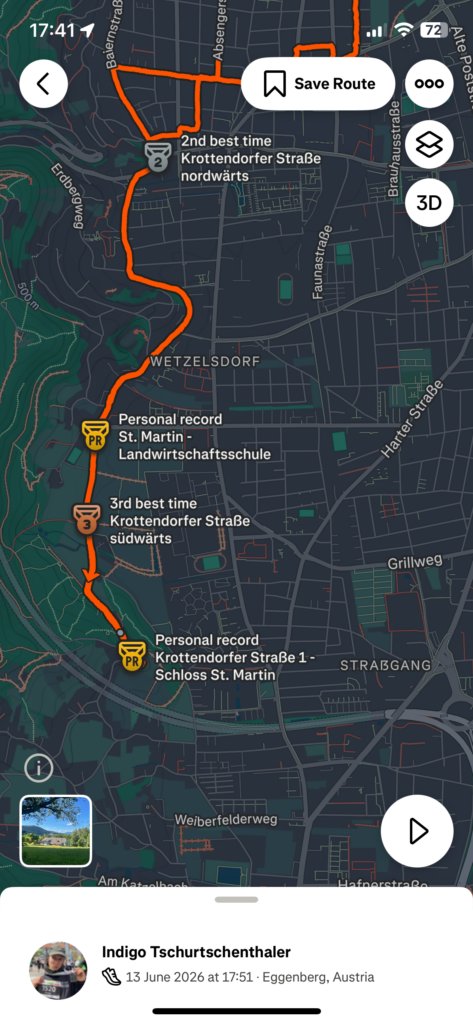
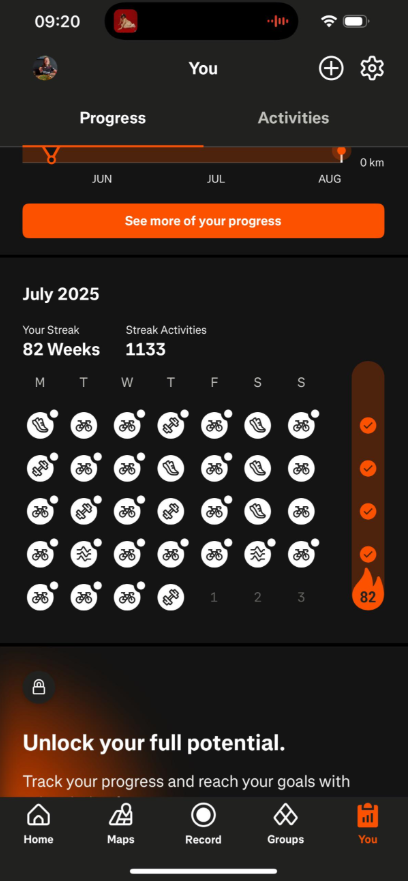
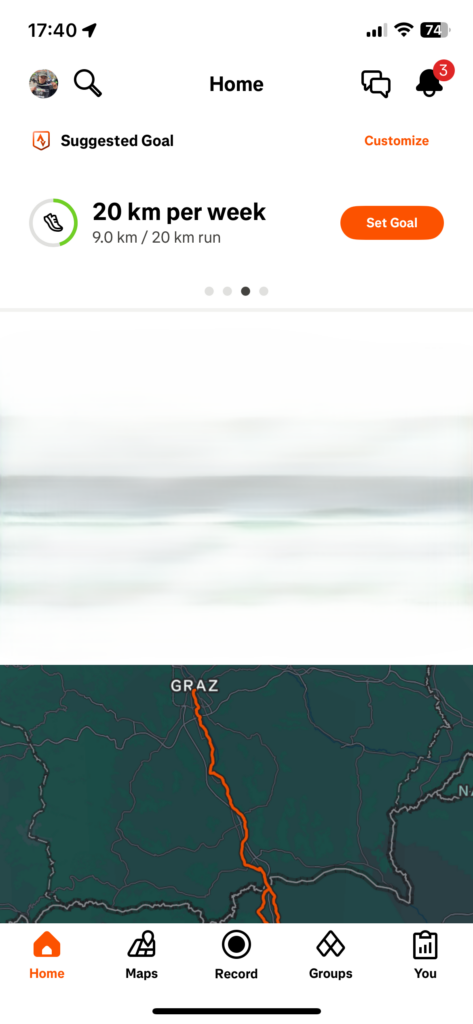
In conclusion, Strava operates primarily through motivational mechanisms rather than social pressure and comparison.
In my opinion, Strava represents a healthier way to integrate gamification and increase engagement, because it relies on personal motivation rather than external pressure. I believe that pressure-free motivation and customisable goals are positive examples of gamification that I could include in my app.
Kuure, O., Kähkönen, K., & Hekkala, R. (2026). The Impact of Social Features and Application Design on User Behavior and Long-Term Engagement of Strava Users. Proceedings of the 59th Hawaii International Conference on System Sciences, Article 453, 1-10. https://scholarspace.manoa.hawaii.edu/items/c9eea53a-eddb-4a62-9429-16c8b005c1ac
This paper explores how Strava users interact with its social features and how its design and functionalities affect user engagement.
It was found that sharing activities with peers motivates users to exercise and engage more with the application. At the same time, some users feel insecure and curate their feed by selecting which activities to display, in order to maintain a positive social image.
Strava users downloaded the app or switched to it from other platforms because they value the sense of community it gives them. Group features are highly appreciated. Yet, a big network results in a cluttered feed. This makes some users feel stressed out, reducing their motivation to post activities.
Everyone stays on Strava because they appreciate a different feature. A large amount of features may cater to everyone’s needs, but some users feel overwhelmed by them and prefer quality over quantity.
All in all, users look forward to logging activities because they feel motivated when their peers interact with their logs. All this engagement creates a sense of loyalty that makes it so that the app becomes a part of the users’ fitness routine.
It was mentioned in this paper that the surveyed population may not represent the total of Strava users and I agree with it. The interviewed persons already use Strava various times a week. I think the results would be different if people new to fitness had participated. In my opinion this difference is relevant when studying how to cater to a new target group. Nevertheless, the paper helped me understand the role social media features can have in apps and I think my project should include this functionality.
After finding these papers, we did another research activity with Dr. Ursula Lagger. The session with her helped me to improve my research strategy and I was able to find more interesting papers.
I first described my topic to Gemini and asked it for keywords for my research. It recommended these:
- Citizen Science Data Quality: To study how apps like iNaturalist structure data so scientists can trust and verify it.
- Gamification for Behavior Change: To find frameworks for keeping users engaged in environmental apps over time.
- Mobile AR Science Education: To research how to design effective augmented reality tools for teaching astronomy and light pollution.
- Civic Tech & E-Participation: To understand how apps can successfully connect citizens to local government and petitions.
- Artificial Light at Night (ALAN): The standard scientific term used in research papers for light pollution.
Using these keywords I browsed various platforms, primarily the library catalog of FH Joanneum, the Search Engine of the Austrian Library Network (OBV) and Google Scholar. I found a surprising quantity of relevant material. I am going to list the resources here in APA Style format, divided into categories. Due to time reasons I am going to read them in a future research phase.
A. Light Pollution & Citizen Science
- Kyba, C. C. M., Wagner, J. M., Kuechly, H. U., Cavazzani, S., Zamorano, J., Hänel, A., … & Hölker, F. (2013). Citizen science provides valuable data for monitoring global sky glow change. Scientific Reports, 3(1), 1835. https://doi.org/10.1038/srep01835
- Kyba, C. C. M., & Hölker, F. (2013). Loss of the night: A citizen science project for monitoring skyglow. GFZ German Research Centre for Geosciences. https://doi.org/10.2312/GFZ.b103-13054
- Bauer, B. (2020). Exploring the impact of artificial light at night (ALAN) through citizen science initiatives. University of Vienna.
B. Citizen Science Data Quality & Structure
- Kosmala, M., Wiggins, A., Swanson, A., & Simmons, B. (2016). Assessing data quality in citizen science. Frontiers in Ecology and the Environment, 14(10), 551-560. https://doi.org/10.1002/fee.1436
- Balázs, B., Mooney, P., & Novak, J. (2021). Data quality and validation protocols in crowdsourced environmental monitoring. In Citizen Science: Innovation in Open Science, Society and Policy (pp. 139-157). UCL Press. https://doi.org/10.1007/978-3-030-58278-4_8
C. Gamification & Civic Engagement
- Thiel, S.-K. (2016). A review of introducing game elements to e-participation. Proceedings of the Innovation Systems Conference (AIT), 1-9.
- Sailer, M., Hense, J. U., Mayr, S. K., & Mandl, H. (2017). How gamification motivates: An experimental study of the effects of specific game design elements on psychological need satisfaction. Computers in Human Behavior, 69, 371-380. https://doi.org/10.1016/j.chb.2016.12.033
- Bowser, A., Hansen, D., & Preece, J. (2025). Gamifying citizen science: Long-term engagement and behavior change in biodiversity apps. Biological Conservation, 301, 111001. https://doi.org/10.1016/j.biocon.2025.111001
D. AR/VR & Science Education
- Ibáñez, M. B., & Delgado-Kloos, C. (2018). Augmented reality for STEM learning: A systematic review. Computers & Education, 123, 109-123. https://doi.org/10.1016/j.compedu.2018.05.002
- Sirakaya, M., & Alsancak Sirakaya, D. (2022). Augmented reality in science education: An analysis of design features and learning outcomes. Journal of Science Education and Technology, 31(1), 45-61.


