Intro
After the development of the functional prototype, the device was brought into the classroom for a user testing session. The objective of the test was twofold:
- to evaluate the functionality of the system
- to collect feedback on the overall design and user experience
Functionality Testing
The first goal was to verify whether the system could reliably measure soil moisture and provide visual feedback through the LEDs.
The results were very positive. During all testing sessions, the system worked correctly and the code performed as expected. The sensor successfully detected changes in soil moisture, while the LEDs updated in real time.
Participants found the color transition easy to understand and appreciated the immediate feedback provided by the light.
Improvements
One important observation emerged during testing: the need to also indicate when the soil becomes excessively wet. Since, overwatering can be as harmful to plants as underwatering.
Design Evaluation
The second objective was to evaluate the physical appearance of the prototype.Participants generally appreciated the visual effect created by the colored light and the lamp-like shape
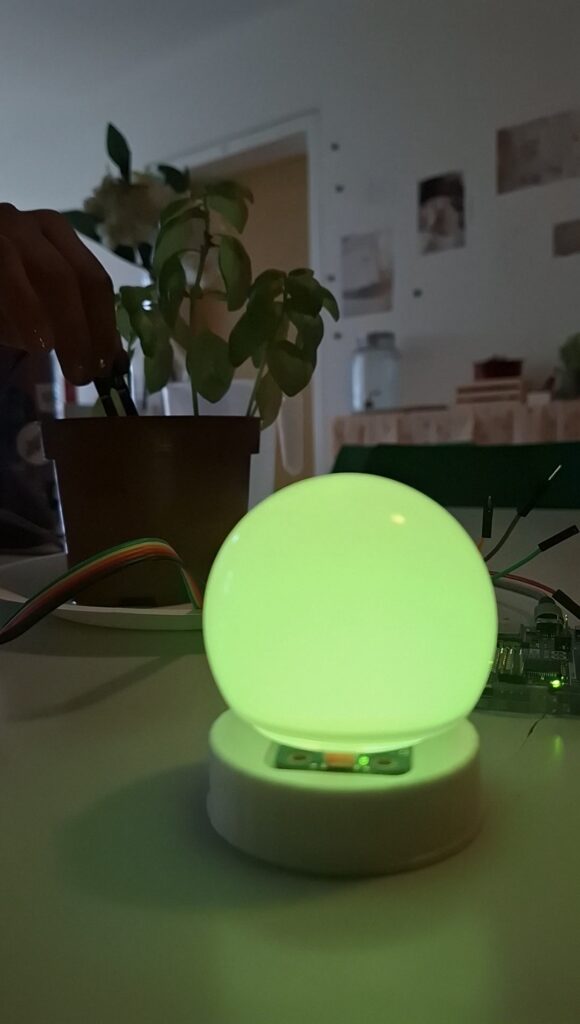
Figure 1: Bulb lamp design
However, feedback also suggested that the design could become more playful. So, to explore different possibilities, several alternative 3D-printed shapes were produced and tested. These elements could be positioned above the LEDs to create different visual effects and appearances.
Although participants appreciated these variations, the most promising direction identified during the testing phase was a different approach: reducing the size of the sensor itself. A smaller sensor could be integrated directly into the plant pot and designed as an ornamental object rather than a visible technical component.
Conclusion
The user testing session confirmed the reliability of the system. However, the testing also highlighted the need to improve the design of the object by reducing its size and creating a decorative element that could be placed directly inside the plant pot.
