Experiencing Space Through Light: Inspiration from Tomás Saraceno at Haus der Kunst
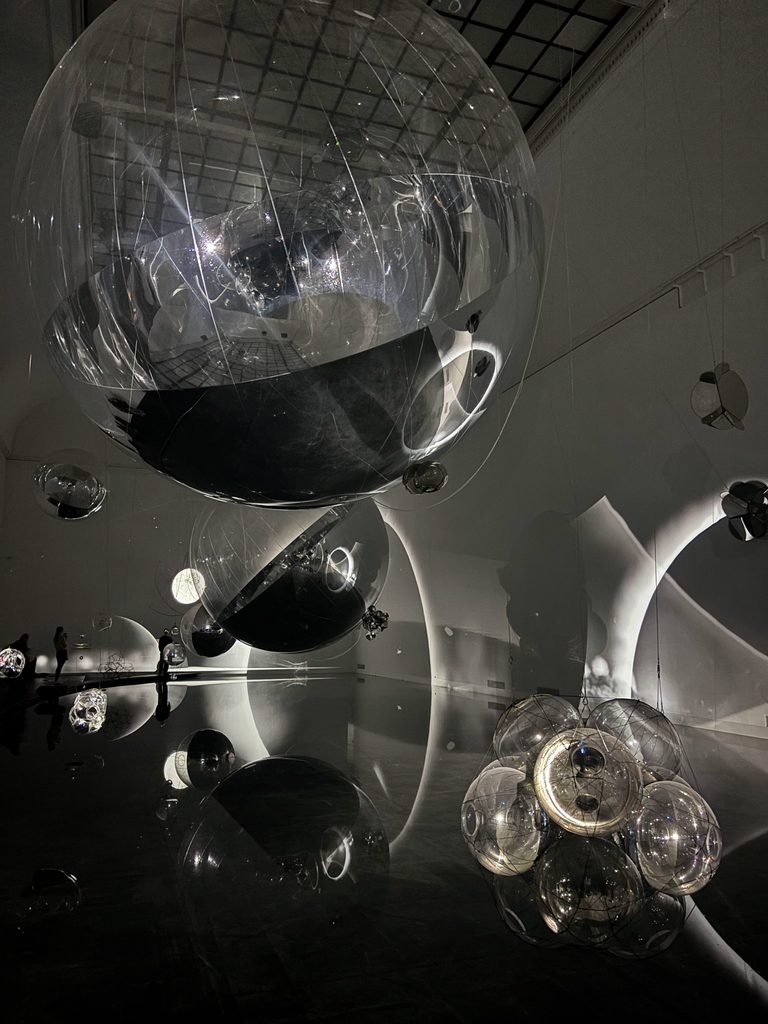
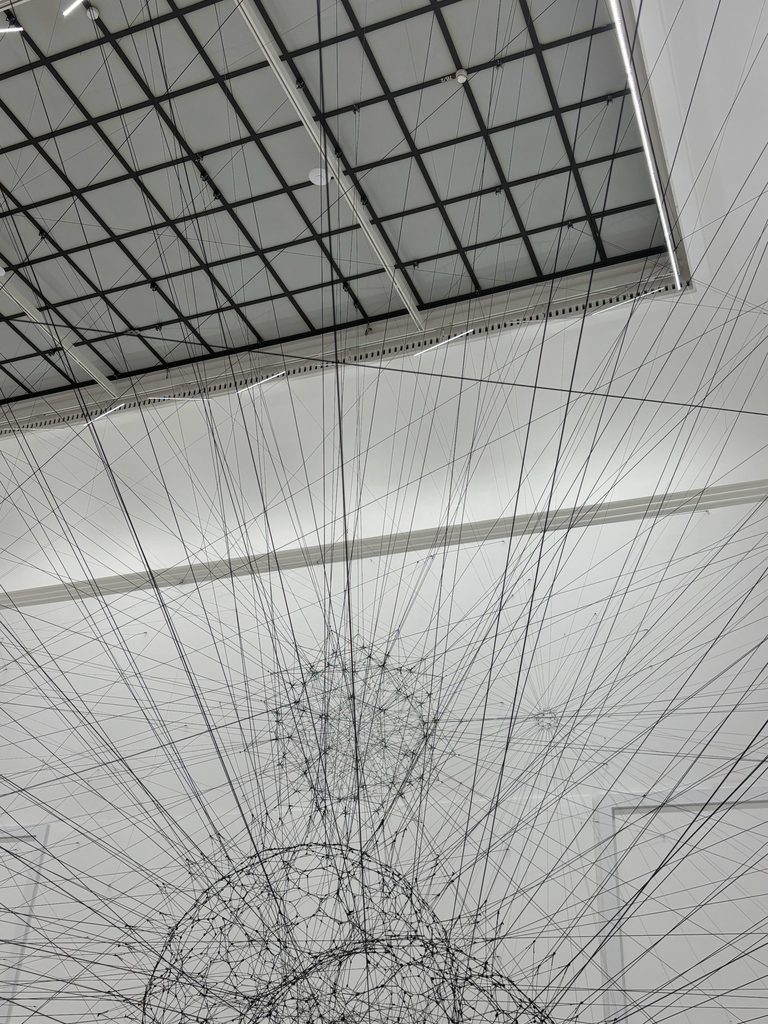
I visited the current exhibition by Tomás Saraceno at Haus der Kunst in Munich. The exhibition connects art, architecture and science through spatial environments and installations that invite visitors to perceive their surroundings differently. What made this experience particularly relevant to my Master’s thesis was the use of light, projections and interactive installations to influence how visitors experience and move through a space.
Since I want to focus on user experience design at German train platforms in my Master’s thesis, I’m particularly interested in exploring how light could be used to guide passengers through their environment. Although I have already spent considerable time researching this topic, I am still looking for inspiration beyond conventional wayfinding systems, such as signs, floor markings and digital displays. Visiting the exhibition allowed me to experience spatial design from a different perspective and consider how light could become an active part of an environment rather than simply illuminating it.
In my research, I have already explored ideas about how light could be used as part of a flexible and adaptable guidance system. However, I am still collecting new perspectives that could help me develop and question my existing ideas. A particularly interesting aspect of the exhibition was the way the rooms were kept dark, allowing the artworks to become the main sources of light. The installations were not only artworks but also served as visual reference points that helped visitors navigate the space and move from one area to the next.
Of course, a train platform does not offer the same controlled conditions as a carefully curated exhibition space. Nevertheless, this experience made me more aware of the importance of placing orientation points within a reasonable distance of one another. I started to think of them as stepping stones, with each point providing a visual reference that helps people find the next one and continue moving through the environment. Rather than expecting passengers to understand an entire space at once, a sequence of clearly positioned visual cues might help them navigate it step by step. This is an idea I find quite interesting and would like to investigate further in my upcoming research. At the same time, I recognise that an artistic installation and a practical wayfinding system have very different purposes. An art installation often aims to encourage exploration, evoke emotions or challenge how visitors perceive their surroundings. At a train platform, guidance needs to be clear, reliable and immediately understandable. Passengers may be in a hurry, carrying luggage, travelling with children or trying to navigate an unfamiliar station.
This difference is precisely what makes the exhibition valuable as an impulse for my research. Rather than trying to reproduce an artistic effect, I want to investigate which principles could be transferred into a practical design context. How does light attract attention, and how can it do so without distracting passengers from their surroundings? How many orientation points are needed to help people understand where to go next and at what distance should these points be placed to create a continuous and understandable route? Could light communicate direction without causing confusion? And how might its effectiveness change depending on the architecture, daylight conditions or the number of people on a platform? These questions could help me examine whether light-based guidance would be useful and usable in practice.
The exhibition did not provide a ready-made solution for my Master’s thesis, but it expanded the way I think about possible design approaches. It encouraged me to look beyond established transport design conventions and consider how light and spatial relationships could contribute to orientation via breaking information down into smaller steps and orientation points.
My main takeaway from this visit is that inspiration for design research can come from disciplines outside the immediate field of study. Although the exhibition was created within an artistic context, it gave me a new perspective on the relationship between light, architecture, movement and human perception. Most importantly, it helped me identify a specific aspect worth exploring further: whether a sequence of visual orientation points could support passengers in navigating train platforms more intuitively.
Links/Media:
https://www.hausderkunst.de/eintauchen/tomas-saraceno
https://www.toptal.com/designers/creative-direction/art-vs-design
https://mabiloft.com/en/blog/insights/ux-and-psychology-micro-steps-in-ux-to-motivate-users
