Looking back at this semester, the thing that interested me the most was moving from theory to experimentation.
At the beginning of my research, I explored how objects communicate through perception, semiotics and design. This time, I tried to observe what actually happens when people interact with objects.
The Looking Beyond workshop was probably the moment I found the most meaningful. Seeing the students transform simple objects into something completely different showed me in a concrete way how much a personal perspective can change the meaning of what we see in front of us.
The questionnaire about the three objects also allowed me to observe how everyday objects can become connected to memories, experiences and personal interpretations.
At the same time, this journey also helped me understand some difficulties. During different moments of the research, I felt stuck, unsure about which direction to take or how to transform this topic into something broader. Rather than finding a final answer, this experience helped me understand what I am truly interested in exploring and what feels less connected to me.
I do not think this topic will become the starting point of my thesis, but it remains an important part of my journey. It taught me the value of observing what we often take for granted and creating opportunities to see objects, and the world around us, from different perspectives.
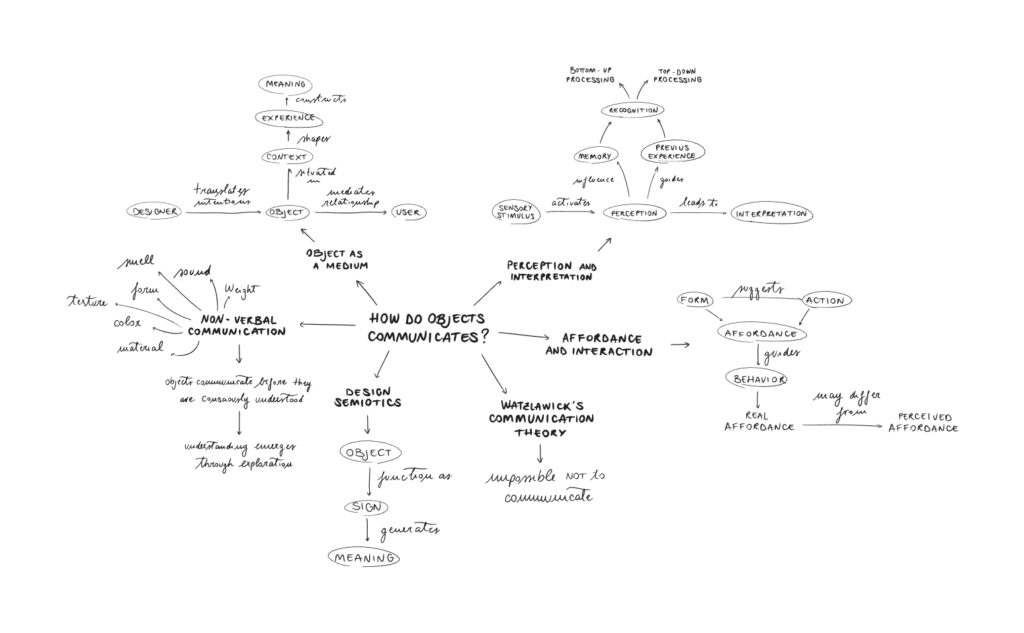
Creating this concept map helped me organize and connect the different topics I explored during my research. Since the map is a general overview of the subject, it allowed me to identify relationships between concepts that I had initially considered separately.
One of the main insights I gained is that communication is not a one-way process: objects do not communicate only through their function. The meaning of an object is created through the relationship between the object, the user and the context in which it exists. This made me realize that communication is not fixed, but changes according to perception, experience and interpretation.
I found the connection between perception and affordance particularly relevant because it shows how design can guide actions and behaviours.
Another interesting aspect was with Watzlawick’s communication theory, especially the idea that “it is impossible not to communicate”. This principle can also be applied to objects: every designed artifact communicates something through its form, materials and presence, even when this communication is not intentional.
Since this concept map is only an introduction to the topic, many aspects could be explored further. In particular, I would like to explore how different people interpret the same object and how personal experiences influence meaning.
Overall, this exercise helped me develop my research question further. I am still interested in how objects communicate, but I now want to explore more specifically how design choices influence perception and how people create meaning through their interaction with objects.
This research helped me see everyday objects not only as functional products, but also as active elements of communication!
Looking at the answers collected, I had confirmation that objects are not interpreted only for what they are, but also for what they represent.
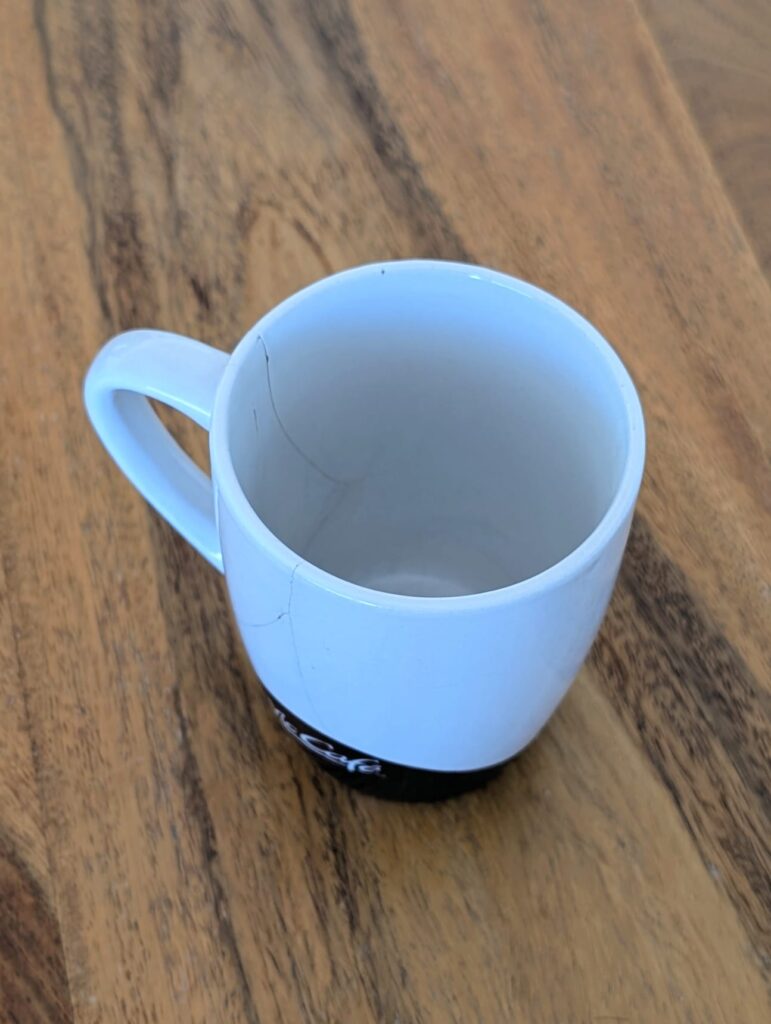
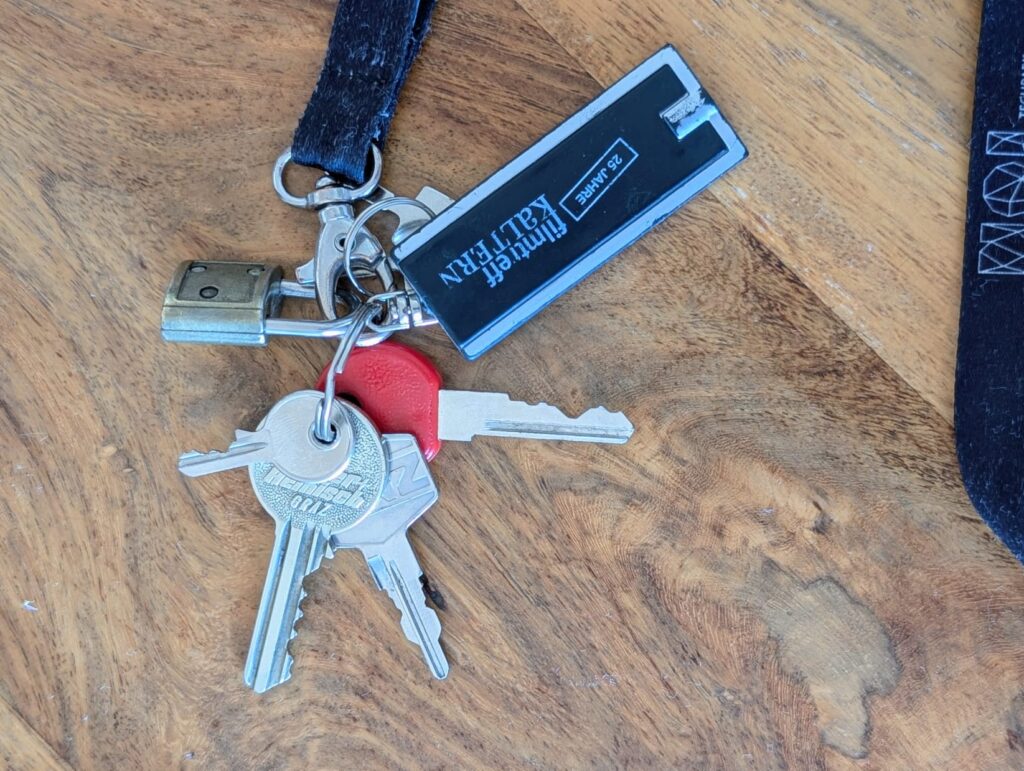
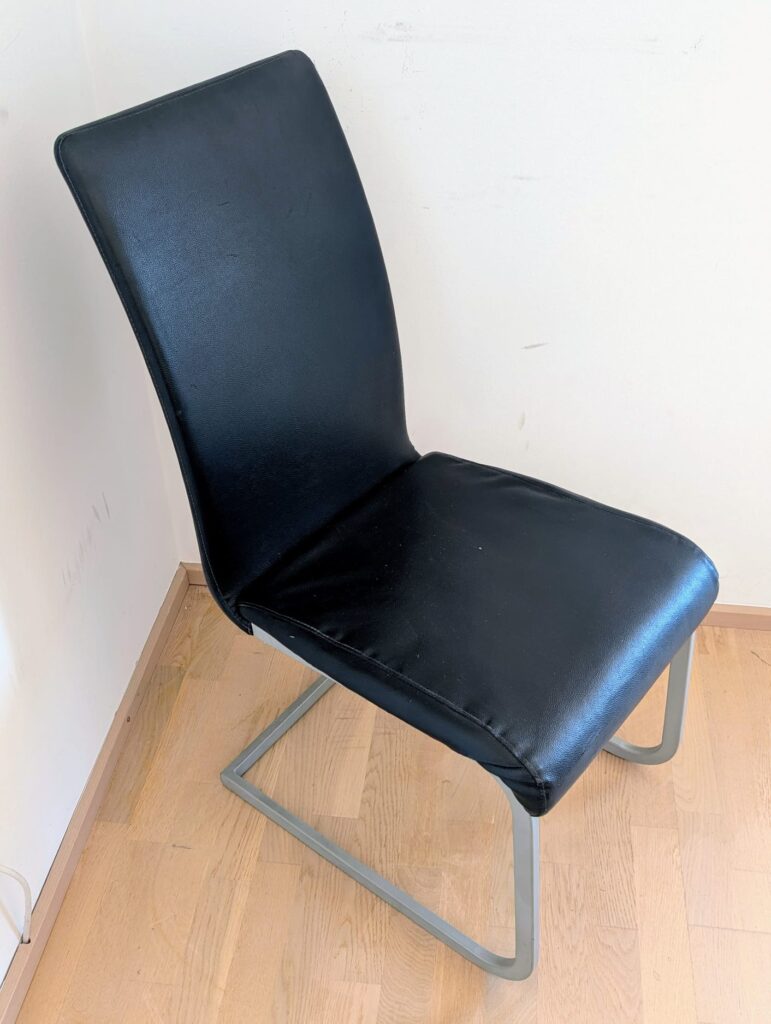
The cup remained mostly connected to everyday and personal moments: breakfast, coffee, a small ritual of calm. The keys, instead, led to more symbolic interpretations: not only an object used to open doors, but a symbol of home, independence and responsibility. The chair, perhaps the most open object, collected very different interpretations: comfort, work, waiting, loneliness.
This experiment made me notice once again that an object is never perceived only for what it is. Its shape can suggest something, but meaning takes shape through the person looking at it, through the memories and experiences they bring with them.
I was also surprised by how little is needed to transform an ordinary object into a story.
I collected different answers for each object, and here I present three of the most representative ones: the ones that better show the connections, images, and stories that emerged around each object.
First object: Cup
First impression
“Breakfast!”
“Coffee”
“The morning, the beginning of the day”
Memories and stories
“It reminds me of a daily moment of calm.”
“I imagine my day that is about to begin.”
“It reminds me of the ceramics course I took in France, where I tried to make a cup for the first time.”
Second object: Keys
First impression
“The song by Gianni Morandi and Jovanotti ‘Apri tutte le porte’”
“I take my keys and leave the house”
“Did I lock the door?”
Memories and stories
“They remind me of home and the garage, but also of the workplace.”
“I imagine that the more keys someone has, the more responsibilities they have, and probably also an older age.”
“I imagine all the doors they have opened and closed, every new beginning and every return they have accompanied.”
Third object: Chair
First impression
“So uncomfortable”
“Office, homework and duties”
“A comfortable, bare and anonymous object”
Memories and stories
“It reminds me of an unfinished chair.”
“I imagine waiting in a doctor’s waiting room…”
“I imagine a child rocking on the chair while trying to concentrate.”
To continue exploring the topic of my research, I wanted to observe what happens when different people encounter the same object.
I chose three objects from my everyday life: a cup, a set of keys and a chair. Three common objects, present in everyday life, but able to evoke different memories, images and stories.
I created a short online questionnaire asking participants to look at the photographs and answer three simple questions:
What is the first thing that comes to your mind when looking at this object?
What or who does it remind you of?
What story do you imagine behind this object?
Through these questions, I tried to observe three aspects: the immediate perception of the object, the connection with personal experience and the way a possible meaning is created.
In the next blogs, I will collect the answers that emerged and observe the different stories created around the same objects.
When I organised this workshop, I simply wanted to understand how the students would look at common objects and what they would be able to imagine starting from familiar shapes.
The objects were the same for everyone, but many different stories were created!
Some students started from the shape of the object, others from an idea or an image they already had in their mind. A detail could become something completely different depending on who was looking at it.
This activity confirmed something that I am exploring in my research: the meaning of an object is never completely fixed. It does not depend only on what the object is, but also on the person looking at it and the experiences they bring with them.
I would definitely do this workshop again! I was surprised to see how quickly the students were able to move beyond the function of the object and imagine new possibilities. It also created a new curiosity for me: what would happen if I did the same exercise with adults?
One thing I would improve is leaving more space for randomness in the choice of objects: instead of giving everyone the same objects, I would let each participant pick different ones, creating new and unexpected combinations.
The most interesting part of the activity was exactly this: there was no right answer, every object could become something different!
Below are some observations that emerged during the workshop…
I noticed two different approaches:
some students started working immediately, with very clear ideas
others needed more time to observe the objects and let themselves be inspired
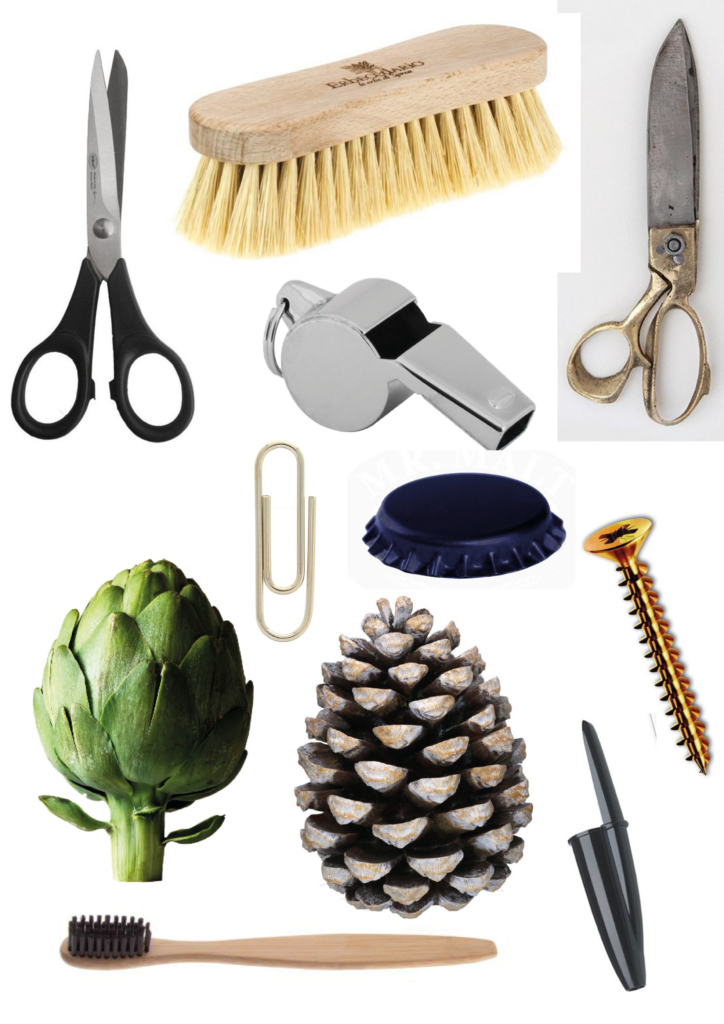
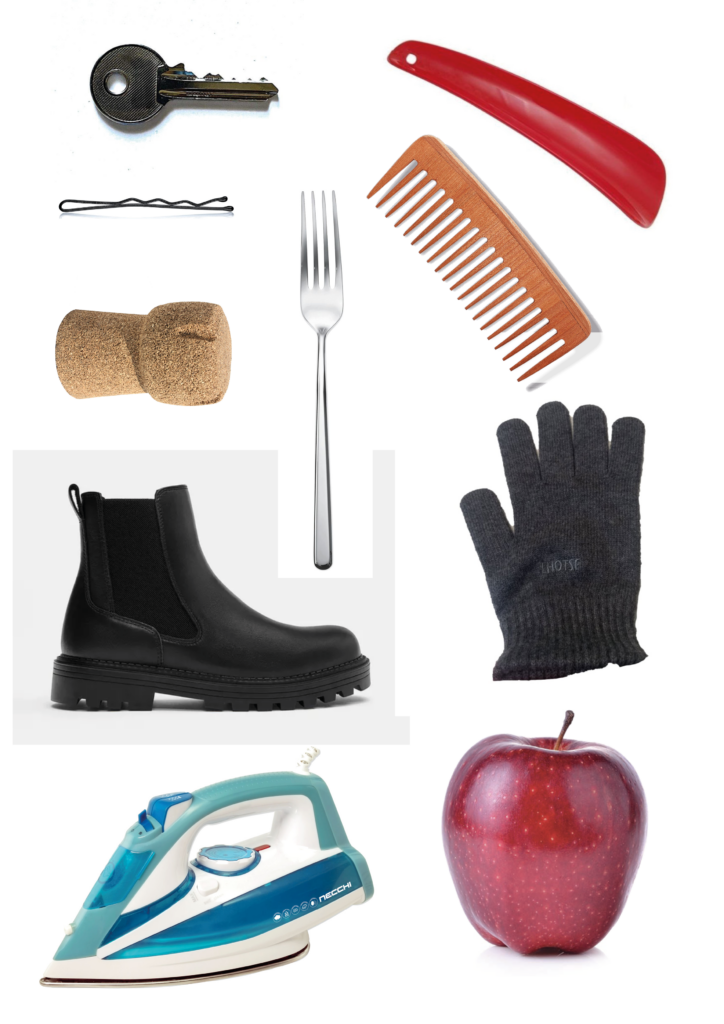
Some objects led different people towards similar interpretations, probably influenced by their shape:
screw → drill
pine cone → tree crown
shoehorn → slide
glove → bird
When an idea appeared, it often created a feeling of satisfaction: the object started to become something new.
The activity was experienced as a moment of:
relaxation
involvement
concentration
The first transformation seemed to be the easiest one to find. Often, after completing an idea, imagining new interpretations required more time and creativity.
In the attached PDF, I collect some of the works created by the students during the workshop!
In everyday life, we are surrounded by objects that we know so well that we almost stop really looking at them. An object becomes familiar, loses its ability to surprise us and remains simply what we think it is.
But what would happen if we tried to look at it with different eyes?
From this question, the workshop I created with some middle school classes in Egna, a town in South Tyrol,, was born. During the period when I worked at the school as an Italian substitute teacher, whenever we had some free time, I enjoyed proposing small creative activities to the students. Luckily, my colleagues were also enthusiastic about the materials I prepared and welcomed this activity with pleasure, giving me the opportunity to experiment!
The goal was to explore how objects are perceived and reinterpreted, leaving space for creativity and imagination.
I presented the students with a series of common and random objects, printed on a worksheet, and asked them to cut them out and transform them through drawing. The task was not to represent the object as it is, but to try to see what it could become.
A glove did not have to remain just a glove. It could transform into a character, a fantastic creature, a part of a new body, or something completely different.
Through this simple activity, objects stopped being only functional objects and became starting points for new stories. Their shapes, details and visual characteristics opened up different possibilities, depending on the perspective of the person looking at them.
This workshop connects to my research: if the meaning of objects comes from the encounter between what we see and our experiences, what happens when we leave space for imagination?
In the next blogs, I will collect some of the results that emerged from this experiment and the different interpretations that the students gave to the same objects.
During International Design Week, I participated in the workshop PLAYS! with Emilio Leonardo.
One of the sentences that accompanied the workshop was: “Playing is a serious way to imagine other possible futures.”
The activity explored play as a tool for knowledge and imagination, not only between humans, but also in relation to animals and non-human systems. Through scenarios, roles and collaborative processes, we worked on the possibility of seeing the world from different perspectives.
One of the exercises proposed was “A day in the life of…”: choosing an object and imagining a day in its life.
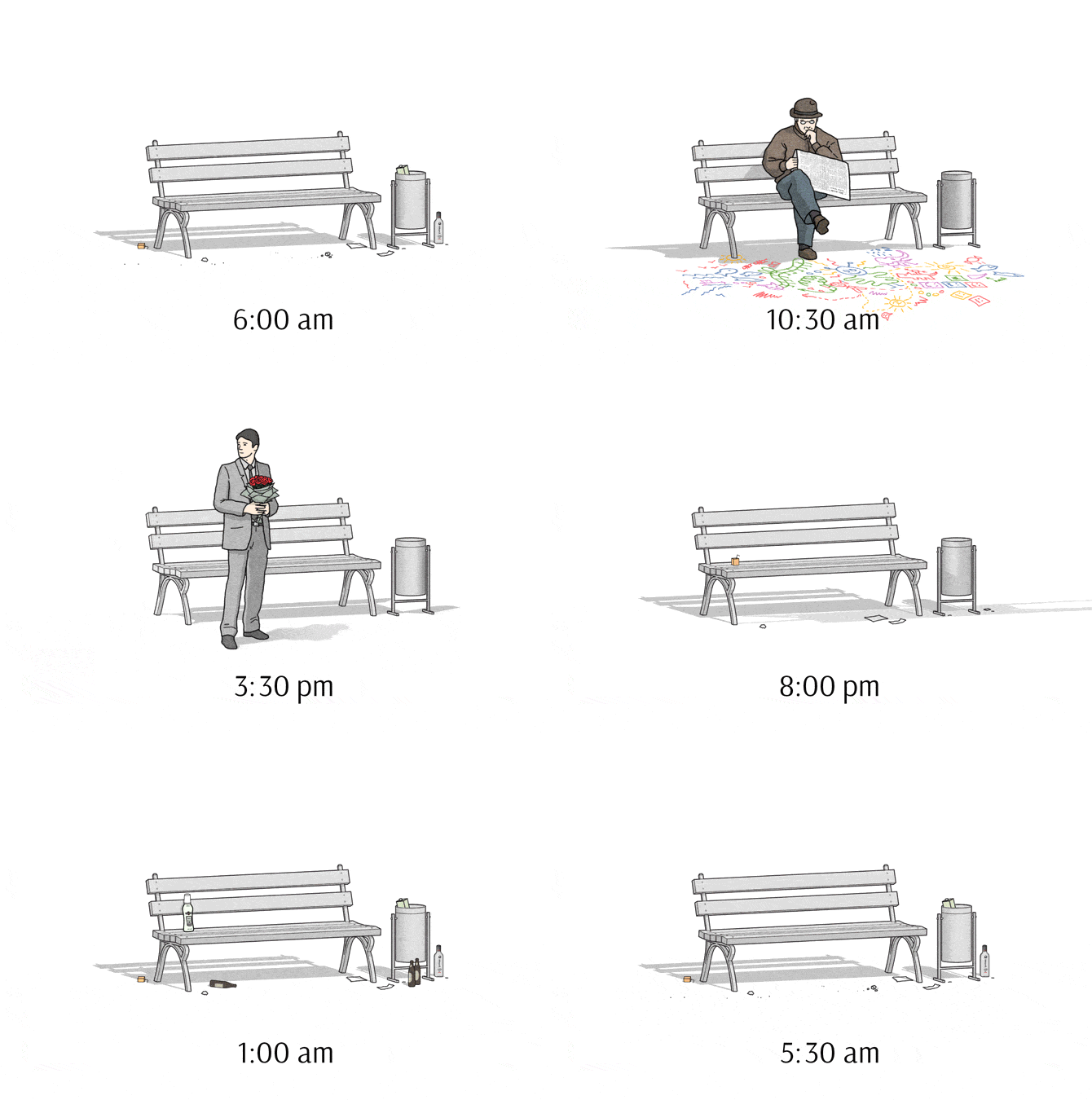
A day in the life of a bench, Max Degtyarev
The inspiration came from the work of Max Degtyarev, who tells the everyday life of a bench through an illustration showing what happens around it during different hours of the day.
Looking out of the window, I chose an object that we often see without really observing: a street lamp.
And this is how the story of Giorgione was born.
A day in the life of… Giorgione, the street lamp
Giorgione starts his day when most people are about to finish theirs.
As the sun goes down, he slowly opens his eyes and turns on. From that moment, he stays awake until sunrise, while the city around him changes rhythm. During the day he stays silent, almost invisible, but at night he becomes one of the few fixed points for those passing by.
His life does not follow real schedules. He always stays in the same place, while everything around him changes: people running, bicycles passing, seasons changing.
Giorgione observes.
He sees people coming home late, someone stopping for a phone call, someone leaning against him for a moment.
Sometimes someone gives him a little tap, almost as if he was an old friend.
Dogs are also part of his everyday life. He sees many of them passing by and, regularly, someone decides to leave their mark at his feet.
To stay on during the night, Giorgione needs electricity. He does not drink, he does not eat, he does not move, but he completely depends on the energy that keeps him awake and ready to illuminate those who pass by.
It is not an easy life. He is always there, in the same place, while everyone else moves. Even when he is turned off during the day, someone continues to interact with him and this sometimes makes his resting time more difficult.
Maybe the hardest part is being far from others. The other street lamps are his family, but they are often only distant points of light across the city.
And yet, every night, when he turns on, Giorgione goes back to doing what he does best: staying still and accompanying the movement of others.
This exercise felt particularly interesting because it allowed me to change perspective: instead of observing an object from the outside, I tried to imagine what the object itself would see.
A street lamp is no longer just a functional element of the street, but becomes a silent observer of everyday life.
“There are more chairs than asses,” said Bruno Munari. An ironic, almost provocative sentence that accompanied me throughout my whole research…
One chair, many stories.
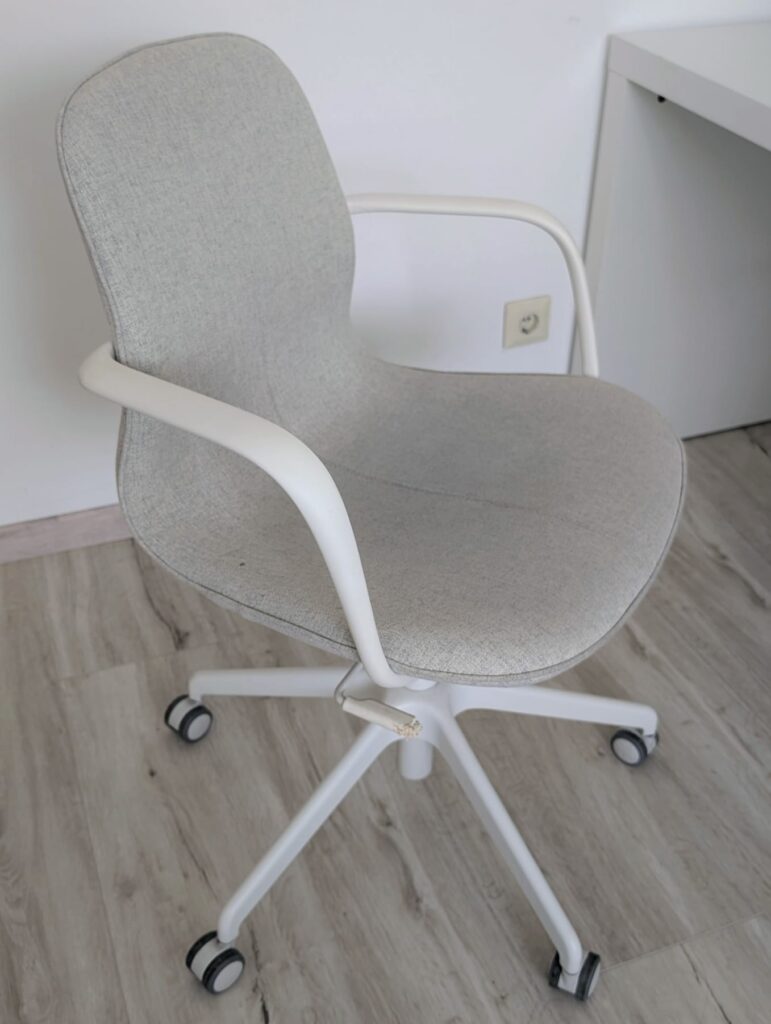
The chair I am sitting on right now is a simple IKEA office chair, bought second-hand on Willhaben. At first glance, it is just a functional object, but looking closer, it tells much more. Its shape suggests concentration, the colour and materials speak of a simple and minimalist aesthetic, while the marks left by time tell something about the people who used it before me.
Even a small detail can become a story: the lever to raise and lower the seat, for example, has been chewed by a pet. Probably a curious cat that did not see this object only as a chair, but as something to explore. A place to rest, play or attract the attention of the person who spent hours sitting there.
During the first semester, I explored the communication of objects through perception, semiotics and design. I discovered that objects are never neutral: even before using them, we interpret them through what we see. Shape, materials, colours, proportions and signs of use suggest meanings and ways of relating to them.
A handle suggests how it should be grabbed, a chair suggests a posture, a worn object tells a story. But meaning never completely belongs to the object itself: it is created through the encounter between what has been designed and the person who observes, uses and experiences it.
From here comes a new question: if objects communicate, what happens when they meet people?
I want to understand how people interpret objects and how, through their experiences, they create new meanings.
Because maybe it is not only the object that tells something. We also create a story around it through the way we look at it and use it. The same chair can become a workplace, a place for a break or simply the spot where we leave something at the end of the day. The object stays the same, but the story changes.
In this second semester, I want to observe these encounters: through stories, observations and experiments, I will try to understand how objects are perceived, interpreted and reinvented in everyday life.
Because maybe objects do not communicate fixed meanings. They communicate possibilities.