The Villain Taxonomy Project: Framework Draft #1

For those who haven’t read my first four blog posts: I am working on a framework to systematically analyze fictional characters, especially popular villains whom people root for. The goal is to gather data on what these characters have in common and why they are perceived positively and gain popularity among a wide audience. After completing foundational research, I am now beginning to develop my own framework. Since this will likely be a lengthy process, I want to define some clear goals to keep me focused and aligned with my initial vision while refining the framework.

Goals of This Long Odyssey in Analyzing Villains

  1. Focus and Scope
    • Analyze villains with consideration of factors highlighted by Keen, McCoy, and Powell.
    • Categorize, taxonomize, and analyze fictional characters of all natures and origins.
  2. Methodological Clarity
    • Offer a fast and easy method to produce an extensive, comparable profile of any fictional character.
    • Provide a systematic approach that is scalable to analyzing large numbers of characters (e.g., 100+).
  3. Analytical Value
    • Deliver results that facilitate statistical comparison to identify common traits of popular villains.
    • Add value to other use cases involving fictional character analysis and comparison beyond villains.
  4. Usability and Efficiency
    • Prioritize quantity and efficiency, enabling detailed comparisons and similarity detection across many characters.

From Theory to Quantifiable Analysis: Introducing My Framework

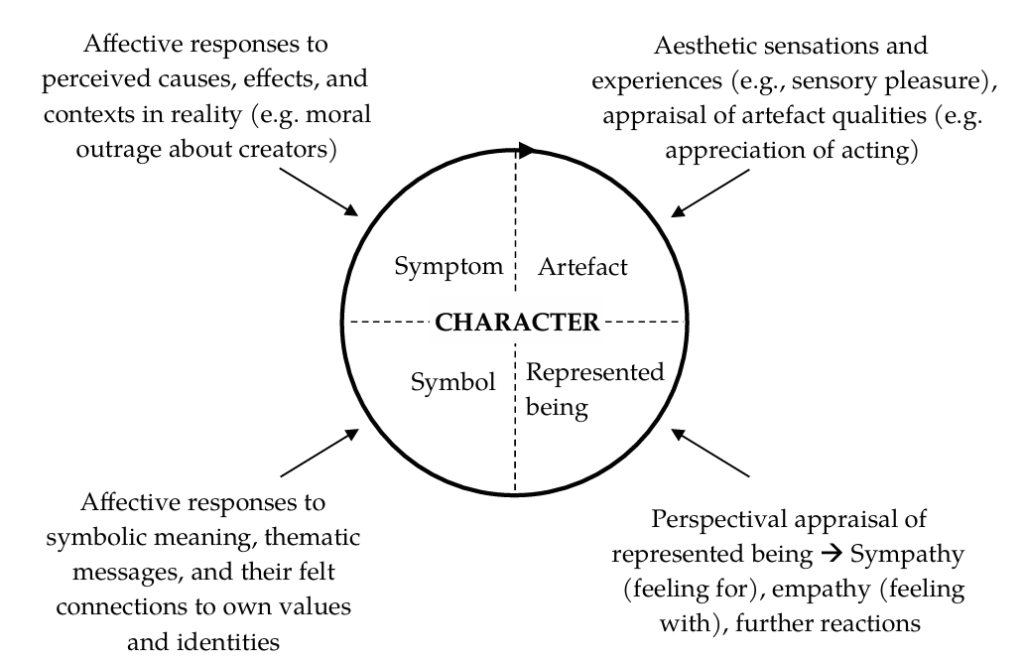
Like Jens Eder’s Character Clock, my own model also consists of four parts that analyze characters in a similar manner. However, while Eder’s framework delves far more deeply into theoretical aspects, mine focuses on producing simple, quantifiable values that can be statistically compared. Therefore, all the attributes I mention can be measured by assigning numerical values or using custom categories (e.g., for Nature/Origin: Aberration, Humanoid, Godlike, etc.).

Part 1: Observable Traits

This section focuses, as the name suggests, on visual and audible traits that define the character. While emphasizing actual appearance, it also accounts for narrative role and origin, visual identity, and behavioral elements to create a comprehensive character profile. This part draws inspiration from the ACIS framework developed by Linke and Prommer.

Part 2: Personality Profile

To enable personality comparisons across characters, the Big Five model proved the best foundation for this section. It provides five distinct, measurable values tied to core personality traits that can be readily analyzed statistically.

Part 3: Symbolism & Motivation

This part summarizes why the character behaves as they do, what deeper meanings their behavior might convey, and what broader concepts or themes the character symbolizes.

Part 4: Creation & Cultural Context

This section considers when the character and their associated media were created, as well as the demographics of their creators and directors. These factors can provide valuable context for understanding audience perceptions. For instance, a character created 40 years ago might now be viewed positively due to nostalgia, whereas a recently created one reflects contemporary societal values.

But now let’s move to the interesting part: here is the first draft of my own framework in a more concrete form.

Framework Draft #1

Part 1: Observable Traits
(Surface-level, directly measurable characteristics from media portrayal)

  • Narrative Role & Origin
    • Role (Protagonist/Antagonist/ Minor Antagonist)
    • Nature/Origin (type of fictional being, humanoid or otherwise)
  • Visual Identity & Setting
    • Color Scheme (dominant colors in depiction)
    • Screen/Scene Context (typical environment or setting)
    • Silhouette Distinctiveness (recognizability by shape/form)
  • Expressive & Behavioral Traits
    • Interaction Style (how character relates to others)
    • Movement Style (physicality and motion)
    • Voice Characteristic (tone, accent, style)
    • Facial Expressions (common emotional display)
  • Physical Attributes
    • Gender
    • Hair Color
    • Eye Color
    • Skin Color or Complexion
    • Age
    • Physique
  • Screen Presence
    • Duration Visible (screen time)
    • Duration Speaking (spoken lines)

Part 2: Personality Profile
(Inferred psychological traits reflecting character’s inner dimensions)

  • Extraversion
  • Neuroticism
  • Agreeableness
  • Conscientiousness
  • Openness to Experience

Part 3: Symbolism & Motivation
(Iconography and thematic drives behind the character’s role in the story)

  • Iconic Symbol
  • Lead Motif
  • Symbolism

Part 4: Creation & Cultural Context
(Real-world metadata about character origin and creators, informing cultural and historical analysis)

  • Year of First Visual Appearance
  • Year of Creation
  • Creator Demographics
    • Gender
    • Age
    • Nationality
    • Professional Background
    • Industry Role History
    • Cultural/Ethnic Background?
  • Director Demographics
    • Gender
    • Age
    • Nationality
    • Professional Background
    • Industry Role History
    • Cultural/Ethnic Background?

That concludes this blog post! I’ll discuss and refine this first draft in future posts. Feel free to share your feedback. See you next time!

Literature:

  1. Linke, Christine, and Elizabeth Prommer. “From fade-out into spotlight: An audio-visual character analysis (ACIS) on the diversity of media representation and production culture.” Studies in Communication Sciences 21.1 (2021): 145-161.
  2. Keen, Richard, Monica L. McCoy, and Elizabeth Powell. “Rooting for the bad guy: Psychological perspectives.” Studies in Popular Culture 34.2 (2012): 129-148.
Ästhetik in 2D- und 3D-Animation

Ästhetik spielt seit jeher eine wichtige Rolle in unserer Gesellschaft. Oft verbinden wir den Begriff automatisch mit Schönheit oder etwas „Geschmackvollem“. Doch eigentlich umfasst Ästhetik alles, was unsere Sinne bewegt – also auch das Unangenehme. In der Animation ist Ästhetik nicht nur Dekoration, sondern ein zentrales Werkzeug: Sie entscheidet darüber, wie wir eine Geschichte emotional wahrnehmen.

2D-Animation wirkt oft unmittelbar künstlerisch, leicht und abstrahiert. Sie zeigt die Welt nicht zwingend so, wie sie ist, sondern eher so, wie sie empfunden wird. 3D hingegen hat etwas Körperliches, Atmosphärisches. Es spricht unser Gefühl für Raum, Licht und Materialität an und erzeugt ein immersives Eintauchen, das manchmal fast physisch wirkt. Beide Ansätze lösen unterschiedliche Empfindungen aus und beide können Geschichten auf vollkommen eigene Art zum Leben erwecken.

Aus ästhetischer Sicht spricht man in der 2D-Animation häufig von Reduktion. Linien, Flächen und Farben werden bewusst vereinfacht, weil der Fokus eher auf Ausdruck und Rhythmus liegt als auf realistischen Details. In der 3D-Animation dagegen ist oft das Gegenteil der Fall: Hier geht es um Komplexität, Tiefe und einen hohen Detailgrad – sowohl visuell als auch räumlich.

Dass 2D häufig reduzierter wirkt, liegt nicht nur an Stilentscheidungen, sondern auch an der Produktionsweise. Da in der klassischen 2D-Animation viel händische Arbeit steckt, ist es schlicht schwierig, komplexe räumliche Ebenen oder extrem detailreiche Texturen zu erzeugen. Trotzdem schafft es 2D, die Aufmerksamkeit der Zuschauer gezielt zu lenken – oft mit starken emotionalen oder humorvollen Details. Übertriebene Gesichtsausdrücke, verzerrte Proportionen oder überraschend große Reaktionen sind typische Stilmittel. Besonders Cartoons und Anime greifen gern darauf zurück. In der 2D-Animation geht es weniger um Realismus, sondern mehr um Expressionismus: Gefühle, Gags und Bewegungen werden visuell überhöht und ziehen dadurch die Aufmerksamkeit der Zuschauer auf sich.

Das Imperfekte spielt ebenfalls eine große Rolle. Kleine Ungenauigkeiten in Linien, leicht flatternde Outlines oder handgemalte Schraffuren geben 2D-Animationen eine menschliche Note. Sie erinnern uns daran, dass hinter jedem Frame ein kreativer Prozess steckt. Viele moderne Programme ermöglichen zwar extrem präzises Arbeiten, aber selbst digitale 2D-Stile imitieren heute oft bewusst die Ästhetik von Bleistift, Aquarell oder Pastell. Der Look wirkt dadurch nostalgisch und handgemacht, was viele Zuschauer als warm und authentisch empfinden. Frame-by-Frame-Animationen besitzen deshalb einen ganz eigenen Charme – man sieht die Arbeit, die in ihnen steckt.

3D-Animation dagegen wird häufig mit Realismus verbunden. Durch die Tiefe des Raumes lassen sich komplexe Kamerafahrten und Perspektiven umsetzen, die in 2D kaum möglich wären. 3D schafft eine visuelle Glaubwürdigkeit, die fast filmisch wirkt. Mit heutigen Tools lassen sich feinste Details darstellen: fliegende Haare, Stofffalten, Hautporen, reflektierende Oberflächen und sogar mikroskopisch kleine Lichtbrechungen. Auch physikalische Eigenschaften wie Wasser, Gras, Feuer oder Nebel können nahezu real nachgebaut werden. Für viele Zuschauer wirkt dieser Detailreichtum modern beeindruckend und technisch faszinierend.

Natürlich hat auch 3D seine Herausforderungen. Zu viel Realismus kann schnell ins Uncanny Valley führen – also in einen Bereich, in dem etwas fast echt aussieht, aber nicht ganz. Dieser kleine Abstand erzeugt Unbehagen. Deshalb arbeiten viele moderne Produktionen bewusst stilisiert, um eine Balance zwischen Glaubwürdigkeit und künstlerischer Freiheit zu finden.

Die spannendsten visuellen Entwicklungen entstehen aktuell aus der Kombination beider Welten. In vielen Hybridanimationen werden 3D-Modelle mit 2D-Elementen versehen –mit texturierten, skizzenhaften Oberflächen, die wie Pinselstriche oder Kreideschraffuren wirken. Oder man entscheidet sich für harte, grafische Schatten, die an klassische Zeichentrickfilme erinnern. Manche Projekte brechen sogar bewusst die flüssigen Bewegungen von 3D, indem sie mit reduzierter Framerate oder „abgehackten“ Animationen arbeiten. Dadurch entsteht ein Bruch zwischen Simulation und Stil, der extrem modern wirkt und den Blick auf das Künstlerische lenkt.

Besonders beliebt sind 2D-Simulationen innerhalb des 3D-Raums. Sie machen die Bilder lebendig, überraschend und oft völlig einzigartig. Produktionen wie Arcane, Klaus oder Spider-Verse haben gezeigt, wie stark solche hybriden Looks wirken können – und wie sehr sie das Publikum emotional erreichen.

Ob eine Animation flach oder tief, grafisch, gezeichnet oder digital gebaut ist – ihre Ästhetik bestimmt, wie wir Figuren begegnen, Welten betreten und Emotionen erleben. In einer Zeit, in der künstlerische Grenzen immer mehr verschwimmen, geht es meistens nicht mehr darum, ob 2D oder 3D „überlegen“ ist. Die eigentliche Frage lautet: Welche Bildsprache erzählt die Geschichte am besten?

Dieser Text wurde mit Hilfe von ChatGPT 5 auf Ausdruck, Beistrichfehler, und Rechtschreibfehler korriegiert. Der inhaltliche Kern der Arbeit ist davon unberührt.

Quellenverzeichnis:

Putz, M. (2022). 3D-Pipeline zur Imitation einer 2D-Ästhetik: ein Leitfaden für Cartoon Look in Videospielen (Bachelor’s thesis).

Minihuber, H.  (2016). Hybridisierung traditioneller Animationsästhetik im 3D Computeranimationsfilm

Mira, M. (2017). The Aesthetics of Contemporary Animation: Melding 2D & 3D Techniques. Leiden Arts in Society Blog. https://www.leidenartsinsocietyblog.nl/articles/the-aesthetics-of-contemporary-animation-melding-2d-3d-techniques

Animation im Wandel: Vom Fotorealismus zum kreativen Ausdruck

Von der klassischen, handgezeichneten Animation bis zum Durchbruch der computergenerierten Bilder hat sich in der Animationswelt unglaublich viel getan. Wenn man von der „goldenen Ära“ der Animation spricht, denkt man automatisch an die typischen Disney-Klassiker – Filme, die Generationen geprägt haben. Seit diesen Anfängen hat sich jedoch nicht nur unser ästhetischer Anspruch weiterentwickelt, sondern auch die Technik hinter den Bildern. Jede neue technologische Welle eröffnete neue Möglichkeiten und schob das Medium Animation ein Stück weiter nach vorn.

Nach der jahrzehntelangen Dominanz der handgezeichneten Animation kam mit dem Fortschritt im digitalen Bereich der große Umbruch: Computeranimationen eroberten die Branche. Der Schritt in den dreidimensionalen Raum war bahnbrechend. Auf einmal konnte man Welten erschaffen, die realistischer und detaillierter wirkten als jemals zuvor. Lange Zeit galt deshalb: Je realistischer, desto beeindruckender.

Während 3D-Animationen immer populärer wurden, rückte die traditionelle 2D-Animation immer weiter in den Hintergrund. Der nostalgische Charme handgezeichneter Linien geriet immer mehr in Vergessenheit. Doch der Geschmack verändert sich. Realistische Animation ist inzwischen nichts Besonderes mehr, sondern Standard. Und wenn etwas alltäglich wird, beginnt man sich nach Neuem zu sehnen. Genau das passiert gerade: Der visuell experimentelle, künstlerische 2D-Look kehrt zurück – nicht als Rückschritt, sondern als kreative Weiterentwicklung.

Hybridanimationen, also 3D-Produktionen mit bewusst 2D-inspiriertem Look, wurden immer populärer. Der ästhetische Wert eines stilisierten, grafischen Looks gewann wieder an Bedeutung. Moderne Tools ermöglichen es heute, das Gefühl von handgezeichneter Animation mit der Flexibilität und Detailtiefe von 3D zu verbinden. Es entsteht ein visuell einzigartiger Stil, der die Stärke beider Welten nutzt.

Ein Paradebeispiel dafür ist Into the Spider-Verse, ein Film, der die Animationsbranche nachhaltig beeinflusst hat. Die Macher wollten ein „lebendiges Comic“ erschaffen – und das ist ihnen gelungen. Sie kombinierten typische Comic-Elemente wie Rasterpunkte, händische Outlines und visuelle Soundwords mit aufwendigen 3D-Animationen. Der Look wirkt zugleich nostalgisch, experimentell und frisch. Der Erfolg des Films zeigte eindrucksvoll, dass das Publikum offen für ungewöhnliche, mutige visuelle Stile ist.

Diese Entwicklung hat der Branche eine neue kreative Freiheit zurückgegeben. Animator*innen müssen nicht mehr darum kämpfen, die Realität möglichst perfekt zu imitieren. Stattdessen können sie sich wieder stärker auf Emotionen, Stil und Ausdruck konzentrieren – genau das, was Animation so besonders macht. Denn anders als Realfilm muss Animation nicht versuchen, die Realität abzubilden. Sie ist frei davon. Und gerade diese Freiheit ermöglicht ungewöhnliche Charakterbewegungen, überzeichnete Reaktionen, fantasievolle Welten und ein Storytelling, das weit über das Physisch-Mögliche hinausgeht.

Auch die steigende Popularität von Indie-Games und Graphic Novels spielt dabei eine große Rolle. Viele dieser Projekte leben von ihrem einzigartigen Look, der oft stark stilisiert und fernab des Realismus ist. Genau diese Ästhetiken finden nun ihren Weg in die Animation. Rendertechniken wie NPR (Non-Photorealistic Rendering) oder Engines wie Unreal ermöglichen es, handgemalte Shader, toon-shaded Figuren, Outline-Effekte oder sogar Pinselstrich-Optiken in 3D zu simulieren. NPR umfasst alles, was bewusst nicht realistisch aussieht – von Cell Shading über Hatching bis hin zu brushartigen Texturen. Das Ergebnis sind Animationen, die eher an Gemälde, Illustrationen oder Comics erinnern als an Fotografie.

Diese stilistischen Entwicklungen geben Animator*innen die Chance, wieder eine eigene Handschrift zu entwickeln. In einer Zeit, in der vieles digital perfektioniert wirkt, steht der handgemachte Look für Persönlichkeit und Wärme. Und tatsächlich: Hyperrealistische Bilder können zwar faszinieren, aber sie erzeugen manchmal auch ein Gefühl von Unbehagen oder Distanz. Stilisiert gezeichnete Bilder hingegen erlauben emotionale Übertreibung – und schaffen damit eine Verbindung zum Publikum, die oft direkter und menschlicher wirkt.

Der Trend zeigt: Die Zukunft der Animation muss nicht entweder 2D oder 3D sein. Sie liegt irgendwo dazwischen – im kreativen Mix aus Technik und künstlerischem Ausdruck.

Dieser Text wurde mit Hilfe von ChatGPT 5 auf Ausdruck, Beistrichfehler und Rechtsschreibfehler korrigiert. Der inhaltliche Kern der Arbeit ist davon unberührt.

Quellenverzeichnis:

Alvarez, G. ” Pencils, Paints, or Pixels?: How Aesthetic Choices of Indie Games Affect Interactive Experience “.

Heydari, N. (o. D.). The Battle of Realism vs. Artistry: How Stylized Animation is Revolutionizing the Industry. Dream Farm Studios. https://dreamfarmstudios.com/blog/stylized-animation-is-revolutionizing-the-industry/?utm_source=perplexity

Linsenmaier, T. (2011). Yen-Jung Chang – Strategies for a Reduction to 2D Graphical Styles in 3D Computer Graphics with Hybrid Aesthetics – Animation Studies. https://oldjournal.animationstudies.org/yen-jung-chang-strategies-for-a-reduction-to-2d-graphical-styles-in-3d-computer-graphics-with-hybrid-aesthetics/?utm_source=perplexity

The personification of Death

The classic Western image is the Grim Reaper: a cloaked skeleton with a scythe, usually male‑coded, mysterious, and frightening, symbolising death as an evil, inevitable force. Many modern stories give Death a more human look: an “average Joe” worker, a beautiful woman, or a vague humanoid presence, allowing audiences to relate to death as if it were a person. Personified Death often has a job: collecting souls, making deals, or enforcing “rules”, which makes death feel like a structured process rather than pure chaos. Personality can range from villainous predator to gentle guide, caring sibling, or reflective narrator, shaping whether death feels terrifying, comforting, or strangely neutral. These characters mirror cultural attitudes: in much Western media, Death still leans toward the frightening and violent, but there is a clear trend toward more nuanced, empathetic, everyday interpretations as well.

Characteristics: Death, Grim Reaper, Charon, Thanatos

Death is an abstract, flexible figure representing the inevitability of dying. Depending on the narrative, it may appear frightening, neutral, or even compassionate. Forms of Death vary widely, from the Western Grim Reaper to a genderless presence, a beautiful figure, or a mundane bureaucrat.

The Grim Reaper, shaped by Western and Christian traditions, is depicted as a hooded skeleton wielding a scythe. Its primary function is to arrive at the moment of death, sever the thread of life, and occasionally escort the soul onward. In modern media, the figure is sometimes softened into a humorous or “working” character while retaining its essential role.

In Greek mythology, Charon is the ferryman of the dead who transports souls across the River Styx (or Acheron). Charon does not cause death but functions as a psychopomp, guiding already‑deceased souls within the structure of the Greek afterlife. His role highlights the procedural or bureaucratic aspects of death in myth.

Thanatos, also from Greek mythology, personifies peaceful or natural death. Unlike violent death deities, he is calm, inevitable, and not malevolent. Sometimes sent by higher gods, Thanatos acts as a reaper‑type figure, bridging the role between divine authority and human mortality.

Characters

  1. Puss in Boots (2022): Death

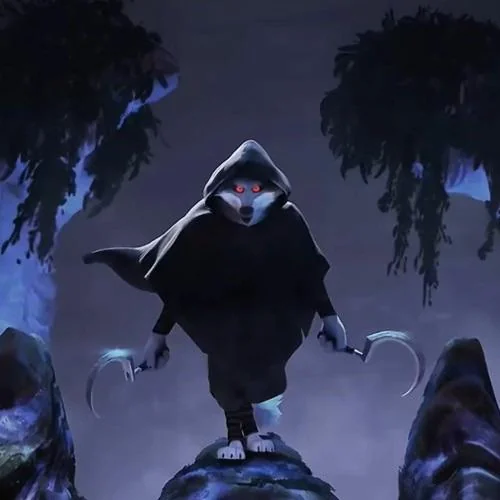
Death was briefly mentioned in the previous blog post. The personification of Death in Puss in Boots: The Last Wish combines characteristics of both “Death” and the “Grim Reaper”. The wolf wears a cloak and wields two scythes, but is no skeleton. He is blood‑thirsty, menacing, and frighteningly self‑assured, accompanied by a distinctive whistling motif.

2. Supernatural (2010-2015): Death

Death in Supernatural first appears stepping out of a pale grey 1959 Cadillac Series 62 coupé with the licence plate “BUH‑BYE”, also known as “Pale Horse”, while “I Am No One…” by Gemini Killer plays. (cars are an important thing in Supernatural idk) This is a homage to the Four Horsemen of the Apocalypse, each with their own horse. Death is portrayed with an irreplaceable sense of weariness and disinterest in mortal affairs and is so ancient that he cannot remember whether he or God came first. He personifies death itself, similar to Thanatos, embodying the mortality inherent in all living beings.

3. The Sandman (2022): Death

A woman! She fulfils the duties of a Grim Reaper, visiting those who have died and guiding them to the other side. She is friendly and empathetic towards humans, acting as one herself to stay in touch with their experiences and understand how death feels.

4. The Adventures of Baron Munchausen (1988): Angel of Death

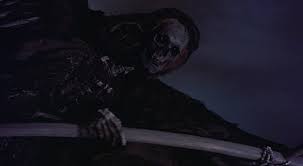
The line of imagination and reality is blurry. A skeletal grim reaper with black wings, a dark cloak and a scythe (and red hair?) pursuits the main character. Baron Munchausen safes himself with his imagination, but as soon as he has doubts the grim reaper comes back. It’s job is similar to the one in Puss in Boots – relentlessly trying to kill the main character.

5. Death Parade (2015): Decim

Decim is emotionless and lacks understanding of human feelings. His task is to decide the fate of each human through the results of the games they must play. The characteristics of Thanatos suit him best – calm and inevitable.

Source

Lammon, Marissa. (2024). The Big, Bad… Grim: Personification of death in Puss in Boots: The Last Wish. Mortality. 1-13. 10.1080/13576275.2024.2308881.

Moore, K. (2006). The Grim Reaper, working stiff: The man, the myth, the everyday (Master’s thesis). Bowling Green State University.

O’Connor, A. M. (2024). Death is whoever does Death’s job: The gender of death personifications in contemporary fantasy literature (Master’s thesis). University of Helsinki.

How “Puss in Boots: The Last Wish” depicts anxiety

Psychological Foundations

Fear acts as a bridge between detecting a threat and the behaviours that follow, initiating a chain reaction of events. Ralphs Adolphs, professor of psychology, neuroscience, and biology at the California Institute of Technology, concluded the distinction between fear and anxiety. Fear is the immediate reaction to a present danger, for example, a spider in the room, while anxiety is about anticipating and preparing for potential threats, as in worrying that a spider might be in the room.

In the brain, the amygdala serves as the starting point for fear, receiving sensory information and responding by sending signals to other areas in the brain. The prefrontal cortex regulates the fear response by evaluating how imminent the threat is. The expression of fear is most likely a leftover action that was previously a crucial response for survival.

About Puss in Boots

Puss in Boots originates from a European fairy tale about an anthropomorphic cat who uses trickery and deceit to gain power, wealth, and the hand of a princess in marriage for his penniless and low-born master.

DreamWorks Animation adapted this fairy tale within the Shrek movies, and in 2011 Puss received his own standalone film, Puss in Boots. In this movie, Puss is a Spanish-speaking anthropomorphic cat and a fugitive on the run from the law, seeking to restore his honour.

Puss in Boots: The Last Wish

After 11 years, Puss returned in Puss in Boots: The Last Wish (2022). The story follows Puss as he teams up with Kitty Softpaws and Perrito to find the Last Wish of the fallen Wishing Star, in hopes of restoring eight of his nine lives. They race against other fairy tale characters seeking the same treasure, while a sinister wolf, the personification of Death, hunts Puss himself.

Depicting anxiety

Depicting internal feelings externally is difficult, but Puss in Boots: The Last Wish manages it remarkably well. There is a scene in which Puss hears Death’s iconic melody and has a panic attack.

It begins with everything around him slowing down. He hears the wolf’s whistle, and his fur stands on end. A dolly zoom is used, a technique designed to disorient the viewer. When the camera turns to reveal the wolf, there is a stark contrast in colour: the battlefield around Puss is brightly lit in red hues, while the wolf stands in shadows with darker, blue tones – even though the same space had a red hue moments earlier. The wolf’s red eyes intensify the effect. When Puss turns around, he too is cast in a blue tint.

The wolf is framed with a lot of negative space, creating a sense of stillness, while Puss is surrounded by chaos. Chromatic aberration becomes pronounced, simulating how detached from reality someone may feel during a panic attack.

Puss runs away mid-battle into the blue, foggy forest. As the camera follows him, the environment appears blurry and distorted, again enhanced by chromatic aberration. The wide-angle lens exaggerates the distortion of close-ups.

As Puss runs, he believes he sees the wolf in the forest, but these figures turn out to be shapes merely resembling the wolf. This reflects pareidolia, the human tendency to perceive faces in patterns where none exist.

Perrito then finds him lying at the base of a tree. This calm moment, following intense visual exaggeration, underlines how Puss is feeling and highlights the dissonance between his internal and external worlds.

Death

If one were to ask how another ‘sees’ death, there are overwhelming majorities: Death is male, Death is cloaked, Death is macabre. Literature as early as the 13th century feature the appearance of the Grim Reaper – a skeletal figure with black robes holding a scythe. The images of death ‘harvesting’ lives reflects the 20th and 21st century attempts to showcase death as something to be feared, that can simultaneously be conquered. Death remains the villainous obstacle to be overcome, and is personified in ways that demonstrate its wickedness, as well as its ability to fall at the hands of the story’s hero.

The wolf’s terrifying image, haunting laughter, and deadly weaponry demonstrate that Puss should be afraid of Death – because death is inherently frightening. The cloaked figure with blood-red eyes only ever appears in darkness, announces his presence through whistles or menacing laughter, and is always seen with sharp, deadly weapons in hand. Associated with colours signalling danger, morbidity, and violence (in addition to his sheer dominating size in comparison to the hero), Death is a frightening sight to behold for all viewers.

Source

Adolphs, R. (2013). The biology of fear. Current Biology(23(2)), R79–R93. doi:10.1016/j.cub.2012.11.055

Lammon, Marissa. (2024). The Big, Bad… Grim: Personification of death in Puss in Boots: The Last Wish. Mortality. 1-13. 10.1080/13576275.2024.2308881.

Nurcahya, Radhitya & Juanda, Juanda. (2024). Puss’ Anxiety and Defense Mechanism in The Puss In Boots: The Last Wish Movie. Mahadaya: Jurnal Bahasa, Sastra, Dan Budaya. 4. 187-196. 10.34010/mhd.v4i2.13748.

Die Auswirkungen und potenziellen Möglichkeiten von Sportdokumentationen 

In den letzten Jahren haben sich Sportdokumentationen sichtlich vermehrt und an Beliebtheit gewonnen. Vor allem das Zusammenspiel aus Realität und Emotionen, sowie ein Näherbringen der Athlet:innen und die zunehmende Rolle globaler Streamingplattformen haben dafür gesorgt, dass immer mehr Sportdokumentationen das Licht der Welt erblicken. Dabei besitzt dieses Genre nicht nur ein gesellschaftliches, sondern auch ein wirtschaftliches und kulturelles Wirkungspotenzial. 

Die Logik hinter Sportdokumentationen 

Nicht nur für das Storytelling, um das es in dem letzten Blogpost ging, sondern auch für die Auswirkungen und potenziellen Möglichkeiten von Sportdokumentationen sind die Logiken hinter dem Genre von großer Bedeutung. Dabei gibt es fünf Grundprinzipien: Sport ist narrativ, visuell spektakulär, von Kapital durchdrungen, besitzt seine eigene Ausdruckskraft und bringt das Publikum dazu, über Medien und ihre Funktionen nachzudenken. Fast alle Sportarten werden heutzutage medial vermittelt, sei es nun in Form von Social Media, Live-Übertragungen, Podcasts oder eben Sportdokumentationen. Dadurch nimmt das Publikum nicht nur den Sport an sich war, sondern beobachtet gleichzeitig immer, wie die Medien ihn darstellen: medial, narrativ oder durch die Bildsprache. 

Um dies auf das Genre der Sportdokumentationen zu übertragen: Durch diese wird der Sport nicht nur in seiner bestehenden Realität abgebildet, sondern ihm wird eine gewisse Struktur gegeben. Sportdokumentationen strukturieren die Sportarten aktiv, interpretieren Dinge hinein, geben ihm eine Geschichte und laden das Geschehene emotional auf. Dadurch entsteht ein Aufbau von Spannung, Konflikte, Höhen und Tiefen, ausgeprägte Charaktere (und manchmal Heldenfiguren) und Wendepunkte. So wird die Wahrnehmung der Zuschauer:innen aktiv geprägt und geleitet. Um zu den Logiken zurückzukehren: In Sportdokumentationen wird der Sport also nicht nur dokumentiert, sondern gleichzeitig inszeniert und wird somit ein bedeutender Teil der Kultur. 

Ökonomische Bedeutung 

Durch das Aufkommen und die große globale Rolle der Streamingplattformen, haben Sportdokumentationen eine andere Bedeutung bekommen. Sie werden nun von einem viel breiteren Publikum konsumiert. Dadurch wird das Genre zu einem strategischen Werkzeug für Medienunternehmen und Sportrechteinhaber:innen. Vor allem Netflix und Amazon Prime haben sich die steigende Beliebtheit von Sportdokumentationen zu Nutzen gemacht, um ihre Zuschauer:innen langfristig und binden. Ein weitere Vorteil durch die große Reichweite von Streamingplattformen ist die Anzahl an neuen Zielgruppen durch das breite Publikum. Gut produzierte Sportdokumentationen vermitteln Emotionen und individualisieren Vereine, Teams und die Athlet:innen, wodurch das Interesse an Sportarten außerhalb der klassischen Zielgruppe gesteigert wird. So breitet sich das Genre immer weiter aus und verlängert vor allem die Lebensdauer der sportlichen medialen Inhalte. Zusätzlich gibt es auch für den Sport selbst noch weitere Vorteile: Durch die wachsende Aufmerksamkeit profitieren auch Sponsor:innen, Markenbildung und das Image der Sportarten. So erhalten Athlet:innen mehr finanzielle und mediale Unterstützung, sowie größere Reichweiten und Vermarktungsoptionen, was wiederum die wirtschaftlichen Dynamiken innerhalb des Sports verändert. 

Wie bereits erwähnt, verstärken Streamingplattformen die Relevanz von Sportdokumentationen zusätzlich. Dadurch werden die Publikumsstrukturen und Zielgruppen der Sportarten erheblich verändert. Ein gutes Beispiel dafür ist „Drive to Survive“. Die Serie zeigt viele Einblicke in die Welt der Formel 1, die davor als „reicher Männersport“ gegolten hat. Durch die Sportdokumentation in Form einer jährlich wiederkehrenden Serie, erfuhr die Formel 1 eine deutliche Verjüngung des Publikums, die nach dem Konsumieren der Serie zu Live-Zuschauer:innen wurden. Das war vor allem bei den amerikanischen Rennen der Fall, die viel mehr Aufmerksamkeit und einen starken Zuwachs an Zuschauer:innen nach dem Release der Serie erfuhren. Außerdem änderte sich auch das Geschlecht des Publikums drastisch und besteht mittlerweile auch fast jeweils 50% Männern und 50% Frauen. 

Dieses Beispiel zeigt, dass Sportdokumentationen Sportarten große Chancen bieten, um neue Zielgruppen, Aufmerksamkeit oder Reichweite zu gewinnen. Sie schaffen Identifikation, in dem sie Sportler:innen tatsächlich als Menschen mit Geschichten, Problemen und Erfolgen zeigen und einen Blick hinter die Kulissen werden. Diese Form der Emotionalisierung und Identifikation kann nachhaltig das Image einer Sportart prägen und ihr internationale Aufmerksamkeit verschaffen. 

Weitere Möglichkeiten 

Sportdokumentationen haben aber auch ein bedeutendes Potenzial, Lernprozesse (vor allem Sozial- und Zeitgeschichtliche) zu fördern. Sportarten stehen stets in einem sozialen, politischen und ökonomischen Zusammenhang, sodass Sportdokumentationen als Brücken zwischen diesen Welten steht und somit neue Entwicklungen schaffen kann. Sie ermöglichen auch die Vergangenheit oder historische Prozesse in emotionaler oder narrativer Form für das Publikum zugänglich zu machen. Durch das Genre werden individuelle Schicksale, sportliche Konflikte oder Ungleichheiten, sowie gesellschaftliche Entwicklungen dargestellt, aufgearbeitet und verknüpft. 

Kritik am Genre 

Durch die große Aufmerksamkeit und Reichweite von Sportdokumentationen kamen natürlich auch kritische Stimmen auf. Auch wenn das Genre eine große Begeisterung erfährt, sollte das Publikum auch die Nähe zur Vermarktung reflektieren. Viele Produktionen leisten keine klassische journalistische Arbeit, sondern rücken vielmehr Marketing- oder Vermarktungsstrategien in den Vordergrund. Dadurch kamen immer mehr Fragen in Bezug auf Objektivität, kritischer Distanz und Transparenz auf. Es besteht die Gefahr, dass Konflikte, Probleme und kontroverse Themen unzureichend oder falsch beleuchtet werden. Auch hier ist „Drive to Survive“ ein gutes Beispiel, da die Serie mit den zunehmenden Staffeln immer weiter in die Kritik rückt. 

Fazit 

Sportdokumentationen haben definitiv an Bedeutung gewonnen und spielen eine große Rolle für die verschiedenen Sportarten, aber auch Streamingplattformen. Sie profitieren gegenseitig voneinander, sei es nun in Form von neuen Publikumsgruppen, großen Reichweiten oder emotionalen Geschichten. Außerdem eignet sich das Genre als gutes Vermittlungswerkzeug von Konflikten, Missständen oder historischen Prozessen. Trotzdem stellt die Kommerzialisierung ein Risiko dar, weshalb Sportdokumentationen immer mit Bedacht konsumiert werden sollten. Es ist jedoch deutlich zu sehen, dass Sportdokumentationen zu einem unverzichtbaren Bestandteil des modernen Sports geworden sind. 

Quellen: 

Malitsky, J.: Knowing Sports: The Logic of the Contemporary Sports Documentary.
https://people.southwestern.edu/~bednarb/capstone/capstone_materials/neal-reading.pdf

Sheard, R.: The Evolution of the Sports Documentary and Impact on the Media Ecosystem. https://www.linkedin.com/pulse/evolution-sports-documentary-impact-media-ecosystem-rob-sheard-4ohye

Brugar, K. A.: 30 For 30: An Inquiry into Sports Documentaries to Engage in Social History. https://societyforhistoryeducation.org/pdfs/F16_Brugar.pdf

Deutschlandfunk: Marketing-Experte zu Sport-Dokus: Netflix und Co. sind eine große Chance. https://www.deutschlandfunk.de/sportdoku-netflix-einfluss-tennis-100.html

Dieser Text basiert auf Literaturvorschlägen von Perplexity pro und wurde von ChatGPT korrigiert. Alle Inhalte wurden von mir selbst auf Richtigkeit und Relevanz überprüft und der Text selbst wurde von mir erstellt.

What Makes a Villain? An Introduction to Character Analysis Frameworks (Part 3)

Because my first three blog posts were all about the same topic but lacked a logical structure, I want to give you a brief overview of what I have researched and discussed so far before it gets too confusing:

  1. Why do we root for the bad guy? A summary of eight reasons why audiences are often drawn to villains and anti-heroes in film and television
  2. The Jungian Archetype Theory
  3. The Big Five
  4. The Character Clock
  5. A Brief Draft for Building a Customized Model for Villain Analysis

These topics already build a good foundation for creating my own model, but there are still a few steps I need to take before I can develop an actual framework.
The current idea I have for a systematic character analysis framework looks as follows:

  1. The character as an artefact – analyzing the character using the ACIS framework
  2. The character as a represented being – analyzing the character using the Big Five
  3. The character as a symbol – brief notation of possible symbolic meanings the character can carry

So, what will be next?
In this blog post, I want to explore the missing parts, such as discussing the ACIS framework and researching concrete examples of how to use these frameworks, before actually defining the complete framework in one of the next blog posts.

The ACIS Framework

The ACIS Framework was developed by Christine Linke and Eckart Prommer in 2021 as a systematic method for analyzing how characters are represented and visible in audiovisual media (perfect for my use case!). It combines quantitative content analysis with narrative and reception-based approaches. An important aspect of this method is that it analyzes the content as a viewer would experience it, without relying on external context.

The Step-by-Step Procedure of the ACIS Framework

Since I plan on integrating this framework into my own model, I want to explain it by giving you a step-by-step guide on how it is used.

Step 1: Character Identification

The first step in using the ACIS Framework is to distinguish whether the character is a Protagonist or a Main Character. ACIS defines characters based on their role and presence in the narrative.

  • Protagonists are characters who take on a leading role and act as the driving force behind the story in a goal-oriented manner. In television, this is often clearly marked by the character’s permanent presence in the ensemble.
  • Main characters are persons who are centrally visible on screen, have their names mentioned, and speak dialogue, such as TV hosts, news anchors, reporters, and so on.

Step 2: Character Characteristics Coding

Once the role of the character is identified, the next step is to analyze the character in detail by coding individual characteristics such as:

  • Gender
  • Age
  • Sexual orientation
  • Other specific characteristics (body shape, appearance, clothing, etc.)

The key principle here is that these characteristics must be visually or audibly perceivable – not simply taken from the script or other external information.

Step 3: Visibility Dimensions

The ACIS Framework focuses on three dimensions of visibility:

  • Frequency: How often does the character appear?
  • Density: How much screen time does the character receive?
  • Focusing: How prominently is the character positioned or emphasized in the frame?

It also considers when and how much the character speaks, so the analysis includes both visual and audio presence.

Adapting the ACIS Framework for Analyzing Sympathetic Villains

A fun picture of Severus Snape (sympathetic villain) to keep you engaged.

The ACIS Framework serves as an almost perfect method for systematically analyzing the character as an artefact, but I want to modify a few aspects so it fits perfectly with my analysis of sympathetic villains. Keep in mind that all these adaptations currently function as a first draft and will probably be revised and further adjusted as the research progresses.

Since some villains function as protagonists in film and television, and the identification as a main character is primarily used for broadcasting formats, I will either identify the villain as the protagonist or not. I also considered defining three categories for villains, because they can not only be a protagonist or not, but sometimes also act as an omnipresent being, like Sauron in The Lord of the Rings, who serves as the main challenge for the hero but receives hardly any screen time. Since I am unsure about this and would need to create a clear definition for each category, I will just note it here as a thought to keep in mind.

Regarding the second step, Character Characteristics Coding, I would like to incorporate the research of Keen, McCoy, and Powell in Rooting for the Bad Guy: Psychological Perspectives and definitely include attractiveness in some way, based on the third reason they mention: “What is Beautiful is Good.” I know attractiveness is difficult to measure scientifically, but hopefully I will find a method in my future research that provides an easy way to analyze this attribute.

Another aspect I want to consider, which is already included in the ACIS Framework, is the Mere Exposure Effect mentioned by Keen, McCoy, and Powell – that is, the screen time and actual dialogue time of the villain. I have already looked into some AI tools that could help determine a character’s actual screen time without having to watch an entire film or TV series and manually count the time. Unfortunately, I fear these tools have limitations, and I will probably have to focus mainly on movie villains. Hopefully, further research will provide a solution to this problem.

That’s it for this blog post. In the next one, I want to create my first concrete draft of a character analysis model. Looking forward to it!

Until then – see ya.

Literature:

  1. Linke, Christine, and Elizabeth Prommer. “From fade-out into spotlight: An audio-visual character analysis (ACIS) on the diversity of media representation and production culture.” Studies in Communication Sciences 21.1 (2021): 145-161.
  2. Keen, Richard, Monica L. McCoy, and Elizabeth Powell. “Rooting for the bad guy: Psychological perspectives.” Studies in Popular Culture 34.2 (2012): 129-148.

Disclaimer: This text was proofread for punctuation, grammar, and spelling errors with the help of Perplexity. The content of the text remains unaffected.

What Makes a Villain? An Introduction to Character Analysis Frameworks (Part 2)

In the first part of this two-part blog series, I explored two well-known character analysis models – Jungian Archetype Theory and the Big Five personality framework. While both offer interesting perspectives for analyzing fictional characters, they fall short of covering the full scope needed for a truly systematic analysis. That’s why, as promised, I’ll introduce another model that is much more detailed and was specifically created for analyzing fictional characters in film and media. I know what you might be thinking:

“Great, another post on dry theoretical character analysis!”

But hang in there – soon we’ll dive into the practical side.

The Character Clock

Jens Eder introduced a new character analysis framework called the “Character Clock” in his book Characters in Film and Other Media. The purpose of this model is to analyze different dimensions of fictional characters to provide a complete understanding that includes not only their personality but also their appearance, symbolic meaning, and the context in which the character was created. The name comes from the shape of the model, which resembles a clock and symbolizes how our understanding of a character moves through the four parts he defined.

  1. Artefact:
    The first aspect we notice about a character is their appearance and how they are presented on screen. This includes not only their looks but also their voice, movements, and how these elements are arranged through acting, camera work, and writing style. This stage focuses on the character as a crafted piece of media itself, before considering what the character represents.
  2. Represented Being:
    At this stage, we begin to view the character as a person within the story – a being with a personality. We consider their relationships, emotions, actions, and social roles in the story’s world. This involves imagining the character’s traits and inner life as part of the narrative.
  3. Symbol:
    Characters often symbolize something larger than themselves. Here, we understand that the character not only exists in the story world but also functions as a symbol representing ideas, themes, or social issues. This stage deals with the deeper, often hidden meanings the character can carry.
  4. Symptom:
    Finally, a character can reflect aspects of the real world in which the media was produced. This includes cultural values, political messages, and social stereotypes that influenced the creation. This stage examines why the character was created in a certain way and how audiences might interpret them based on the production and viewing context.

Not every part of the character clock is equally useful for every character or story because some characters might be mostly about their story role, while others are specifically designed as a symbol or to make social commentary.

Defining My Research Focus (Wtf Was This All About?): A Systematic Approach to Villain Analysis

Moving from “How to analyze characters in film and media in general” to “What I aim to research and what is necessary to do that,” I want to combine these methods to suit my specific use case. My goal is to analyze villains systematically, compare them, and highlight what differentiates common villains from the most popular villains, those we actually root for despite their immoral actions. Keep in mind that this is just my main goal. If I manage to create a reliable statistical model, you could use it to compare fictional characters in any way you like. For example, you could compare heroes and villains, sidekicks and heroes, or antiheroes and villains. The possibilities become almost endless once you establish an analytical method focused on building a large database with statistically and systematically researched values.

Adapting the Character Clock: Building a Customized Model for Villain Analysis

I really like Jens Eder’s approach with his Character Clock because it covers all the aspects of a fictional character and not only the personality. Therefore, I want to base my model on his but with a few modifications.

First of all, I don’t want to include the Symptom part. I know that the Symptom is also an interesting aspect of character analysis, but I think it’s more efficient, when analyzing multiple villains, to start with a smaller scope. Otherwise, the analysis for just one character would take way too much time to even gather a database. You could write a whole book analyzing one character if you try to cover each of these four aspects, so I am trying to break it down to the most important ones.

Secondly, I want to mainly focus on the Artefact and the Represented Being parts because they are not only the things we notice first when seeing a character on screen, but also the easiest to compare. I also want to include the Symbol briefly for every character by noting if they represent something bigger, what it is, or if there is even a deeper meaning behind the character.

And last but not least: How do I want to systematically analyze the Artefact and the Represented Being?
I want to use the Big Five for analyzing the Represented Being since it fits perfectly for analyzing multiple characters and is suitable for creating comparable diagrams.

For the Artefact, on the other hand, I want to use a framework called ACIS (Audio-Visual Character Analysis) a systematic method designed for analyzing how characters are represented and visible in audiovisual media, developed by Christine Linke and Eckart Prommer and published not too long ago in 2021. I will present this framework in the next part of this blog series as well as continue to describe what my approach will look like.

I know I promised this to be a two-part blog, but during my research, I realized that I have to cover much more to actually develop my own framework. Sorry!

See ya in the next one.

Literature:

  1. Eder, Jens. Characters in Film and Other Media: Theory, Analysis, Interpretation. Open Book Publishers, 2025.
  2. Linke, Christine, and Elizabeth Prommer. “From fade-out into spotlight: An audio-visual character analysis (ACIS) on the diversity of media representation and production culture.” Studies in Communication Sciences 21.1 (2021): 145-161.

Disclaimer: This text was proofread for punctuation, grammar, and spelling errors with the help of Perplexity. The content of the text remains unaffected.

What Makes a Villain? An Introduction to Character Analysis Frameworks (Part 1)

Simply listing the reasons why people root for villains and antiheroes wasn’t enough for me. I wanted to explore the deeper question of what truly makes a villain a villain. To understand that, I also needed to examine how a typical villain is structured and designed. In other words, this is a matter of character analysis.

Conducting character analysis in a scientific context is far from simple. In my case, I aim not only to analyze several well-known villains but also to compare them in order to identify shared traits and distinct differences among some of the most popular antagonists in contemporary media.

In this two-part blog post, I will present three established models of character analysis and discuss how these frameworks can help reveal the psychological and narrative patterns that define our favorite villains. Furthermore, I will try to combine them and create my own framework for analyzing villains in TV and movies. Keep in mind that many more models exist for analyzing both fictional characters and real people – such as Aristotle’s Poetics, Campbell’s Hero’s Journey, Freytag’s Pyramid, and the Myers-Briggs Type Indicator, just to name a few. I chose these models because they seemed fitting for my plan to analyze and compare villains, and I often came across them during my research.

The Jungian Archetype Theory

The Twelve Archetypes in Marketing

Named after the renowned Swiss psychiatrist Carl Gustav Jung, the Jungian Archetype Theory describes characteristic patterns that categorize attributes into different persona types. While this theory has been highly influential in analyzing characters and crafting stories and narratives, it is not considered a strictly scientific approach to character analysis because it relies heavily on the interpretation of stories, myths, and images, which is subjective and difficult to validate with empirical evidence.

Bassil-Morozow explains in Jungian Theory for Storytellers: A Toolkit that archetypes manifest in narratives as familiar character types – such as the Hero, the Shadow (the villain) and the trickster (among many others). Each archetype represents recurring motifs and psychological dynamics within stories. These archetypes are not rigid but act as flexible templates that can be adapted depending on the context, genre, and cultural interpretation. While Jung originally identified four archetypes, his concept was later developed and expanded to include nine archetypes in analytical psychology, and even twelve archetypes to align with marketing principles.

Since the Jungian Archetype Theory is rather pseudoscientific, I won’t use it for my character analysis of popular villains. However, because it is still quite renowned – and even our lecturer in narratives and dramaturgy, Mr. Köpping, mentioned that I should take a look at it – I thought I might as well present it in this blog post.

The Big Five

Although the Big Five was not originally created as a model for analyzing fictional characters but rather as a framework in personality psychology to describe human personality, it is a scientific approach to understanding personalities. You might have come across this model, as it is widely used in various personality tests available across the internet. The key traits this model focuses on are Extraversion, Neuroticism, Agreeableness, Conscientiousness, and Openness to Experience. In an analysis, each of these traits is assigned a high or low value, which is then interpreted accordingly. These traits are relatively stable over time and have been supported by extensive empirical research.

Extraversion describes whether a person is more introverted or extraverted. While an extraverted person is sociable, energetic, and assertive, introverts tend to be more reserved and solitary.

Neuroticism reflects emotional instability and the tendency to experience negative emotions such as anxiety and sadness. High neuroticism means a person may be more prone to stress and mood swings.

Agreeableness measures how cooperative, kind, and empathetic an individual is toward others. A high score indicates helpfulness and trust, while a low score suggests competitiveness or antagonism.

Conscientiousness refers to self-discipline, organization, and dependability. High conscientiousness is linked to goal-directed behavior, reliability, and a strong sense of duty.

Openness to Experience describes intellectual curiosity, creativity, and preference for novelty. Individuals with high openness enjoy new experiences, cultural pursuits, and abstract thinking, while those lower prefer routine and practicality.

You thought that we were done with boring character analysis models? Unfortunately, I have yet one other framework I want to talk about! But you’re lucky because the third model, as well as my own approach to a combined model, will be presented in Part 2.

See ya!

Literature:

  1. Asendorpf, Jens B. Persönlichkeitspsychologie für Bachelor. Springer Berlin Heidelberg, 2019.
  2. Bassil-Morozow, Helena. Jungian theory for storytellers: A toolkit. Routledge, 2018.

Disclaimer: This text was proofread for punctuation, grammar, and spelling errors with the help of Perplexity. The content of the text remains unaffected.

Gedankenspiele about printing and CMYK

Printing, in its many forms, is the process of transferring visual information from a digital or physical template onto a physical and tactile medium. Despite its long history, printing continues to evolve. Central to most modern printing systems is the CMYK colour model: cyan, magenta, yellow, and key (black), which defines how printers mix coloured inks to reproduce full-colour images.

Inkjet Printing

Inkjet printers are among the most common and versatile printing devices used today. Their operation relies on microscopic precision. At the heart of an inkjet printer is the print head, which contains thousands of nozzles capable of ejecting microscopic droplets of ink at high speed. As the print head moves horizontally across the paper, it deposits ink in precise locations determined by the digital file. The paper advances incrementally after each pass, allowing the printer to build the image line by line.

Each nozzle is responsible for a specific colour, usually cyan, magenta, yellow, and black, which are combined through dithering and layering to create a full spectrum of tones and hues. The ink used is typically water-based or pigment-based, optimized to absorb quickly into the paper without excessive bleeding. The result is a continuous-tone image that appears smooth to the human eye, despite being composed of countless microdroplets. This technology allows for high-resolution photographic prints, text documents, and even fine art reproductions.

Risograph Printing

In contrast, Risograph printing, often called “RISO”, is a more tactile and analogue method, though it also incorporates digital preparation. Originating in Japan in the 1980s, the Risograph functions similarly to a screen printer. The process begins with converting an artwork into a stencil: the image is burned onto a master sheet, which is then wrapped around a rotating drum filled with soy-based ink of a specific colour. When the machine operates, the drum spins and pushes ink through the stencil onto the paper beneath it.

To create multi-coloured prints, different colour drums must be inserted sequentially, with new stencils for each colour layer. The paper passes through the machine multiple times for each colour, resulting in unique overlaps, misregistration, and textures that give RISO prints their distinctive charm. Because the inks are semi-transparent, layering them naturally mimics the subtractive colour process of CMYK, producing vibrant and sometimes unexpected colour interactions.

Unlike the precision of inkjet printing, Risograph embraces imperfection. Its handmade quality, uneven textures, and slight misalignments contribute to its growing popularity among designers and artists seeking an organic aesthetic.

(Filament) 3D Printing

A radically different form of printing is three-dimensional (3D) printing, which builds physical objects rather than flat images. Most consumer-grade 3D printers use a technique called material extrusion, which operates in principle like a glue gun. Plastic filament is heated until it liquifies, then extruded through a nozzle that moves along generated paths. The printer interprets digital files such as STL or FBX by slicing them into thin two-dimensional layers. Each layer is printed sequentially as the platform lowers or the print head rises, allowing the object to gradually take shape.

Although primarily used for prototyping and fabrication, 3D printing also intersects with traditional printing ideas, especially regarding layering and texture. Some printers are capable of multi-material or multi-colour printing, hinting at a convergence between CMYK colour theory and volumetric fabrication.

Gedankenspiel: Mixing Printing Techniques Digitally and Physically

The boundaries between digital and physical printing processes are increasingly blurred. Artists and designers have begun experimenting with cross-media approaches that combine principles from multiple technologies.

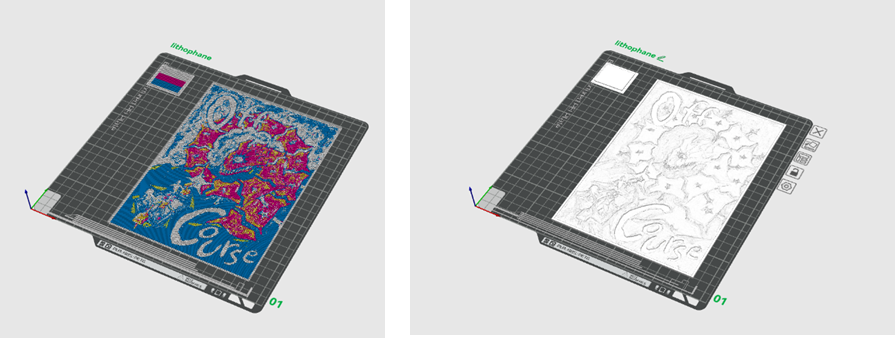
Lithophane

This technique involves creating multi-coloured 3D prints using multiple nozzles loaded with CMYK filaments. The print appears as a plain white relief when unlit, but when illuminated from behind, variations in thickness reveal a hidden colour image. The light passes through the translucent material in different intensities, producing tonal gradations akin to photographic printing.

See: https://wiki.bambulab.com/en/knowledge-sharing/CMYK-color-lithophane-printing-instructions

Replicating RISO digitally

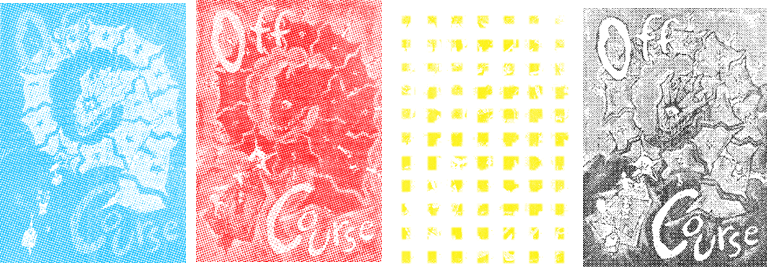
To digitally mimic RISO aesthetics, an image can be split into CMYK channels, each converted to grayscale and then processed through a halftone screen at distinct angles. When recombined in RGB mode, with colours reassigned to each layer and slight misalignments introduced, the result replicates the layered and imperfect charm of real Risograph printing. Adding a paper texture enhances the illusion of ink absorption and grain.

See: https://www.liznugentdraws.com/blog/3221

RISO compositor in 3D

Artists have begun creating RISO compositors in 3D software such as Blender with the same principle as the digital RISO.

See: https://youtu.be/YYkCCqRE7B8?si=zl8j3LsqWlgGcHTG