Boosting children’s self-esteem (Stefanie Stahl)

At the beginning of my research, I listed a podcast episode from the “So bin ich eben!” podcast by renowned psychologist, psychotherapist, and bestselling author Stefanie Stahl and psychologist and podcaster Lukas Klaschinski as a possible source. Since Stefanie Stahl has focused primarily on working with the inner child and building self-esteem and healthy relationships, it seemed very appropriate to me to include what she has to say on the subject.

In this episode, Stefanie Stahl and Lukas Klaschinski give tips on how to promote children’s self-esteem: not only for parents, but also for everyone else who deals with children on a daily basis. Although the episode is mainly told from the parents’ perspective, I think that much of it can also be applied to how teachers interact with children. In addition, I would like to conclude by exploring the extent to which the aspects mentioned can be incorporated into the game.

At the beginning of the episode, Stefanie once again emphasizes the importance of self-esteem for later life, describing it as the epicenter. She says it is a gift for life that adults can give to children.

The topic of the episode was inspired by an email from a listener: a mother describes how her son no longer wants to go to soccer practice because he is not as good as the other children and feels ashamed of his abilities. The mother asks for tips on how to encourage him and boost his self-esteem. Since this example is closely related to the topic of physical education, I wanted to mention it in this article.

At the beginning, the two psychologists explain that it is important to sometimes stick with something for longer in order to realize that things can change for the better and that you can achieve things. However, you shouldn’t force anything, as the child may later develop an aversion to the activity.

A concrete solution for the example situation is therefore to talk openly with the child and explain what you are concerned about (learning opportunity, seeing things through), validate the child’s feelings, and accept the child’s decision if they do not change their mind.

The following general tips are explained:

– Important: Love and secure attachment, empathy, recognizing the child’s needs -> Parents must have good access to their own feelings

– Presence: Children should not be sent to daycare in their first year of life if possible. Parents must convey security, be reliable; a repeated pattern of dashed hopes is not good for building secure attachment behavior

– Encourage the child, do not link love to expectations or performance

– Read the child’s signals, recognize and respect physical boundaries, do not overwhelm them with closeness -> Children are not at the mercy of adults; children must learn that they have the right to communicate their boundaries; adults must ensure that other adults respect their children’s boundaries

– Autonomy: the child must have the opportunity to assert their opinion sometimes, otherwise they will become conflict-averse later on and feel that there is no point in expressing their own opinions/needs at all -> if agreements are negotiated with the child, they are more likely to stick to them

– Autonomy -> Children learn that relationships can be actively shaped and are not something that must be endured, but that it is still important to find balance and set boundaries.

– Self-efficacy: Children should take on age-appropriate responsibilities, do things for themselves, and take on tasks. You have to trust children, because self-confidence is learned through the trust of others.

– Mistakes are okay and opportunities to learn. This way, children are not ashamed and develop a better tolerance for frustration.

– Encourage strengths and talents, reinforce a positive self-image, do not praise too much or pointlessly (i.e., for trivial things), because then the child will not feel taken seriously and credibility will be lacking -> so praise and recognize real strengths, focus on the process rather than the result, e.g., recognize perseverance.

– If a child is “always exceptional” because they are praised for everything, they feel that they always have to be exceptional.

– Know your own background and be self-reflective: what did I want (when I was little), how did I grow up, how did my parents influence me, and what does my child actually want? Your own issues should not be transferred to your child.

– Children need to have friends and feel like they belong.

– Be a positive role model: How do I talk about myself as a parent, how good am I at dealing with conflict, do I come across as confident, do I set good boundaries for myself, and do I stand up for my needs?

– Establish rituals to promote a positive self-image.

How can these tips be applied to physical education?

One aspect that is very important to me is that the focus should not be on the end result, i.e., the specific performance, but on the process and learning success. This also goes hand in hand with meaningful praise, i.e., not only students who perform well should be praised, but all students should receive praise for things they have done well, such as high perseverance or a high willingness to learn, or even social skills such as helpfulness. I think it would be useful to address this specifically in the game instructions for teachers, even though this knowledge should already be available to them due to their educational background. In my opinion, teachers also have a responsibility to be vigilant and recognize when a child’s physical boundaries are not being respected, and to intervene in an emergency and point this out to the children.Here is an exercise that I know from my work with young people: The children stand in two rows facing each other, a few meters apart. Then one row moves toward the other, and the children who remain standing have the task of saying “stop” when the other person gets too close to them. The distance that results is different for each child, but it is important for the children to recognize that personal space is different for everyone and must be respected. It also gives the children the opportunity to learn about their own personal space and to set boundaries in a protected environment. Another task for the teacher is to recognize when a child feels excluded and to ensure that they feel part of the group. This task can also be achieved through the game by promoting teamwork and togetherness.

I have already discussed promoting the individual strengths of each student at length in previous posts, so I don’t want to go into this aspect in greater depth here.

Students should be given the opportunity to actively participate in the design and implementation of the game. This gives them the feeling that their opinion is important and their needs are being seen. It also teaches them to do things on their own and take responsibility, which gives them a sense of self-efficacy.

Another particularly important aspect of physical education is fostering a positive culture of error. Mistakes should be allowed and given to children as learning opportunities. If an exercise is not yet being performed correctly, children should not feel that they are not good enough, but should reflect on how they can use the mistake to identify ways to improve their technique.

Finally, it occurred to me to incorporate small rituals at the beginning or end of the lesson. Ideally, these would fit seamlessly into the game concept or storyline, so that the rituals seem more natural and less imposed from outside. For example, the students could sit in a circle or in small groups and reflect on what they are particularly looking forward to today, even if it’s just small things, or what they did well today and where they have improved. I also think it would be helpful if each child said something about their neighbor that they are good at or did well today. This gives the children external validation and confirms their positive self-image. It also trains the children to see and appreciate individual strengths in others and challenges them to engage with other children with whom they might not otherwise have much to do and to perceive them in their entirety.

Sources

Stahl, Stefanie, Klaschinski, Lukas: So bin ich eben! Stefanie Stahls Psychologie-Podcast für alle “Normalgestörten”. 5 psychologische Tipps, die das Selbstwertgefühl von Kindern fördern. URL: https://open.spotify.com/episode/4AHoVP7Uplw2AJ8EbH9JLq?si=55257233ed6a4d4a, published on may 13th 2025 on Spotify

Image: https://i.scdn.co/image/ab67656300005f1faf7c3ec00e4ab2a4732c54f9

Hybrid Games

For my next blog post, I wanted to find out which games already combine analog and digital elements. It seemed obvious to me to search for the term “hybrid games,” but all I found were digital games that are a mixture of several game genres or a mixture of story and game. So I asked Gemini what games that are a mix of analog and digital are called, and came across the term “phygital games.”

Phygital Games

During a Google search on this topic, I came across Phygital Games of the Future, an event featuring competitions in esports and real sports. In the sport of phygital basketball, players first compete against each other on a digital basketball court in a video game and then, after a 5-minute break, play against each other on a real basketball court. I found the concept quite interesting, but I had hoped that digital and analog would happen more simultaneously and that the digital features would take the analog game to the next level – which I assumed due to quite misleading images on the website [1]. Unfortunately, this is not the case with this event, as the two worlds are separated from each other. Since this was the only approach I found to Phygital Games, I ended my research on the topic at this point and focused on the use of digital media in physical education.

1) Image on the Phygital Games of the Future Website

Video games in physical education

This led me to an article about a university project at the Ludwigsburg University of Education in which students from various teaching disciplines worked with a primary school class at Rosensteinschule. The aim of the project was to transfer well-known video games into the real world and use them in physical education. On various project days, the games Super Mario, Pacman, SuperTuxCart, Angry Birds, Temple Run, Moorhuhn, and Townsmen were brought to life. The selection criteria for the games were their level of popularity, so that already familiar game principles could be built upon, their popularity among schoolchildren and students, as well as their design and educational potential and youth media protection requirements.

The concept was developed as follows: After selecting a suitable game, it was analyzed in terms of its underlying storyline, intention, basic activities, strategy, and communication. The use of media was then designed and planned to determine the extent to which children could be given the opportunity for creative participation and independent activity.

Use of media

To integrate digital games into the lessons, one or more digital devices were used depending on the game, including tablets, projectors, green screens, GoPro, Nintendo Labo, and Makey Makey.

For the Super Mario game, for example, a tablet was used as a panel to play sounds from the game. The children had to perform a specific movement depending on the sound and had to recognize the sounds from the game to do so.

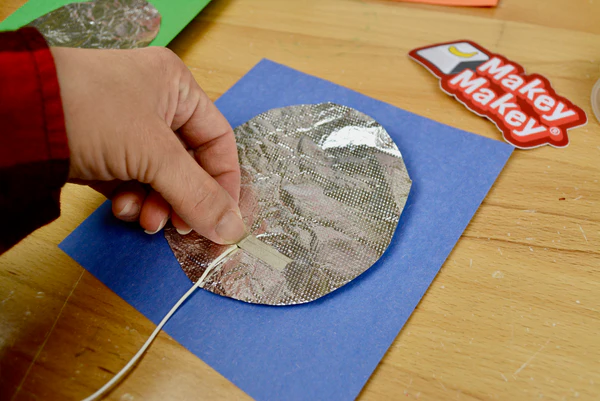
Some games used a buzzer or controller built with Makey Makey. In most cases, the game itself or a live broadcast from the current player’s GoPro was also projected onto the gym wall using a projector.

2) Building a buzzer with Makey Makey

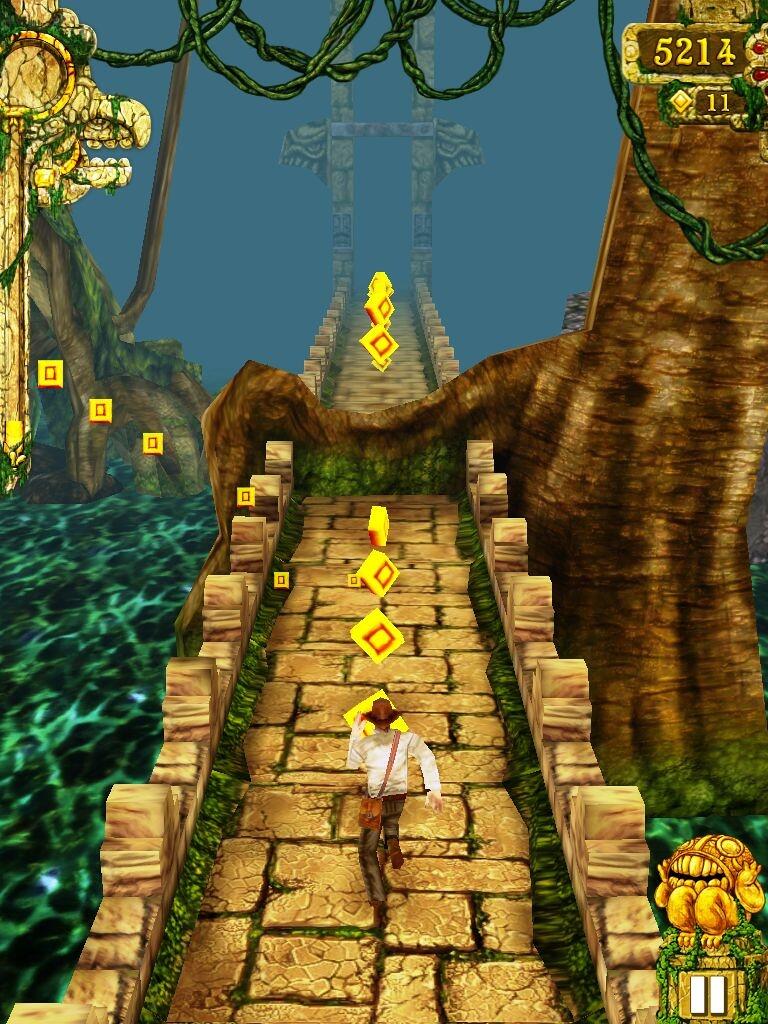
A green screen enabled immersion in the jungle world of the game Temple Run. Each student’s run was recorded and could be watched live by the other students or analyzed afterwards by the student themselves. In this game, there was a scene in which the students had to swing on a trapeze (= vine) through a fire. A still image of this scene was later printed out as a photo so that the students could take it home with them. However, the students observed that the pupils were bothered by the fact that the trapeze was visible in the photo – they had high expectations for a realistic representation of the situation. During the design phase, the students considered this circumstance to be negligible, which shows how different the expectations of pupils and students can be. [2]

3) Jungle world in Temple Run

Advantages of digitally supported physical education

The use of digital games in physical education opens up opportunities for immersion and involvement. They create “access to children’s inner perception (…) through the forms of expression of movement, play, storytelling, and imagination in a kind of symbolic transfer (…) of interpersonal communication” (Marquardt, Anja: Gaming im Sportunterricht, p. 107. Translated to english with DeepL Translator). Students slip into new roles, embody avatars, and identify with their character traits and strengths. This creates a new perspective that goes hand in hand with newly gained self-confidence, a strong urge to move, and new body movements. It can also help students find their identity and promote self-efficacy. For example, students observed that a rather shy student suddenly dared to climb over a high obstacle.

Digital games also make it easier to use neglected or feared sports equipment such as the trapeze or the vaulting horse. Creative reinterpretations of the equipment as a “mountain,” “coin,” or obstacle alienate the equipment and can thus alleviate students’ fears. [2]

4) Student climbing over an obstacle

Conclusion

I found this article particularly helpful as inspiration for the use of media, but I also enjoyed seeing that the concept was well received by the students and was able to break old patterns. I also found the principle of role-playing and the associated benefits very convincing. I wonder why I didn’t come across the article sooner.

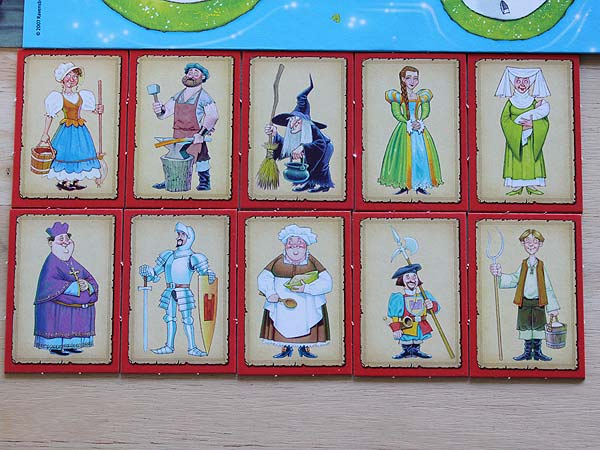
For my own concept, I could well imagine incorporating numerous sports equipment items as artifacts for building the world or the playing field, in addition to digital media, and offering students the opportunity to contribute creatively to the design of the world. Collaboration with other subjects such as art or crafts/creative design would also be conceivable. For example, students could design certain materials they need, such as the thief or food cards in the “Who did it?” game, themselves, thus giving them a more personal connection to the game.

5) Thief cards in “Who did it?” (German: Wer war’s?)

Sources

[1] Phygital Games of the Future: Disciplines. URL: https://gofuture.games/disciplines/, last opened 09.02.2026

[2] Marquardt, Anja (2019): Gaming im Sportunterricht – virtuelle Bewegungsräume schaffen reale Bewegungsanlässe. In: Junge, Thorsten/Niesyto, Horst (Hrsg.): Digitale Medien in der Grundschullehrerbildung. Erfahrungen aus dem Projekt dileg-SL. Schriftenreihe Medienpädagogik interdisziplinär, Band 12. München: Verlag kopaed, S. 103-116.
Found under this URL: https://www.ph-ludwigsburg.de/fileadmin/phlb/hochschule/fakultaet1/erziehungswissenschaft/medienpaedagogik/12-Abgeschlossene_Projekte/dileg_SL/dileg-SL-2019-Marquardt_-_Gaming_im_Sportunterricht.pdf

Images

1) https://gofuture.games/uploads/media/20250305205658010396e8c78a06451049908879175521d/medium.webp

2) https://cdn.shopify.com/s/files/1/0162/8612/files/wireto_foil_600x600.jpg?v=1643832686

3) https://heise.cloudimg.io/v7/_www-heise-de_/download/media/temple-run-93154/temple-run-1_1-1-20.jpg?org_if_sml=1&q=75&width=998

4) https://encrypted-tbn0.gstatic.com/images?q=tbn:ANd9GcSmyKITKwqVT7P4zXrPL–okZ4rOcgfsAQHpA&s

5) https://www.brettspiele-report.de/images/w/wer_wars/wer_wars_beispiel_12.jpg

Forms of interaction

In order to better understand the interactions that take place in the game and in class, I examined interaction on a theoretical level and initially focused my research primarily on social interaction. Apart from the findings summarized below, I also looked at the principle of re-enactment or scenic understanding by Alfred Lorenzer and the associated transference and countertransference. However, due to its lack of relevance to the topic of physical education, I will refrain from elaborating on my findings in this blog article.

Forms of interaction

“Interaction (from Latin inter ‘between’ and actio ‘activity’, ‘action’) refers to the mutual influence of actors or systemsSocial interaction.” (Wikipedia: Interaktion. URL: https://de.wikipedia.org/wiki/Interaktion, last opened 07.02.2026)

Social Interaction

“Social interaction refers to processes of mutual influence, e.g., through communication and social reciprocal exchange relationships between individuals and social groups (social influence), as well as the resulting change in, for example, behaviors and attitudes (attitude change).” (Wikipedia: Interaktion. URL: https://de.wikipedia.org/wiki/Soziale_Interaktion, last opened 07.02.2026)

The term communication is sometimes used as a synonym for social interaction, but communication can also be one-sided, i.e., only from the sender to the receiver, whereas interaction always involves both parties. It therefore involves a response from the receiver to the content sent or parts thereof. Interaction can therefore be described as a symmetrical process and communication as either a symmetrical or asymmetrical process. [1]

Theme-centered interaction according to Ruth Cohn

Thematic-centered interaction (TCI) is a model for working in groups that was developed in the mid-1950s by American psychoanalyst and psychologist Ruth Cohn and therapists Norman Liberman, Yitzchak Zieman, and other representatives of humanistic psychology. Its goal is to promote social learning, personal development, and progress in the subject area [2]. It is used in the fields of education, leadership, social work, counseling, and social engagement. [3]

“TCI was developed against the theoretical backdrop of psychoanalysis, group therapy, and humanistic psychology, and takes into account experiences from Gestalt therapy and group dynamics.” (Wikipedia: Themenzentrierte Interaktion. URL: https://de.wikipedia.org/wiki/Themenzentrierte_Interaktion, last opened 08.02.2026)

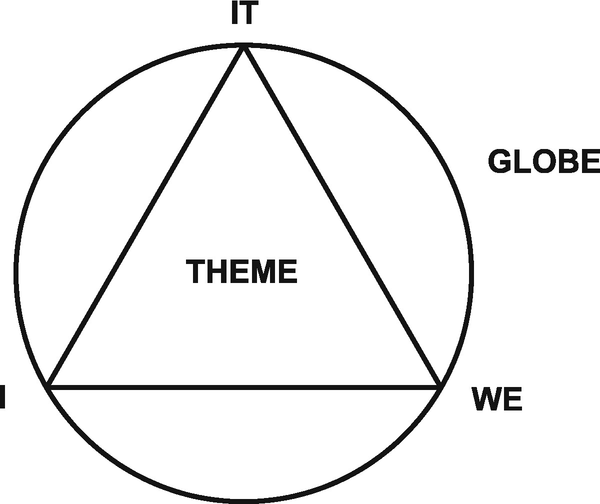
According to theme-centered interaction, there are four factors that influence interaction: the individuals (I), their relationships (we), the shared task (it), and the environment (globe). For successful interaction, it is essential that these factors are in balance. [3]

TCI is also based on a humanistic worldview that can be formulated in three axioms:

“1. Human beings are psycho-biological entities. They are also part of the universe. They are therefore both autonomous and interdependent. The more aware individuals are of their interdependence with everyone and everything, the greater their autonomy.

2. Respect is due to all living things and their becoming (and passing away). Respect for growth requires evaluative decisions. The humane is valuable, the inhuman threatens value.

3. Free decision-making takes place within conditioning internal and external boundaries; expansion of these boundaries is possible.”

(Ruth Cohn Institut: Themenzentrierte Interaktion. Werte und Menschenbild. URL: https://ruth-cohn-institute.org/themenzentrierte-interaktion-tzi/, last opened 08.02.2026)

Another key aspect of theme-centered interaction is that there is a theme that sets the goal for the group and is formulated in such a way that all group members can identify with it. The group leader has a moderating role, but is also a participant, so that cooperation on an equal footing can develop. [3]

The two postulates of TCI:

“1. The chairperson postulate: Lead yourself—become aware of your inner and outer reality, use your senses, make decisions, and take responsibility.

2. The disturbance postulate: Disturbances take precedence – obstacles, concerns, and conflicts require attention and should be taken seriously and dealt with so that the group remains capable of working and learning.”

(Ruth Cohn Institut: Themenzentrierte Interaktion. Postulate. URL: https://ruth-cohn-institute.org/themenzentrierte-interaktion-tzi/, last opened 08.02.2026)

Furthermore, the following rules are formulated in TCI:

1. Represent yourself in your statements; speak using “I” rather than ‘we’ or “one.”
2. When you ask a question, explain why you are asking and what your question means to you. Express yourself and avoid interviewing.
3. Be authentic and selective in your communications!
4. Refrain from interpreting others. Instead, express your personal reactions.
5. Be cautious with generalizations.
6. When you say something about another person, also say what it means to you.
7. Side conversations take precedence. They are disruptive and usually important.
8. Only one person at a time, please!

(Ruth Cohn Institut: Themenzentrierte Interaktion. Hilfsregeln. URL: https://ruth-cohn-institute.org/themenzentrierte-interaktion-tzi/, last opened 08.02.2026)

Interaction and pedagogy

Interaction serves to socialize individuals and plays a major role in psychosocial development. In social situations, skills such as role distance, empathy, tolerance of ambiguity, and identity representation can be acquired. In an educational context, a distinction is made between actions among peers and interaction between children and adults. Adults should create opportunities for children to interact. [1]

Sources

[1] Wikipedia: Interaktion. URL: https://de.wikipedia.org/wiki/Soziale_Interaktion, last opened 07.02.2026

[2] Wikipedia: Themenzentrierte Interaktion. URL: https://de.wikipedia.org/wiki/Themenzentrierte_Interaktion, last opened 08.02.2026

[3] Ruth Cohn Institut: Themenzentrierte Interaktion. URL: https://ruth-cohn-institute.org/themenzentrierte-interaktion-tzi/, last opened 08.02.2026

Image: https://media.springernature.com/lw685/springer-static/image/chp%3A10.1007%2F978-3-030-01048-5_2/MediaObjects/460965_1_En_2_Fig1_HTML.png

Case Example: Baupiloten

Kindergarten Taka-Tuka-Land, Berlin

A strong example of including children in the design process can be found in the work of Baupiloten, a Berlin-based architecture and design collective known for their participatory approach. Baupiloten involve children from the very early stages of design, especially in projects related to schools and playgrounds. Instead of relying on formal interviews or verbal explanations, they use playful and interactive methods such as drawing sessions, storytelling, role-playing, and model-making.

These activities allow children to express ideas through movement, imagination, and play rather than language alone. In this process, designers act as facilitators, creating situations where children’s experiences and perspectives can surface naturally. The insights gathered from these interactions directly influence design decisions, including spatial organization, atmosphere, and types of play supported by the environment.

Baupiloten’s approach demonstrates how interaction design methods can translate children’s playful expressions into meaningful design input. Their work shows that when children are treated as co-designers rather than passive users, the resulting spaces are more responsive to their needs and more supportive of creativity and exploration. This makes Baupiloten a relevant and inspiring example for exploring how interaction design can help include children in the playground design process, particularly within a German-speaking cultural context.

References

What Comes Next: Planned Research Steps

After clarifying my research focus and framing playground design as a wicked problem, the next phase of my thesis will concentrate on practice-based research methods. These steps are intended to help me better understand how children can be meaningfully included in the playground design process through interaction design approaches.

One of the main steps will be conducting workshops with children. These workshops will use playful and interactive methods such as drawing, simple prototyping, storytelling, and role-playing. Rather than relying on verbal explanations, these activities aim to create spaces where children can express ideas through play, movement, and imagination. This approach aligns closely with interaction design principles and allows children to participate in ways that feel natural to them.

In addition to working with children, I plan to conduct interviews with parents. Parents play an important role in shaping children’s play experiences, especially through their views on safety, risk, and supervision. These interviews will help me understand adult perspectives and expectations surrounding playgrounds, and how they may influence design decisions.

Another key step will be on-site observations in playgrounds. By observing how children interact with existing play spaces, I aim to gain insights into their behavior, social interactions, and patterns of play. Observations will help ground my research in real-world contexts and reveal aspects of play that may not emerge through workshops or interviews alone.

Alongside these practical methods, I will continue my literature review throughout the research process. Revisiting existing theories, case studies, and design frameworks will allow me to reflect on my findings and situate them within a broader academic context. This ongoing dialogue between theory and practice is essential for developing a well-rounded and reflective thesis.

Together, these steps represent an iterative and exploratory research journey. Rather than following a fixed path, the process will remain flexible, allowing insights from each phase to inform the next. This approach reflects both the complexity of playground design and the values of interaction design, where learning emerges through engagement, reflection, and participation.

The Role of Interaction Design in Including Children

If playgrounds are meant for children, an important question arises: how can children be meaningfully included in the design process itself? This is where interaction design plays a crucial role.

Interaction design focuses not only on outcomes, but on processes, experiences, and relationships. It is concerned with how people interact with systems, spaces, and each other. When applied to playground design, interaction design offers tools and methods that make participation possible—especially for children, who may not be able to express their ideas through conventional verbal or written means.
Children communicate through play, movement, drawing, and storytelling. Workshops that include playful activities, role-playing, prototyping with simple materials, or drawing exercises allow children to express their thoughts in ways that feel natural to them. Instead of asking children to explain what they want in abstract terms, interaction design creates situations where ideas emerge through action.

Figure 1

By creating playful, inclusive, and flexible design processes, interaction design makes children’s participation more accessible and meaningful. It acknowledges that children are experts in their own experiences and that their perspectives can enrich the design of playgrounds in ways adults alone cannot achieve. In this sense, interaction design is not just a method, but a bridge—connecting children’s ways of thinking with the structured demands of the design process.

References

Sanders, E. B.-N., & Stappers, P. J. (2008). Co-creation and the New Landscapes of Design. CoDesign, 4(1), 5–18.r.

Brown, D. M. Y., Ross, T., Leo, J., Buliung, R. N., Shirazipour, C. H., Latimer-Cheung, A. E., & Arbour-Nicitopoulos, K. P. (2021). A Scoping Review of Evidence-Informed Recommendations for Designing Inclusive Playgrounds. Frontiers in Rehabilitation Sciences, 2, 664595.

Norman, D. A. (2013). The Design of Everyday Things (Revised and Expanded Edition). New York: Basic Books.

Nicholson, S. (1971). How NOT to Cheat Children: The Theory of Loose Parts. Landscape Architecture, 62(1), 30–34.

Playground Design as a Wicked Problem

Playground design is a wicked problem shaped by cultural values, safety expectations, and deeply rooted ideas about childhood. What children need from play differs significantly across societies, as attitudes toward risk, independence, and learning are influenced by social norms and educational systems. This makes it difficult—if not impossible—to design a universal playground that fits all cultural and social contexts.

Recognizing this complexity led me to reflect on the scope of my research and the importance of context. Rather than attempting to address playground design on a global level, I decided to narrow my focus to German-speaking countries, where shared cultural attitudes toward play, education, and risk-taking provide a more coherent framework for investigation. This shift allows for a deeper and more meaningful exploration of design practices within a specific cultural setting.

By moving from a broad, global perspective to a more contextual one, I aim to better understand how interaction design can support the meaningful inclusion of children in the playground design process. Focusing on a defined cultural context not only makes the research more manageable, but also strengthens its relevance, enabling insights that are grounded, reflective, and transferable to similar contexts.

10. Neuro-Inklusive Unternehmenskultur: Bitte mehr als nur bunte Sitzsäcke

Um mal weg von der digitalen Welt zu kommen und in ein anderes Medium, denn Design geht weit über Interfaces hinaus. Wenn Unternehmen über Inklusion sprechen, landen sie oft schnell bei der Inneneinrichtung. Da stehen dann ergonomische Stühle, bunte Sitzsäcke in der „Chill Area“ und vielleicht gibt es einen Obstkorb. Versteh mich nicht falsch: Ein schönes Büro ist toll und ergonimische Stühle helfen sicher auch bei Rückenproblemen. Aber für einen Menschen mit ADHS, Autismus oder Legasthenie löst ein Sitzsack wenige Probleme, wenn die eigentliche Arbeitsstruktur, die „mentale Architektur“ des Unternehmens, exklusiv auf neurotypische Standardgehirne ausgelegt ist.

Echte neuro-inklusive Unternehmenskultur bedeutet, den Workflow als Service zu begreifen. Es geht darum, Barrieren abzubauen, die oft so tief im System verankert sind, dass wir sie gar nicht mehr als solche wahrnehmen. Wir müssen weg vom Anpassungszwang des Einzelnen hin zu einer Infrastruktur, die vielfältig ist.

Der Albtraum des „Standard-Büros“

Der klassische 9-to-5-Tag im Großraumbüro ist für viele neurodivergente Menschen eine massive Belastungsprobe. Warum? Weil er zwei Dinge gleichzeitig verlangt: maximale soziale Performance und maximale kognitive Konzentration unter vielen sensorischen Bedingungen.

Stell dir vor, du versuchst eine komplexe Code-Zeile zu schreiben oder einen Text zu entwerfen, während neben dir drei Leute über das Wochenende reden, das Telefon klingelt und die Neonröhren über dir in einer Frequenz flackern, die du zwar nicht bewusst siehst, die dein Gehirn aber permanent unter Stress setzt. Für ein neurotypisches Gehirn ist das „Hintergrundrauschen“. Für ein Gehirn mit sensorischen Verarbeitungsbesonderheiten ist das quasi Schwierigkeitslevel 1000 und geht dazu noch auf die Exekutivfunktionen. Jede Ablenkung kostet nicht nur fünf Minuten, sondern oft den gesamten „Flow“, den wir mühsam aufgebaut haben. Es ist viel anstrengeder sich zu konzentrieren, es kostet viel mehr Energie und einmal aus dem “Flow” draußen, fällt es schwer wieder reinzukommen.

Was brauch man für einen neuro-inklusiven Workflow?

Um das zu ändern, müssen wir nicht das gesamte Büro umbauen, sondern die Art, wie wir zusammenarbeiten.

1. Asynchronität Kommunikation

Der größte Feind des ADHS-Hyperfokus ist der Satz: „Hast du mal kurz eine Minute?“ In vielen Firmen gilt es als höflich, sofort zu antworten. Für neurodivergente Menschen ist das ein Produktivitätskiller. Ein inklusiver Workflow setzt auf asynchrone Kommunikation. Das bedeutet: Slack oder Teams funktionieren viel besser, denn Informationen werden so aufbereitet, dass man sie konsumieren kann, wenn das Gehirn gerade im Aufnahmemodus ist. Es gibt keine Erwartung einer sofortigen Antwort, außer bei echten Notfällen. Das gibt Menschen mit ADHS die Freiheit, in ihre tiefen Fokusphasen abzutauchen, ohne Angst zu haben, sozial als „unkooperativ“ zu gelten.

2. Body Doubling als Team-Feature

In meinem Post über ADHS habe ich das Prinzip des Body Doubling erwähnt, also die bloße Anwesenheit einer anderen Person, die uns hilft, bei der Sache zu bleiben. Warum nutzen wir das nicht aktiv im Arbeitsalltag? Unternehmen können „Focus-Rooms“ (virtuell oder physisch) anbieten. Das sind Sessions, in denen sich Leute treffen, kurz ihr Ziel für die nächste Stunde ansagen und dann einfach schweigend parallel arbeiten. Es gibt keinen sozialen Druck zur Interaktion, nur die gemeinsame Energie des Tuns. Das ist Service Design für die Exekutivfunktion.

3. Low-Stim-Zonen

Wenn wir über physische Räume reden, dann gerne auch strategisch, denn eine Idee für inklusive Büros sind klare Zonen. Eine „Low-Stim-Zone“ ist dabei kein Pausenraum, sondern ein Arbeitsraum, in dem absolute Stille herrscht, das Licht gedimmt ist und visuelle Reize minimiert sind. Gleichzeitig brauchen wir Regeln für die Erreichbarkeit. Dieses Mindset ständig erreichbar sein zu müssen, während seiner Arbetiszeit kann auch Druck ausüben. Ein „Do-not-disturb“-Status im Kalender sollte in der Unternehmenskultur so respektiert werden wie eine verschlossene Tür beim Vorstand. Inklusion bedeutet hier, das Bedürfnis nach Ruhe nicht als „Sonderwunsch“ abzutun, sondern zu akzeptieren.

Der „Curb-Cut-Effekt“: Warum alle profitieren

In der Stadtplanung gibt es das Konzept der Bordsteinabsenkungen (Curb Cuts). Sie wurden für Rollstuhlfahrer:innen gebaut. Aber wer nutzt sie heute? Menschen mit Kinderwagen, Reisende mit Koffern, Radfahrer:innen. Genau das passiert bei neuro-inklusivem Design am Arbeitsplatz. Wenn wir Meetings strukturierter gestalten, Informationen asynchron teilen und klare Fokuszeiten einführen, hilft das nicht nur den Neurodivergenten. Es hilft dem Elternteil, das nachts besser arbeiten kann. Es hilft der introvertierten Führungskraft, es hilft letztlich jedem, der in unserer überreizten Welt nach Konzentration sucht.

Fazit: Inklusion ist ein Wettbewerbsvorteil

Neurodivergente Menschen bringen oft außergewöhnliche Fähigkeiten in den Bereichen Mustererkennung, Kreativität und Problemlösung mit. Aber sie werden diese Fähigkeiten nur dort einsetzen, wo sie nicht die Hälfte ihrer Energie darauf verschwenden müssen, so zu tun, als hätten sie ein neurotypisches Gehirn. Auch in der Arbeitswelt kann viel neu designt werden, weg vom Standardmaß, hin zu einer Umgebung, die Flexibilität als Stärke begreift. Denn am Ende des Tages ist ein inklusives Unternehmen nicht nur „netter“, sondern schlichtweg innovativer und leistungsfähiger.

Quellen & Referenzen

  • The Brain Charity (2024): Neurodivergent-friendly design transforms modern workplaces.
  • CIPD (2024): Neurodiversity at work guide.
  • Doyle, N. (2020): Neurodiversity at work: a biopsychosocial model and the impact on working lives. British Medical Bulletin.
  • Austin, R. D., & Pisano, G. P. (2017): Neurodiversity as a Competitive Advantage.

Note: This text was developed with the assistance of artificial intelligence for research purposes and to refine the linguistic clarity and flow of the final draft.

9. Dark Patterns: Wenn Design zur Dopamin-Falle wird

Aber unter was leiden Menschen mit ADHS überhaupt und was hat das mit Design zu tun? In meinem zweiten Blogpost habe ich beschrieben, wie das ADHS-Gehirn nach Dopamin sucht und oft erst unter extremem Druck handlungsfähig wird. Dieses Wissen über neurologische Prozesse ist mächtig und wie jede Form von Macht kann sie missbraucht werden. In der Tech-Industrie gibt es dafür einen Begriff: Dark Patterns. Das sind Design-Strukturen, die darauf ausgelegt sind, Nutzer zu Handlungen zu verleiten, die sie eigentlich nicht wollen. .

Für Neurodivergente Menschen sind diese Muster sehr ärgerlich. Sie sind eine Form der digitalen Barrierefreiheit im Rückwärtsgang, sie nutzen nämlich die neurologische Veranlagung aus, aber ins negative.

Die Slot-Machine im Handy

Warum ist es so schwer, TikTok pder Instagram nach fünf Minuten wieder zu schließen? Der Grund liegt in einem psychologischen Mechanismus namens Variable Reward Schedule Das Gehirn schüttet am meisten Dopamin aus, wenn eine Belohnung unvorhersehbar ist. Jedes Mal, wenn wir den Feed nach unten ziehen („Pull-to-Refresh“), ist das wie der Hebel an einem Spielautomaten. Kommt jetzt ein lustiges Video? Eine spannende Nachricht? Oder nur Werbung?

Dieses Prinzip trifft neurodivergente Menschen besonders hart. Da das interne Belohnungssystem ohnehin dysreguliert ist, reagieren wir viel stärker auf diese kleinen, schnellen Dopamin-Kicks. Wir geraten in einen „Zustand des Suchens“, aus dem die Exekutivfunktion uns nicht mehr so leicht rausholen kann. Wir wollen aufhören, aber der präfrontale Kortex, unsere interne Bremse ist gegen das hormonelle Feuerwerk, was diese ständigen Dopmaninkicks auslöst, des Belohnungszentrum quasi machtlos.

Dazu habe ich mir mal die Dark Patterns im Detail angeschaut.

1. Der Infinite Scroll

Ursprünglich als Komfort-Feature gedacht, ist der endlose Feed heute eines der effektivsten Werkzeuge zur Aufmerksamkeits-Extraktion. Er eliminiert den sogenannten „Stop-Signal“-Effekt. In der analogen Welt signalisiert uns das Ende einer Zeitungsseite oder das Kapitelende eines Buches: „Hier kannst du eine Pause machen.“ Im digitalen Design wird dieser Moment künstlich entfernt. Für Menschen mit ADHS, die ohnehin Schwierigkeiten mit der Zeitwahrnehmung (Time Blindness) haben, verschwinden so viel zu schnell zu viel Zeit darin.

2. Künstliche Verknappung und die FOMO-Falle

„Nur noch 2 Stunden verfügbar!“, „3 andere Personen schauen sich diesen Artikel gerade an.“ Diese Einblendungen erzeugen künstlichen Stress. Stress führt zur Ausschüttung von Cortisol und Adrenalin, was wiederum, wie wir auch schon beim Deadline Dopamin gelernt haben, das Gehirn in einen Tunnelblick-Modus versetzt. Neurodivergente Menschen, die oft mit Impulskontrolle kämpfen, treffen unter diesem künstlichen Druck Kaufentscheidungen, die sie später bereuen.

3. Der „Daily Streak“

Apps wie Duolingo oder Snapchat nutzen Streaks, um Nutzer:innen zur täglichen Rückkehr zu zwingen. Was wie Gamification aussieht, ist oft psychologischer Druck. Für jemanden mit exekutiver Dysfunktion kann das Versäumen eines Tages zu Schuldgefühlen oder Scham führen, was dazu führt, dass die App entweder zwanghaft genutzt oder aus Frust über das Scheitern komplett gelöscht oder einfach nicht mehr benutzt wird. Es gibt keinen Raum für einen schlechten Tag oder einen Pause Tag. Manchmal ist es sogar so weit, dass Apps dich dazu bringen 3 “viruelle Münzen” zu kaufen, ein paar Münze bekommt man natürlich kostenlos und wenn man keine mehr hat ploppt sofort ein angebot auf mit “Jetzt 10 Münzen kaufen dann kannst du dein Streak einfrieren und eine Münze kostet dann aber echte 2€, was natürlich auch wieder manipuliert. An dieser Stelle lösche ich die Apps meistens komplett, dann wird wohl keine neue Sprache über Duolingo gelernt, weil mich die ständigen Erinnerungen und aufploppen und sonstiges einfach viel zu sehr nervt.

Der Gegenentwurf: Neuro-Ethisches Design

Als Designer tragen wir auch stückweit die Verantwortung für die mentale Gesundheit unserer User. In Los Angeles beginnt jetzt einer von einigen anstehenden Prozessen gegen Social-Media-Konzerne. Es geht um deren Mitverantwortung für psychische Probleme von jugendlichen Nutzern.

Inklusion bedeutet hier, das Gehirn nicht zu manipulieren, sondern es zu unterstützen. Was wäre das Gegenteil von Dark Patterns?

  • Eingebaute Haltepunkte: Statt Infinite Scroll könnten wir „Load More“-Buttons nutzen oder nach einer gewissen Zeit eine sanfte Erinnerung einbauen: „Du bist seit 20 Minuten hier. Möchtest du eine Pause machen?“
  • Transparente Benachrichtigungen: Statt eines vagen roten Punktes sollte eine App genau sagen, was passiert ist. „Anna hat dein Foto kommentiert“ erlaubt es mir, die Relevanz einzuschätzen, bevor ich die App öffne.
  • Vergebendes Design: Inklusive Gamification würde „Pause-Tage“ erlauben oder Streaks nicht sofort auf Null setzen, wenn das Leben (oder die Exekutivfunktion) dazwischenkommt.

Fazit: Ethik ist kein Feature, sondern das Fundament

Wir müssen aufhören, Engagement-Metriken (wie Verweildauer oder Klickraten) als den alleinigen Erfolg eines Designs zu sehen. Wenn ein Design nur deshalb „erfolgreich“ ist, weil es die neurologischen Schwächen einer Person ausnutzt, dann ist es ethisch gescheitert.

Echtes neuro-inklusives Design bedeutet, die Autonomie der Nutzer:innen zu respektieren. Wir sollten Werkzeuge bauen, die Menschen helfen, ihre Ziele zu erreichen und nicht Produkte, die Menschen dazu benutzen, die Ziele von Werbealgorithmen zu erfüllen. Es ist Zeit für eine digitale Welt, in der wir uns nicht ständig gegen unser eigenes Gehirn wehren müssen.

Quellen & Referenzen

Note: This text was developed with the assistance of artificial intelligence for research purposes and to refine the linguistic clarity and flow of the final draft.

8. Das „Double Empathy Problem“ Warum Kommunikation keine Einbahnstraße ist

In diesem Post bin ich nochmal Werg von meiner Idee von einem MR Awareness Tool und habe mir nochmal mehr generell zu Neurodivergenz, Design und Hürden angeschaut.

Hast du schon mal versucht, ein Android-Ladegerät in ein iPhone zu stecken? Es passt einfach nicht. Nicht, weil das Kabel kaputt ist oder das Handy einen Defekt hat, sie nutzen einfach unterschiedliche Protokolle. Genau so fühlt sich Kommunikation oft an, wenn neurotypische und neurodivergente Welten aufeinandertreffen. Lange Zeit galt in der Psychologie das Narrativ, dass neurodivergente Menschen (besonders Autist:innen) ein „Defizit“ in der sozialen Interaktion hätten. Man ging davon aus, dass sie soziale Signale einfach nicht „richtig“ lesen können. Aber was, wenn das nur die halbe Wahrheit ist?

Der Soziologe Damian Milton stellte 2012 eine revolutionäre Theorie auf: das Double Empathy Problem. Er argumentiert, dass soziale Schwierigkeiten nicht einseitig bei der neurodivergenten Person liegen, sondern im Zwischenraum entstehen. Wenn zwei Menschen mit völlig unterschiedlichen neurologischen „Betriebssystemen“ kommunizieren, entstehen Missverständnisse auf beiden Seiten.

Die Illusion der „richtigen“ Intuition

In der Design-Welt ist es immer super wichtig, dass alles intuitiv ist. Wir wollen Interfaces bauen, die man „einfach so“ versteht. Doch hier liegt die Falle: Intuition ist kein biologisches Gesetz. Sie ist das Ergebnis von kulturellen Erfahrungen und von der Art, wie unser Gehirn Reize filtert.

Für ein neurotypisches Gehirn ist es oft „intuitiv“, zwischen den Zeilen zu lesen, Ironie an der Tonlage zu erkennen oder vage Anweisungen durch den Kontext zu ergänzen. Für ein neurodivergentes Gehirn, das Informationen oft bottom-up (also detailfokussiert statt kontextfokussiert) verarbeitet, ist diese Art der Kommunikation nicht intuitiv, sondern ein Ratespiel. Das Double Empathy Problem zeigt uns also Neurotypische Menschen sind oft genauso schlecht darin, die direkten, detailreichen und logikfokussierten Kommunikationsmuster von Neurodivergenten Menschen zu verstehen. Die Empathielosigkeit ist also beidseitig, nur dass die neurotypische Seite ihren Stil als „Standard“ definieren darf. Und alles andere kann dann als “Problem” dargestellt werden.

Design als Dolmetscher: Brücken statt Barrieren

Wenn wir als Designer:innen verstehen, dass Kommunikation keine Einbahnstraße ist, verändert das unsere Arbeit grundlegend. Wir hören auf, User „erziehen“ zu wollen, und fangen an, Brücken zu bauen. Hier sind drei Ansätze, wie wir das Double Empathy Problem im Design lösen können:

1. Explizitheit schlägt implizite Erwartungen

Vermeidung von „Mystery Meat Navigation“: also Icons oder Buttons, deren Funktion man erst durch Raten oder Drüberfahren mit der Maus versteht. Ein inklusives Interface sagt genau, was es tut.

  • Beispiel: Statt eines vagen „Absenden“-Buttons, der je nach Kontext etwas anderes tut, nutzen wir „Anfrage jetzt zahlungspflichtig abschicken“.
  • Warum? Es reduziert die kognitive Last der Interpretation. Wenn das System klar und direkt kommuniziert, muss das Gehirn keine Energie für das „Deuten“ von Absichten verschwenden.

2. Multimodalität: Die Freiheit der Wahl

Manche Menschen brauchen das geschriebene Wort, um Informationen in ihrem eigenen Tempo zu verarbeiten. Andere brauchen visuelle Roadmaps, um den Prozess zu verstehen. Ein Interface, das nur auf einen Kanal setzt, schließt automatisch Menschen aus. Inklusion im Webdesign bietet deshalb oft „Easy-Read“ Versionen oder klare visuelle Marker parallel zu Texten an. Das Ziel ist es, dem User die Wahl zu lassen, wie er die Information empfangen möchte.

3. Vorhersehbarkeit

Ein großer Stressfaktor in der Kommunikation ist das Unvorhersehbare. Was meint sie damit? Warum kommt keine Antwort? Im Interface-Design können wir diesen Stress durch Feedback-Loops abfangen. Jede Aktion braucht eine sofortige, eindeutige Reaktion des Systems. Wenn ein Prozess länger dauert, brauchen wir keine vage Ladeanimation, sondern eine klare Fortschrittsanzeige: „Schritt 2 von 4: Wir prüfen deine Daten.“

Warum uns das alle besser macht

Das Spannende ist: Wenn wir für das Double Empathy Problem designen, profitieren alle. Wer mag schon unklare Anweisungen oder versteckte Menüs? Inklusion bedeutet hier, dass es mehr als nur einen „richtigen“ Weg gibt, Informationen zu verarbeiten.

Design sollte nicht der Filter sein, der bestimmt, wer „reinpasst“, sondern das Werkzeug, das Vielfalt ermöglicht. Wenn wir Interfaces bauen, die explizit, multimodal und vorhersehbar sind, senken wir die Barrieren für alle, egal, welches Betriebssystem im Kopf gerade läuft.

Quellen & Referenzen

  • Milton, D. E. (2012): On the ontological status of autism: the ‘double empathy’ problem. In: Disability & Society, 27(6).
  • Crompton, C. J., et al. (2020): Autistic peer-to-peer information transfer is highly effective.
  • Reframing Autism (2023): Double Empathy Problem Explained. Eine großartige Ressource für die praktische Anwendung des Konzepts.
  • Gernsbacher, M. A., & Yergeau, M. (2019): Empirical Failures of the Claim That Autistic People Lack a Theory of Mind.

Note: This text was developed with the assistance of artificial intelligence for research purposes and to refine the linguistic clarity and flow of the final draft.