Blog Post 8: Planning a public survey

Public survey

The next step in this project is to develop a survey strategy that enables me to gather insights into train travel in Germany from the perspective of other travelers. To achieve this, I will first establish a solid research foundation and prepare the necessary framework to begin conducting interviews in the coming weeks.

Survey planning

A crucial starting point for any survey is defining its purpose and objectives. It must be clear why the survey is being conducted, what goals it aims to achieve, and which hypotheses or questions it seeks to answer. A well-defined purpose helps ensure that the survey is goal-oriented and produces meaningful results (Public Affairs, 2026). In the context of this project, conducting a survey is essential because individuals experience train stations in very different ways, resulting in a wide range of needs and expectations. These insights cannot be fully understood without engaging directly with users on site. The primary goals of the survey are to identify key pain points, explore potential solutions, and broaden my understanding of user experiences at train platforms. The main questions guiding this research are how travelers currently experience train stations, which problems they encounter, and how these issues might be addressed.

Once the purpose is defined, identifying the target group becomes the next important step. A clearly defined audience helps ensure that the collected data is relevant and representative of actual users (Team, 2025). For this project, the target group is broad and diverse, encompassing anyone who interacts with the German rail system. However, particular attention will be given to those who regularly use or work on train platforms, such as travelers, station staff, conductors, and onboard personnel. These groups are most directly affected by platform design and are therefore likely to provide valuable and experience-based insights.

The next step is developing the survey questions. A helpful approach is to initially collect all potentially relevant questions and then organize them into a logical structure that allows for smooth questioning and clear answers. It is also important to determine the appropriate question formats and response types (Team, 2025). Both the questionnaire and the chosen survey method must suit the target group as well as the project’s time and resource constraints (Public Affairs, 2026). For this study, I have chosen an in-person interview format conducted directly at selected German train stations. While the final set of questions is still being developed, it will be completed before the next blog post.

Before launching the survey, testing and finalization are essential. Conducting a pilot test with a small group helps identify unclear questions and areas that require adjustment (Public Affairs, 2026). I plan to carry out this test run with people in my immediate surroundings, who can provide honest and constructive feedback to improve the questionnaire before it is used in a public setting.

Once all preparations are complete, the survey can be conducted. Here the questions are brought out to the public and are closely monitored while they’re active, to ensure a smooth and targeted process (Public Affairs, 2026). During this phase, the survey will be carried out in person at multiple train stations and on several dates. While conducting the interviews, I will observe which questions are easy or difficult to answer, how willing people are to participate, and the nature of the responses provided. This ongoing reflection will help assess the effectiveness of the survey design.

The final step is the analysis and presentation of the collected data. At this stage, the information will be processed, interpreted, and structured using appropriate analytical methods. The results will then be transformed into a clear and accessible format to make them understandable for others (Public Affairs, 2026). The specific analytical approach will be determined once the interviews are completed and the nature, scope, and quality of the data are fully understood.

Information Gathered

By taking a closer look at survey methodology and the process of conducting surveys, I gained a clearer understanding of the necessary steps involved and how these can be applied to my project.

Next Steps

The next step will be to develop the concrete survey questions and determine the locations where the research will be conducted. Once these aspects are clearly defined, I can carry out the survey and collect the intended data. After the results have been gathered, they will be combined with the insights obtained so far to begin developing concepts aimed at improving the user experience at German train stations.

References

Public Affairs. (2026). What are the most important steps in conducting an opinion poll? Von LinkedIn: https://www.linkedin.com/advice/0/what-key-steps-conducting-public-opinion-7yphf abgerufen

Team, Q. E. (13. November 2025). How to Conduct a Survey: 7 Steps That Actually Work. Von ProProfs Qualaroo: https://qualaroo.com/blog/how-to-conduct-a-survey/ abgerufen

Die systematische Unterrepräsentation von Frauen in der Wissenschaftskommunkation

In meinem ersten Blogartikel zu der Unterrepräsentation des weiblichen Körpers in didaktischen Erklärvideos habe ich bereits über den Bechdel Test geschrieben und diesen neu erfunden. Unterrepräsentation von Frauen gibt es jedoch nicht nur in Erklärvideos, sondern in sämtlichen Bereichen der Wissenschaftsdarstellung. In diesem Blogeintrag möchte ich vertieft darauf eingehen und einen Leitfaden für Mediendesigner:innen darlegen, wie sensible Wissenschaftskommunikation funktioniert.

Wir leben in einer androzentrischen Welt, die von einer „männlichen Norm“ ausgeht. Dies hat nicht nur soziale und gesellschaftliche Folgen, sondern auch wissenschaftliche und medizinische. In vielen Lernmaterialien, Videos, Büchern und E-Learning Plattformen wird der „neutrale“ Körper mit männlichen Geschlechtsmerkmalen dargestellt. Wie bereits in meinem ersten Blogeintrag zu dem Thema, sowie in dieser Studie: (Are stereotypes in decline? The portrayal of female anatomy in e-learning – PubMed) festgestellt, werden “geschlechtsneutrale” Erklärungen des menschlichen Körpers (Funktion Verdauung, Atmung, Herz-Kreislauf etc.) in einer überwiegenden Mehrheit anhand eines männlichen Körpermodelles dargestellt. Der weibliche Körper wird vor allem dann herangezogen, wenn es um sexualisierte oder reproduktive Kontexte geht (Reproduktionssystem der Frau, Sexualkunde etc.).

In 2008 veröffentlichte Science Daily eine Statistik zur Visualisierung von Geschlechtern in medizinischen Textbüchern, die ähnliches offenbarte. Die Darstellung neutraler Körperteile fand um bis zu 83% öfter am Modell eines männlichen Körpers statt. Außerdem wurden zu 75% nur Modelle vom kaukasischen Menschen (helle Haut) gezeigt. Die Studie ging auf Transpersonen nicht ein, doch es ist davon auszugehen, dass hier ebenso eine große Unterrepräsentation vorliegt. [2]

Warum ist Repräsentation so wichtig?

Die mediale Unsichtbarkeit einer Personengruppe bringt die Festigung von Stereotypen mit sich. Verzerrte und sexualisierte Darstellungen gehen mit Body Shaming und internalisierten Schönheitsidealen einher, sowie mit einer höheren Toleranz für Sexismus, Belästigung und Gewalt. Im medizinischen Kontext kann sie zu fehlerhaften Diagnosen und falschen oder verzögerten Behandlungen führen. [3,4] Und das kann tödlich enden.

Wie die KI den Stereotyp weiter befeuert

Ich habe ein kleines Experiment gewagt. Ich fütterte ChatGPT mit dem Prompt „Erstelle mir 10 anatomische Bilder des menschlichen Körpers“ mit dem Ergebnis: 2 von 10 Bildern ließen weibliche Körperformen erahnen. Auch bei weiteren Suchanfragen – „Anatomie menschlicher Körper“ – kam ich zu keinem anderen Ergebnis. Auch andere Analytiker:innen beschreiben ähnliches: Bei generischen Prompts, wie bei dem Wort „athlete“ werden in 9 von 10 Fällen männliche Körper erzeugt. [5] Doch warum ist das so?

Online-Bilderplattformen und Bildergeneratoren holen sich ihre Vorlagen aus dem von der männlichen Norm dominiertem Internet. Geschlechterstereotype werden ungefiltert und manchmal gar verstärkt ausgegeben. Und nicht nur die KI, sondern auch Mediendesigner:innen, die oft auf Stock-Material oder Inspiration aus dem Internet zurückgreifen, fallen in diese Falle. [5] Wer mit solchen aus dem Internet heruntergeladenen Inhalten arbeitet befindet sich in einem Ökosystem, in dem eine ganz bestimmte Norm herrscht: Männlich, weiß, jung, sportlich, heterosexuell, cis und ohne Behinderungen. Diese Norm wandert dann in Erklärvideos, Grafiken, Buchgestaltungen und anderen Wissenschaftsdarstellungen. [6]

Guidlines für Designer:innen zur Darstellung wissenschaflticher Inhalte

Designer:innen tragen große Verantwortung. Letztendlich sind sie es, die den größten Einfluss auf die visuelle Darstellung in der Wissenschaftskommunikation haben. Der erste Schritt ist das kritische Hinterfragen aller aus dem Internet gezogenen Inhalte.

Das Projekt Supera (Supporting the Promotion of Equality in Research and Academia) [6] veröffentlicht ein Paper mit “Guidelines for gender sensitive communication in research and academia”. Ein paar Guidelines daraus:

  • Vermeide irrelevante Information über Aussehen und Geschlecht einer Person.
  • Vermeide Auslassungen in visueller und verbaler Kommunikation. (Beispiel: Kommen in einer Illustration mehrere Menschen vor, achte auf eine angemessene Anzahl an Frauen, Männern, sowie androgynen Personen)
  • Präferiere die Darstellung von Frauen/Männern in nicht-traditionellen Rollen und Berufen.
  • Achte auf eine gender-sensitive Sprache.
  • Vermeide stereotype Farbgestaltungen (Frau – Rosa).
  • Hinterfrage Icons kritisch. Frauen werden auf Icons meist mit einem Rock dargestellt. Denke immer über Alternativen nach.

Es gibt bereits Initiativen, die versuchen aus dem „genormten Ökosystem“ auszubrechen. Hier werden gezielt medizinische Stock-Illustrationen erstellt, die ein realistisches Frauenbild erzeugen sollen. So sind darauf etwa weibliche Körper mit Dehnungsstreifen, Hautkrankheiten oder Geburtennarben abgebildet. [5]

Quellen:

  1. Are stereotypes in decline? The portrayal of female anatomy in e-learning – PubMed
  2. Heffernan, Aishling (03.06.2022): Gender-Blind Medicine. How Images Affect Diagnosis and the Health of Women. In: femLENS, https://femlens.com/blog-post/gender-blind-medicine-how-images-affect-diagnosis-and-the-health-of-women/ (zuletzt abgerufen am 01.01.2026)
  3. Santoniccolo, Fabrizio u.a. (09.05.2023): Gender and Media Representations: A Review of the Literature on Gender Stereotypes, Objectification and Sexualization. In: National Library of Medicine, https://pmc.ncbi.nlm.nih.gov/articles/PMC10218532/ (zuletzt abgerufen am 01.01.2026)
  4. Navlakha, Meera (04.05.2022): These illustrations are challenging the lack of representation in women’s healthcare. In: Mashable, https://mashable.com/article/reframing-womens-healthcare-illustrations (zuletzt abgerufen am 01.01.2026)
  5. Damjanovic, Jelena (26.11.2025): Study asks AI to generate male and female body images—with predictable results. In: Phys.org, https://phys.org/news/2025-11-ai-generate-male-female-body.html (zuletzt abgerufen am 01.01.2026)
  6. H2020 SUPERA & Gender-SMART: Guidelines for gender-sensitive communication in research and academia. In: supera, https://www.superaproject.eu/wp-content/uploads/2020/05/SUPERA-guidelines-gender-sensitive-communication.pdf [PDF], (zuletzt abgerufen am 01.01.2026)

Der Trailer mal anders

(Ja es wird wieder wissenschaftlich)

Kein anderes Werbemittel für einen Film ist so effektiv wie der Tailer. In Hollywood Produktionen macht dieser nur wenige Prozent des gesamten Werbebudgets aus, tragt aber massiv – bis zu 30% – zum Einspielergebnis bei. [1]

Ein Trailer ist auch sehr effektiv dabei, Lust auf einen Film zu machen. Er zeigt Ausschnitte, Musik, grafische Elemente, Schauspieler:innen und Sprecher:innenstimmen, damit Zusehende einen Einblick bekommen. Diese kurze Version des Filmes verrät jedoch nicht die ganze Handlung. Vielleicht werden Fragen aufgeworfen, Mysterien gezeigt, jedoch nicht aufgelöst. Ein guter Trailer erweckt das Verlangen im Zuseher diese Wissenslücken zu schließen und sich den Film anzusehen. Manche Trailer enden mit einem Cliffhanger, einem Witz oder einer Actionszene. Besonders das Ende ist ausschlaggebend. Je „bombastischer“ das Ende eines Trailers, desto positiver wird sich daran erinnert. [2]

Es gibt auch andere Arten von Trailer. Auch viele Games werben mit Previews. Dabei wird aber selten das eigentliche Gameplay gezeigt, als eher eine Filmsequenz, die die Story und das Gefühl des Spieles rüberbringen soll. (Ich möchte hierbei aber zwischen diesen lästigen Werbeschaltungen von Handyspielen absehen und spreche in weiterer Folge von nicht kostenfreien Games, wie etwa für Konsolen oder Computer.)

Die Trailer von Games sind eigentlich richtige Lügner. In manchen Game-Trailern werden vermeintlich Szenen aus dem Game gezeigt, die so jedoch nie vorkommen. Klar, das führt zur Frustration, wenn Erwartungen der Käufer:innen nicht getroffen werden. Andererseits wirkt so ein Story-Trailer viel aufregender, als 2 Minuten pures Gameplay. Beim Bewerben eines Produktes geht es darum ein Gefühl zu vermitteln, Emotionen anzuspielen. Und diese werden durch Storyelemente am besten angesprochen. [2]

Und dann wäre da auch noch der Buch-Trailer. Ein etwas weniger verbreitetes und recht neues Medium. Zum Vergleich: Im Jahr 2005 wurden im deutschsprachigen Raum circa 10 Buchtrailer veröffentlicht. Nur 5 Jahre später waren es bereits 500. [3] Dieser rasante Anstieg zeigt, dass das Prinzip des Trailers „in kurzer Zeit viel Emotion und Inhalt vermitteln“ sehr gut funktioniert, auch jenseits der Kinoleinwand. Der Trailer ist ein Werkzeug der Aufmerksamkeit.

Und wo ist Aufmerksamkeit noch wichtig? In der Schule. Wie wäre es also das Prinzip eines Trailers dafür einzusetzen Spannung, Erwartung und Emotion in den Unterricht zu bringen?

Der didaktische Trailer

Warum sollte der Trailer mit all seiner Funktion nur als Werbemittel betrachtet werden? Wenn es Buchtrailer gibt, warum nicht auch Schulbuch-Trailer, die den Ruf der Schullektüre aufwerten und modernisieren? Ein Trailer komprimiert Inhalte und verpackt sie in eine emotional aufgeladene Form. Genau das, was im Unterricht Herausforderungen darstellt: Aufmerksamkeit und Motivation erwecken.

Ein Trailer, in solch einer Form, wie oben im Text beschrieben, kann laut seiner eigenen Definition inhaltlich nicht komplette Fachkapitel abdecken, könnte aber einen humorvollen oder spannenden Einstieg in ein Thema bieten. Ein Trailer für das nächste Kapitel im Biologiebuch könnte die Stimmung heben und die Einstellung der Schüler:innen auf das Lernen bessern.

Dabei kann auf das oben genannte „Kochrezept“ eines guten Trailers zurückgegriffen werden: Offene Fragen und Mysterien, Humor, actionreiche Szenen und am Ende ein Cliffhanger.

Didaktisch spannend kann der Trailer dann werden, wenn Lernende selbst ihn gestalten müssen. Denn beim Gestalten entstehen gleich mehrere Lernkompetenzen:

  • Priorisierung und Vereinfachung der Inhalte
  • Zusammenhänge müssen verstanden werden
  • Kommunikation und Sprachkenntnisse. [4]

Warum Bildung Spannung braucht

Lernen braucht Emotion. Neurowissenschaftlich gesehen werden Inhalte, die mit Emotionen, Spannung, Humor oder Überraschung verknüpft werden tiefer verarbeitet. Dadurch kann sich auch besser daran erinnert werden. [4]

Trailer zielen genau das an. Sie erzeugen Vorfreude und einen inneren Drang nach Auflösung. In der Didaktik nennt man das eine „motivationale Aktivierung“ – ein Faktor, der nachhaltig das Lernen verbessert. [5]

Der Trailer macht also sichtbar, was der Unterricht versucht: Aufmerksamkeit herstellen. Dies jedoch viel gezielter und dadurch äußerst effektiv. Ob nun als Einstieg in ein neues Unterrichts-Kapitel, als Projektaufgabe, als Präsentation oder als Lernstrategie: Ein Trailer vereint das Lernen mit Kommunikation, Kreativität und Spannung.

So gesehen ist ein Trailer das Miniaturformat des eigentlichen Lernens: Ein Versprechen auf das Verstehen.

Quellen

  1. Hediger, Vinzenz: Der Trailer, das Schlüsselelement jeder Filmwerbekampagne. In: Hediger, Vinzenz; Vonderau, Patrick: Demnächst in Ihrem Kino. Grundlagen der Filmwerbung und Filmvermarktung. Marburg: Schüren 2005, S. 272-281.10.25969/mediarep/12039
  2. Dirkes, Jonas (2020): Warum Trailer uns faszinieren – Alles zu den Mini-Previews. In: ingame, Warum Trailer faszinieren. Alles zu den Mini-Previews (zuletzt abgerufen am 29.12.2025)
  3. Wikipedia. Die freie Eneklopädie (3.6.2025), Buchtrailer, https://de.wikipedia.org/wiki/Buchtrailer (zuletzt abgerufen am 29.12.2025)
  4. Immordino‑Yang, Mary Helen; Damasio, Antonio: We Feel, Therefore We Learn: The Relevance of Affective and Social Neuroscience to Education.  Mind,BrainandEducation 2007, 1(1), 3–10.
  5. Krapp, Andreas. Interesse, Motivation und Lernen: Neue Entwicklungen der pädagogisch‑psychologischen Interessenforschung. Beltz 2010.

Blog Post 7: Primary areas of interest

Primary areas of interest

To continue this project, my next step is to define the primary areas of focus more clearly. By narrowing down the scope, I aim to clarify the overall goal of the project and establish a stronger foundation for the next research phase. This will include conducting interviews, initially with people in my immediate surroundings and later with travelers directly at train stations.

Problem zone train station

In 2024, six of the lowest-ranked train stations in Europe were located in Germany. According to the annual train station ranking published by the international Consumer Choice Center (CCC), the bottom six positions out of 50 evaluated stations were occupied by Bremen Hauptbahnhof, Munich-Pasing, Berlin Zoologischer Garten, Berlin-Gesundbrunnen, Berlin Ostkreuz, and Essen Hauptbahnhof. The ranking evaluates criteria such as information management, the availability of elevators and escalators, and overall accessibility (Gang, 2024). These aspects are essential for a positive user experience, yet they remain insufficiently addressed at many German train stations. As a result, Germany continues to perform poorly in European-wide comparisons, highlighting the urgent need for improvement in this area.

Fokus area

Given the scope, time constraints, and available resources of this project, it would not be realistic to redesign every aspect of a train station. Concentrating on a specific area allows for deeper analysis and more meaningful outcomes. Based on my recent observations in Hamburg and Augsburg, I identified train platforms, along with their entry and exit points, as the areas where the highest number of recurring pain points and challenges occur. Therefore, this project will primarily focus on the user experience of train platforms, while still considering the broader station context in which they are embedded.

Current status

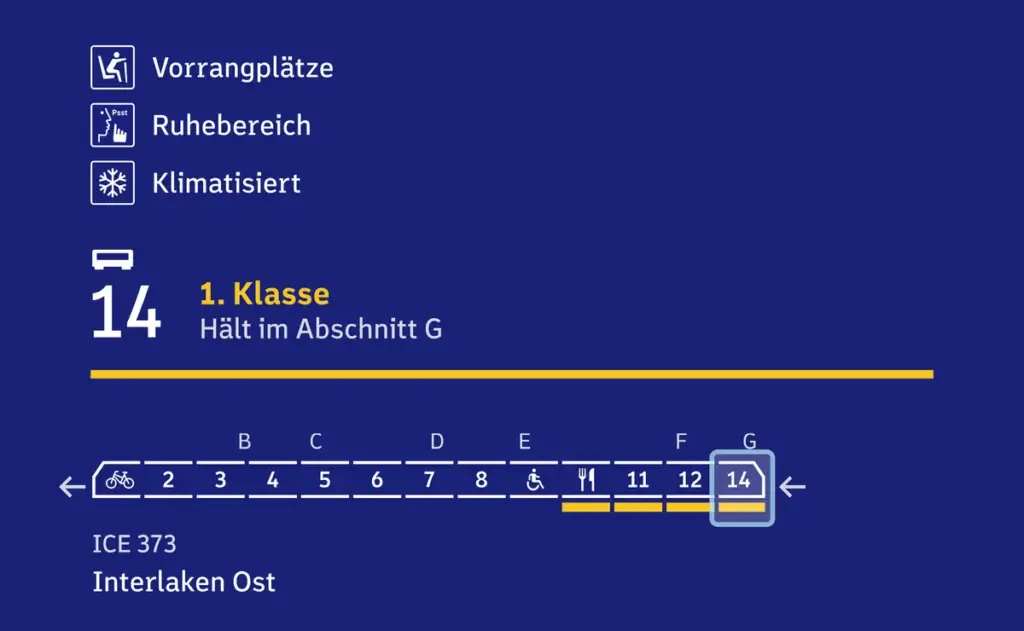
Today, passengers can access a wide range of information about their train both before and during their journey. Prior to arrival at the station, users can consult platforms such as Bahnhof.de, which provide details about train stopping positions, carriage formations, and onboard equipment. Travelers can see where specific carriages will be positioned on the platform, including family compartments, bicycle areas, wheelchair-accessible spaces, priority seating, dining cars, first-class sections, and sleeping cars. Additional information such as the availability of air conditioning, Wi-Fi, or onboard services is also provided (DB, 2025). 

DB. (2025). See the stopping position, train formation and train equipment at a glance. Von DB: https://www.bahnhof.de/entdecken/wagenreihung abgerufen

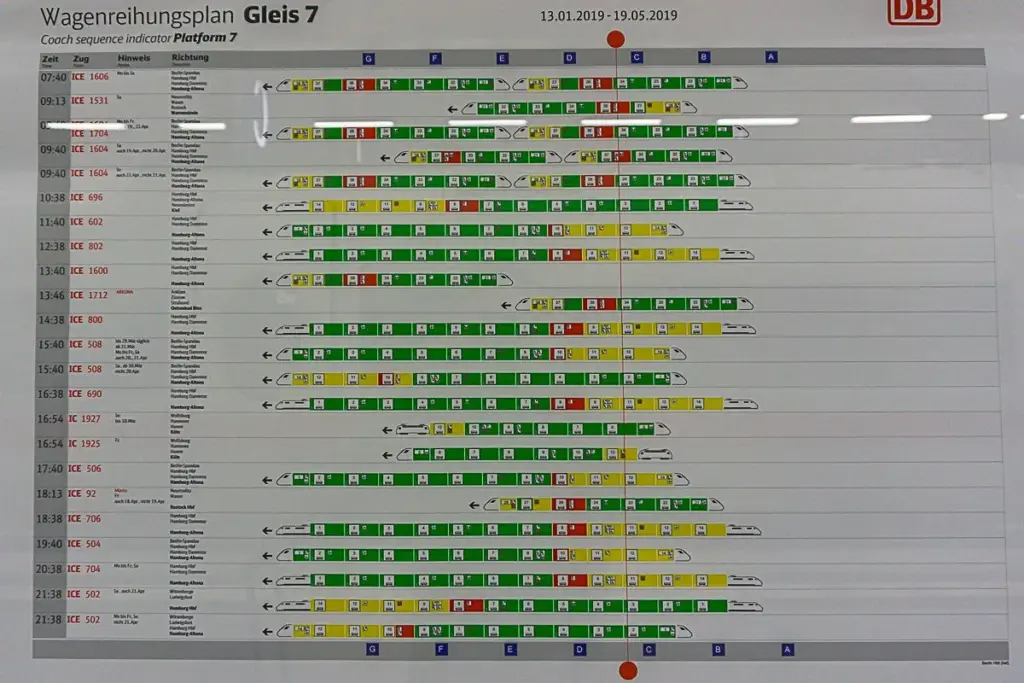
Upon arrival at the station, further guidance is available. Large information boards in entrance areas indicate the platforms assigned to each train, while digital displays on the platforms themselves provide updates on arrival times, delays, and platform changes. This information can also be accessed via the DB Navigator app or through Deutsche Bahn’s online portals. Platform sections where trains are expected to stop are typically displayed on boards, online, or in the app. In addition, many platforms feature carriage plans that show which trains will stop there and where individual carriages will be located. However, this analog system works best for regularly scheduled trains and often fails in cases of last-minute platform changes (Wagner, 2022).

Wagner, J. B. (2022). An Easy Guide to Deutsche Bahn – Navigating German Train Travel. Von Hamburg Beyond: https://hamburgandbeyond.com/an-easy-guide-to-deutsche-bahn-navigating-german-train-travel/ abgerufen

Overall, a large amount of information is already available to help make train travel more structured and predictable. However, a major challenge is that many travelers are unaware of these resources or do not know how to use them effectively. Another issue is the inflexibility of certain systems, which can quickly become confusing or ineffective when schedules change. While digital platforms are more adaptable, they can still be outdated or incomplete. Existing information systems therefore need to be communicated more clearly and made more accessible to all users.

Information Gathered

Through this blog post, I clarified which areas of the train station I want to focus on and gained a better understanding of the current status quo at many German stations. This forms a solid foundation for the next phase of the project.

Next Steps

The next phase will involve designing and preparing surveys to be conducted in January. This includes selecting appropriate locations, defining participant groups, and developing targeted questions. Once the survey results are collected, I will combine them with the insights gathered so far and begin developing concepts aimed at improving the user experience at German train stations.

References

DB. (2025). See the stopping position, train formation and train equipment at a glance. Von DB: https://www.bahnhof.de/entdecken/wagenreihung abgerufen

Gang, M. (01. January 2024). Die sechs schlimmsten Bahnhöfe Europas sind alle in Deutschland. Von 24 Rhein : https://www.24rhein.de/leben-im-westen/verkehr/bahn-schlechtesten-bahnhoefe-europas-deutschland-ranking-bremen-hbf-berlin-essen-hbf-nrw-deutsche-92713050.html abgerufen

Wagner, J. B. (2022). An Easy Guide to Deutsche Bahn – Navigating German Train Travel. Von Hamburg Beyond: https://hamburgandbeyond.com/an-easy-guide-to-deutsche-bahn-navigating-german-train-travel/ abgerufen

Making Plant Life Perceptible Through Technology

How can home automation help make the invisible life processes of plants perceptible? Over the last few decades, both scientific research and artistic practices have shown a growing interest in plant life and in the hidden processes that regulate growth, health, and interaction with the environment.

Some of the most emblematic experiments combining technology, plants, and perception can be found in the field of music and sound. These works explore how biological signals from plants can be translated into audible forms, allowing humans to sense processes that are normally invisible.

One of the most well-known examples is the musical project by Mort Garson. In 1976, he released the album Mother Earth’s Plantasia, a collection of electronic compositions created entirely with synthesizers. Each track was associated with a specific houseplant and was intended to accompany and support plant growth. [2] Although the album was not initially very successful, since it was not released for the commercial music market, it has gradually gained recognition among a niche audience as an early work of electronic music. [3]

In other experiments, plants have been used as actual musical instruments, or as sources of data that are transformed into music.

Composer Mamoru Fujieda, for example, worked with a bioelectric interface developed by botanist Yuji Dogane. This system, known as the Plantron, uses electrodes attached to plant leaves to measure changes in their electrical activity. These signals are then translated by a computer into MIDI data and converted into musical patterns using digital software.

Furthermore, Mileece, an English sound artist and environmental designer, gives a voice to plants by creating installations and performances based on generative music [4]. Her installation Soniferous Eden (2010) reflects her intention to create a bridge of communication between humans and plants, and even between plants themselves. In this work, plants become sensitive to one another and respond when humans touch the leaves of a neighboring plant.

Another notable example is Data Garden, a collective inspired in part by Mileece’s work. Their installation Data Garden: Quartet consists of four plants connected to galvanometers through electrodes attached to their leaves. The electrical signals collected from each plant are translated into MIDI notes, with each plant controlling a different musical instrument. [6]

These experiments invite us to reflect on the possibility of linking sound to dynamic interfaces. Sound, in particular, is a powerful tool for turning biological data into a sensory and perceptible experience. In the field of interaction design, for example, biometric data collected from plants can become parameters that influence technological objects or interfaces.

Within a domestic environment, it would be interesting to integrate a musical or sonic layer into plant care. Following Garson’s early intuition, sound could be used to support plant growth and overall well-being, since research has shown that certain audible frequencies and musical patterns can support physiological processes in plants, such as nutrient absorption, photosynthesis, and protein synthesis [5].

Alternatively, a generative soundscape could be linked to the real-time condition of plants: a stressed plant could produce more tense or dissonant sounds or environmental balance could be expressed through harmonic and stable melody tones.

In this way, home automation systems could help make the perception of plants and their well-being more active and dynamic.

Blog Post 6: Observations at German train stations

Observation in Augsburg and Hamburg

While travelling from Augsburg to Hamburg I was able to conduct primary research and observe the user behaviour, the spatial organization, the signage system and potential pain points on those two sites.

User behaviour

By observing travellers, conductors, and visitors at the two selected train stations, several differences in user behaviour and atmosphere became apparent. At Hamburg Main Station, people generally appeared stressed and in a hurry. Many travellers were running or rushing toward their platforms, contributing to a fast-paced and tense environment. The noise level was noticeably high, caused by constant conversations, shouting, phone calls, frequent announcements, and the general soundscape of the surrounding city. The user group was highly diverse, with people of different ages, body types, and cultural backgrounds, and I heard a variety of languages including German, English, and Turkish. Users engaged in a wide range of actions: standing, sitting, walking quickly, running, talking, and calling out to others. Despite these variations, their shared goal in most cases was to move efficiently from point A to point B using public transport.

In contrast, the atmosphere at Augsburg Main Station felt significantly calmer and less rushed. Although the noise level was elevated, mainly due to conversations, announcements, and construction sounds, it remained within a more tolerable range. The user group was still diverse in age and appearance, but linguistically I predominantly heard German. The observed activities resembled those in Hamburg, but with a greater emphasis on sitting, standing, and waiting, and far less running or shouting. Nevertheless, the fundamental goal for most users remained the same: to travel smoothly from one place to another via public transport.

Spatial organization

Regarding spatial organization and design, I observed that Hamburg Main Station is structured around a large bridge that spans across all tracks and connects the various entrances to the platforms. Access to the platforms is provided via stairs and elevators. Each platform stretches from section A to F, making them quite long. Both the platforms and the walkways on the bridge are relatively narrow, which contributes to a crowded and chaotic atmosphere, especially when people move in different directions at the same time. Overall, the space feels dark and confined, as the station is enclosed and only limited natural light enters the building. However, the design language throughout the station is coherent, and the areas belonging to the train company maintain a consistent visual identity.

In Augsburg, the platforms are connected through an underground tunnel that runs beneath the tracks. Users can access the platforms via stairs, escalators, or elevators. The platforms here are shorter, ranging from section A to D, but they are noticeably wider than those in Hamburg. Despite the increased space, their current condition is not ideal, which can make navigating them, especially with luggage, somewhat challenging. The overall environment feels more open compared to Hamburg, as the station is not fully enclosed and benefits from abundant natural light. However, due to ongoing construction work, the visual appearance and general atmosphere lack coherence at the moment.

Signage systems

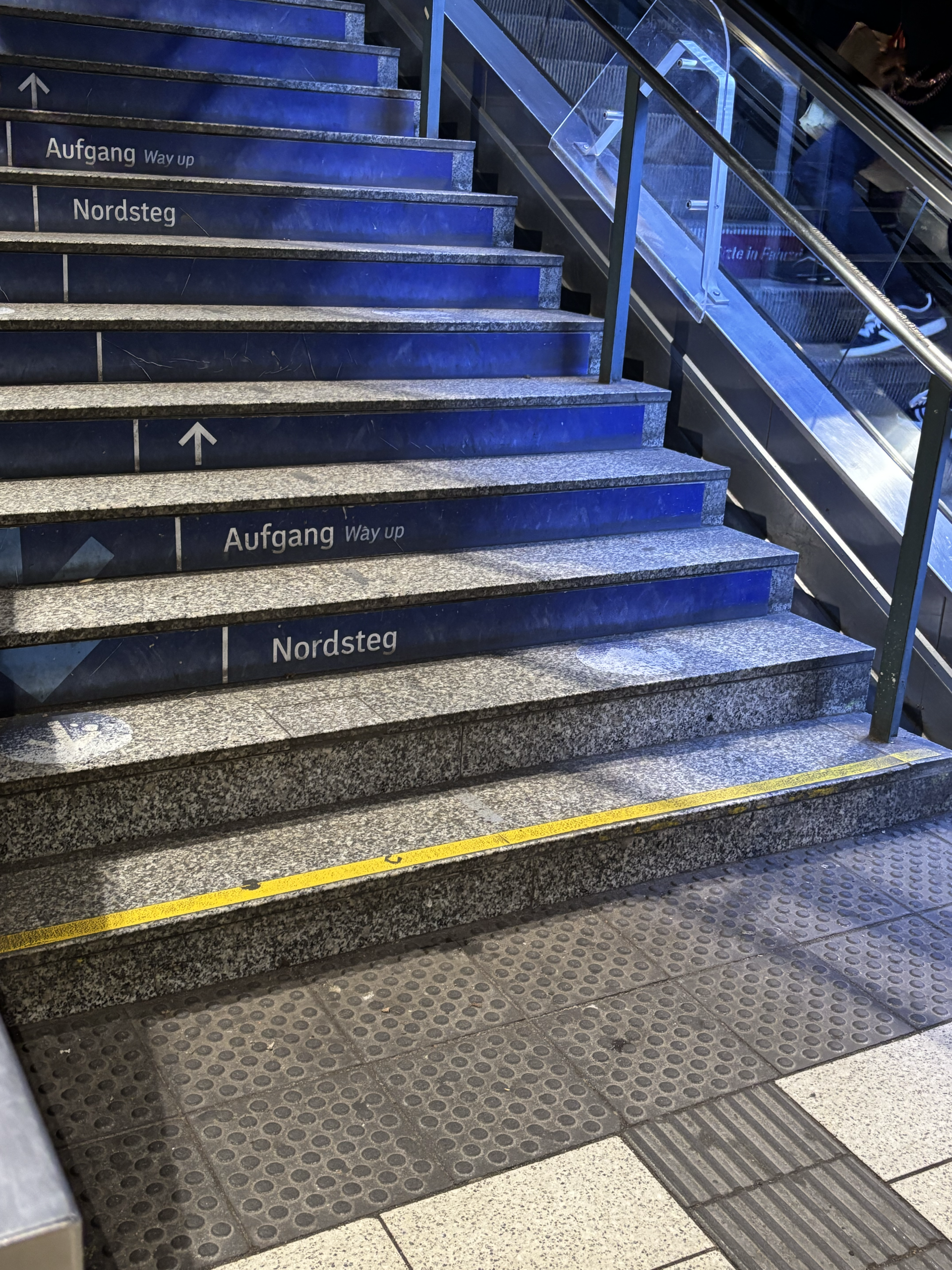
Focusing my attention on the signage systems revealed notable differences between the two stations. At Hamburg Central Station, the signage system is generally well-designed and functional. The panels follow a coherent visual language in terms of layout, iconography, and color usage. However, I did observe instances where signs were misleading or where additional guidance would have been helpful but was missing. There were also attempts to incorporate directional cues on stairs and floors to indicate walking directions. Unfortunately, many of these markings were either worn down and therefore difficult to see, or unclear in their meaning, which reduced their usefulness.

In Augsburg, signage is used more sparingly, and there are no visible attempts to integrate alternative forms of way finding beyond traditional overhead signs. While the existing system is understandable and relatively clear, its minimal nature sometimes makes it challenging for users to locate specific destinations within the station.

Potential pain points

For the pain-point analysis, I began by reflecting on my own experiences before examining the difficulties I observed in other travellers during my time in the stations. One of the most significant pain points I personally encountered in Hamburg was the narrowness of the walkways leading to the platforms, combined with the absence of escalators. This made navigating the station, especially with luggage, physically demanding and time-consuming. Additionally, the platforms were packed, as many people tended to gather in the central area rather than spreading evenly along the full length. This made it difficult to stand without obstructing others and complicated the process of boarding the train.

In Augsburg, my main challenges were related to missing signage, which caused me to spend a considerable amount of time searching for the public restrooms, and the inconsistent design and varying quality of the platforms. These inconsistencies made traveling with a suitcase uncomfortable and sometimes impractical.

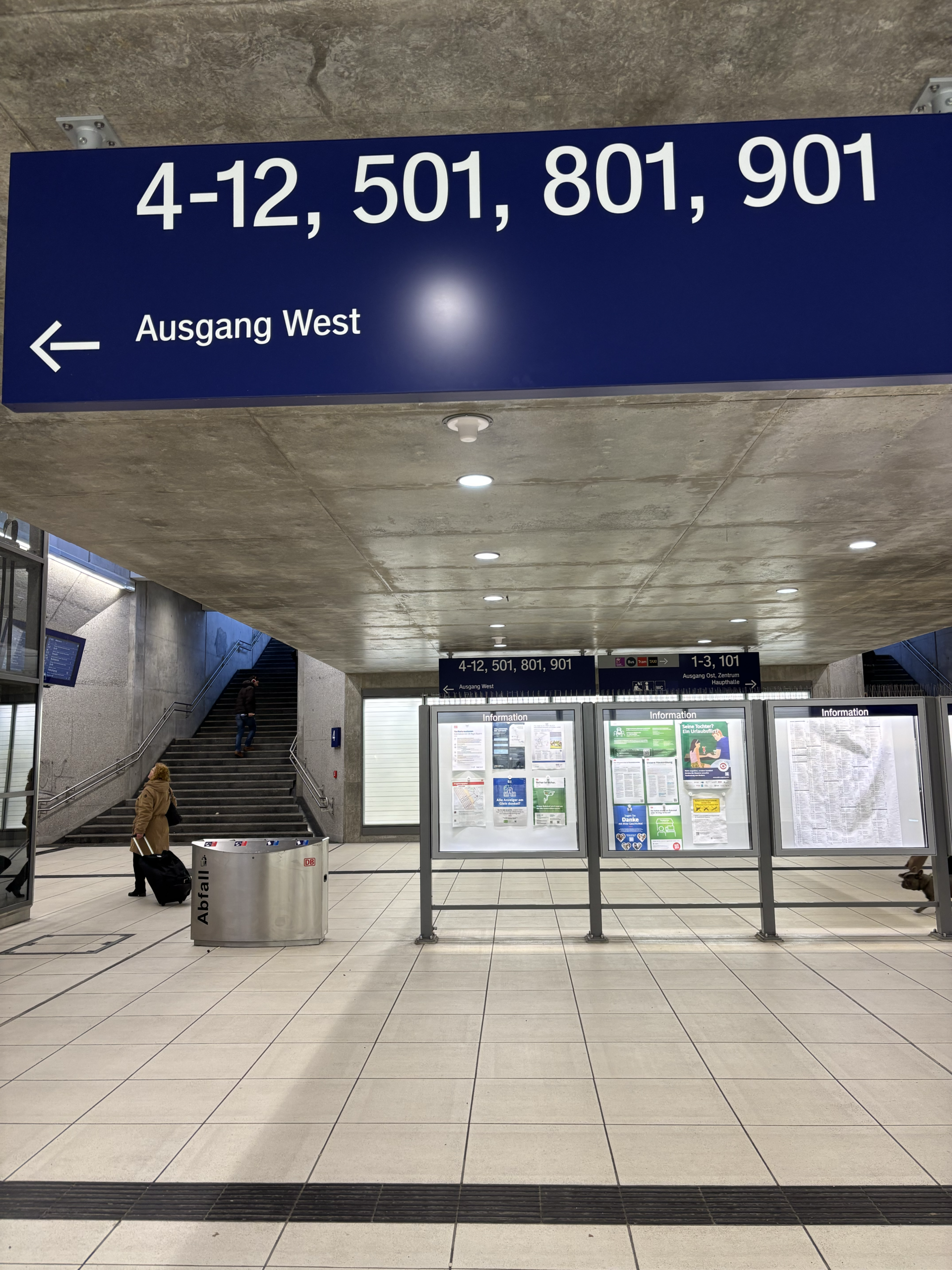
Beyond my own experiences, I also observed several potential pain points faced by other travellers. In Hamburg, many people seemed to struggle with reaching their destinations quickly due to the narrow pathways, opposing walking directions, and the long distances across both the bridge and platforms. Orientation was another notable challenge: some signage was missing, and the exact stopping positions of trains on the platforms were not always predictable, leaving passengers uncertain about where to wait.

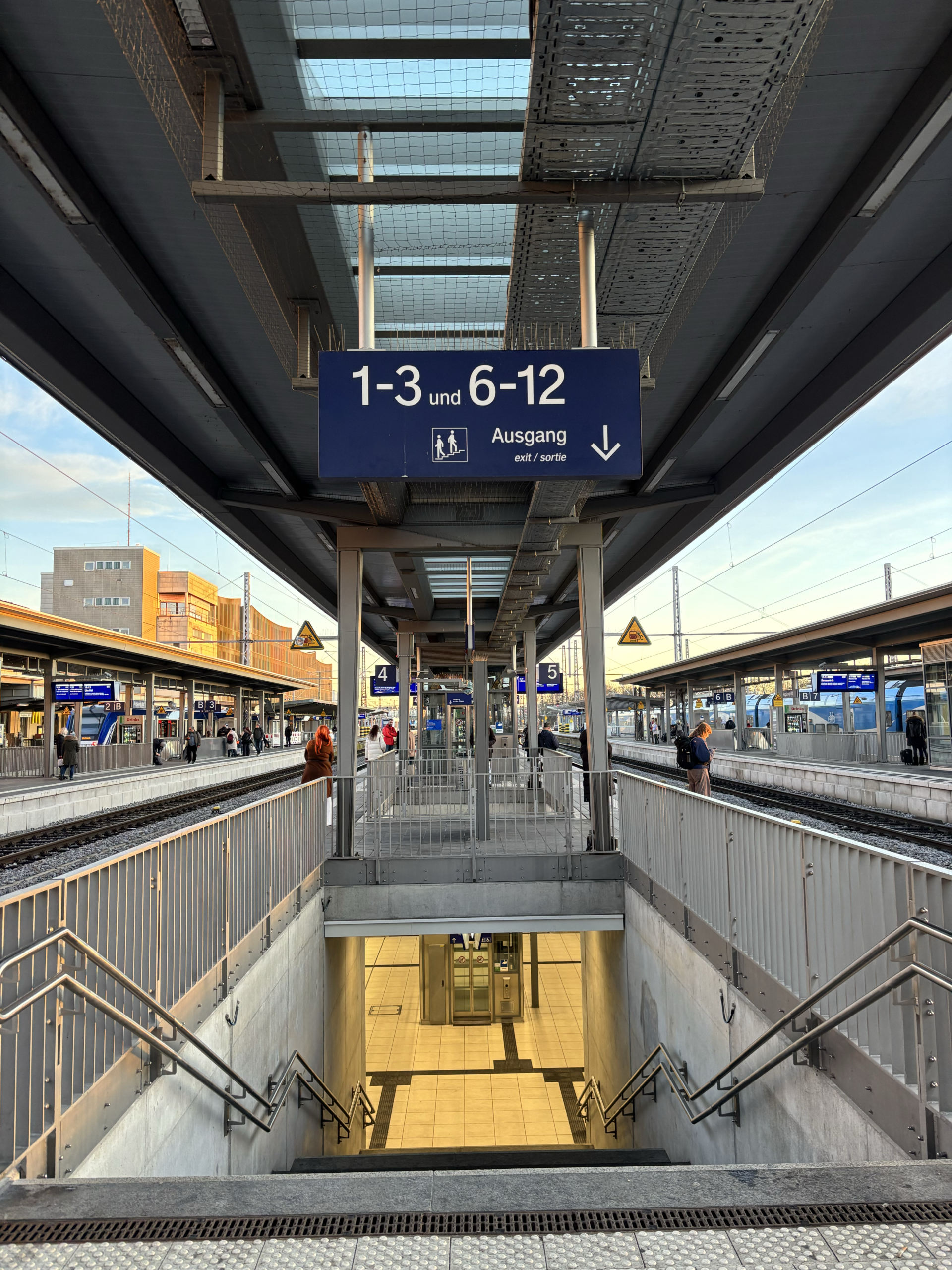
A frequent issue appearing in Augsburg was the limited number of exits on the platforms. When trains arrived and passengers needed to disembark, congestion formed quickly, and people often had difficulty identifying the most efficient route to continue their journey.

Information Gathered

This week, I evaluated and analysed the primary data I gathered by conducting first-hand observations on two German train stations. The insight that I gained will need to be supplemented with more observations and also surveys, to get a more general and wholistic picture of the current situation at train stations around Germany. But already paying closer attention to components that are interesting for this project has helped me develop a more realistic look on the problem at hand.

Next Steps

My next step in this project is to define the primary areas of interest for the further research and identify opportunities for targeted design interventions. I also want to conduct further observations and surveys at one or two train stations and collect more closer insights into the experience of various people.

The Trimm-Dich movement as an example for successfull sport campaign

The Trimm-Dich movement was launched on 16 March 1970 as a campaign to encourage the general public to take up more physical activity with the slogan ‘Trimm Dich durch Sport’ (Get fit through sport). Jürgen Palm, long-time managing director of popular sports at the DSB, and sports physician Wildor Hollmann were particularly involved in this initiative. After the economic miracle, a prosperous society had established itself in Germany, in which obesity and cardiovascular diseases were on the rise. The aim was to counteract this situation through sport and exercise. Until then, sport had been strongly performance-oriented and was only practised in the context of competitions. The Trimm-Dich campaign succeeded in establishing popular sport. Older people, overweight people and less able-bodied people were also encouraged to exercise, and sport became a leisure activity for the first time. Within a few years, 9 million citizens of the Federal Republic of Germany were encouraged to take up active sports.

Why it was so successfull

The campaign’s great success can be attributed to the fact that it perfectly captured the spirit of the times. The 1972 Olympic Games in Munich sparked widespread enthusiasm for sport among the general public and contributed to the success of the Trimm-Dich movement. In addition, Germans had more free time available due to the reduction in working hours, which meant that a general change in lifestyle took place. The campaign was known to 94% of the total population and 99% of young people.

In addition to TV commercials, there was also a mascot, ‘Trimmy’, who was shown in various outfits and participating in a wide range of sports. To this day, Trimmy is the mascot of the DOSB, the German Olympic Sports Confederation.

The longterm effects of the campaign

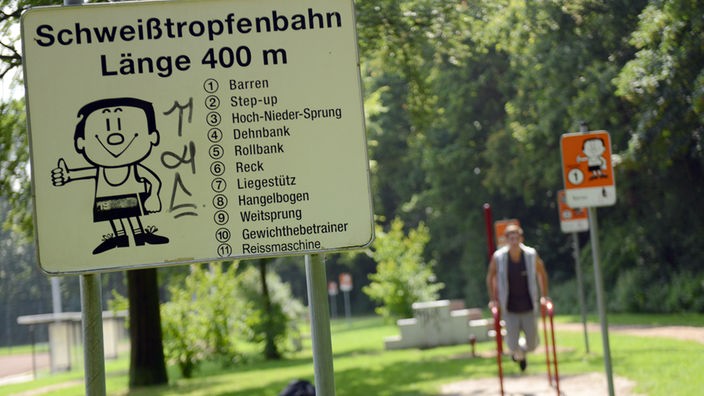
The most visible effects of Trimm-Dich were the numerous fitness trails that were built in many places in the 1970s, modelled on the Swiss Vitaparcours: in Germany, there were around 1,500 Trimm-Dich facilities in the 1980s. At the same time, the first informal running groups were formed, which met outside of sports clubs to go running. The Trimm-Dich campaign initially caused concern among sports clubs, as they feared a decline in membership numbers. In the long term, however, the campaign led to clubs increasingly focusing on popular sports. They changed their programmes and set up non-competitive activities for the general public, families, children and women, which were geared solely towards exercise in leisure time. The Trimm-Dich movement had a significant impact on sports clubs as we know them today and was the catalyst for the fitness wave that continues to this day.

Sources

Image Sources

Analysis and summary of a scientific review on the relation between sports and psychological and social well-being

For proving my point of the impact of sports on mental health I read a scientific review called “The impact of sports participation on mental health and social outcomes in adults: a systematic review and the ‘Mental Health through Sport’ conceptual model“ which was conducted by Narelle Eather, Levi Wade, Aurélie Pankowiak and Rochelle Eime in 2023. The review screened studies that were published between 2012 and March 2020 to find out the relation between sport participation and mental health and social outcomes.

This is how the term mental health is defined in the review:

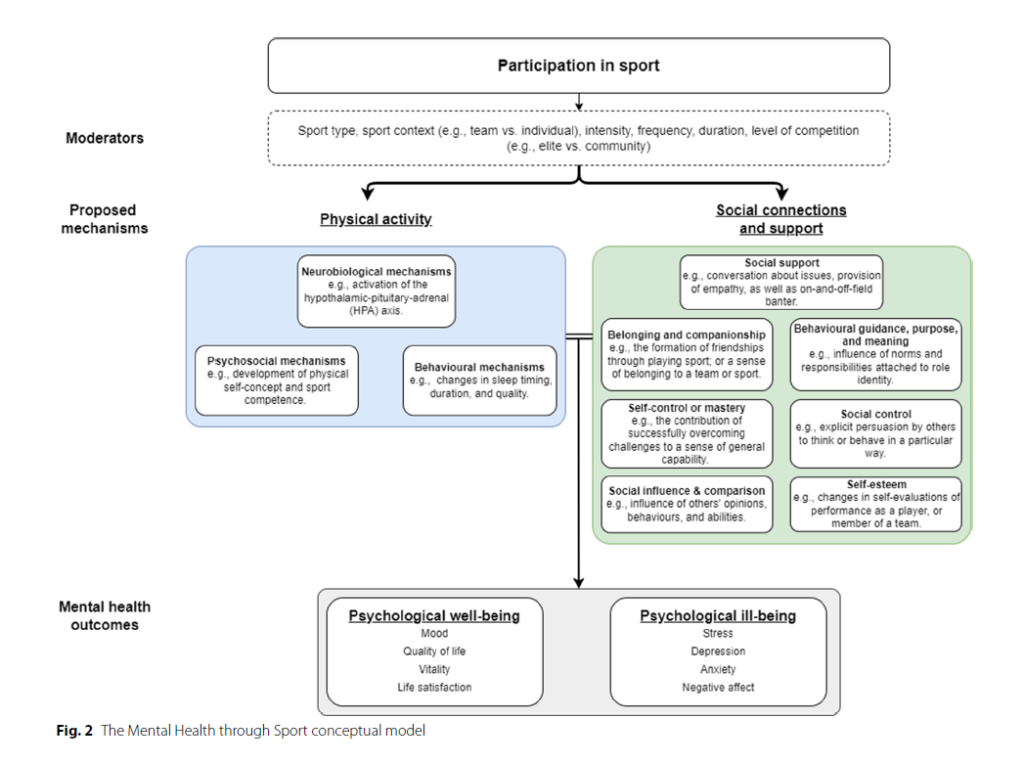
According to the World Health Organization, mental health refers to a state of well-being and effective functioning in which an individual realizes his or her own abilities, is resilient to the stresses of life, and is able to make a positive contribution to his or her community. Mental health covers three main components, including psychological, emotional and social health. Further, psychological health has two distinct indicators, psychological well-being (e.g., selfesteem and quality of life) and psychological ill-being (e.g., pre-clinical psychological states such as psychological difficulties and high levels of stress). Emotional well-being describes how an individual feels about themselves (including life satisfaction, interest in life, loneliness, and happiness); and social well–being includes an individual’s contribution to, and integration in society.

The review showed that adults who participate in sport activities on a regular basis have better mental health conditions: there was shown to be a strong relation to psychological well-being, like e.g. higher self-esteem and life satisfaction, and lower psychological ill-being, like e.g. a lower level of depression, anxiety and stress. Furthermore, sports can have a positive influence on social factors such as improved self-control, pro-social behaviour, interpersonal communication anda sense of belonging. Although this review researched the impact of sports on adults, it can still provide useful insights for the topic of sports education in schools and can be transferred to youths.

Specific outcomes of the review

Another interesting finding is that the positive effects are not as strong when it comes to elite-level sport: in contrary to community sport it can cause higher levels of psychological distress. Research in this field indicates that this fact is related to the high mental and physical demands on pro-athletes. The effects of the pressure to perform prove my point of the negative impact that performance oriented sports education can have on the students mental well-being.

Summary of findings in the review:

  • the positive effects of participating in sports even exceed the effects of other leisure-time activities or recreational activities
  • the effects occur in all different kinds of sports and across different life stages and sub-populations
  • there is a strong tendency for youths to drop out of community sports during adolescence, which leads to many people missing out on the positive effects of sports on mental well- being
  • over the past 25 years there was a consistently high rate of around 10% of adults affected by mental illness
  • especially among young adults there is a high level of loneliness and social isolation
  • improved vitality through sport participation
  • if adults participate in sports they chose themselves and that they enjoy, there is a relation between the intensity of the sports participation and the amount of mental health benefits
  • social factor of sports (social support, peer bonding) as an explanation for the benefits on mental and social health
  • evidence shows that participation in sports in adolescence and young adulthood prevent depression, anxiety and stress longterm
  • aspects that impact the improvement of psychological well-being:
    • psychological mechanisms: development of self-efficacy, opportunity for mastery, changes in self-perceptions, the development of independence, and for interaction with the environment
    • behavioural mechanisms: changes in sleep duration, self-regulation and coping skills
    • social mechanisms: social influence/social comparison; social control; role-based purpose and meaning (mattering); self-esteem; sense of control; belonging and companionship; and perceived support availability
  • improved perception of capability or value (within a team) -> improved self-esteem
  • self-efficacy: learning new skills, overcome challenges, self-control mastery -> confidence in the ability to cope with general life challenges

Deductions based on those findings:

  • It is important that one has the possibility to choose sports that they enjoy
  • Social bonding is an important  factor for unfolding the potential of sports. If social bonding is prevented by performance pressure, unhealthy competition and comparison, the potential of sports can not be reached
  • For students to learn new skills and experience self-efficacy and mastery, sports education needs to be tailored to the student’s individual capabilities and needs

Sources

Eather, Narelle; Wade, Levi; Pankowiak, Aurélie; Eime, Rochelle: The impact of sports participation on mental health and social outcomes in adults: a systematic review and the ‘Mental Health through Sport’ conceptual model. 2023

When a Research Topic Feels too Big

At some point in the research process, a topic can start to feel overwhelming. What once felt exciting and full of possibilities slowly turns into a space of uncertainty, where everything seems relevant and nothing feels clear enough. This is exactly where I currently find myself in my thesis journey.

My initial interest in playground design came from a simple question: why do most playgrounds still look the same? The more I read and explored, the more layers I discovered—safety regulations, standardization, adult-centered design, lack of child participation, educational values, urban constraints, and social expectations. Each of these aspects felt important, meaningful, and worth investigating. However, instead of clarity, this richness created a sense of being lost.

This moment of doubt made me question whether I should change my research question or narrow my scope. Should I focus only on school playgrounds? Should I shift my attention from playgrounds as spaces to the design process itself? Or should I concentrate on one specific issue, such as how children can be meaningfully involved in the early stages of design?

As I move forward, my goal is not to simplify the topic, but to clarify my role as a designer within it. Accepting that a research topic can feel too big is an important step toward shaping it into something focused, intentional, and personal.