Diese Woche bin ich auf das Buch “90 Day Brand Plan” gestoßen 👇, und eine Stelle darin hat mich besonders beschäftigt: der Unterschied zwischen Personal Branding und Corporate Branding. Obwohl beide Begriffe im Marketing selbstverständlich wirken, zeigt der Autor sehr deutlich, warum die Zukunft stärker im persönlichen Markenaufbau liegt als in klassischen Unternehmensmarken.
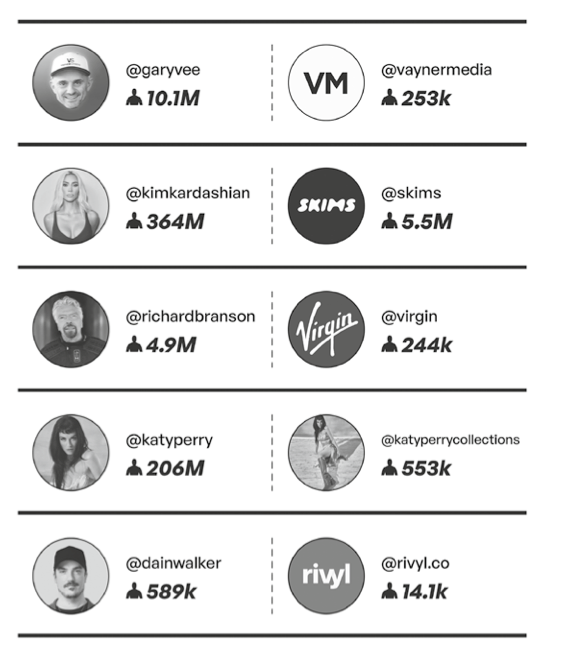
Der Text argumentiert, dass sich Menschen emotional und kognitiv viel stärker mit anderen Menschen verbinden als mit Unternehmen. Geschichten, Erfahrungen, Fehler und Erfolge schaffen Nähe und Identifikation. In sozialen Medien wird diese Dynamik besonders sichtbar, denn Personen haben oft deutlich mehr Reichweite, Engagement und Follower als die Firmen, für die sie arbeiten. (vgl. Walker, 2024)
Studien zeigen, dass 92 Prozent der Konsumentinnen und Konsumenten Empfehlungen von Freundinnen und Freunden mehr vertrauen als klassischen Werbeanzeigen. Authentizität wirkt stärker als Marketing, und persönliche Marken gelten als glaubwürdiger und nahbarer. (vgl. Walker, 2024)
Die Orientierung an Vorbildern ist nichts Neues. Social Media hat diesen Mechanismus jedoch beschleunigt und für alle zugänglich gemacht. Wer eine persönliche Marke aufbaut, kann heute Meinungen und Konsumentscheidungen beeinflussen, unabhängig von großen Medienhäusern oder Agenturen. (vgl. Walker, 2024)
Das Buch verweist darauf, dass bereits 2012 Verkäuferinnen und Verkäufer mit einer starken Social-Media-Präsenz deutlich höhere Verkaufszahlen erzielten. Empfehlungen von echten Personen wirken unmittelbarer und überzeugender als die Kommunikation von Unternehmen. (vgl. Walker, 2024)
Hohe Followerzahlen, Kommentare und Interaktionen dienen in sozialen Medien als soziales Qualitätsmerkmal. Wer sichtbar ist, wird als kompetent, vertrauenswürdig und gut vernetzt wahrgenommen. Diese Wirkung betrifft sowohl Konsumentinnen und Konsumenten als auch mögliche Arbeitgeberinnen und Arbeitgeber. (vgl. Walker, 2024)
Rund 70 Prozent der Arbeitgeberinnen und Arbeitgeber prüfen Social-Media-Profile, bevor sie jemanden einstellen. Interessant ist, dass das Fehlen einer Online-Präsenz teilweise negativ bewertet wird. Sichtbarkeit wird zu einem Zeichen für Professionalität und zeitgemäße Kommunikation. Die berufliche Identität wird dadurch weniger über den Jobtitel definiert, sondern vielmehr über die Art und Weise, wie eine Person online auftritt. (vgl. Walker, 2024)
Personal Branding ist längst kein reines Marketinginstrument mehr. Es hat sich zu einem kulturellen und gestalterischen Phänomen entwickelt. Für Designerinnen, Forscherinnen und Kreative ist die eigene Sichtbarkeit ein aktiver Bestandteil der beruflichen Positionierung. Die zentrale Erkenntnis des Buchs lautet, dass Social Media heute die moderne Visitenkarte ist und dass Menschen anderen Menschen folgen, nicht Marken. Wer versteht, wie persönliche Marken funktionieren, kann sowohl Konsumentinnen und Konsumenten erreichen als auch berufliche Chancen und kreative Projekte aktiv gestalten.
Quelle:
Walker, Dain: The 90 day brand plan. How to Unleash Your Personal Brand to Dominate the Competition and Scale Your Business. Willen:New Jersey 2024
When we think about storyboards, we tend to picture the cinematic concept art used to pre-plan special effects or camera sequences. However, a storyboard, at its most fundamental, is simply a graphic organizer—a series of images or illustrations displayed in sequence for the purpose of pre-visualizing a project’s flow or narrative. It is a methodology for achieving conceptual clarity and effective communication, regardless of whether the final output is a film, an e-learning module, or a new product interface.
For us in Communication Design (CD), the storyboard’s structure must specifically reflect the shift from aesthetic direction to functional experience (UX/Service Design). The key components of our storyboards are strategically designed to capture user interaction and mitigate risk.
What Defines Storyboards?
The communication storyboard is built on specific elements that go beyond basic sequencing, focusing on usability, empathy, and early validation:
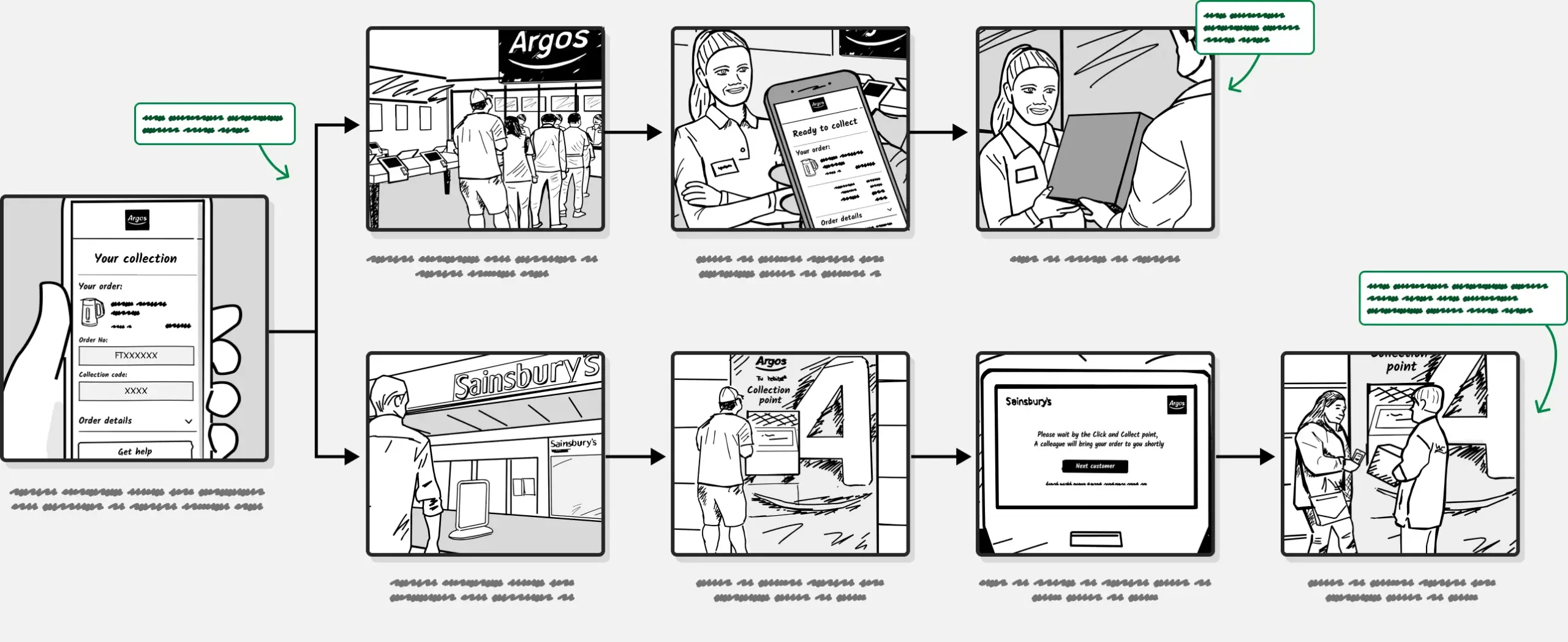
1. Scenario, Persona, and Visuals: Grounding the Narrative in Reality Storyboards must be grounded in reality, meaning they begin by defining a specific Scenario and the Persona who is attempting to achieve a goal. The Visuals are the sequential frames that represent each step of that persona’s journey, capturing the actions taken and the environment or interface being interacted with. This focus ensures design is tailored to authentic user needs and expectations, transforming research findings into an actionable visual story.
2. Focus on Emotion and Annotations: The Empathy Tool This element differentiates the CD storyboard from the cinematic version. Instead of detailing technical directions like ‘camera pans,’ Annotations and Captions must explicitly capture the user’s internal experience. This means documenting the persona’s emotional state (frustration, confusion, or satisfaction) and their cognitive load at each moment. This emphasis on emotion is the primary empathy tool utilized, ensuring solutions are designed to address real behavioral pain points, not just technical steps.
3. Structural and Logical Integrity: The Blueprint for Clarity For complex projects like technical communication, instructional content, or service flows, the storyboard acts as the crucial blueprint for structural validity. By meticulously mapping the sequence of content, it is ensured that information flows logically and that critical details—such as safety procedures or key instructional steps—are presented to the end-user in the correct, unambiguous order. This rigor is essential for preventing systemic failure, ensuring compliance, and delivering a clean, understandable user journey.
4. Low-Fidelity for Speed and Iteration: The Risk Management Asset The visuals used in communication storyboards are often deliberately simple, rough sketches (sometimes called “scamps”). This low-fidelity approach is highly strategic: it makes the process inexpensive and incredibly fast to produce. Because these prototypes are easy to create and modify, rapid ideation and collaboration are fostered, allowing teams to explore multiple options and gather feedback immediately. This speed is a major risk management asset, as it ensures big-picture structural problems are identified and fixed early on, before costly development begins.
By prioritizing the Persona, the Scenario, and the Annotation of internal states, the storyboard is transformed into a powerful, living artifact that actively helps find and fix problems in the user experience before the final product is launched.
Refrences
Adobe Blog. “Prototyping: The Difference Between Low-Fidelity and High-Fidelity Prototypes and When to Use Them.”
Because my first three blog posts were all about the same topic but lacked a logical structure, I want to give you a brief overview of what I have researched and discussed so far before it gets too confusing:
Why do we root for the bad guy? A summary of eight reasons why audiences are often drawn to villains and anti-heroes in film and television
The Jungian Archetype Theory
The Big Five
The Character Clock
A Brief Draft for Building a Customized Model for Villain Analysis
These topics already build a good foundation for creating my own model, but there are still a few steps I need to take before I can develop an actual framework. The current idea I have for a systematic character analysis framework looks as follows:
The character as an artefact – analyzing the character using the ACIS framework
The character as a represented being – analyzing the character using the Big Five
The character as a symbol – brief notationof possible symbolic meanings the character can carry
So, what will be next? In this blog post, I want to explore the missing parts, such as discussing the ACIS framework and researching concrete examples of how to use these frameworks, before actually defining the complete framework in one of the next blog posts.
The ACIS Framework
The ACIS Framework was developed by Christine Linke and Eckart Prommer in 2021 as a systematic method for analyzing how characters are represented and visible in audiovisual media (perfect for my use case!). It combines quantitative content analysis with narrative and reception-based approaches. An important aspect of this method is that it analyzes the content as a viewer would experience it, without relying on external context.
The Step-by-Step Procedure of the ACIS Framework
Since I plan on integrating this framework into my own model, I want to explain it by giving you a step-by-step guide on how it is used.
Step 1: Character Identification
The first step in using the ACIS Framework is to distinguish whether the character is a Protagonist or a Main Character. ACIS defines characters based on their role and presence in the narrative.
Protagonists are characters who take on a leading role and act as the driving force behind the story in a goal-oriented manner. In television, this is often clearly marked by the character’s permanent presence in the ensemble.
Main characters are persons who are centrally visible on screen, have their names mentioned, and speak dialogue, such as TV hosts, news anchors, reporters, and so on.
Step 2: Character Characteristics Coding
Once the role of the character is identified, the next step is to analyze the character in detail by coding individual characteristics such as:
Gender
Age
Sexual orientation
Other specific characteristics (body shape, appearance, clothing, etc.)
The key principle here is that these characteristics must be visually or audibly perceivable – not simply taken from the script or other external information.
Step 3: Visibility Dimensions
The ACIS Framework focuses on three dimensions of visibility:
Frequency: How often does the character appear?
Density: How much screen time does the character receive?
Focusing: How prominently is the character positioned or emphasized in the frame?
It also considers when and how much the character speaks, so the analysis includes both visual and audio presence.
Adapting the ACIS Framework for Analyzing Sympathetic Villains
A fun picture of Severus Snape (sympathetic villain) to keep you engaged.
The ACIS Framework serves as an almost perfect method for systematically analyzing the character as an artefact, but I want to modify a few aspects so it fits perfectly with my analysis of sympathetic villains. Keep in mind that all these adaptations currently function as a first draft and will probably be revised and further adjusted as the research progresses.
Since some villains function as protagonists in film and television, and the identification as a main character is primarily used for broadcasting formats, I will either identify the villain as the protagonist or not. I also considered defining three categories for villains, because they can not only be a protagonist or not, but sometimes also act as an omnipresent being, like Sauron in The Lord of the Rings, who serves as the main challenge for the hero but receives hardly any screen time. Since I am unsure about this and would need to create a clear definition for each category, I will just note it here as a thought to keep in mind.
Regarding the second step, Character Characteristics Coding, I would like to incorporate the research of Keen, McCoy, and Powell in Rooting for the Bad Guy: Psychological Perspectives and definitely include attractiveness in some way, based on the third reason they mention: “What is Beautiful is Good.” I know attractiveness is difficult to measure scientifically, but hopefully I will find a method in my future research that provides an easy way to analyze this attribute.
Another aspect I want to consider, which is already included in the ACIS Framework, is the Mere Exposure Effect mentioned by Keen, McCoy, and Powell – that is, the screen time and actual dialogue time of the villain. I have already looked into some AI tools that could help determine a character’s actual screen time without having to watch an entire film or TV series and manually count the time. Unfortunately, I fear these tools have limitations, and I will probably have to focus mainly on movie villains. Hopefully, further research will provide a solution to this problem.
That’s it for this blog post. In the next one, I want to create my first concrete draft of a character analysis model. Looking forward to it!
Until then – see ya.
Literature:
Linke, Christine, and Elizabeth Prommer. “From fade-out into spotlight: An audio-visual character analysis (ACIS) on the diversity of media representation and production culture.” Studies in Communication Sciences 21.1 (2021): 145-161.
Keen, Richard, Monica L. McCoy, and Elizabeth Powell. “Rooting for the bad guy: Psychological perspectives.” Studies in Popular Culture 34.2 (2012): 129-148.
Disclaimer: This text was proofread for punctuation, grammar, and spelling errors with the help of Perplexity. The content of the text remains unaffected.
To understand the depiction of future life in media, let’s start with the book that would set everything in motion.
Published in 1981, After Man: A Zoology of the Future by Dougal Dixon along with his following books, are considered the roots of the modern speculative evolution artistic movement. A movement which would go on to discuss both possible futures and alternative routes history could have taken, thus shaping the face of media, especially sci-fi over the last few decades.
About the Book
After Man depicts a world set 50 million years in the future, after the extinction of mankind. Showing how animals that we are familiar with today could evolve in this world set after our time. In 2018 a second edition was published, aimed to update the book to our current understanding on speculative evolution.
Content
While scientific in nature, the book doesn’t aim to be a firm prediction, but rather an exploration of possibilities. How evolution and natural selection can be used to flesh out a fictional future ecosystem. Showing how animals would adapt to changing environments through behaviour, physical form and their place in the food chain.
It goes over multiple different possible branches of evolution, asking questions like: What if rabbits eventually evolved to take over the niche of ungulates? How would baboons behave if they became hunter-predators? Could penguins evolve to the size of whales?
Structure
The book is built up like a scientific almanac, with full-page illustrations by Diz Wallis, John Butler, Brian McIntyre, Philip Hood, Roy Woodard and Gary Marsh. Showing both animals and their environment.
The introduction goes over the different processes responsible for evolution, as well as a short break-down of the development of life on Earth. The chapters explore life from environment to environment, ranging from Temperate Woodlands and Grasslands to Tundra and the Polar Region. It establishes the common animals of the region, which niche they occupy in the food chain.
The book makes use of binomial nomenclature, meaning it uses both generic and Latin names. Alongside are facts about the animals’ physical appearance and behaviour (hunting, social interaction, adaption to weather, …). These are often accompanied by smaller illustrations to visualize the information.
Further Works
The success of After Man showed, that there was a market for books that make use fictional examples and settings in order to explain scientific processes. In 1988 Dixon followed his work up with The New Dinosaurs, which aimed to explain zoogeography, by showing an alternate world where dinosaurs hadn’t gone extinct. This was followed in 1990 by Man After Man, which focused on climate change; showing the future of a human species which was genetically engineered to adapt to it.
“Anyway, After Man, I feel, established the idea of world building as goes Speculative Zoology. Things being what they were prior to the age of the internet, I don’t think anybody during the 1980s or early 90s really tried to do what Dougal did […]” – Darren Naish
In 2002 Dixon would also be a consultant on the docu-miniseries The Future is Wild. The 13-episode series goes over speculative evolution of the next 5 million, 100 million, and 200 million years. Many of the designs reflect creatures from After Man, while also taking future environmental changes into account.
In the first part of this two-part blog series, I explored two well-known character analysis models – Jungian Archetype Theory and the Big Five personality framework. While both offer interesting perspectives for analyzing fictional characters, they fall short of covering the full scope needed for a truly systematic analysis. That’s why, as promised, I’ll introduce another model that is much more detailed and was specifically created for analyzing fictional characters in film and media. I know what you might be thinking:
“Great, another post on dry theoretical character analysis!”
But hang in there – soon we’ll dive into the practical side.
The Character Clock
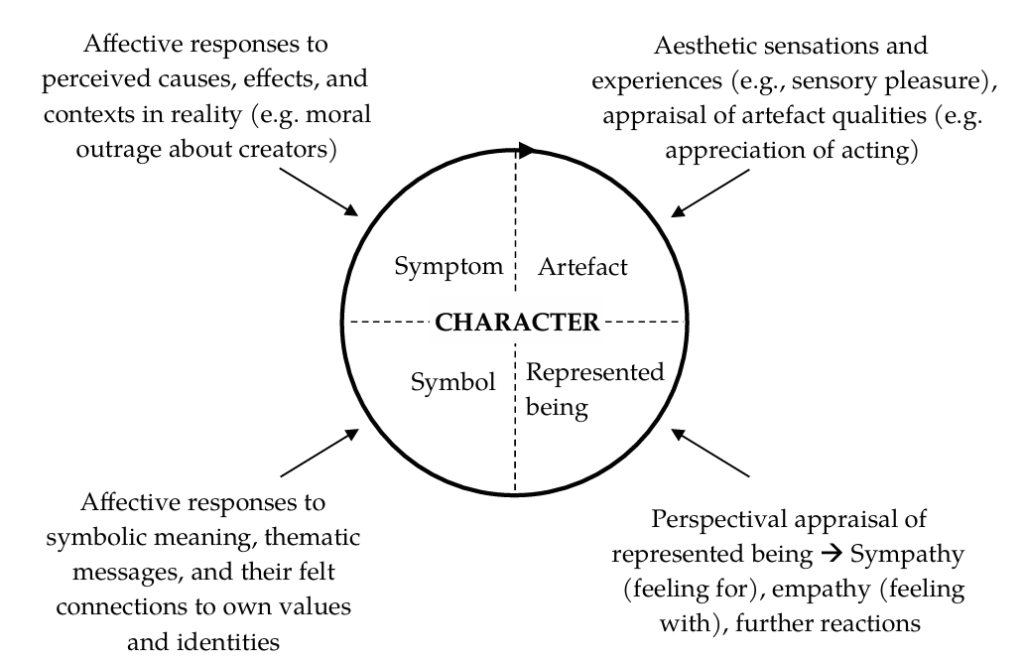
Jens Eder introduced a new character analysis framework called the “Character Clock” in his book Characters in Film and Other Media. The purpose of this model is to analyze different dimensions of fictional characters to provide a complete understanding that includes not only their personality but also their appearance, symbolic meaning, and the context in which the character was created. The name comes from the shape of the model, which resembles a clock and symbolizes how our understanding of a character moves through the four parts he defined.
Artefact: The first aspect we notice about a character is their appearance and how they are presented on screen. This includes not only their looks but also their voice, movements, and how these elements are arranged through acting, camera work, and writing style. This stage focuses on the character as a crafted piece of media itself, before considering what the character represents.
Represented Being: At this stage, we begin to view the character as a person within the story – a being with a personality. We consider their relationships, emotions, actions, and social roles in the story’s world. This involves imagining the character’s traits and inner life as part of the narrative.
Symbol: Characters often symbolize something larger than themselves. Here, we understand that the character not only exists in the story world but also functions as a symbol representing ideas, themes, or social issues. This stage deals with the deeper, often hidden meanings the character can carry.
Symptom: Finally, a character can reflect aspects of the real world in which the media was produced. This includes cultural values, political messages, and social stereotypes that influenced the creation. This stage examines why the character was created in a certain way and how audiences might interpret them based on the production and viewing context.
Not every part of the character clock is equally useful for every character or story because some characters might be mostly about their story role, while others are specifically designed as a symbol or to make social commentary.
Defining My Research Focus (Wtf Was This All About?): A Systematic Approach to Villain Analysis
Moving from “How to analyze characters in film and media in general” to “What I aim to research and what is necessary to do that,” I want to combine these methods to suit my specific use case. My goal is to analyze villains systematically, compare them, and highlight what differentiates common villains from the most popular villains, those we actually root for despite their immoral actions. Keep in mind that this is just my main goal. If I manage to create a reliable statistical model, you could use it to compare fictional characters in any way you like. For example, you could compare heroes and villains, sidekicks and heroes, or antiheroes and villains. The possibilities become almost endless once you establish an analytical method focused on building a large database with statistically and systematically researched values.
Adapting the Character Clock: Building a Customized Model for Villain Analysis
I really like Jens Eder’s approach with his Character Clock because it covers all the aspects of a fictional character and not only the personality. Therefore, I want to base my model on his but with a few modifications.
First of all, I don’t want to include the Symptom part. I know that the Symptom is also an interesting aspect of character analysis, but I think it’s more efficient, when analyzing multiple villains, to start with a smaller scope. Otherwise, the analysis for just one character would take way too much time to even gather a database. You could write a whole book analyzing one character if you try to cover each of these four aspects, so I am trying to break it down to the most important ones.
Secondly, I want to mainly focus on the Artefact and the Represented Being parts because they are not only the things we notice first when seeing a character on screen, but also the easiest to compare. I also want to include the Symbol briefly for every character by noting if they represent something bigger, what it is, or if there is even a deeper meaning behind the character.
And last but not least: How do I want to systematically analyze the Artefact and the Represented Being? I want to use the Big Five for analyzing the Represented Being since it fits perfectly for analyzing multiple characters and is suitable for creating comparable diagrams.
For the Artefact, on the other hand, I want to use a framework called ACIS (Audio-Visual Character Analysis) a systematic method designed for analyzing how characters are represented and visible in audiovisual media, developed by Christine Linke and Eckart Prommer and published not too long ago in 2021. I will present this framework in the next part of this blog series as well as continue to describe what my approach will look like.
I know I promised this to be a two-part blog, but during my research, I realized that I have to cover much more to actually develop my own framework. Sorry!
See ya in the next one.
Literature:
Eder, Jens. Characters in Film and Other Media: Theory, Analysis, Interpretation. Open Book Publishers, 2025.
Linke, Christine, and Elizabeth Prommer. “From fade-out into spotlight: An audio-visual character analysis (ACIS) on the diversity of media representation and production culture.” Studies in Communication Sciences 21.1 (2021): 145-161.
Disclaimer: This text was proofread for punctuation, grammar, and spelling errors with the help of Perplexity. The content of the text remains unaffected.
The problem with physical education in schools is that it is mainly oriented on performance. There is a strict grading system that is not tailored to the individual capabilities of students. This leads to less sporty students feeling even worse about their bodies and loosing trust in their physical capabilities and developing an aversion against sports and movement in general that is often maintained into adulthood. This can result in a lack of movement later on in life which has a high impact on one’s physical and mental health and also can possibly cause severe physical health and mental health problems later on. Physical education actually offers great potential that goes beyond the obvious physical benefits: it has been proven that sport promotes neuroplasticity in the brain [1]. Neuroplasticity refers to the development of new synapses or the formation of neurons in the brain [4]. Among other things, sport promotes the release of neuromodulators such as dopamine and serotonin, as well as neurotrophic substances such as BDNF (brain-derived neurotrophic factor). These substances promote growth and accelerate and enhance neuroplasticity [4]. This plays a central role in learning processes, but also in building self-confidence. In addition to boosting pupils’ self-esteem, this could also improve their academic performance, which in turn strengthens their self-esteem.
To reinforce this point, I would like to quote Dr Barbara Prüller-Strasser, a researcher at the Department of Medical Biochemistry at the Biozentrum Innsbruck:
“Movement leads to more neurons participating in a learning situation after a cognitive stimulus. Thus, sport can improve attention and learning ability before mental activities.” [1]
Physical activity is also closely linked to general mental well-being and can prevent mental and neurological disorders [1]. This is why it is important to design physical education in a way that it reaches its full potential and is beneficial for every student.
The main research question is how physical education needs to be changed in order to benefit the mental health of students and to help them build healthy self-esteem. Questions that also need to be considered are what impact movement has on stress reduction, academic success, physical abilities and the body-mind-connection in general.
Personal motivation
During my own school days, I perceived physical education as rather limiting to my personal development. Instead of promoting my individual abilities, failing the strict assessment system and the relentless comparison with my classmates led to a high level of frustration in physical education, which prevented me from pursuing any sporting activities for years. It was only through personal development that I realised the potential of exercise in terms of emotional and physical health. I find it very sad that this potential is not being exploited in school physical education. I would like to see future generations benefit more from physical education and develop a healthy relationship with their bodies and exercise. Especially in a society where working at a screen is widespread, I consider physical activity to be essential. Furthermore, I ask myself how I, as a designer, can contribute to raising awareness of the lost potential of physical education and what contribution I can make to solving the problem from a design perspective.
Possible problem solving approaches
There are different possible approaches on how to solve the problem. One of them could be changing the curriculum of sports education classes to fit the individual student, focussing on their individual progress instead of imposing a strict grading system on them and comparing them to their physically stronger classmates. Theoretical input on the benefits of physical activity should also be included. This could also happen via educating the sports teachers on the body-mind-connection and giving them tips on how to support young people in building self-esteem. Changing the curriculum as a solution is going to be hard to achieve due to bureaucracy. Therefore, it may be more helpful to incorporate special movement-action-days that dedicate one whole day to education about movement, mind and body. This could replace the Federal Youth Games that are very performance oriented. Another approach could be to educate the students outside of the school context. This could happen on social media or in an app specially designed to guide them to a healthy relationship with their body and also on how to “survive” physical education classes without feeling minor, for example teaching them how to deal with comparing oneself with peers in a healthy way and how to enjoy physical activity as much as possible.
Expected challenges
Challenges of this topic could be finding the right persons for interviews, the almost unchangeable curriculum of schools and the broadness of the topic. Until now it remains unclear to what extent physical education in schools can be impacted and if the problem can be solved from outside of the system. Another challenge, due to the complexity of the topic, is that it might be hard to maintain the focus on the interaction design aspect of the topic, making sure not to drift into other subject areas.
Next steps
The most important step is to collect relevant literature and other sources to deepen the research and create a profound scientific basis for problem solving attempts. Another sensible step is to conduct surveys to find out how physical education is currently perceived in schools and how it has been perceived by different generations. This will, on the one hand, rule out personal bias and, on the other hand, highlight any generational differences that may exist. In addition, the aim is to find out on what basis the current concept of physical education was developed in order to better understand and evaluate it. One potentially relevant approach is the Trimm-dich movement, which was initiated by the German Sports Federation in the 1970s as a campaign to promote more exercise [3]. More in-depth research on this topic could yield promising approaches to solving the problem. It is necessary to examine the extent to which the ideas behind this movement can be transferred to the present day and to the specific context of physical education. Furthermore, it will certainly be helpful to find people as early as possible with whom subject-specific interviews can be conducted later in the research process, in case the available literature does not provide sufficient insights.
[2] Vanutelli, Maria Elide; Hommel, Bernhard; Cancer, Alice: Moving the mind, thinking the body: new insights on the mind-body connection from the neuroscience of movement, sports, arts, yoga, and meditation. URL: https://pmc.ncbi.nlm.nih.gov/articles/PMC10879547/ (zuletzt aufgerufen am 15.11.2025)
Why inclusive design matters and how we can start doing better
Design shapes the way we move, think, work, and connect with our environment and other people. It influences how we navigate often without us even noticing. Yet many design decisions whether in digital products, physical objects or architecture still assume a neurotypical user as the default.
With an estimated 15 to 20 percent of the global population being neurodivergent, this means a significant part of our society is still overlooked. Neuro-inclusive design is not a niche or an add-on. It is a core part of creating accessible, meaningful, and human-centered experiences.
This blog post explores what neurodivergence is, why it matters for design, and how we can start building environments that truly support different ways of thinking, sensing, and being.
What Is Neurodivergence?
Neurodivergence describes people whose brains process information, stimuli, or social cues differently from what is typically expected. It includes ADHD, autism, dyslexia, dyspraxia, Tourette’s, and many other variations. The word itself is not a medical term. It simply acknowledges that not all brains work the same way, and that these differences are valid.
Being neurodivergent is not an illness. It means experiencing the world through a different lens. Along with challenges, many neurodivergent people have exceptional strengths such as creativity, pattern recognition, intense focus, innovative thinking, or strong problem-solving abilities.
But because most environments are designed with neurotypical needs in mind, friction appears where it does not have to.
Common examples of challenges
Noise sensitivity Busy open offices or loud spaces can feel overwhelming. Many people depend on noise-cancelling headphones to stay focused or simply to get through the day.
Sensory differences Some individuals are easily overstimulated by bright lights, strong smells, or chaotic visuals. Others seek more input and need tactile or movement-based stimulation to feel regulated.
Attention and focus differences ADHD can make task switching, organizing, or following long instructions difficult, while at the same time enabling periods of deep hyperfocus.
Social communication differences Unspoken rules, social cues, or group interactions can be hard to navigate, especially in environments that rely on intuition and context.
Learning differences Reading, writing, or doing math can be challenging even when intelligence is average or above average.
No neurodivergent person experiences these things in the same way. Neurodiversity is extremely individual. The real problem is not the person, but that many systems and spaces expect only one type of brain.
Why Neuro-Inclusive Design Matters
When design defaults to the “typical,” it unintentionally excludes a large part of the population.
Designing with neurodivergent needs in mind improves:
• comfort • accessibility • autonomy • ease of use • emotional well-being
And importantly, inclusive design shouldn’t create separate solutions. It focuses on flexibility, options, and environments that adapt to different needs. When we design with neurodivergent users in mind, experiences become better for everyone.
Examples of Neuro-Inclusive Design
1. Adaptive furnishing in physical spaces Furniture and spatial layout directly influence sensory comfort and attention. Offering a mix of soft seating, modular furniture, beanbags, standing options, or quiet corners makes a space more welcoming for different nervous systems. These choices allow people to self-regulate, whether they need calm, movement, or a different type of sensory input.
2. Reducing cognitive load in digital design Digital interfaces can either support or overwhelm. For people with ADHD for example, keeping track of passwords or understanding unclear error messages can be exhausting. Design can help by offering: • clear, friendly error messages • the option to save passwords • login links via email Small adjustments like these reduce cognitive load and frustration, improving usability for all users.
3. Reducing working memory load Designs that minimize what people need to remember make experiences more inclusive. Checklists, reminders, autofill, tagging systems or saved preferences help users stay organized without relying solely on memory.
4. Multiple ways to absorb or provide information Neurodivergent people process information differently. Giving users options improves accessibility for everyone. Examples include text combined with icons use an easy readable font, captions on videos, simple infographics, or voice input for people who struggle with typing.
5. Clear visual structure and predictable layouts Many neurodivergent users rely on consistent, easy-to-scan interfaces. Predictable layouts reduce cognitive load and help people stay oriented. Useful design choices include clear headings, simple navigation that stays in the same place, generous whitespace and labels that say exactly what they mean.
6. Sensory-friendly lighting in physical spaces Lighting can make or break someone’s ability to focus. Adjustable warm lighting, flicker-free LEDs or access to natural light help reduce sensory overwhelm. Offering dimmer switches or “low-stim” areas gives people control over their environment.
Include Neurodivergent Users in the Process
The most important principle of neuro-inclusive design is to Design with neurodivergent people, not just for them. This means involving them during the design process and not just in the end. Their lived experience is essential. Their insights reveal real barriers, real needs, and real opportunities for better design.
References
„Neurodivergence: what it is, symptoms and treatment“. Zugegriffen: 16. November 2025. [Online]. Verfügbar unter: https://www.topdoctors.co.uk/medical-dictionary/neurodivergence/
„Neurodivergent: What It Is, Symptoms & Types“, Cleveland Clinic. Zugegriffen: 16. November 2025. [Online]. Verfügbar unter: https://my.clevelandclinic.org/health/symptoms/23154-neurodivergent
„Inclusive Design for Neurodiversity: Creating Harmonious Spaces for a Diverse Future“, modulyss. Zugegriffen: 16. November 2025. [Online]. Verfügbar unter: https://modulyss.com/en-INT/inclusive-design-for-neurodiversity-creating-harmonious-spaces-for-a-diverse-future
R. East, „How to Design for Neurodiversity“, Showcase PSR. Zugegriffen: 16. November 2025. [Online]. Verfügbar unter: https://showcase-psr.co.uk/how-to-design-for-neurodiversity/
Ryan.Taylor, „How neurodivergent-friendly design transforms modern workplaces“, Support for neurological conditions | The Brain Charity. Zugegriffen: 16. November 2025. [Online]. Verfügbar unter: https://www.thebraincharity.org.uk/neurodivergent-friendly-design/
Australian Psychological Society, Designing Neurodiverse inclusive events: Creating accessible experiences for all. 2024.
Note: This text was developed with the assistance of artificial intelligence for research purposes and to refine the linguistic clarity and flow of the final draft.
Unsere menschliche Aufmerksamkeit ist eine limitierte Ressource. In der modernen Welt wird unsere Aufmerksamkeit durch permanente Benachrichtigungen, Informationsüberflutung und dauerhafte Erreichbarkeit ständig gefordert was zu kognitiver Überlastung und Stress führen kann. Die Interaktion mit Technologie und digitaler Information ist aus unserem Alltag nicht mehr wegzudenken. Dabei wird die Art und Weise, wie wir mit ihr interagieren grundlegend durch die eingesetzten Ein- und Ausgabemedien begrenzt.
Viele moderne Produkte und Technologien nutzen fast ausschließlich grafische Benutzerschnittstellen und sprechen dadurch hauptsächlich den visuellen Sinn des Nutzers an. Grafische Benutzerschnittstellen fordern konstant Aufmerksamkeit vom Nutzer und vernachlässigen die Fähigkeit des Menschen, Informationen im Hintergrund und über andere Sinne zu verarbeiten.
Diese eindimensionale Art der Interaktion hat mich schon während meinem Bachelor beschäftigt und mich dazu bewegt, mich mit alternativen Benutzerschnittstellen auseinanderzusetzen. Mein Fokus lag damals auf den greifbaren Benutzerschnittstellen (Tangible User Interface) durch deren Einsatz ich eine alternative Herangehensweise zeigen wollte, um dem immer stärkeren Verlust der realen Welt in Zeiten digitaler werdenen Lebensumstände entgegenzuwirken. Konkret ging es in meiner Abschlussarbeit um die Kommunikation im virtuellen Raum und wie eine greifbare Benutzerschnittstelle ein Gefühl der Präsenz und physischen Verbundenheit schaffen-, sowie die Informationsübermittlung positiv beeinflussen kann.
Durch diese Arbeit konnte ich bereits feststellen, welchen Einfluss die Wahrnehmung über unterschiedliche Sinne auf die User Experience -und die Fähigkeit Informationen zu verarbeiten haben kann. Anders als in meiner Abschlussarbeit wollte ich mich im Rahmen dieser Blogeinträge aber nicht nur auf greifbare Benutzerschnittstellen beschränken, sondern das Thema zunächst breiter umreißen.
Mit was genau möchte ich mich beschäftigen?
Um mein Thema einzuleiten möchte ich mit diesem Zitat von Mark Weiser beginnen: “The most profound technologies are those that disappear. They weave themselves into the fabric of everyday life until they are indistinguishable from it.”
Diese Zitat beschreibt den Prozess der Integration jeder größeren neuen Technologie. Zunächst ist sie Präsent und im Fokus unserer Aufmerksamkeit. Mit der Zeit wird sie Massentauglich und rückt immer mehr in den Hintergrund, und bereichert unsere Umgebung. Ein Beispiele hierfür ist die Erfindung des Buchdrucks. Zunächst nur für jene verfügbar, die die Fähigkeiten und Mittel hatten, mittlerweile findet sich Schrift überall in unserer physischen Welt wieder und vermittelt uns Informationen wo und wann wir sie brauchen, ohne dass wir aktiv darüber nachdenken müssen.
Die Computertechnologie hat ebenfalls so angefangen. Zunächst nur Unternehmen und Universitäten vorbehalten ist sie heute kleiner, günstiger, leistungsfähiger und so weitflächig verfügbar und wird immer stärker auch in Alltagsgeräten eingesetzt um diese smart zu machen. Beispiele hierfür sind Smart Devices (physische Objekte, die mit Sensoren und Kommunikationstechnologien ausgestattet sind) wie Lichter, Lautsprecher, Küchengeräte und vieles mehr. Dieses Konzept der Technologien, die in unsere Umgebung integriert sind, wird Ubiquitous Computing gennant.
Um nun einen Schritt weiter zu gehen, möchte ich kurz den Ansatz der Calm Technology anreißen. Hier geht es nicht mehr hauptsächlich um die Integration von Computertechnologie in die physische Welt oder die physische Interaktion im Allgemeinen, sondern um die Art und Weise wie Technologie mit uns Menschen kommuniziert. Calm Technologie formuliert Prinzipien, die im Designprozess berücksichtigt werden können, um Technologie so zu gestalten, dass sie nicht ständig die volle Aufmerksamkeit des Nutzers beansprucht. Informationen sollen erst dann übermittelt werden, wenn sie gebraucht werden und den Nutzer nicht in seinem Flow stören, sondern unterstützten indem sich auf die peripheren Sinne konzentriert wird.
Research Fokus
Für meinen Research wird das Prinzip der Calm Technology die grundlegende Richtung vorgeben. Dabei möchte ich mich mit dem Einsatz von alternativen Interaktionskonzepten beschäftigen, welche potentiell die Informationslast für den Nutzer verringern – und die Technologie mehr in den Hintergrund rücken lassen kann.
Auf diese Weise kann unsere Umgebung durch Technologie bereichert werden ohne zu stören oder abzulenken. Meine zentrale Frage wird dabei sein:
Wie können Systeme digitales Feedback an den Nutzer übermitteln, ohne die Aufmerksamkeit unnötig zu belasten?
Wie kann die Fähigkeit des Menschen, Informationen im Hintergrund und über andere Sinne zu verarbeiten genutzt werden, um Informationen zu vermitteln?
Wie können Interaktionen mit der physischen Welt als Nutzereingaben verwendet werden, um die Interaktion mit einem digitalen System unterschwelliger zu machen und Systemfeedback/Informationen zu den benötigten Zeitpunkten zu vermitteln?
Welche Arten der Interaktionsschnittstellen bestehen und wie werden sie aktuell als Eingabemedium und im Hinblick auf Systemfeedback eingesetzt?
Mögliche Einsatzgebiete
Um meinen Research etwas einzuschränken habe ich mir überlegt, in welchen Bereichen ich einen besonderen Mehrwert alternativer bzw. physischer Interaktionsformen sehe.
Zum einen finde ich den Einsatz im Bereich Accessibility interessant, da es dort in einigen Fällen üblich ist, bestehende digitale Anwendungen durch haptische Add-ons zu erweitern oder nach den eigenen Bedürfnissen anzupassen. Zudem ermöglichen physische Interaktionen mehr Nutzern mit einer digitalen Anwendung zu interagieren oder die Interaktion mehr an die persönlichen Fähigkeiten und Präferenzen anzupassen. So ergibt sich eine Vielzahl neuer Interaktionswege. Dies kann nicht nur für Menschen mit Beeinträchtigungen hilfreich sein, sondern die Interaktion zwischen Mensch und Technik im Allgemeinen bereichern. Dies hat sich bereits in der Vergangenheit zum Beispiel mit der Einführung von Untertiteln gezeigt. Diese werden heute auch von hörenden Menschen gerne verwenden.
Zum anderen bietet sich auch der Bereich der Medizintechnik an. Dort ist oft eines der Ziele eine Verhaltensänderung beim Patienten zu erreichen. Diese Art des Designs fällt unter das Konzept des behavioural Designs. Hier könnte untersucht werden, inwiefern sich das Konzept von physischen Interaktionen mit Prinzipien des behavioural Design kombinieren lassen, um eine Verhaltenänderung beim Nutzer hervorzurufen.
Relevanz für Design
Alternative, unkonventionelle Interaktionskonzepte und Ansätze wie das Ubiquitous Computing und Calm Technology können eingesetzt werden, um die Grenzen herkömmlicher Interaktionsweisen aufzubrechen und ein Umdenken zu provizieren. So können neue Lösungen für bestehende Probleme gefunden werden. Die fortschreitende Entwicklung digitaler Systeme muss nicht zwangsläufig zu einem Verlust der interaktion mit der physischen Welt führen, sondern kann durch die Verschmelzung beider Welten zu einer Bereicherung der Mensch-Computer-Interaktion beitragen.
References:
Weiser, M. (1991): “The Computer for the 21st Century”, Scientific American.
Weiser, M., Seely Brown, J. (1995): “Designing Calm Technology“, Xerox PARC
Weiser, M., Seely Brown, J. (1996): “The Coming Age of Calm Technology“, Xerox PARC
Ishii, H., & Ullmer, B. (1997): “Tangible Bits: Towards Seamless Interfaces between People, Bits and Atoms“
Ishii, H. (2008): “Tangible Bits: Beyond Pixels“, New York, NY: ACM.
Case, A. (2015): “Calm Technology: Principles and Patterns for Non-Intrusive Design“
Wickens (2008): “Multiple Resources and Mental Workload“
Lipp, Lauritz L. (2004): “Interaktion zwischen Mensch und Computer im ubiquitous computing. Alternative Ein- und Ausgabemöglichkiten für allgegenwärtige Informationstechnologien.” 1. Aufl. Münster: Lit Verlag (Publizistik, Bd. 13).
As professionals interested in the power of narrative, the question inevitably arises: how can we harness storytelling structure to communicate complex, functional information effectively? This line of inquiry leads directly to storyboarding, a methodology that has transitioned from the entertainment industry into a vital strategic tool for corporate and experience design.
What is Storyboarding and its Strategic Shift
Storyboarding is fundamentally defined as a graphic organizer—a series of simple illustrations or sketches displayed in sequence—used for the critical purpose of pre-visualizing a project’s flow or narrative .
Its most famous use originated in cinema and animation (notably at Walt Disney Productions in the 1930s), where it was employed to plot fixed, linear narratives and precise camera movements . However, its powerful contemporary application lies in Communication Design (CD), User Experience (UX), and Service Design, where it is used to map dynamic, non-linear experiences and interactions. The strategic pivot here is crucial: we shift from planning a fixed artistic output to designing a functional, interactive experience that guides a user toward a goal.
Why Storyboarding is Essential for Professional Communication
Storyboarding is an indispensable tool for the modern Communication Designer because it directly solves the challenge of translating technical concepts into relatable, visual language for diverse audiences:
Bridging External Communication Gaps: Storyboarding is perfect for presenting a project or concept to a client or customer who may not understand the specific professional language of design or development. By visually mapping the flow, designers convert complex structural logic into a tangible narrative that is easily understood by non-technical stakeholders, significantly enhancing clarity.
Driving Branding and Marketing Campaigns: For branding projects and defining the flow of a marketing campaign, the storyboard provides the essential roadmap. It allows teams to visualize the entire customer journey, outline key messages and Calls to Action (CTAs), and maintain a consistent tone and visual identity across fragmented channels from a social media ad to an email campaign . This ensures the brand narrative remains cohesive and strategically focused.
Enhancing Internal Communication: Internally, storyboarding fosters alignment across multidisciplinary teams. It serves as a universal visual blueprint, bridging communication gaps between writers, designers, developers, and management. This shared reference reduces subjective interpretation and prevents costly revisions late in the process.
Cultivating User Empathy: Most critically, the modern CD storyboard forces a focus on user experience. It empowers the designer to anticipate how a user will interact, visualize their emotional state (frustration, confusion, satisfaction), and identify key pain points within the service or product flow, ensuring the solution is robust and empathetic.
Ultimately, storyboarding is a powerful asset because it enables the visualization of complexity, ensures structural integrity, and manages risk by substituting cheap, low-fidelity visualization time for expensive development rework .
This week I started working on some research. I talked to a few people, just an informal interview, so I could get a feeling of the topic. I wanted to know if they would do more on their smartphones if they felt it was easier to use and also what makes some digital products hard to use. I also asked if there is a particular app they feel really confident with and why they feel that way.
One example that stood out to me was WhatsApp. Everyone was using WhatsApp. Someone also told me that she felt safe using it because she understands how the app works and that it feels more like a finite system they could oversee. What was more interesting to me was that she mentioned that the app is more understandable and feels more secure to use because it is linked to her phone number. She mentioned that only people who have her number, that are usually people she already met in real life, are able to contact her or see what she posts. This is what makes the app feel more predictable to her.
I found this really interesting, because its not just about usability, it is more about the feeling in control and having a familiar structure that connects to her real world experiences. “Giving someone the your phone number is something she always done, long before smartphones existed.”
Mental Models
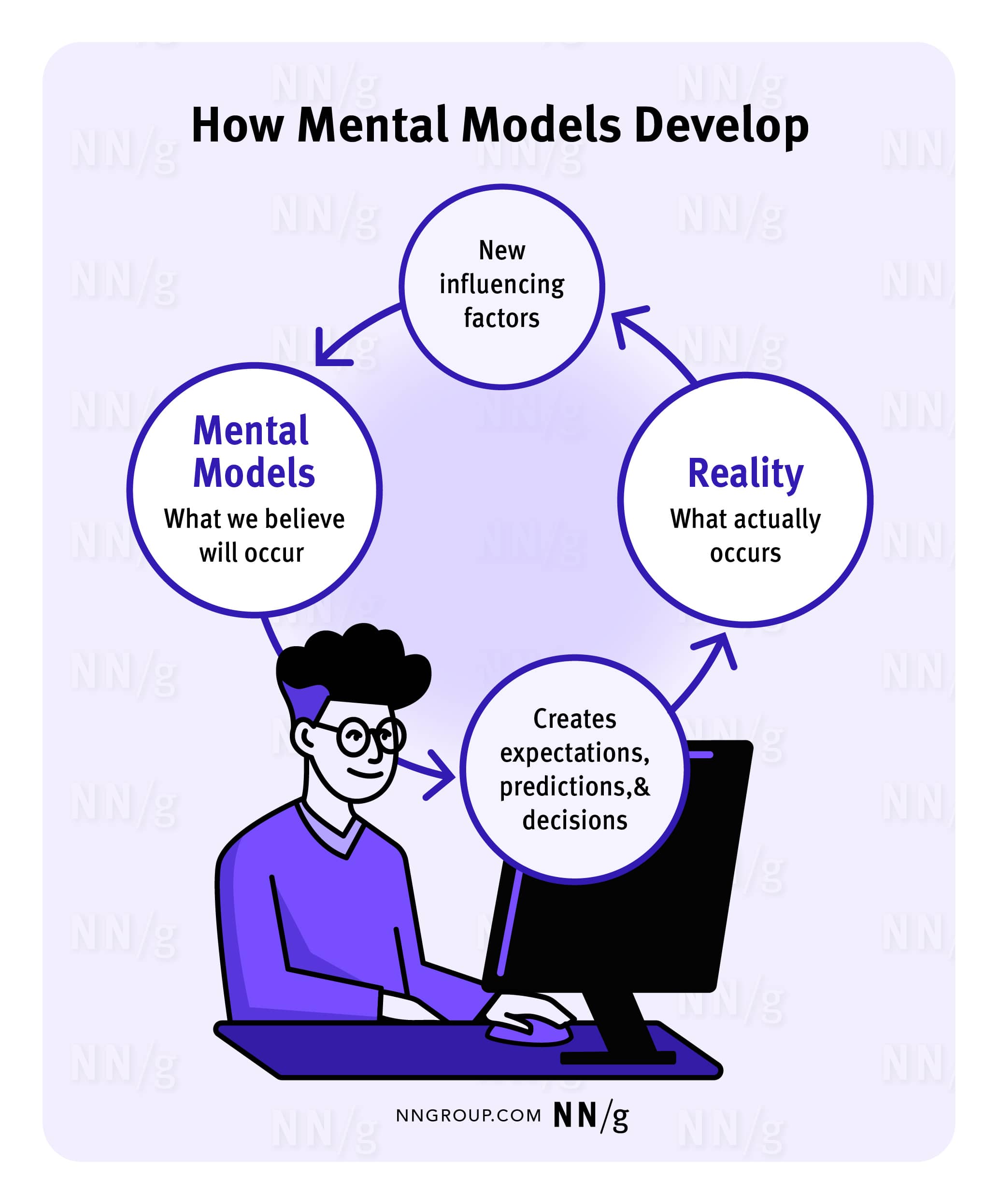
I think this was a great example for mental models. When a digital product works in a way that feels familiar, it’s easier to understand and trust. In this case, WhatsApp builds on an old habit (not sure if on purpose), which helps users feel safe and capable in a digital environment.
After talking to a few people, I noticed that them using digital products depends on how much they trust them. Some felt unsure about what happens in the background or who can see what they do online.
At the same time, I think usability plays an important role. It was mentioned that digital products should be easy to use and that this would encourage them to engage with these products more often. In connection with this, one person said, “I’d use apps more if someone showed me how,” which highlights the idea that either the app itself needs to provide guidance, or a person needs to take on that role.
For my next steps, I would like to explore this concept of ease of use and the guidance aspect further. I want to research what makes a system feel simple enough to use and what kind of support helps people feel confident when trying something new.
References
M. Chan, “Mental Models and User Experience Design,” Nielsen Norman Group, Jan. 26, 2024. https://www.nngroup.com/articles/mental-models/
“Jakob’s Law of Internet User Experience,” www.youtube.com. https://www.youtube.com/watch?v=wzb4mK9DiHM (accessed Apr. 29, 2022).