Positive Design for Homelessness

Growing up I noticed how people saw homeless as an annoyance and inconvenience where they were asking for help outside grocery stores or train stations. I grew up with discussions on the ban of begging and sleeping in public spaces. Movies displayed homelessness as a dystopian, dirty world, fueled with narcotics. In my later years I learned about Hostile Design – where benches are designed in such a way where one can’t comfortably sleep on them. Everywhere homelessness would be seen as a problem. A distance between “us” and “them” was created, a divided community. 

This summer I travelled across the ocean to enjoy Irish folk music, while Cillian sang his heart out on the street to earn enough for today’s meal. I paid to watch a sheepherding demonstration in the Irish countryside, while Molly was begging for money on O’Connell Street to feed her dog. I paid well over a hundred euro to sleep in the dorms of Trinity College, while Dublin is undergoing a shelter crisis. As I am learning to think on my own I am also learning to see everyone for who they are, simply humans trying to get by. I would like to help those that are less privileged, those who make themselves so vulnerable because they have no other option. 

What I wish to focus on in my research is how design can help tighten the local communities – the relationship between the homeless and those who are not, which then also can result in a stronger feeling of dignity and independence for the homeless. Research questions could include:

  • How can Positive Design and Interaction Design be used to create/improve a service/product that …
    • strengthens the local community?
    • creates a stronger sense of dignity and independence for the homeless?

Existing Design 

Several services and products exist or are being developed today to make the days pass by more easily for those who are sleeping rough. Help stations provide services like food stations where meals are prepared or groceries can be picked up. In the United States there is a program called SNAP where homeless are given a card that can be used to buy their own groceries, while also providing other helpful services (United States Department of Agriculture, n.d.). 

Previous research includes researching and creating UX design for applications aiding the homeless (Burrows et al., 2019) and those working for organizations providing shelters to the homeless (Pratt, 2024). Other various designs that can aid the homeless in their daily life that have been researched are small shelters and lockers to keep them and their belongings safe (Makris, 2024). Maps have been distributed that include an overview of important resources (Kennedy, 2016), and in some countries one can find trash bins with spaces for cans to be placed so that they can more easily collect “pfand” to earn some money to get by.

Image of Hostile Design in Detroit. Bench with no space for lying down.

Figure 1: Example image of Hostile Design (Davison, 2023)
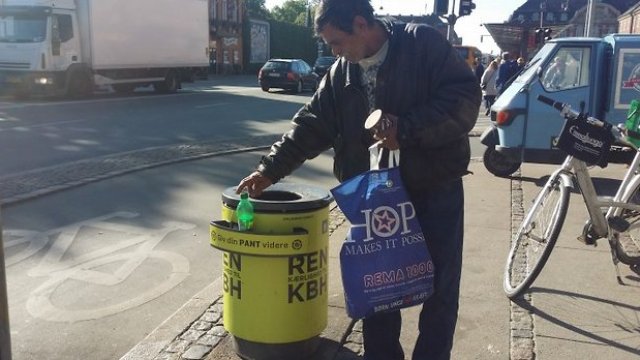
Image of man picking up bottle from "pant"/"pfand" holder on trashbin

Figure 2: Example image of trash can with space for “pfand” (KBH Pant, 2015)

Relevance for the Design Fields

Positive design has a goal to increase the happiness and well being of individuals. It’s about designing for pleasure – to design comforting and joyful experiences, to design for personal significance – to design for goals and aspirations, and design for virtue – to design for good behaviour (Desmet & Pohlmeyer, 2013). These are all qualities that are important to keep in mind when you are designing a service or product for a community that is meant to bring joy, to inspire and promote good behaviour.

When it comes to focusing on the particular target group of the ones sleeping rough I find it important to design fields as one to this day still finds hostile design in our infrastructure, and it can be hard to know where and how to provide the best help. In the light of the topic of inclusivity, the homeless, alongside other groups, have their own specific needs that should be put into consideration when designing for the general population.

Future research process

In the first phase of the research I will have to go deeper into exploring the topic, I will need to gain a better understanding of the different problems and needs of the target groups (both the homeless, and those who are not) and to look at and categorise various approaches. From here I can try to narrow down the problems, and choose an approach to focus on. This might include some changes to the research question and sub-questions. A literature review could also be helpful thereafter to find relevant papers. Eventually I will have a more clear goal and can move to the phase of the research process where I can gather some data. 

When gathering data both qualitative and quantitative information gathering may be useful in order to understand perspectives and outlooks on the problem within a community. This could be done with one to one interviews or surveys with open ended questions (qualitative) or a typical survey with close ended questions (quantitative). As I aim to look at the problem from a community based outlook the target groups include both the homeless and those who are not.

When researching and gathering data there are several institutions that could be helpful to use or get in contact with. Besides looking for research papers through Google Scholar, there are various organizations both in Austria and Norway that could be contact points. Caritas, Red Cross/Røde Kors, Erlik, Asfalt and International Network of Street Papers, could be some.

Research Challenges

As I see it the first challenge will be to limit the research scope and questions. Later comes problems related to data gathering. Here the main challenge will be communication with the target group, the homeless. First of all I do not speak German well which can cause communication barriers. Secondly, it’s a vulnerable group that lacks the safety most of us take for granted and are always exposed to various kinds of exploitation, communication should therefore be done in a space in which they feel safe and comfortable.

Sources

Reimagining Playgrounds: Designing for Children’s Creativity and Curiosity

In many modern cities, playgrounds have become safe but standardized spaces that often limit children’s imagination and curiosity. The playgrounds rarely encourage creative play or free exploration. My research topic, “Reimagining Playgrounds”, focuses on how design can move beyond fixed and adult-centered models to create more stimulating environments that inspire creativity, encourage discovery, and support children’s natural sense of wonder.

By combining insights from interaction design, environmental psychology, and industrial design I aim to explore, how thoughtful design can transform ordinary playgrounds into spaces for imagination, learning, and social connection.

Research Questions

Central Research Question: 

  • Can playgrounds be designed to foster children’s creativity without being safety-focused and adult-centered?

Sub-Questions:

  • Why have most playgrounds maintained a similar design and appearance since the 19th century?
  • What role do safety standards  play in limiting creativity in playgrounds?
  • What design strategies can balance safety, accessibility, and creative freedom in contemporary playgrounds?
  • What role may interaction design play in making play experiences more inclusive, sensory-rich, and appealing?
  • How can children be actively involved in the early stages of the playground design process?

video by https://www.youtube.com/watch?v=SWDqoFqcvUU

Relevance for the Design Field and Approaches

Playground design is highly relevant for designers looking to build more inclusive and engaging public spaces because it lies at the heart of interaction design, urban design, and educational psychology. The videos How to Let Kids Design Their Own Playgrounds [1] and Why Safe Playgrounds Aren’t Great for Kids [2] demonstrate how user participation and emotional engagement can redefine traditional playgrounds. Allowing children to co-design or test prototypes during the early stages of the design process supports a human-centered and participatory approach, where young users become active contributors rather than passive participants. Design can address current issues—such as the lack of diversity, interactivity, and sensory richness in playgrounds—by employing co-creation workshops, interactive prototyping, and play observation as research tools. Examples like the Lappset Sona Interactive Play Arch [3] show how technology and interaction design can transform physical play into responsive and social experiences. Through these approaches, design can balance safety with creative freedom, fostering environments that stimulate curiosity, movement, and collaboration.

My Personal Motivation

My personal motivation for choosing this topic comes from a few things. As a designer, my ultimate goal is to meet people’s needs in creative and playful ways, which continually encourages me to become a better designer. I want to create spaces that allow children to express their creativity freely while socializing and learning from one another—a space that feels meaningful and inclusive for everyone, even if in different ways. In today’s modern world, we have many facilities and technologies that could be used more thoughtfully for children, who will one day become the adults shaping our future. Designing better playgrounds, therefore, is not just about play—it’s about nurturing curiosity, empathy, and creativity in the next generation.

Upcoming Research Phase

In the next phase of my research, I aim to take a closer look at how different types of playgrounds function in practice. I plan to explore various playground categories—from traditional and standardized ones to more experimental or nature-based examples—to identify what works well and what fails to support children’s creativity and curiosity. 

Another  step will be to analyze how and when designers involve children in the design process, both physically (through participation or co-creation workshops) and verbally (through interviews or observations). 

Finally, I will conduct on-site observations in different playgrounds around the city, paying attention to how children use the space, how they interact with each other, and which features seem to inspire the most creativity or playfulness. 

Expected Challenges

One of the most crucial—and challenging—aspects of my research will be figuring out how to strike a balance between safety regulations and creative flexibility in playground design.

At some point ı will also need to conduct interviews with children and parents to better understand their needs and experiences; however, this may be challenging since I do not speak German fluently, which could make communication and building trust more difficult.

References

[1] K. Botsoglou, “Creativity in Playgrounds: A Literature Review,” European Regional Conference: Perspectives of Creativity and Learning in Early Childhood, University of Thessaly, 2011.

[2] D. Harwood, M. Huang, and M. Somma, “We’re Trying to Find Cool Things in the Forest: Exploring Children’s Curiosity and Creativity in the Outdoors,” International Electronic Journal of Elementary Education, vol. 15, no. 1, pp. 33–42, 2022.

[3] D. M. Y. Brown, T. Ross, J. Leo, R. N. Buliung, C. H. Shirazipour, A. E. Latimer-Cheung, and K. P. Arbour-Nicitopoulos, “A Scoping Review of Evidence-Informed Recommendations for Designing Inclusive Playgrounds,” Frontiers in Rehabilitation Sciences, vol. 2, 664595, 2021.

[4] M. Colville-Andersen, “How to Let Kids Design Their Own Playgrounds – and Give Them Back the Streets,” YouTube, 2023. [Online]. Available: https://www.youtube.com/watch?v=SWDqoFqcvUU

[5] Why Safe Playgrounds Aren’t Great for Kids, YouTube, 2020. [Online]. Available: https://www.youtube.com/watch?v=SWDqoFqcvUU

[6] Lappset Sona Interactive Dance and Play Arch, YouTube, 2021. [Online]. Available: https://www.youtube.com

[7] J. L. Frost, S. C. Wortham, and S. Reifel, Play and Child Development, Upper Saddle River, NJ: Prentice Hall, 2001.

[8] N. D. Ridgers, Z. R. Knowles, and J. Sayers, “Encouraging Outdoor Play: The Role of Forest School in Fostering Social and Creative Development,” Early Child Development and Care, vol. 182, no. 3, pp. 431–444, 2012.

[9] AI Assistance: Parts of this proposal were developed with the assistance of ChatGPT (OpenAI, GPT-5, 2025) to refine language, structure, and citation formatting. All conceptual ideas, analysis, and final edits were made by the author.

Gedankenspiele about printing and CMYK

Printing, in its many forms, is the process of transferring visual information from a digital or physical template onto a physical and tactile medium. Despite its long history, printing continues to evolve. Central to most modern printing systems is the CMYK colour model: cyan, magenta, yellow, and key (black), which defines how printers mix coloured inks to reproduce full-colour images.

Inkjet Printing

Inkjet printers are among the most common and versatile printing devices used today. Their operation relies on microscopic precision. At the heart of an inkjet printer is the print head, which contains thousands of nozzles capable of ejecting microscopic droplets of ink at high speed. As the print head moves horizontally across the paper, it deposits ink in precise locations determined by the digital file. The paper advances incrementally after each pass, allowing the printer to build the image line by line.

Each nozzle is responsible for a specific colour, usually cyan, magenta, yellow, and black, which are combined through dithering and layering to create a full spectrum of tones and hues. The ink used is typically water-based or pigment-based, optimized to absorb quickly into the paper without excessive bleeding. The result is a continuous-tone image that appears smooth to the human eye, despite being composed of countless microdroplets. This technology allows for high-resolution photographic prints, text documents, and even fine art reproductions.

Risograph Printing

In contrast, Risograph printing, often called “RISO”, is a more tactile and analogue method, though it also incorporates digital preparation. Originating in Japan in the 1980s, the Risograph functions similarly to a screen printer. The process begins with converting an artwork into a stencil: the image is burned onto a master sheet, which is then wrapped around a rotating drum filled with soy-based ink of a specific colour. When the machine operates, the drum spins and pushes ink through the stencil onto the paper beneath it.

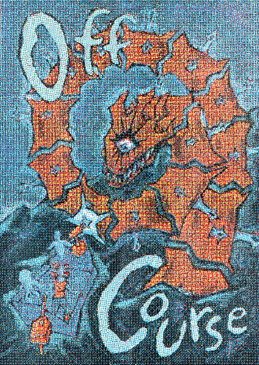
To create multi-coloured prints, different colour drums must be inserted sequentially, with new stencils for each colour layer. The paper passes through the machine multiple times for each colour, resulting in unique overlaps, misregistration, and textures that give RISO prints their distinctive charm. Because the inks are semi-transparent, layering them naturally mimics the subtractive colour process of CMYK, producing vibrant and sometimes unexpected colour interactions.

Unlike the precision of inkjet printing, Risograph embraces imperfection. Its handmade quality, uneven textures, and slight misalignments contribute to its growing popularity among designers and artists seeking an organic aesthetic.

(Filament) 3D Printing

A radically different form of printing is three-dimensional (3D) printing, which builds physical objects rather than flat images. Most consumer-grade 3D printers use a technique called material extrusion, which operates in principle like a glue gun. Plastic filament is heated until it liquifies, then extruded through a nozzle that moves along generated paths. The printer interprets digital files such as STL or FBX by slicing them into thin two-dimensional layers. Each layer is printed sequentially as the platform lowers or the print head rises, allowing the object to gradually take shape.

Although primarily used for prototyping and fabrication, 3D printing also intersects with traditional printing ideas, especially regarding layering and texture. Some printers are capable of multi-material or multi-colour printing, hinting at a convergence between CMYK colour theory and volumetric fabrication.

Gedankenspiel: Mixing Printing Techniques Digitally and Physically

The boundaries between digital and physical printing processes are increasingly blurred. Artists and designers have begun experimenting with cross-media approaches that combine principles from multiple technologies.

Lithophane

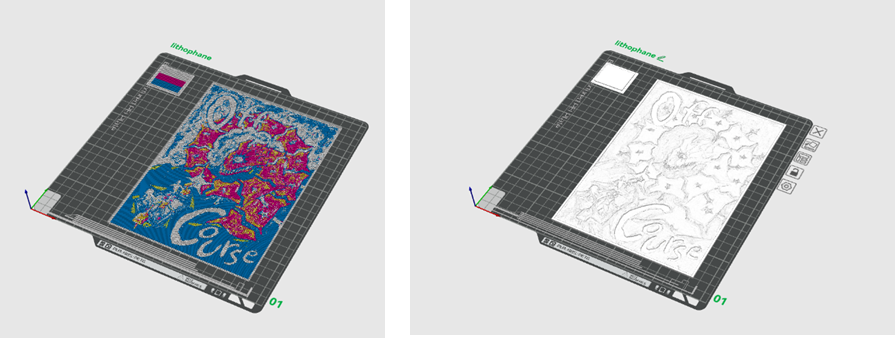
This technique involves creating multi-coloured 3D prints using multiple nozzles loaded with CMYK filaments. The print appears as a plain white relief when unlit, but when illuminated from behind, variations in thickness reveal a hidden colour image. The light passes through the translucent material in different intensities, producing tonal gradations akin to photographic printing.

See: https://wiki.bambulab.com/en/knowledge-sharing/CMYK-color-lithophane-printing-instructions

Replicating RISO digitally

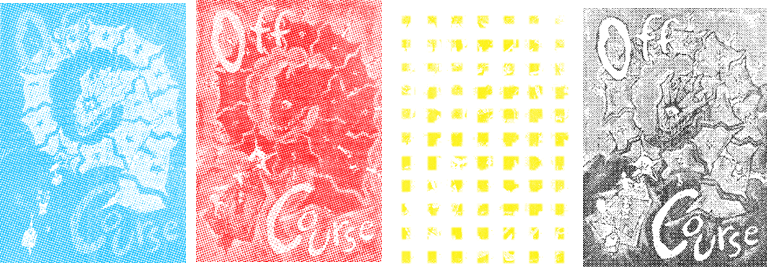
To digitally mimic RISO aesthetics, an image can be split into CMYK channels, each converted to grayscale and then processed through a halftone screen at distinct angles. When recombined in RGB mode, with colours reassigned to each layer and slight misalignments introduced, the result replicates the layered and imperfect charm of real Risograph printing. Adding a paper texture enhances the illusion of ink absorption and grain.

See: https://www.liznugentdraws.com/blog/3221

RISO compositor in 3D

Artists have begun creating RISO compositors in 3D software such as Blender with the same principle as the digital RISO.

See: https://youtu.be/YYkCCqRE7B8?si=zl8j3LsqWlgGcHTG

Research blog 5.11.2025

Can design help prevent doomscrolling?

With social media platforms like Instagram and Tiktok it’s easy to get trapped in a cycle of never-ending scrolling. These platforms are designed to keep our attention for as long as possible, making it hard for the user to put the phone down and move on. They are tempting the user with a never ending supply chain of content with an algorithm perfectly fitted to the individual user. I myself, and many other people in my life have experienced this fist hand. You scroll on social media constantly having new content pop up and all of a sudden, an hour or two has passed by. It is called doom scrolling when this chain of content has a negative affect on the user, leaving them with feelings like sadness, anxiety or stress. This does not only affect people’s mental health but can also shape how people perceive the world and interact with technology. The algorithm is often so good that people still continue to scroll endlessly even though the content the consume is mainly negative, because it shows the type of content they find interesting, not recognising that overconsumption of these topics can be bad for their mental health. 

Research questions

  •  How can interaction design be used to reduce or prevent doomscrolling 
  • Can designers prevent the negative side affects of social media usage while still keeping the good parts?   
  • What role does interface design play in helping users manage their screentime? 

Potential challenges

  • Will external nudging be enough or is personal motivation needed  
  • Design is part of the problem and hopefully also the solution 
  • Getting designers to take ethical responsibility and puting it over their/ the companies buisnes goals.  

Possible approaches

The project could explore different ways of limiting peoples screentime or the content they consume by for example nudging the user to take breaks or swich focus, or simplifying the design of this kind platform to strictly necessary features. 

Personal motivation

This topic is very relevant for todays time, espessially with younger generations that are growing up with the access of smartphones and tablets, being so used to having access to constant entertainment. Personally, this topic also raises the question of ethical design. Is it ethical of an app designer to design a platform so well formed that the user get trapped? The designer is doing its job very well, and is probably getting paid what they deserve, but is it right when the use can lead to healt issues? One can argue that the platforms also inflict a lot of joy when used corectly. Is there a way to use design to keep the joy and decrease the negative side affects? I want to find out.  As an interaction designer, I want to find out how we can design digital environments that promote healthy use of social platforms rather than feeding this addiction. 
 

Relevance to design

The issue of doomscrolling is highly relevant to the design field, as designers shape the interfaces, flows, and feedback systems that can either encourage or help prevent compulsive use. Domscrolling highlights how design directly influence user behavior, attention, and wellbeing 
For interaction designers, the topic questions current engagement-driven patterns such as infinite scrolls and autoplay, and prompting exploration of more mindful, reflective, and balanced alternatives. From a product and service design perspective, it highlights the need to prioritize digital wellbeing. 
On an ethical level, designers should consider their responsibility within the users mental wellbeing, within both mental heath and peoples attention span and consider moving from maximizing engagement toward supporting healthy digital habits. 

Upcoming research

Personal experiments

I will try to find affective ways of reducing screen time by testing 3 different recomended methods on myself the following weeks.

After the experiments i will answer some questions like: Did i manage to decrease my screentime? Did aything happen to my consentration? Did my mood encrease or decrease? Did I miss using my phone? What did I do instead of scrolling? Did I feel like I missed out on anything by not being online as much?

I will also gather information online via articles, videos, podcasts and such. In addition i plan on holding interviews with social media users among my peers to gather a wider understanding of the issue
 

References

[DesRes 1] Agile_x_SelfCheckout No. 1: Creating User-Centered Strategies that align with Business and IT Goals in an innovative Agile Environment

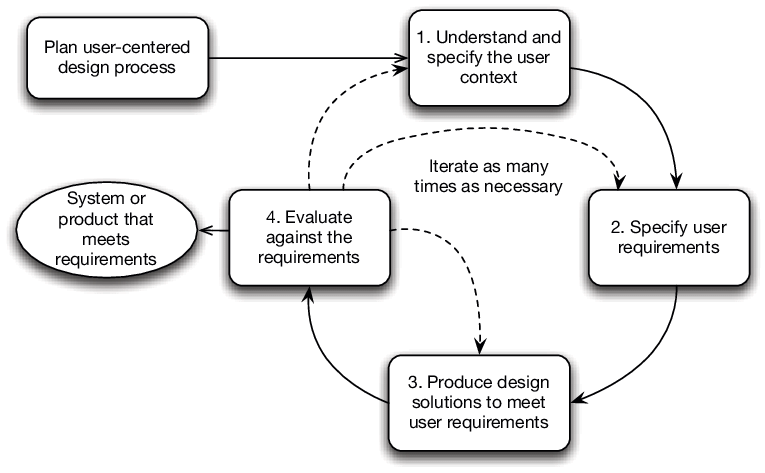
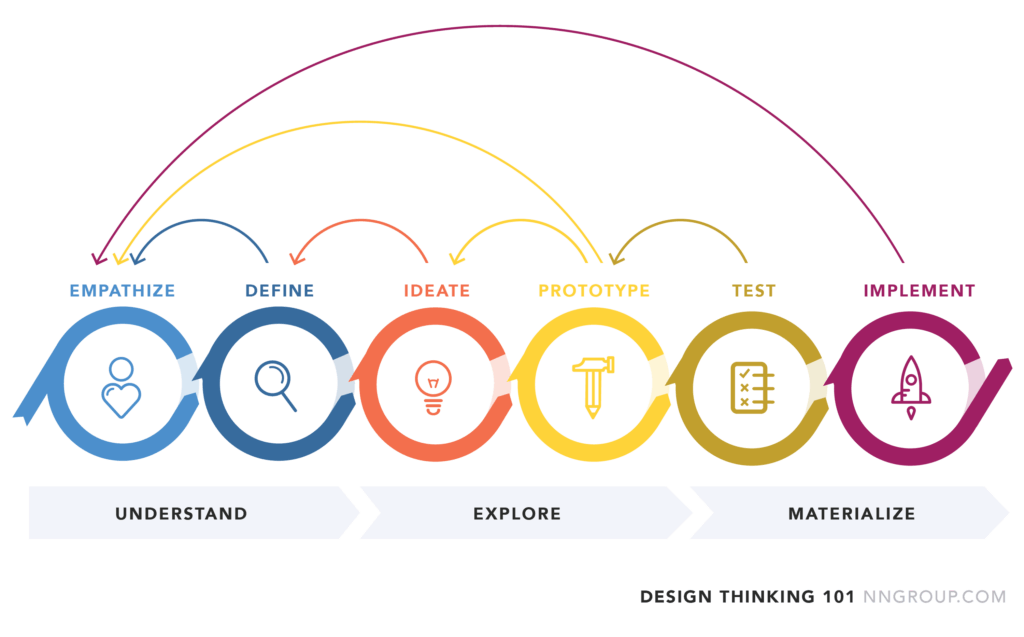
Designers are empathetic visionaries seeking to find the right answer to their user’s desires. Besides breaking down Desirability designers are also responsible for building bridges towards Viability and Feasibility. In business context designers are therefore forced to view challenges holistically within the larger business scale. In order to succeed they need to adapt to business language. By integrating their human-first approach new opportunities and possibilities open up. Their scope of work increases: driving processes and communication, breaking down silos and avoiding risks are suddenly part of their daily work.

The major goal of this project is to identify and collect methods that could be used by designers to build trust with allies in the company.

Value of Human Centred Design

The number of companies understanding the value of human centred design is constantly increasing.

AirBnB: back in 2008 when the booking platform was first introduced, the visionaries of AirBnB were exposed to different challenges, such as the one to offer trust for guests towards their hosts. A major design enabled this by emphasising on more transparency. This was done by adding verified profiles and allowing feedback of other guests to be displayed. (Vishal Peshne, “UX Case Study: The Success of Airbnb’s User-Centered Approach,” Medium, Jan. 26, 2025. https://medium.com/@vishal.peshne/ux-case-study-the-success-of-airbnbs-user-centered-approach-7557f3d769b9)

Juicero: this example of an American start-up perfectly describes, why a good solution is worth nothing without the right problem statement, and it’s influence on financial aspects. Juicero allows its customers to buy an electrical juice-squeezer that operates by simply putting a pre-made bag of juice in the machine. However, quickly users figured out, that in order to open the said bag, they don’t need the machine at all. You can simply do so with your bear hands. (“TOOLS FOR TOMORROW,” Tools for Tomorrow, 2024. https://www.tomorrow.tools/ (accessed Nov. 10, 2025).

Image by Trenton Schulz

My Motivation

During my bachelor’s I was working as a UI & UX at a local start up. I was enthusiastic and motivated to start. As the first ever UX designer at the company I was quickly challenged with a number of obstacles:

Explaining what UX is about

We need to put emphasise on iteration and process driven outcomes. Stakeholders often seek deliverables. It can be difficult to define a specific deliverable, as artifacts such as Prototypes might suffer from a lack of granularity.

User Centred Mindset

UX-Professionals must always push their agenda to sensitize why it’s important to develop a product according to user needs. Ideas for products must constantly be challenged, whether they will deliver actual value for users and/or customers. This is also why problem statements should be focused on precisely before jumping to conclusions too quickly.

Integrating UX in an agile Environment

The company already had existing processes, most of them closely related to agile ways of working. UX and agile do go hand in hand. However, I once attended a talk, where the speaker mentioned, in her early years of agile training, there was no word of UX yet to be heard. Therefore, it can be challenging to spread awareness on the topic.

Relevance for Designers

As product designer in order to cooperate with our stakeholders and team members we must adapt to their language. In terms of human centred design, it is no good to distance yourself as a designer from other disciplines (e.g. Engineering, Business, Dev-Teams and most of all users).

We must be willing to collaborate, especially with our close colleagues from Product Management. This may include gaining trust with the Product Owner one has to report to.

Recherche Weg

In order to get a grasp of this complex topic I would like to perform two expert interviews with UX professionals with a lot of experience. I could imagine this becoming a bit difficult, as they won’t most likely be able to disclose any confidential information within their companies.

Furthermore, I am planning on attending a few talks from UX professionals (e.g. UX Graz, or some online alternatives for networking) to get an understanding of UX designer’s agenda in companies of all kinds. As of right now, I can imagine focusing on larger corporations and enterprises.

Possibility to Collaborate with a Business

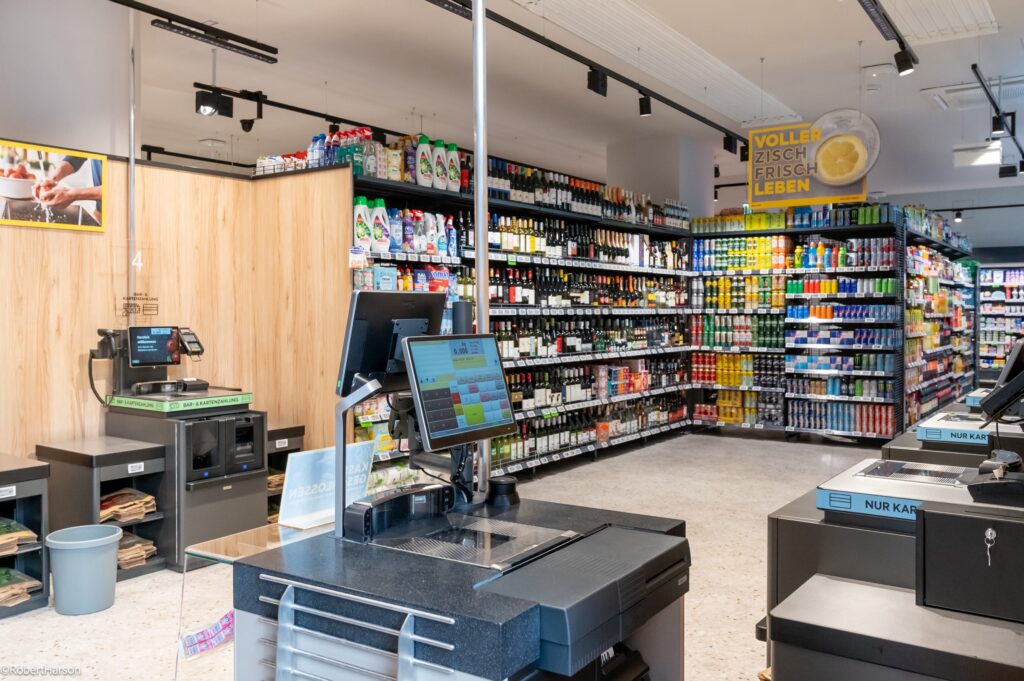
At the WUC 2025 I had the opportunity to connect with Ines Lindner, a UX-Strategist at REWE International. Her responsibility is to tangle the challenge of merging enterprise architecture with human-centred values. In her talk she dives through the different processes that were enabled by Ines and her colleagues to ensure a smooth collaboration between the different parties from Design, Business and IT. One approach introduced by the speaker are so called “fusion teams”. These are teams, consisting out of employees from these mentioned parties. It allows them more freedom in collaboration and especially communication between departments. This is an essential step for breaking down silos, for which Ines has come up with a unique metaphor. Instead of bluntly referring to the different departments as “silos”, as it’s often done in business context, she uses the terms “city” and “houses”.  If I’m lucky I have a chance for collaborating with REWE for my thesis topic. In this case however, the whole topic would be connected to the use case of cash registers in the stores such as BILLA, BIPA, Penny etc.

Image by REWE Group

If the possibility of connecting with REWE doesn’t work out, I might reach out to BOSCH Sicherheitssysteme, where I did my internship.


References

Jurgen Appelo, Management 3.0. Pearson Education, 2010.

‌A. Cooper, R. Reimann, and d D. Cronin, About face 3 : the essentials of interaction design. Indianapolis, Ind.: Wiley, 2007.

S. Flores and N. Yu, “Placing Desirability at the Center of Innovation,” BCG Global, Jan. 16, 2024. https://www.bcg.com/x/the-multiplier/placing-desirability-at-center-of-innovation

B. Flyvbjerg and D. Gardner, How Big Things Get Done. Currency, 2023.

F. Laloux, Reinventing organizations: A guide to creating organizations inspired by the next stage of human consciousness. Nelson Parker, 2014.

Die Geschichte darüber, wie ich mich auf die künstlerische Bühne bringen will ._. (Part 2. Theory…)

Hallo 🤝!

Diese Woche habe ich mich mit dem Thema Self-Branding beschäftigt. Es geht darum, wie Menschen sich selbst als Marke sehen und präsentieren können. Ich habe untersucht, wie andere “Self-Branding” definieren.

Der Begriff kommt aus dem Jahr 1997 und wurde vom Autor Tom Peters in seinem Artikel „The Brand Called You“ bekannt gemacht. Er meinte, dass jeder Mensch wie der oder die Chef:in des eigenen Unternehmens ist. Das bedeutet: Wir tragen selbst die Verantwortung dafür, wie wir wahrgenommen werden. (vgl. Whitmer, 2018)

Früher ging es beim Self-Branding oft darum, sich gut zu präsentieren – fast wie in der Werbung.
Heute geht es viel mehr um Ehrlichkeit und Authentizität. Man soll nicht jemand anderes spielen, sondern zeigen, wer man wirklich ist: mit den eigenen Werten, Stärken und auch Schwächen. So entsteht ein glaubwürdiges und echtes Bild, das sowohl zu einem selbst als auch zur Arbeit passt. (vgl. Arruda, 2019)

Wenn jemand selbstständig arbeitet oder ein kleines Unternehmen führt, spielt Self-Branding eine besonders große Rolle. Denn hier sind Person und Marke fast dasselbe. Die Person zeigt das Unternehmen nach außen – durch ihr Auftreten, ihre Sprache und ihre Arbeit. So entsteht eine persönliche Verbindung zwischen Mensch und Marke, die Vertrauen schafft. (vgl. Resnick/Cheng, 2016)

Wenn man all das zusammenfasst, wird deutlich, dass Self-Branding mehr ist als nur ein Marketing-Trick. Es ist ein Weg, sich selbst zu verstehen, seine Stärken zu zeigen und glaubwürdig aufzutreten. Self-Branding funktioniert am besten, wenn man sich selbst kennt, ehrlich bleibt und mit seiner eigenen Art sichtbar wird. Es geht nicht darum, ein künstliches Bild aufzubauen oder jemand anderes zu sein, sondern die eigene Persönlichkeit bewusst nach außen zu zeigen. Wer weiß, wofür er oder sie steht, kann klarer kommunizieren und dadurch auch andere überzeugen.

Gerade in einer Zeit, in der soziale Medien oft nur perfekte Fassaden zeigen, wird Echtheit zu einem wichtigen Erfolgsfaktor. Menschen reagieren auf echte Geschichten und auf Personen, die sich trauen, sie selbst zu sein. Für mich bedeutet das: Self-Branding ist weniger eine Strategie als vielmehr ein Prozess des Selbstverstehens und persönlichen Wachstums.

QUELLEN:
Arruda, William: Digital you. Real Personal Branding in the Virtual Age. Alexandria: ATD Press 2019

Whitmer, Jennifer M.: You are your brand: Self‐branding and the marketization of self. In: Sociology Compass (2019), https://doi.org/10.1111/soc4.12662

Resnik, Cheng, Simpson: Marketing in SMEs: A ‘4Ps’ self-branding model. In: International Journal of Entrepreneurial Behaviour and Research (2016), https://doi.org/10.1108/IJEBR-07-2014-0139

Storytelling in Sportdokumentationen 

Drive to Survive, Break Point, Quaterback und viele mehr: Mittlerweile gibt es unzählige Sportdokumentationen als Serie oder Film auf Streamingplattformen zu sehen. Durch sie wurde nicht nur mehr Interesse an Sportarten erweckt, sondern auch immense Zuschauer:innenzahlen bei den Veranstaltungen generiert, wie es beispielsweise in der Formel 1 zu sehen ist. Dabei spielt vor allem eines eine zentrale Funktion: das Storytelling. 

Die Narrativierung 

Die Narrativierung, also der Prozess, Fakten und Ereignisse zu einer Geschichte zu machen, die Werte und Emotionen verbindet, stellt ein Schlüsselelement von Sportdokumentationen dar. Dabei gibt es vor allem eine ausschlaggebende Charakterisierung: Sportveranstaltungen sind immer bereits erzählt. Sportdokumentationen selbst werden medial vermittelt und eingebettet, so dass die Dokumentationen diese Erzählungen übernehmen und rekontextualisieren. Joshua Mailtsky, ein amerikanischer Professor an der Media School in Indiana, USA,  formuliert fünf Kernthesen, die zeitgenössische Sportdokumentationen auszeichnen: Sport ist mit Kapital verbunden, visuell spektakulär, feiert individuelle Ausdrucksformen, ist bereits narrativisiert, und impliziert immer Medialität. 

Die Narrativierung bei Sportdokumentationen funktioniert so, dass die bestehenden Sportereignisse als Ausgangspunkt genommen und durch filmische Mittel in mitreißende Erzählungen verwandelt werden. Diese können beispielsweise Auswahl, Sequenzierung, Kommentar oder ästhetische Hervorhebungen sein. Damit besteht die Funktion des Storytellings nicht nur in der Deskription, sondern auch in der Interpretation des Publikums. Narrative Strukturen vereinfachen Komplexität, schaffen Charaktere, Konflikte, Wendepunkte und damit Identifikations- und Reflexionsräume. Für Sportdokumentationen bedeutet das vor allem: Herausforderungen, Held:innen, Triumph, Sieg und Niederlage. Dies unterstützt auch die emotionale Einbindung des Publikums. 

 Der visuelle Aspekt 

Ebenso wichtig ist die visuelle Gestaltung von Sportdokumentationen.  Sport bietet von Natur aus visuelle Elemente – Bewegungen, physische Auftritte, Emotionen im Körper – und Dokumentarfilme greifen diese Qualität auf und verstärken sie beispielsweise durch Wiederholungen, Zeitlupe, Großaufnahmen etc.  Auch im Sportjournalismus werden audiovisuelle Mittel bewusst eingesetzt: Musik, Bild- und Videomaterial, Animationen, Voice-Over. Diese Mittel verstärken die Erzählung und schaffen eine eindringliche Erlebnisebene für das Publikum.  

Storytelling in Sportdokumentationen nutzt nicht nur die Narration im Sinne von Plot, sondern eben auch die visuelle Ebene, um das Publikum emotional zu erreichen. 

Die Individualisierung 

Ein dritter Aspekt beim Storytelling in Sportdokumentationen ist die Ausrichtung der Erzählperspektive auf individuelle Charaktere. Häufig funktionieren die Erzählungen dabei nicht nach strukturellen bzw. kollektiven Formen, sondern rücken eine Person zusammen mit ihrem Ausdruck, ihren Eigenarten und ihrem Charakter in den Fokus. Dadurch werden die Athlet:innen dem Publikum nähergebracht, was eine Identifikationsebene für dieses bietet. Außerdem werden sie so „gleich und doch anders“ dargestellt, was ihre menschliche Art und trotzdem die Einzigartigkeit durch das Ausüben des Sports zeigt. Diese Individualisierung hat mehrere Effekte: Sie emotionalisiert das Thema, schafft Identifikation und erleichtert narrative Klarheit. Gleichzeitig lädt sie aber auch dazu ein, die Athlet:innen als Symbole jenseits des Sports bzw. der Sportart darzustellen. 

Insgesamt lässt sich sagen, dass Storytelling in Sportdokumentationen von der Spannung zwischen individuellen, persönlichen Geschichten und dem größeren Kontext lebt. Vor allem die Verletzlichkeit, Menschlichkeit, das Scheitern oder die Außenseiterrolle führen oft zu erzählerischen Verlaufsachsen und verleihen den Dokumentationen einen emotionalen Touch. 

Die Medialität 

Ein weiterer zentraler Aspekt des Storytellings bei Sportdokumentationen ist die Medialität. Wie bereits in den oberen Absätzen erwähnt, bestehen sportliche Ereignisse vor allem auch durch die Medien und Sportdokumentationen basieren auf deren Narration. Auch Malinsky sagte das: „Thinking about sport always entails thinking about and through media“. Ein Sportereignis wird nahezu immer von irgendeiner Form der Medien begleitet und durch sie vermittelt: Live-Übertragungen, Wiederholungen, Interviews in TV und Radio. Dokumentarfilme treten häufig mit diesem medialen Vorwissen in den Dialog, in dem sie mit Archivmaterial, Videos, Fernsehbildern und Interviews arbeiten. Dabei wird gleichzeitig auch der mediale Rahmen reflektiert, in dem Sport beobachtet und erinnert wird. Diese Medialität hat weitere positive Aspekte: Digitale Werkzeuge im Sport werden durch Medienkompetenzen, visuelle Narrationen und Multi-Modalität ergänzt, wodurch sie zu zentralen Bildungsdimensionen zum Beispiel für Studierende werden. 

Zusammengefasst bedeutet dies also: Sportdokumentationen nehmen nicht nur eine Geschichte auf und erzählen sie dem Publikum. Sie reflektieren gleichzeitig, wie diese Geschichte medial repräsentiert wurde und auch wird. Dadurch wird eine Erzählung immer auch zu einer Medialisierung.  

Fazit 

Storytelling in Sportdokumentationen ist also viel mehr als nur eine Erzählung dessen, was passiert ist. Es umfasst die Strukturierung und Narration von Ereignissen, die visuelle Inszenierung und Ästhetik und auch die mediale Dynamik. Außerdem beinhaltet es den Fokus auf individuelle Charaktere und eine kritische und reflexive Einbettung in Medienkulturen durch die starke Medialität des Sports. All diese Aspekte wirken zusammen: Eine Sportdokumentation wählt, bewertet, inszeniert und schafft Bedeutung, indem sie die Sportereignisse in eine dramaturgische Form bringt. Die Körperlichkeit, die Sport mit sich bringt, wird in Bildsprache verwandelt, während Persönliches vergrößert und emotionalisiert wird. Durch den Konsum von Sportdokumentationen bekommt das Publikum nicht nur eine Geschichte, sondern auch eine mediale Erzählung der Wahrheit durch die Reflexion der medialen Inhalte. 

Quellen: 

Malitsky, J. (2014): Knowing Sports: The Logic of the Contemporary Sports Documentary. Journal of Sport History, Vol. 41 (2), S. 205-214. https://people.southwestern.edu/~bednarb/capstone/capstone_materials/neal-reading.pdf  

Matsiola, M.; Spiliopoulos, P.; Tsigilis, N. (2022): Digital Storytelling in Sports Narrations: Employing Audiovisual Tools in Sport Journalism Higher Education Course. Education Sciences, 12, 51. https://files.eric.ed.gov/fulltext/EJ1324897.pdf 

Brugar, K. A. (2016): 30 for 30: An Inquiry into Sports Documentaries to Engage in Social History. https://www.jstor.org/stable/24810478

Dieser Text basiert auf Literaturvorschlägen von Perplexity pro und wurde von ChatGPT korrigiert. Alle Inhalte wurden von mir selbst auf Richtigkeit und Relevanz überprüft und der Text selbst wurde von mir erstellt.

Bridging the Gap 

Image by congerdesign from Pixabay

#digital-literacy #trust #interactiondesign #inclusive-design #older-adults #usability #accessibility 

With the current development of technology, our world is becoming more digital every day. As a result, digital literacy, the ability to use, understand and critically engage with digital technologies, is becoming essential for full participation in society. 

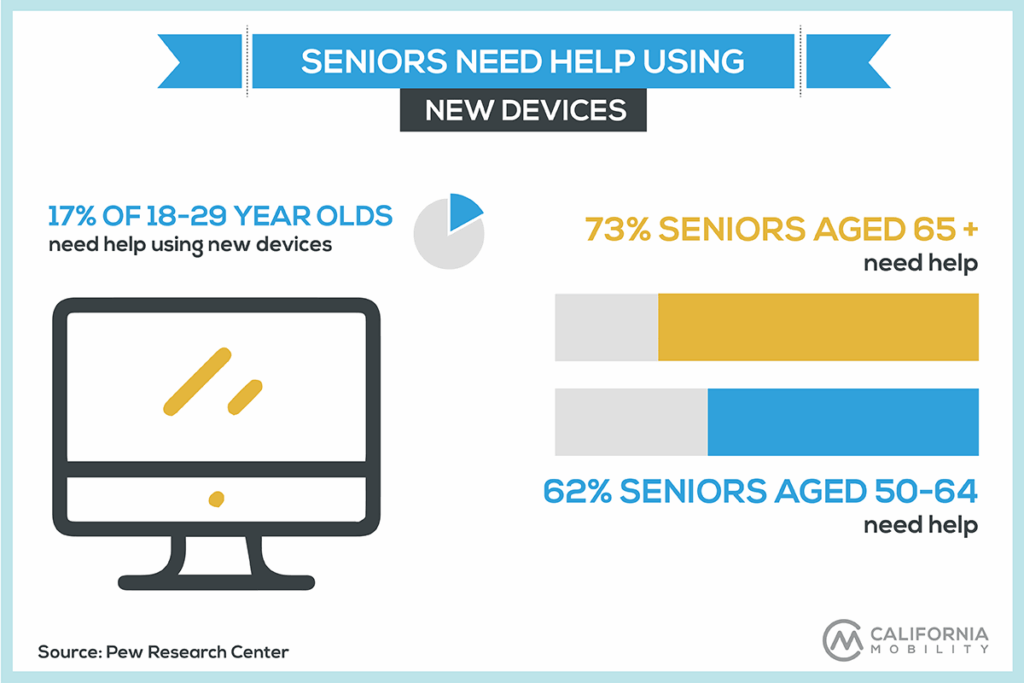
However, a significant portion of older adults rarely or never use digital technology in their everyday lives. This is not simply a matter of disinterest, but often the result of exclusion: many digital products are not designed to meet their needs. Age-related changes such as declining vision, hearing, motor skills and cognitive flexibility make it more difficult to learn and adapt to new systems. When technology assumes prior experience or fast learning, it unintentionally leaves many older users behind. 

Yet, digital literacy offers clear benefits for older adults. It can strengthen social connections by allowing them to stay in touch with family and friends, thereby supporting mental well-being. Beyond that, digital engagement can foster independence, stimulate cognitive activity, help overcome physical barriers and even support a sense of identity and belonging in an increasingly digital world. 

Still, psychological barriers remain. Many older adults believe they are “too old” to learn new technologies or lack confidence in their ability to do so.  

Interestingly, digital exclusion is not only an issue of age. Anyone, regardless of generation, can experience it if they lack access, confidence, or understanding of digital systems. The topic, therefore, is not about age alone but about how design can make technology inclusive, trustworthy and empowering for all users. 

Research Focus

Main Questions

How can interaction design support older adults in learning digital skills and becoming more digitally literate?

How can design make digital systems understandable, transparent and trustworthy for older users?

SubQuestions

  • How do older adults approach learning?
  • How do older adults approach learning new digital technologies?
  • What barriers (cognitive, emotional, or physical) affect their ability to learn digital skills?
  • What teaching or onboarding methods are effective for older adults?
  • What competencies are essential for older adults to be digitally literate?
  • How does digital literacy affect older adults’ independence, social participation and well-being?

Relevance for Design Fields

In many wealthy countries, people aged 65 and older are the fastest-growing demographic. With increasing life expectancy, older adults are living longer, staying active and continuing to pursue personal interests well into late life. They want to manage their finances, shop online, research topics and stay in touch with friends and family. However, age brings physical and cognitive changes. Hearing, vision and dexterity often decline, making interaction with technology more challenging. Most websites and apps are designed by and for younger users, which can make them inaccessible for older adults.

Digital literacy is a fundamental factor when designing interfaces for products and services. The level of digital competence within a user base guides decisions about interface complexity, navigation and functionality. For users with limited digital literacy such as older adults, interfaces need to be clear, predictable and forgiving, providing guidance and feedback that supports learning.

Possible Solutions

  • Integrating older people in the design process from the beginning.
  • Combining digital interactions with real life interactions.
  • Teaching basic digital literacy.

Challenges

Recruiting participants for my research may be challenging, especially ensuring a great range of experience levels. Motivating older adults to engage in learning and actively work on improving their digital literacy can also be difficult. Additionally, designing interfaces and interactions that effectively accommodate users with different levels of digital literacy is complicated.

Preview

In my next step I would like to already integrate some interviews with people. I want to grasp what the problem for them really is. I also plan to go deeper into the research of digital literacy for older people, read up on education and learning for the aging population.

Personal Motivation

As I was working on the topic of accessibility for my bachelor’s thesis, I became especially interested in how digital products can be made more inclusive. This is also when I found out that older adults often struggle to understand the functionality of websites, apps or other digital tools. I like to think that, one day, everyone has equal access to digital products, regardless of age or ability. I chose this topic because I believe good design should leave no one behind. Older adults should be able to use digital products independently, without relying on others and feel empowered while doing so. Being able to navigate technology confidently helps them participate more fully in social life, explore new interests and stay connected with friends and family. This is not just about convenience, it’s also about mental well-being, as social inclusion plays a key role in maintaining cognitive and emotional health. I’m also curious about how older adults’ social networks (family and friends) can play a role in spreading digital literacy. If friends, family, or community members can support each other, it could create a positive effect, helping even more people gain the skills and confidence to engage with technology. Ultimately, my focus is on designing solutions that empower, include and connect older adults in the digital world.

Another thing that really opened my eyes came from a talk at the WUC. I learned that many older adults would be happy to use technology if someone simply showed them how (guidance through interaction design). Surveys presented at the talk highlighted that 20% of older adults would use digital products more often if they were easier to use and 19% would engage more if they could see a clear benefit. These findings made me realize that, for many older users, the barrier is not disinterest, it’s accessibility, guidance and perceived value.

Index

Grabowski, S. (2024, October 2). A guide to interface design for older adults. Adchitects. https://adchitects.co/blog/guide-to-interface-design-for-older-adults

Kane, L. (2019, September 8). Usability for older adults: Challenges and changes. Nielsen Norman Group. https://www.nngroup.com/articles/usability-for-senior-citizens/

Landra, A. (2021). Impact of digital literacy on mobile user interfaces: A process for outlining UI design guidelines for people with low digital literacy (Master’s thesis, Politecnico di Milano, Scuola del Design). Politecnico di Milano.

Vercruyssen, A., Schirmer, W., Geerts, N., & Mortelmans, D. (2023). How “basic” is basic digital literacy for older adults? Insights from digital skills instructors. Frontiers in Education8–2023. doi:10.3389/feduc.2023.1231701

Weck, M., & Afanassieva, M. (2020). AGEING PEOPLE’S TRUST IN DIGITAL ASSISTIVE TECHNOLOGY: INITIAL TRUST FORMATION.

Yesterday, Tomorrow, Elsewhere

How do we depict prehistoric life, or imagine the development of future lifeforms? How would life look on a planet completely different from us?

Illustration by Dougal Dixon – Man After Man : An Anthropology of the Future (1990)


We can paint a picture using science, keep to the facts as far as we can. Though eventually we’ll reach a point where that’s not enough anymore. Where we feel the need to rely on our imagination to depict these worlds that are so different from what we understand.
How should we go about that though? Where lies the point where fact and fiction meet? And how do we portray them in media? Not only considering depictions of past and future life on Earth, or life on other planets. But also how we use this knowledge as a foundation in genres such as fantasy, sci-fi, dystopia, and the like. Creating fictional worlds that feel believable and have a real impact on the viewers.

Approach

  • Research of scientific depictions of the past, future and life on other planets
  • Research of fictional depictions of the past, future and life on other planets
  • Media Analysis
  • Comparison

Die Geschichte darüber, wie ich mich auf die künstlerische Bühne bringen will ._. (Part 1)

Hallo! Wie geht’s?

Wie schreibt man die Posts überhaupt…? Also… Ich bin die Jana Klammer und welches Thema ich für das Fach nehmen will, fiel mir eigentlich nicht so einfach, muss ich sagen. Am Anfang dachte ich, ich soll meine BA weiterführen, was eigentlich eh um Kunst ging (siehe Foto unten), aber dann ist die kluge (hoffentlich) Idee in meinen Kopf gekommen: Es macht eigentlich nicht so viel Sinn für meine Zukunft, wieder ein künstlerisches Projekt zu machen, ohne nicht als Künstlerin gut präsentiert zu sein.

Like, jemand wird mein Projekt sehen (oder hat es schon mal gesehen), wo draufsteht „Jana Klammer“, aber wer die Klammer ist, weiß niemand. So, jetzt ist Zeit für Self-Branding, um meine Kunst nicht nur zu einem Insta-Post mit 10 (bestenfalls 15) Likes zu machen, sondern etwas Größeres daraus zu machen.

👆😔

Kurz gesagt: Ich will herausfinden …

… Wie man die eigene künstlerische Identität entwickelt und sichtbar wird

… Welche Möglichkeiten es in Österreich gibt, das erste Projekt wirklich umzusetzen

Bis zum nächsten (schon mehr wissenschaftlich, mit Quellenangaben und dem ganzen langweiligen Zeug) Mal 👋!

Ah ja und die Forschungsfragen sind:

-Wie können junge Künstler:innen durch gezieltes Self-Branding ihre künstlerische Identität aufbauen und Sichtbarkeit in der Kunstszene erlangen?

-Welche Möglichkeiten bestehen in Österreich, um ein erstes künstlerisches Projekt zu entwickeln und zu realisieren?