Nachdem ich einen unveröffentlichten Blogbeitrag über Ionenpumpen geschrieben habe, für den ich akribisch in meinen alten Biologie-Büchern recherchierte, habe ich mich nun dazu entschlossen das Konzept zu verwerfen. Monate sind vergangen seit der Veröffentlichung meines letzten Blogbeitrages und was soll ich sagen… Ich bin von meiner anfänglichen Idee abgewichen und verfolge nun ein anderes Konzept, das in eine andere Richtung geht. Nicht in die komplett andere Richtung aber sagen wir mal… ich mache eine seichte Kurve.
Mir ist – wie so oft – beim Fahrradfahren ein Licht aufgegangen. Ich weiß nicht, ob das eine gemeingefährliche Eigenschaft von mir ist mich mitten im Straßenverkehr in Gedanken zu vertiefen, doch ich schwöre: Während ich auf gefährlichen Bundesstraßen versuche nicht von großen LKWs überfahren zu werden, kommen mir die besten Ideen.
Nun, meine treue Leser:innenschaft (die whs eh nur aus Roman besteht; Hi Roman), nun möchte ich euch feierlich meine Idee für die Masterarbeit präsentieren und daran anlehnend was ich für DesRes machen möchte:
Im Wintersemester 25/26 schrieb ich einen Blogpost über den Bechdel-Test der Erklärvideos und nannte ihn den „Volckmar-Test“. Darin bewertete ich die Geschlechterdarstellung in geschlechterspezifischen Erklärvideos, wie etwa zum Thema „Aufbau des menschlichen Körpers“. Mit Erschrecken (naja, eigentlich habe ich es nicht anders erwartet) musste ich feststellen, dass gar im medizinisch-biologischem Umfeld, wo es doch um korrekte, naturgetreue Darstellung von Fakten geht, der, männliche Körper als Norm angesehen wird. Kam eine Frau in den Videos vor, dann meist nur zum Zwecke der Darstellung ihrer geschlechterspezifischen Körperregionen. Von intergeschlechtlichen oder transgeschlechtlichen Personen war zudem niemals die Rede.
Meine Masterarbeit soll sich diesem Thema widmen. Zudem entwerfe ich den Volckmar-Test und entwickle Parameter, für sensible, realistische und faire Geschlechterdarstellung in Erklärvideos. Mein Werkstück wird wahrscheinlich solch ein Erklärvideo.
Mein Plan für DesRes ist es nun einen Charakter zu erstellen und mich in Charakteranimation auszuprobieren. Das war eigentlich eh mein ursprünglicher Gedanke, doch nun zu einem anderen Thema.
Ich habe noch keine exakte Vorstellung, wie das Endprodukt aussehen wird, mein Ziel ist es einfach mich auszuprobieren mit Walk-Cycles, Lip Sync etc.
Zudem werde ich einen oder mehrere Charaktere entwerfen, die es dann vielleicht in meine Masterarbeit schaffen.
One of the most inspiring parts of my research has been discovering how many projects already involve children as active contributors to playground design
The article “Children as Co-Designers” from Playground Research presents several examples where children are invited into the design process long before construction begins. Instead of asking children whether they like a finished playground, designers involve them in workshops, drawing sessions, storytelling activities, model making, and discussions about how they imagine play. These activities allow children to express ideas that adults might never consider.
One thing that stood out to me is that children rarely describe playgrounds in terms of equipment. Adults often ask questions such as “Do you want a bigger slide?” or “Should we add another swing?” Children, however, often talk about experiences. They imagine places for adventure, hiding, climbing, discovering, building, making friends, or inventing stories. This difference shows why simply asking children what equipment they want may not be enough.
Another interesting idea comes from the Design Council’s systemic design approach. The report argues that design problems should not be viewed as isolated objects but as systems involving many stakeholders, relationships, and long-term effects. Playground design is a perfect example of this. Children, parents, municipalities, schools, designers, safety regulations, and local communities all influence the final outcome. If one stakeholder is missing—especially children—the system becomes incomplete.
Rather than interviewing children in a formal way, designers create playful activities that feel like games instead of research. This inspired many of the low-fidelity prototypes I have been developing, where children use cards, stickers, drawings, and playful prompts instead of long verbal explanations.
One important lesson I learned is that participation is not simply asking children for opinions. It is about designing methods that allow them to communicate in ways that feel natural, enjoyable, and appropriate for their age. Good co-design is less about collecting answers and more about creating opportunities for children to share their imagination.
As I continued developing the card prototype, I asked myself a simple question:
How do children naturally talk about playgrounds?
The answer is—they often don’t.
Children usually describe experiences rather than designs. They might say “I like climbing trees,” “I want somewhere to hide,” or “Water is fun.” They think through feelings, materials, and play, not through architectural plans.
This observation became the basis of my next prototype.
Instead of asking children to design a playground directly, I created three categories:
Materials & Elements
Feelings
Play
Children can connect these categories in different ways. For example, they might associate water with freedom, or wood with climbing. There are no correct combinations.
This approach is inspired by participatory design, where the role of the designer is not to collect fixed answers but to create tools that support expression.
I also intentionally left empty cards in every category. Children should not be limited by my assumptions. If they think of something I did not include, they can simply create a new card.
In this sense, the cards become less like a survey and more like a shared design language between children and designers.
After creating my three first low-fidelity prototypes, I started comparing them instead of thinking about them as separate ideas. Each prototype focused on a different aspect of participation: materials, emotions, or spatial experiences. However, while reflecting on them, I realized that they all had something in common—they encouraged children to communicate visually instead of relying only on words.
The more I thought about my research question, the more I realized that my goal is not to design a better playground, but to design a better way for children to participate in the design process.
Looking at examples from Playground Research, I noticed that successful co-design projects rarely begin with asking children direct questions like “What playground do you want?” Instead, they provide children with playful tools that help ideas emerge naturally through making, arranging, discussing, and imagining.
This made me reconsider my own prototypes. The first prototype; the card system felt the most flexible. It could easily be expanded, adapted, or combined with other activities. Unlike a questionnaire, it allows children to explore different possibilities without feeling like there is a right or wrong answer.
Rather than designing one perfect activity, I decided to continue developing the card-based approach. It has the potential to become a playful design tool that encourages conversation, creativity, and collaboration.
Instead of collecting answers, I want to create opportunities for children to express ideas that adults might never think of.
Building this really helped me see how much impact interaction design can actually have on a massive, real-world problem. Dealing with the Austrian visa system is usually just a nightmare of heavy cognitive load and confusing legal German, but working through this project showed me how we can systematically break that down.
The main goal of this prototype wasn’t to have a 100% finished product todayit was really just to see if it’s even possible to take a system this complex and push it in a totally new, human-centered direction. I wanted to prove that transparency and good design can exist in government tech.
Obviously, it’s still a work in progress. I’m going to keep polishing it, refining the UI, and making it a lot better moving forward. But for now, this video shows the core vision of what a stress-free Residence Portal could actually look like.
How many times have bought a plant for their house? How many times have you ended up killing it?
This research is about finding a simple way to help people take better care of their plants—using technology to support us where we usually fail
But the goal isn’t just to add more tech. We’re already surrounded by it.
My goal as an interaction designer is to create something a simple object like a lamp that naturally fits into your home. Something that can also create a cozy athosphere engaged the senses with lights and sounds., tracking the health of the plant.
Because in the future, we would have more technological device. So it’s important to start designing systems that are not only efficient, but also comforting. It’s been proven to indoors plants have a really postivie impact on our mental health.
So this project is not about using tehcnology to keep our plant alive but using it to built a better relationship with the nature itself
Following the user testing session, several design improvements were implemented in the product design.
The main objective was to develop a smaller and more ergonomic design that could be placed directly inside a plant pot, while also creating a more playful and aesthetically appealing appearance.
Paper Protyping
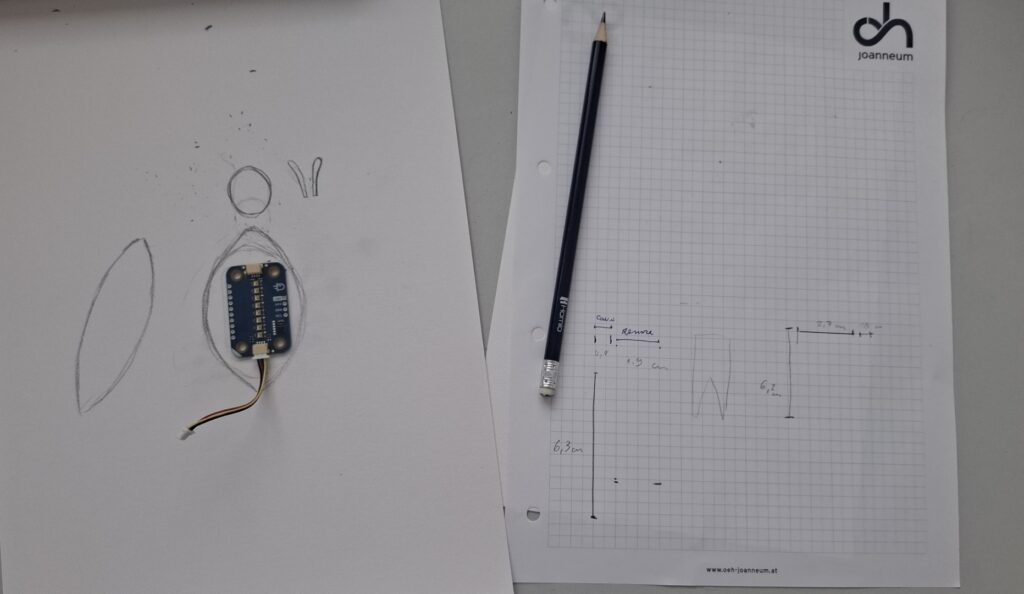
To explore new design ideas, a paper prototype was created. Using simple paper materials made it possible to quickly test different shapes, sizes, and configurations before investing time in more advanced prototypes.
Figure 1: Initial sketches and dimensional studies
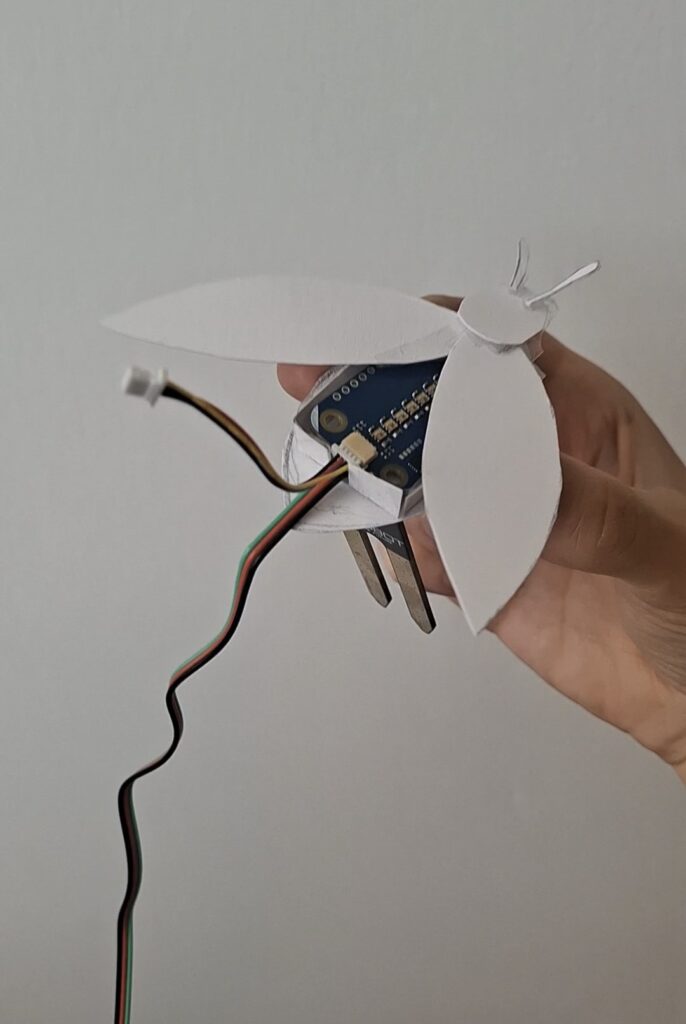
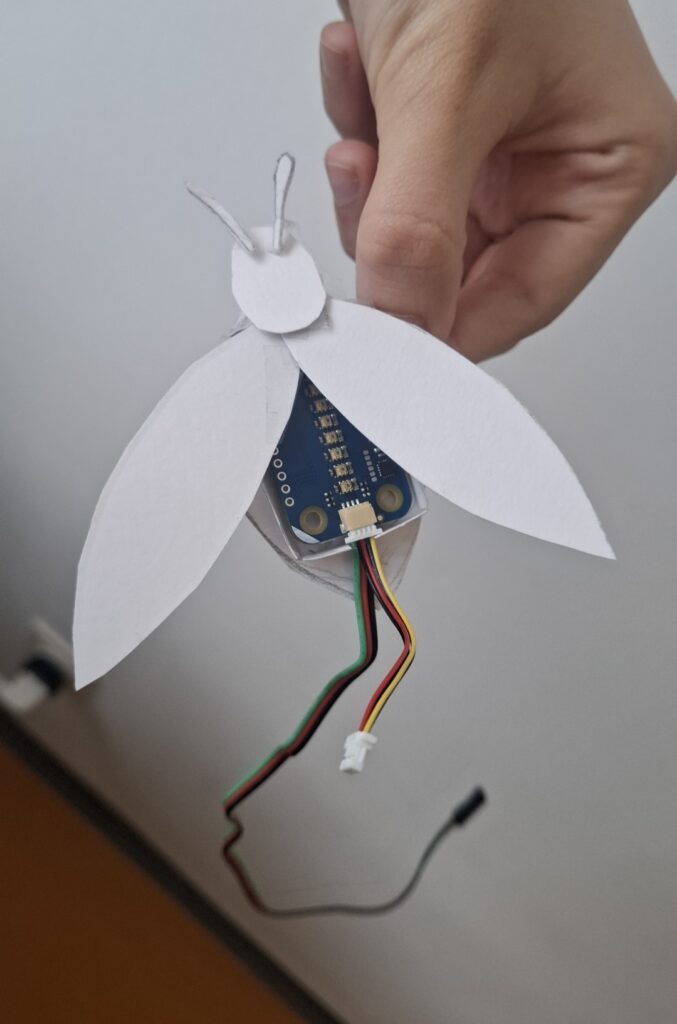
The chosen design was inspired by a firefly. This insect was selected because it naturally produces light, making it a fitting inspiration for the LED-based system. At the same time, fireflies are becoming increasingly rare in many parts of the world, creating a link between the project and environmental awareness.
Figure 2 &3: Final prototype design
While the first prototype takes the form of a firefly, the concept can easily be adapted into other nature-inspired shapes, such as a butterfly or a bee, allowing users to choose different aesthetic variations according to their preferences.
After the development of the functional prototype, the device was brought into the classroom for a user testing session. The objective of the test was twofold:
to evaluate the functionality of the system
to collect feedback on the overall design and user experience
Functionality Testing
The first goal was to verify whether the system could reliably measure soil moisture and provide visual feedback through the LEDs.
The results were very positive. During all testing sessions, the system worked correctly and the code performed as expected. The sensor successfully detected changes in soil moisture, while the LEDs updated in real time.
Participants found the color transition easy to understand and appreciated the immediate feedback provided by the light.
Improvements
One important observation emerged during testing: the need to also indicate when the soil becomes excessively wet. Since, overwatering can be as harmful to plants as underwatering.
Design Evaluation
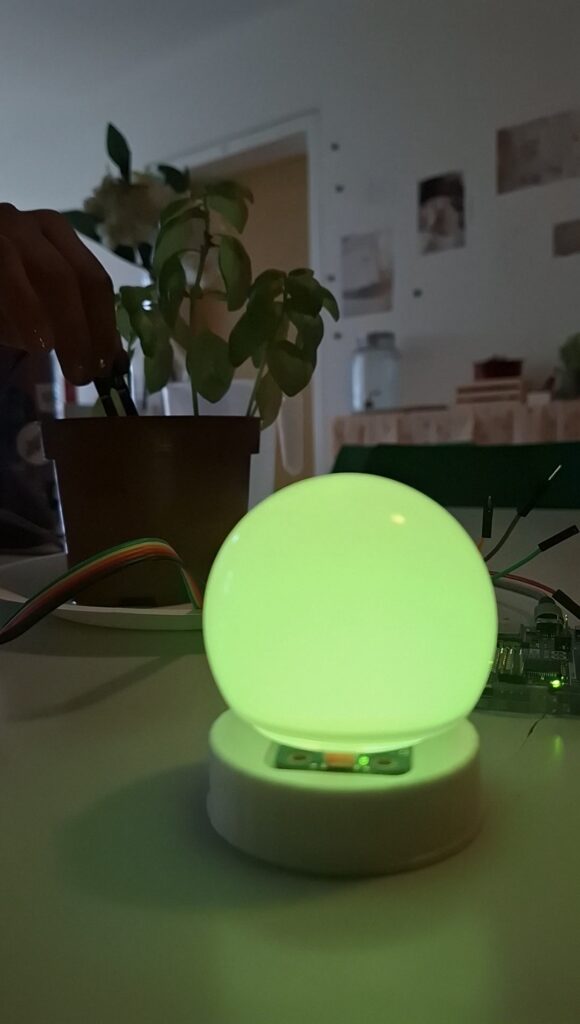
The second objective was to evaluate the physical appearance of the prototype.Participants generally appreciated the visual effect created by the colored light and the lamp-like shape
Figure 1: Bulb lamp design
However, feedback also suggested that the design could become more playful. So, to explore different possibilities, several alternative 3D-printed shapes were produced and tested. These elements could be positioned above the LEDs to create different visual effects and appearances.
Video 1: User testing with different 3D printed component
Although participants appreciated these variations, the most promising direction identified during the testing phase was a different approach: reducing the size of the sensor itself. A smaller sensor could be integrated directly into the plant pot and designed as an ornamental object rather than a visible technical component.
Conclusion
The user testing session confirmed the reliability of the system. However, the testing also highlighted the need to improve the design of the object by reducing its size and creating a decorative element that could be placed directly inside the plant pot.
The next step was to develop a functional version of the system, following the design developed during the first paper prototyping phase (see the articleConcept and Low-Fi Prototyping).
The device was imagined as a lantern-shaped object containing LED lights capable of changing color according to the moisture level of the soil.
Hardware Component
The prototype was built using the following components:
Arduino R4 Wi-fi Board
Soil moisture sensor
Modulino Pixels LED module
Power supply
Wi-Fi network connection
Circuit Setup
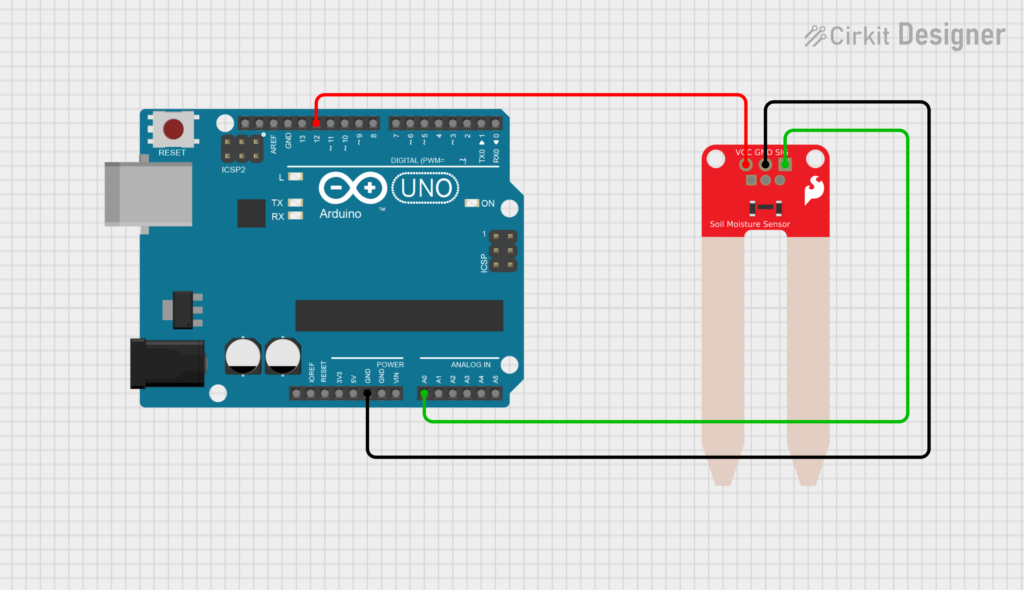
Figure 1. Circuit setup for the soil moisture sensor.
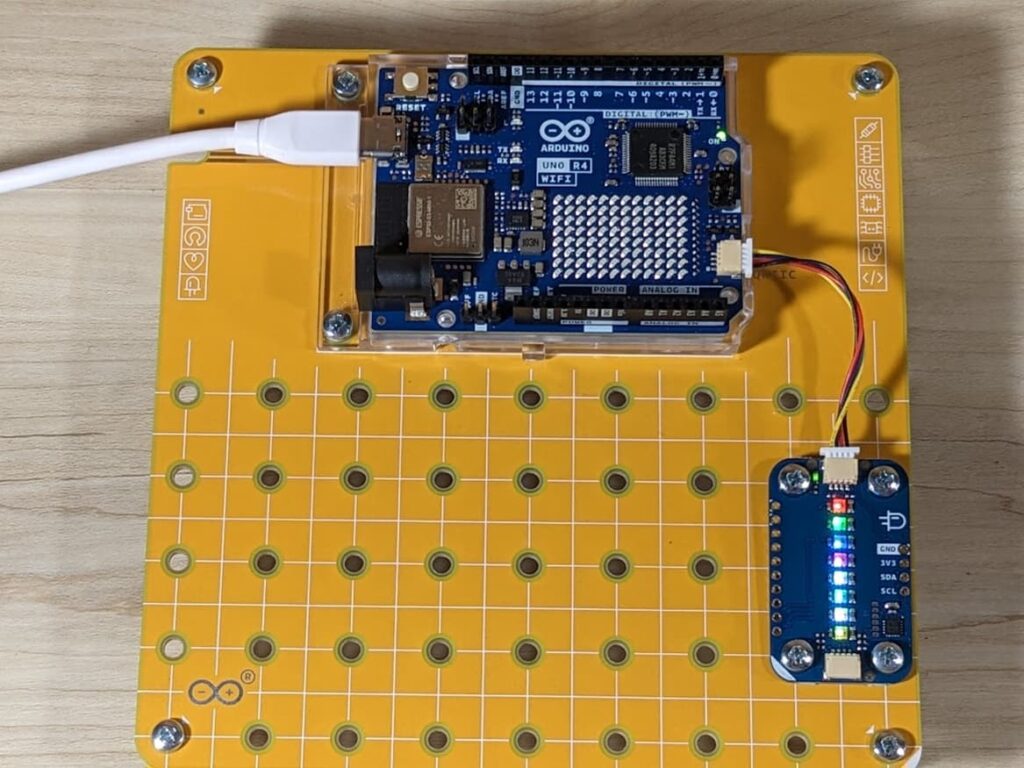
Figure 2. Circuit setup for the Modulino Pixels module.
The soil moisture sensor (Fig. 1) is connected to:
Analog pin A0 for reading the sensor value.
Digital pin 12 for powering the sensor.
The sensor is powered only when a measurement is taken. This prevents it from being continuously powered, which could accelerate electrode corrosion and reduce the sensor’s lifespan. It also helps reduce power consumption. In addition, The Modulino Pixels module (Fig. 2) is connected directly to the Arduino board
Code Structure
Soil Moisture Measurement
The soil moisture sensor monitors the condition of the soil: Every sampling cycle, the system activates the sensor, waits a short time for the signal to stabilize, reads the analog value, and then immediately turns the sensor off.
The measured value is converted into a moisture percentage using calibration values obtained during testing. In this prototype, a value of 0 corresponds to dry soil, while a value of 685 corresponds to wet soil. The result is then mapped to a percentage between 0% and 100%, making the data easier to interpret and use for the visual feedback system
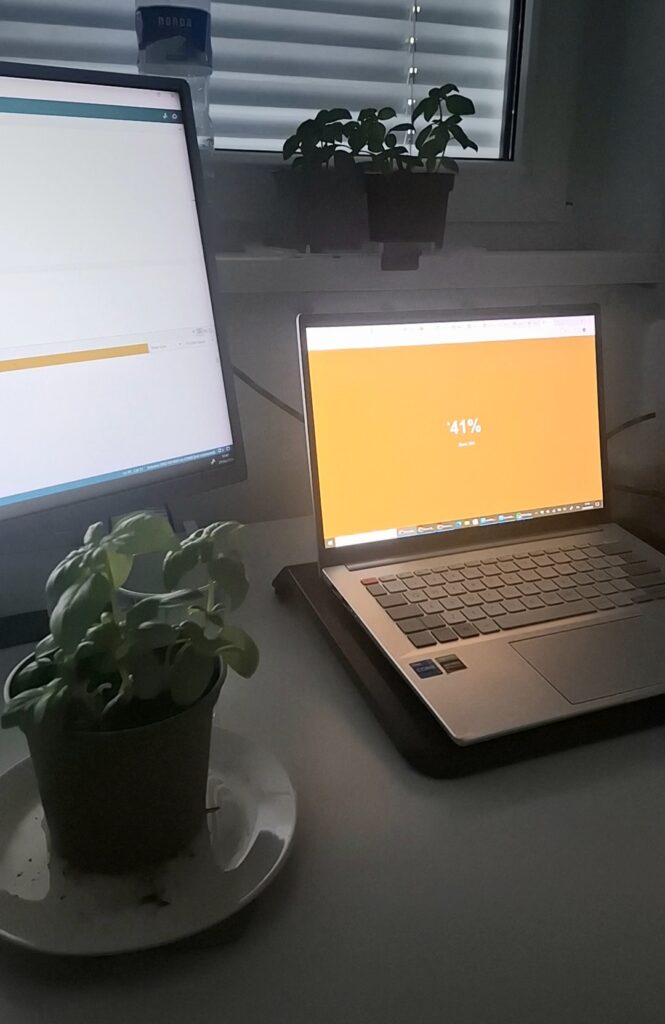
Figure 3. Real-time soil moisture reading displayed through the web interface, showing the current humidity percentage and sensor value
LED visualisation
After each measurement, the LEDs change gradually as the moisture percentage increases. When the soil is very dry, the LEDs appear red. As the moisture level rises, the colour progressively shifts through orange and yellow tones, eventually becoming green when the soil is sufficiently wet.
Video 1. LED feedback system setup
Wi-Fi Connection
The device connects to a local Wi-Fi network using the WiFiS3 library. Once connected, it starts a web server and creates a local address using mDNS. This allows users to access the device through a web browser by typing:
http://light-plant.local
without needing to know the device’s IP address.
Digital Interface
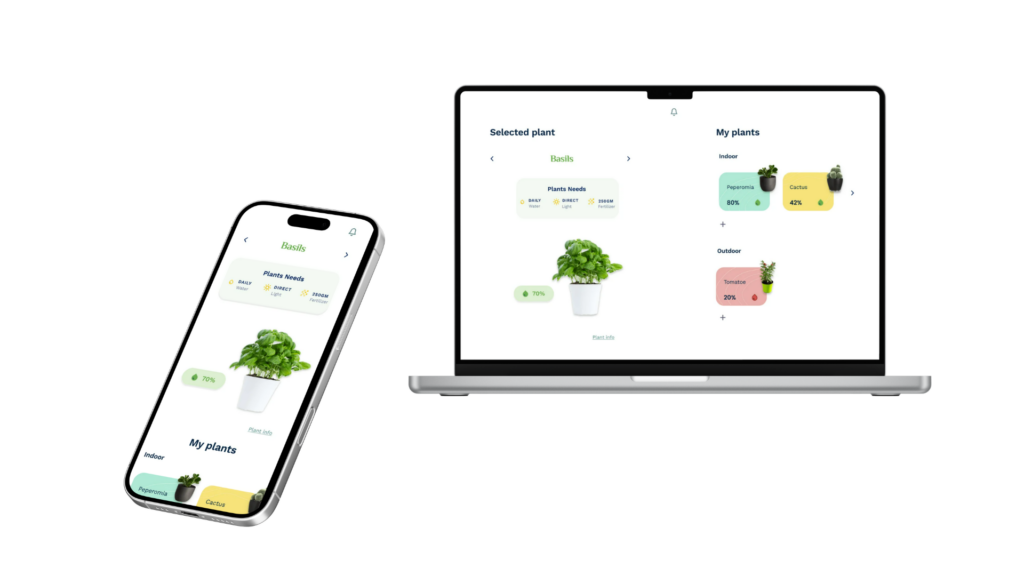
A responsive web application was designed to monitor and manage multiple plants. The home screen highlights the plant connected to the moisture sensor, displaying its soil moisture level together with its care requirements, including watering, light exposure, and fertilization. The app also contain an overview of all the connected plants, organized by indoor and outdoor categories, allows users to quickly monitor their status and access more detailed information.
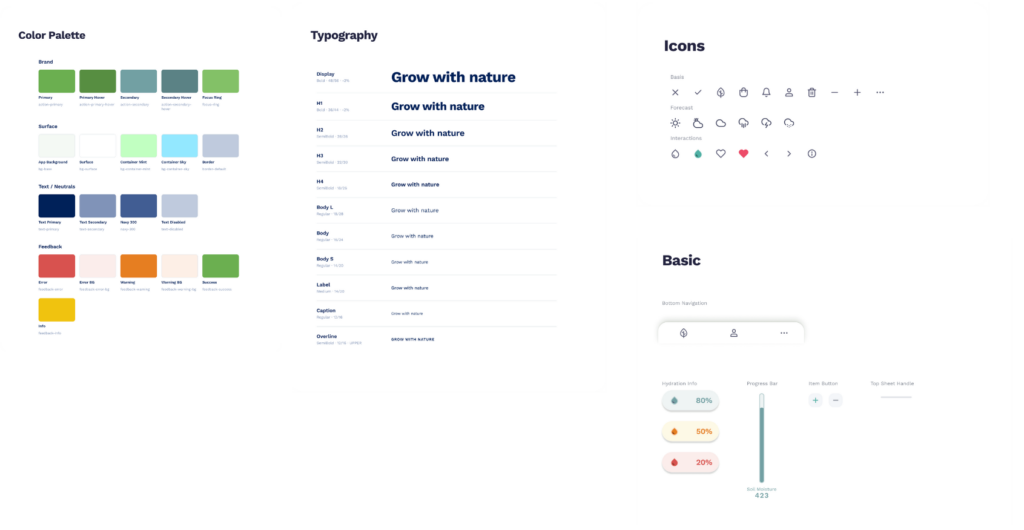
UI Design – Design System
Figure 4. Design system for the digital Interface inlcuding: color palette, typography, icons and basic components
Since my last blog post, I’ve been thinking about the issue of women and observation. What sparked this was an Instagram post I saw a few days ago that made me very angry. It was about a hidden camera found in the women’s restroom at a climbing park that had been used to film the private parts of women and girls. Some of the affected women banded together and turned the camera over to the police. An investigation against persons unknown is currently underway. Unfortunately, I couldn’t find the post later on, and there’s not much information about it online either. I found a similar case on the website of the Saxon Mountaineering Association [1], but I’m not sure if it’s the same one. I did some research on the legal situation for hidden cameras on toilets, because I remember that the post said something about the legal situation not being very clear, and found that in Germany § 201a StGB and § 184 k StGB apply for such cases [2].
§ 201a StGB constitutes a violation of one’s most private sphere and of personal rights through the taking of photographs [3]. The text in German reads as follows:
“ Mit Freiheitsstrafe bis zu zwei Jahren oder mit Geldstrafe wird bestraft, wer (1.) von einer anderen Person, die sich in einer Wohnung oder einem gegen Einblick besonders geschützten Raum befindet, unbefugt eine Bildaufnahme herstellt oder überträgt und dadurch den höchstpersönlichen Lebensbereich der abgebildeten Person verletzt (…)“ § 201a Absatz 1 StGB [3]
Which translates to: Any person who (1) without authorization takes or transmits an image of another person who is in a dwelling or a space specially protected from view, thereby infringing upon the highly personal sphere of the person depicted, shall be punished by imprisonment for up to two years or a fine.
§ 184k StGB refers to the violation of a person’s private parts through photography [4]. This is the original text from StGB:
“Mit Freiheitsstrafe bis zu zwei Jahren oder mit Geldstrafe wird bestraft, wer
1. absichtlich oder wissentlich von den Genitalien, dem Gesäß, der weiblichen Brust oder der diese Körperteile bedeckenden Unterwäsche einer anderen Person unbefugt eine Bildaufnahme herstellt oder überträgt, soweit diese Bereiche gegen Anblick geschützt sind,
2. eine durch eine Tat nach Nummer 1 hergestellte Bildaufnahme gebraucht oder einer dritten Person zugänglich macht oder
3. eine befugt hergestellte Bildaufnahme der in der Nummer 1 bezeichneten Art wissentlich unbefugt einer dritten Person zugänglich macht.
(2) Die Tat wird nur auf Antrag verfolgt, es sei denn, dass die Strafverfolgungsbehörde wegen des besonderen öffentlichen Interesses an der Strafverfolgung ein Einschreiten von Amts wegen für geboten hält.
(3) Absatz 1 gilt nicht für Handlungen, die in Wahrnehmung überwiegender berechtigter Interessen erfolgen, namentlich der Kunst oder der Wissenschaft, der Forschung oder der Lehre, der Berichterstattung über Vorgänge des Zeitgeschehens oder der Geschichte oder ähnlichen Zwecken dienen.
(4) Die Bildträger sowie Bildaufnahmegeräte oder andere technische Mittel, die der Täter oder Teilnehmer verwendet hat, können eingezogen werden. § 74a ist anzuwenden.“ § 184k StGB [4]
The first part is the one most relevant and translates to: Any person who commits any of the following acts shall be punished by imprisonment for up to two years or a fine: 1. intentionally or knowingly taking or transmitting, without authorization, an image of another person’s genitals, buttocks, female breasts, or the underwear covering these body parts, provided that these areas are shielded from view
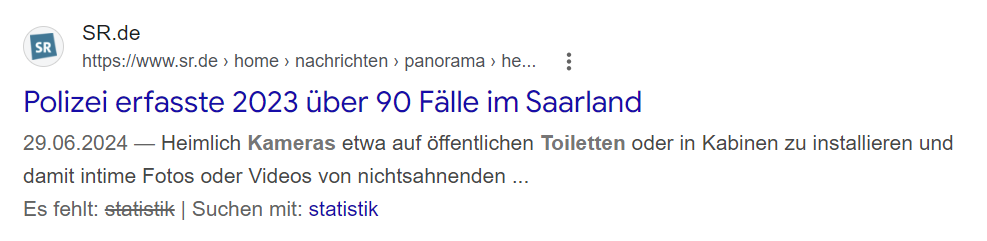
Unfortunately, incidents like this are not isolated cases. I couldn’t find any meaningful statistics on this, but the number of unreported cases is likely very high. During my Google search, I came across a headline stating that, according to the police, there were 90 cases in Saarland in 2023. Unfortunately, the page no longer loads, so I couldn’t read any more details about it. If you search for “camera found in restroom,” numerous articles about incidents in a wide variety of cities and facilities pop up.
1) Screenshot of Google search result
There are several websites online with tips on how to find hidden cameras. There are also some apps that can detect cameras via Wi-Fi or radio signals. In my opinion, however, it’s not fair to shift the responsibility onto the victims. The question is rather how the installation of hidden cameras could be prevented, what role design could play in this, and how restrooms could be designed overall to make women feel safer there. It might be helpful to identify and analyse interactions in a public restroom to identify pain points and determine how these interactions could be improved. Can public spaces ever feel truly private? In addition, it makes sense to examine the architecture of restrooms and identify which architectural elements facilitate the installation of cameras, so that measures can be determined to prevent this from happening. This also sheds new light on the question of responsibility. In the end, is it the architects of restroom facilities who are responsible for making it difficult to install cameras? Or does the responsibility lie with the operators? With lawmakers? Or with the manufacturers of miniature cameras?
Potential observation and the feeling of being safe
Observing people while they use the restroom reveals interesting parallels to the concept of the panopticon explained earlier. The most obvious aspect is the feeling of being constantly watched, which, on the one hand, constitutes a massive invasion of privacy (as was also the case with the original Panopticon, where inmates had no way to withdraw from observation). At the same time, however, this leads to a loss of the feeling of security. This, combined with the constant possibility of being watched, has a major impact on the behaviour of those being observed. The constant uncertainty can foster a deep mistrust of public places. Moreover, precisely because of this uncertainty, invisible observation often feels more threatening than overt observation. This raises the question of what role the fact that there is no way to return the observer’s gaze plays. In my opinion, control and the loss of control play a major role here. In the Panopticon as well, the observer in the tower cannot be seen from the cells, which means that power clearly lies with the observer, and the inmates lose all control over the situation and are at the mercy of the observer. I would like to research in greater detail the effects this constant tension has on the psyche. I have already identified Michel Foucault’s “Überwachen und Strafen” (English: Discipline and Punish) as a source for this, which I will be able to access tomorrow at the university library in Ulm. In his work, Michel Foucault examined penal systems and power relations in 18th-century Europe [5] and, among other things, discusses the concept of the Panopticon and its implications. There is also a chapter in which he develops the concept of panoptism, which I’m already very curious about [6].
Hidden observation from an interaction point of view
The question that rises in the context of observation as a form of interaction is, whether or not it is still an interaction if only one side of the interaction knows of it’s existence. I found this definition of interaction in the Cambridge Dictionary:
“An occasion when two or more people or things communicate with or react to each other” [7]
This definition leaves some room for interpretation: if taken very literally, the criteria for an interaction would no longer be met, since the parties involved would have to react to one another. However, the person being observed does not actively react to the camera or the person who installed it, since they are unaware of its existence. On the other hand, in my view, the person is nonetheless unknowingly involved in an interactional relationship with the camera or the observer, even though they never consented to this. So the question cannot be answered unequivocally.
Follow Up Post
Other topics I’d like to explore in relation to women and observation include the objectification of women, the male gaze, voyeurism, and stalking, as well as why women observe and judge one another.
With regard to observation in general, I’d also like to examine digital observation and data collection, as well as live-streaming culture and the television show *Big Brother* as a pop-cultural digression.
[3] Bundesministerium der Justiz. (n.d.). German Criminal Code (Strafgesetzbuch, StGB), Section 201a: Violation of the highly personal sphere of life and personal rights through image recordings. Retrieved July 3, 2026, from https://www.gesetze-im-internet.de/stgb/__201a.html
[4] Bundesministerium der Justiz. (n.d.). German Criminal Code (Strafgesetzbuch, StGB), Section 184k: Violation of the intimate sphere through image recordings. Retrieved July 3, 2026, from https://www.gesetze-im-internet.de/stgb/__184k.html